Farm to School for the Livestock Producer
Provided by:
Written By


Related Resources

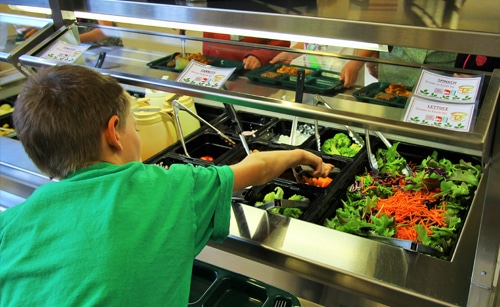
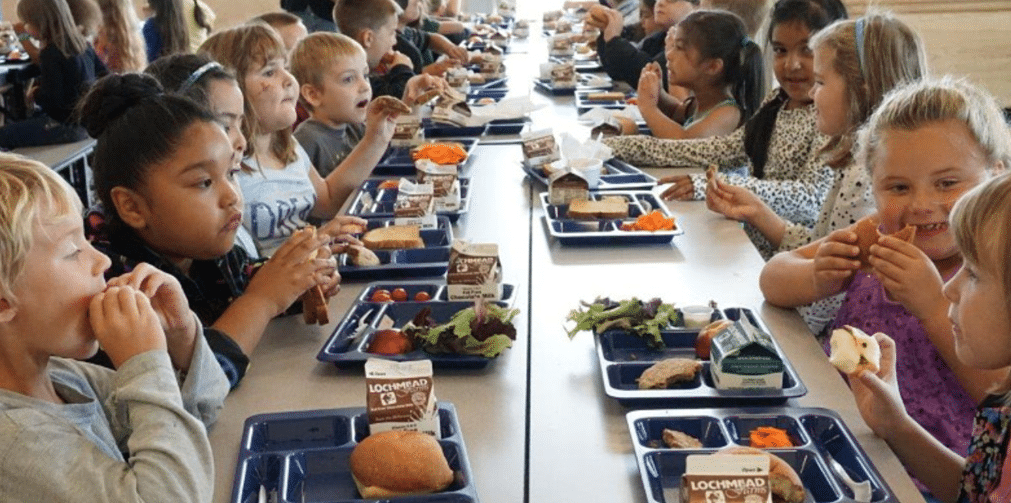
Within the last ten years, the number of farm to school programs in U.S. schools has increased significantly, from 12% to almost 50%. According to the Farm to School Census conducted by the USDA Food and Nutrition Service in 2023, 74,433 schools included local foods on the menu during the 2022-23 school year. This is good news for farmers and ranchers. Market access and demand have always been one of the biggest constraints on producers, especially for small and medium-sized farms and ranches. Now it seems that one constraint might be just a little easier to overcome.
There are many reasons to consider selling meat to schools. To start, locally sourced meats are popular with children and their parents, and many schools have reduced food waste and increased the number of lunches served when they source meats locally.
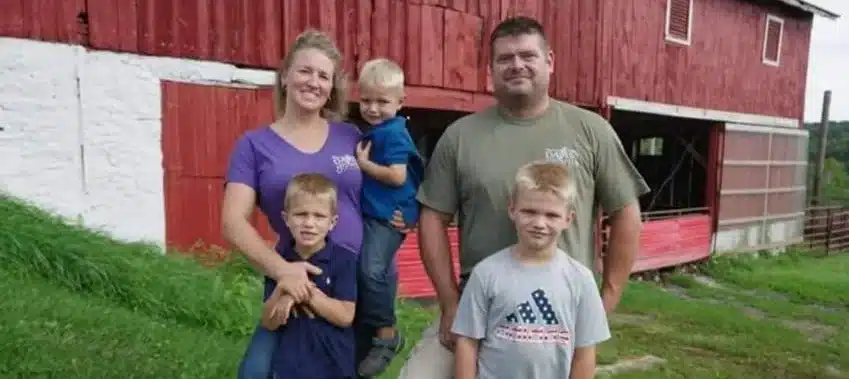
Selling to schools can also give your farm or ranch more visibility in the community. Having more visibility may yield future enterprise opportunities, like selling to restaurants, or maybe a meat CSA that provides local meats to students’ parents. And, not only does selling to schools provide good quality local food for children, but it can also be satisfying to know your customers and see the impact of your work on the local community.
Let’s also think about the tangible benefits you as a livestock farmer may receive with a school contract. First, this enterprise can result in high-volume sales and a consistent, dependable payment schedule. This is especially helpful if your current sales consist of terminal calves sold in the feeder cattle market. A monthly check can help stabilize cash flow. Second, scheduling and delivering meat products can be streamlined, as schools will most likely prefer frozen meat products, which have a long shelf life.
How does a livestock producer determine if selling meat to schools is the right fit? It might be helpful to employ a simple fact-finding process to aid in decision-making.
The School Nutrition Director
Talk to the school nutrition director to understand their product demand, portion size, packaging preferences, and product form – such as beef patties, fajitas, chicken strips, percent lean, eggs, etc. This will be the first of many important conversations you’ll have because producers and school nutrition directors are often speaking two different languages – producers think in pounds, but schools think in terms of portions. Make sure you understand the school’s process so you can better meet their needs. Imagine how your product can match the school menu.
What is the school’s preferred method and time of product delivery, and do they possess storage capacity for your product? If not, make arrangements at the meat processor, a local food co-op or aggregator, or, if need be, on your farm to store frozen products.
Next, ask what kind of contract or agreement they require. Do you need to be on their vendor list as a food provider? And how often will the school pay you for your product? These questions will help you understand the landscape of your new enterprise and will also help you make plans with your local meat processor.
The Meat Processor
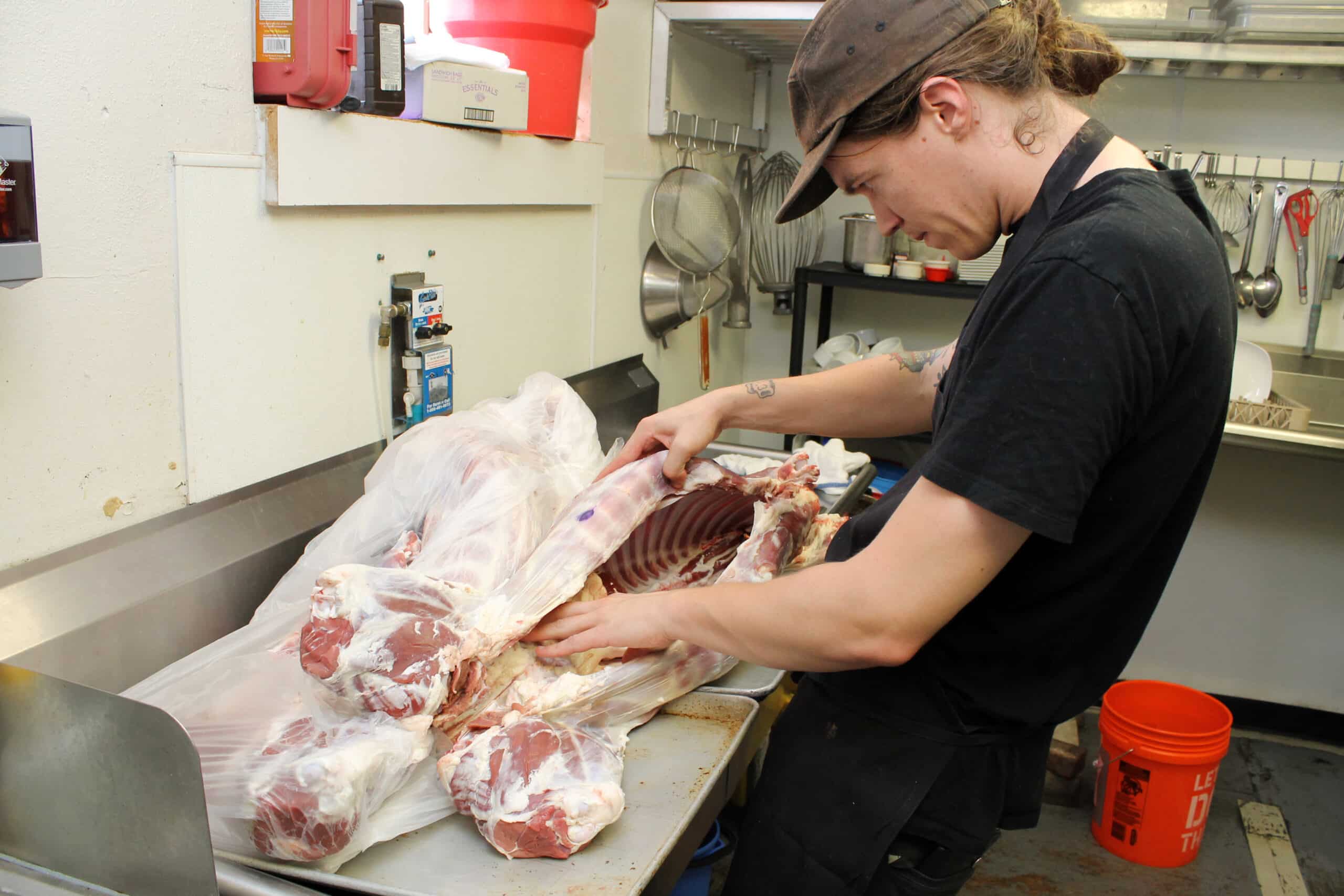
After speaking with the school, you’ll have information that can inform a productive conversation with the meat processor. Remember, it must be a state or USDA inspected plant, and it should be able to accommodate your needs for volume, timing, packaging, and fabrication (i.e., chicken nuggets, beef patties, fajita strips, etc.). Having a backup plan is a good idea, so seek information from more than one processor if your community is lucky enough to have more than one.
We’ve mentioned storage, but it’s good to reiterate this because, most likely, you’ll deliver frozen products to the school. Is it possible to leave product in the processor’s freezer for a month or so? Certain times of the year this might be possible. Again, have a backup plan, because there will be times during high demand at the processor when they won’t have room.
The relationship you build with your processor is just as important as the one you’ll nurture with the school nutrition director, so make sure to get a good understanding of their scheduling. Be prepared to plan months or even years in advance to get your livestock processed.
One of the least understood considerations for those new to having meat processed for direct sales is carcass yield. How much meat should you expect to receive from a carcass? There are many factors that determine the amount of salable product you’ll take home, including the dressing percentage for the species you raise and the average amount of retail cuts you can get from various subprimal cuts. And, what’s more, all these can vary according to the cutting instructions you give the processor. If you ask for lean ground or boneless cuts, that reduces the overall amount in pounds of product you take home. You can familiarize yourself with meat processors’ operations by reading the ATTRA publication Working With Your Meat Processor.
Finally, notice how much meat you produce would NOT be sold to the school. Your school may ask for ground beef patties, so how will you market the other cuts from the carcass? Certainly, you could alter the cutting instructions to yield more ground, but this will reduce the overall yield from the carcass. Can your budget handle this? Or do you need to find an outlet for roasts and steaks? Local restaurants might be interested in these higher value cuts.
Assess Production Capacity
Now that you’ve collected all your information, including the prices and costs, assess your production capacity for your new enterprise. Run the numbers, taking everything into consideration – feed and pasture costs for finishing livestock, processing costs, transportation, storage, and your time. How does your new breakeven price for selling to schools compare to the costs of your current marketing plan? If you are currently selling feeder calves at the local cattle market, you’re likely getting a decent return, at least in 2026. Can you meet that price – or better, beat it – by selling meat products at the school’s prices?
How many animals do you need to fulfill a contract with school? Can you raise that many and cover all production costs? At what price? NCAT and Bringing the Farm to School has developed a worksheet to help you evaluate how much product you’ll need for a school year based on weekly meal demand. You can change it according to the meat processor’s cutting instructions to evaluate various scenarios. You can access Worksheet 4D: Livestock Production and Planning – Capacity and Product Assessment on page 53 of the Bringing the Farm to School: Agricultural Producers’ Toolkit Producer’s Workbook.
Decision Time!
There is a big difference between conventional marketing and direct marketing. Direct marketing, especially selling to schools, is more complex. It requires careful communication and coordination between you, the school, and the processor. You will incur additional costs and need more time for planning and management.
So, do you have the capacity – production, energy, time, and desire – to add a farm to school enterprise to your farm? Now it’s time for a sharp pencil. Look at your breakeven price. Do you still want to do it?
- Assess your production costs, capabilities, and desire to expand sales into schools.
- Contact your local school district to connect with the school nutrition director.
- Set up a meeting. Ask the questions suggested here, as well as any others you may have. Ask about prices.
- Read “Working With Your Meat Processor” to better understand the meat processor’s constraints.
- Set up a meeting with your meat processor once you understand the needs of the school. Ask about costs and expected yields.
- Calculate your mileage to the meat processor and back, and again to pick up meat then to the school and back to deliver products. Add these costs to your costs of production, processing, and storage. Can you sell other cuts? At what price? Figure those costs, too.
- Map out your cash flow. When would you be paid? How much? Be conservative in planning your yields.
Can you do this? Will it be profitable? If so, proceed! You could ease into school sales by trying to supply a smaller amount to see how it works, get realistic costs and returns figures, and learn what your animals will yield. This can relieve anxiety and protect your business from overcommitting. Maybe next year you can expand your efforts!
If the answer is no, that is good too! You have made a business decision based on objective evidence, and you have gained valuable knowledge about your business through the process of thinking through the intricacies of a new enterprise.
If you would like more information on selling meat to schools, or want to talk through your assessment, please contact Linda Coffey or Lee Rinehart through askanag@ncat.org. We are happy to help you explore your goals.
Further Resources
Direct Meat Sales: Getting Started, ATTRA Sustainable Agriculture
This publication describes considerations and processes to begin marketing meat direct to consumers, as opposed to the traditional commodity route for livestock sales. The authors, who are real-life farmers and marketers, describe successful marketing techniques. This publication is most helpful for producers who are already raising livestock and want to improve profitability by diversifying marketing.
How Much Meat to Expect from A Beef Carcass, University of Tennessee
The amount of meat actually available from a beef animal is a frequent source of misunderstanding between consumers, processors, and cattle producers. This document provides information to help you understand how much meat to expect from a beef carcass.
Lamb Cut Guide for Direct Marketers, ATTRA Sustainable Agriculture
This handy guide summarizes important information about lamb cuts.
Local Meat to Local Schools: Lessons Learned from the Montana Beef to School Project, Niche Meat Processor Assistance Network (NMPAN)
Webinar produced by the Niche Meat Processor Assistance Network addressing the work that Montana Beef to School Project is doing to get local meat into their local schools.
Meat Processing Resources, ATTRA Sustainable Agriculture
Check out videos, podcasts, and related publications about meat production and marketing.
Meat Regulations for Producers, Niche Meat Processor Assistance Network (NMPAN)
If you are selling meat, it has to be inspected (both slaughter and butchering) by either a state inspection program or a USDA Food Safety Inspection Service inspector. This resource goes into detail about what that means and provides further reading.
The Lambulator: A Cut-Yield Calculator for the Lamb Direct Marketer, ATTRA Sustainable Agriculture
Microsoft Excel calculator. Enter cut weights and prices to calculate carcass yield percentages, individual and average net profit per lamb, and overall gross and net profit. Evaluate different pricing scenarios should your production or marketing costs change. You can also use this tool for pork.
Understanding Beef Carcass Yields and Losses During Processing, Penn State University
Understanding the factors involved in estimating the amount of beef derived from the live animal will assist cattle producers who directly market their beef.
Working With Your Meat Processor, ATTRA Sustainable Agriculture
See the Resources section at the end of the document, and notice the information related to yields based on various factors, including cut instructions.
Worksheet 4D: Capacity and Product Assessment
Page 53 in Producer’s Workbook, Bringing the Farm to School: Agricultural Producers’ Toolkit
A worksheet to assess how much product will be needed for a school year based on school demand.
This blog is produced by the National Center for Appropriate Technology through the ATTRA Sustainable Agriculture program, under a cooperative agreement with USDA Rural Development. NCAT.ORG/ATTRA.