Value-Added Meat Products
Provided by:
Contents
-
Introduction
-
What are the Options?
-
Logistical Considerations for Value-Added Meat Products
-
Producer Benefits from Value-Added Meats
-
Look Before You Leap: Things to Know Before You Start
-
The Bottom Line
-
Further Resources
Written By

Related Resources
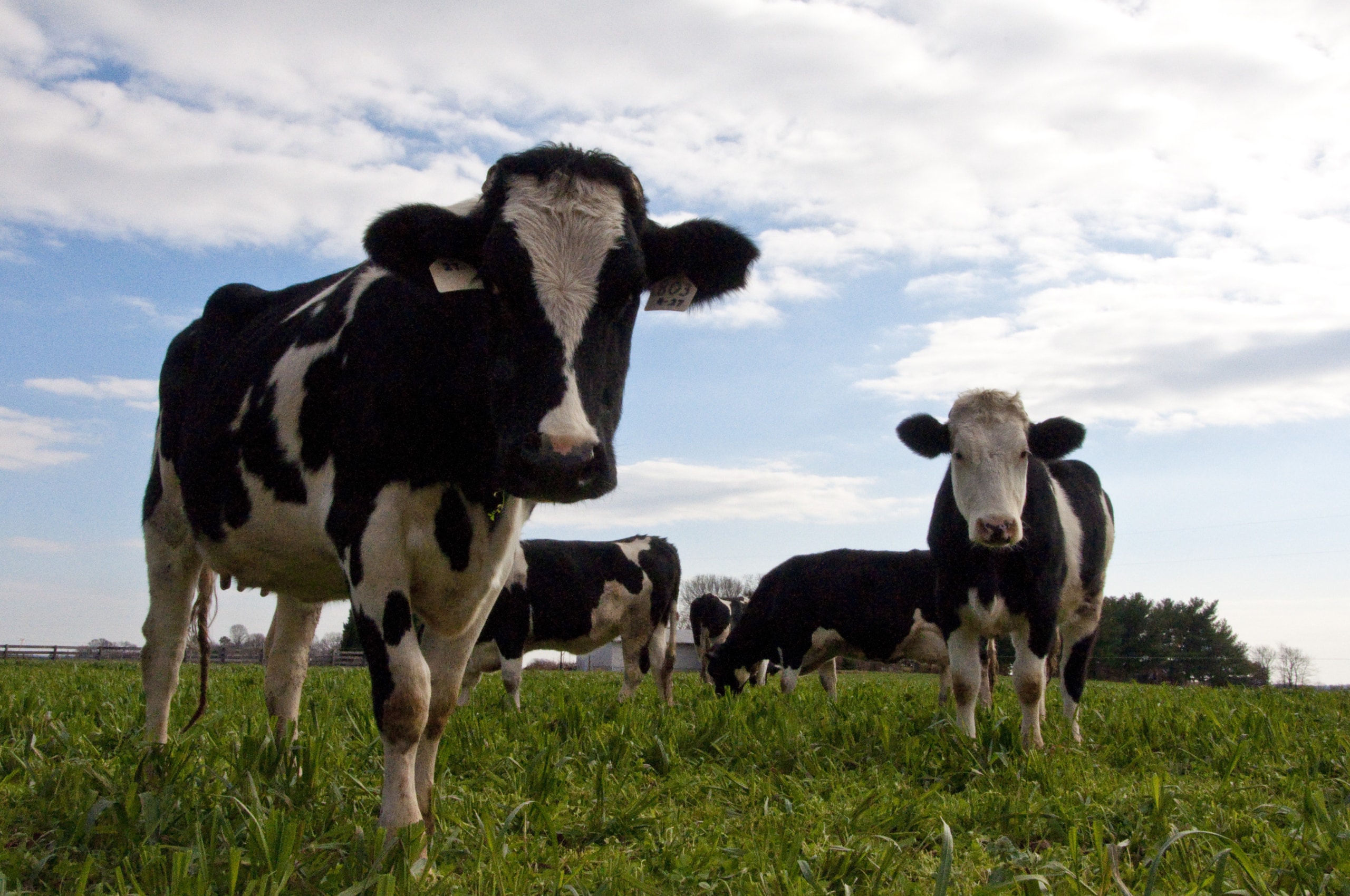
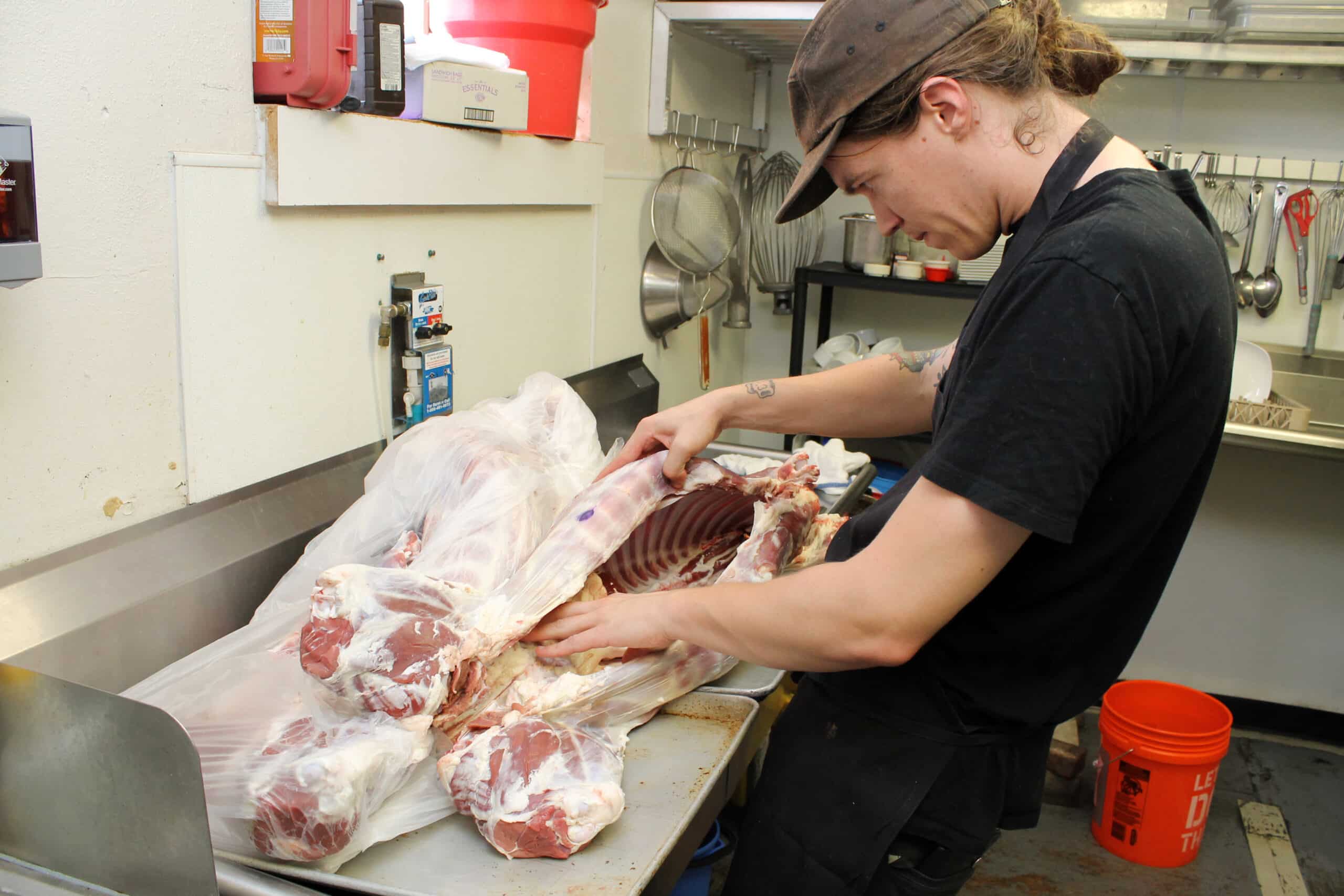
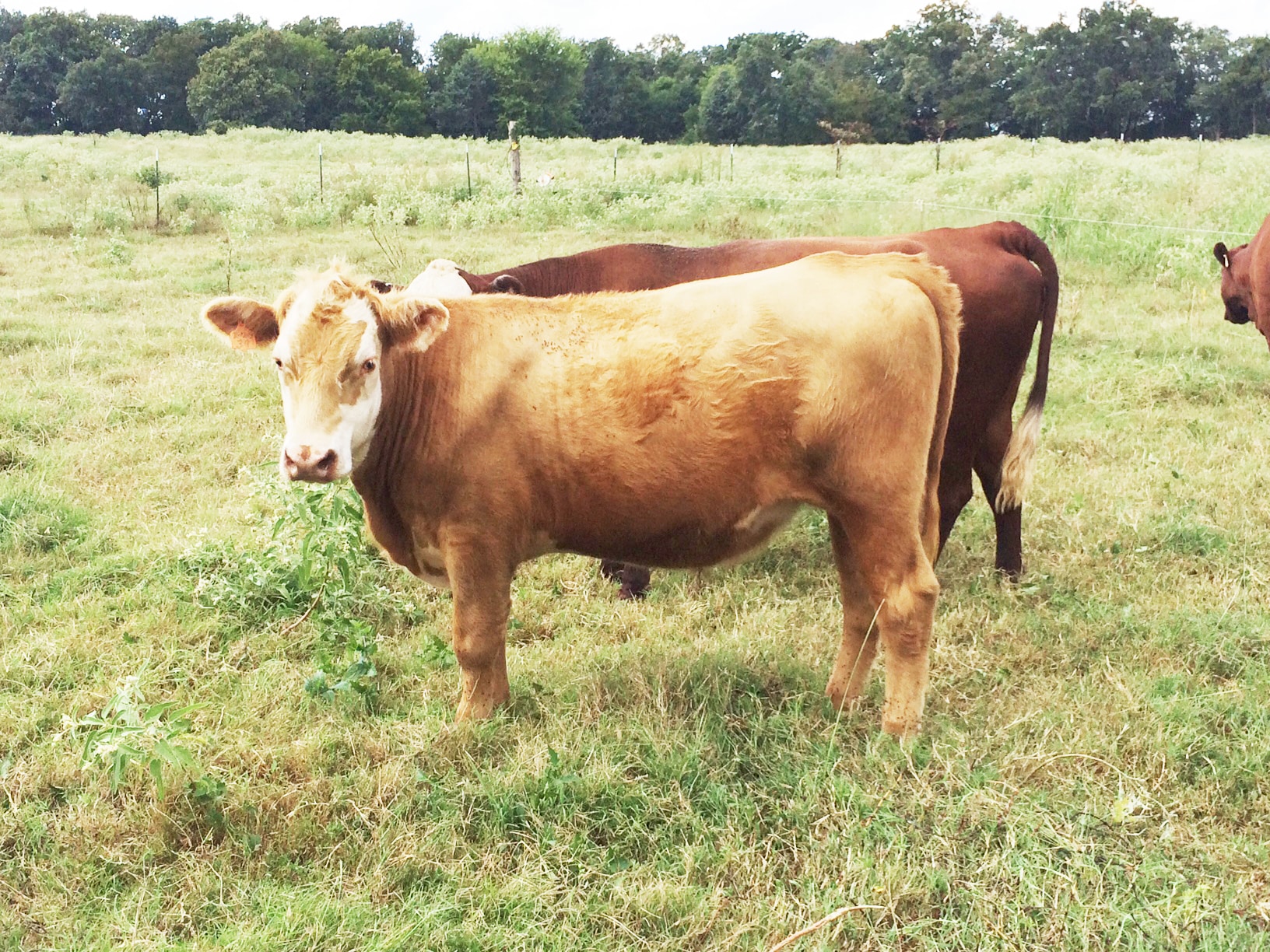
Value-added meat products can offer livestock producers opportunities to access new customers and create niche markets. This publication introduces some of the possibilities and explains the investments in time, labor, and inventory that a value-added meat enterprise requires.
Introduction
How do you distinguish your lamb chops or ground beef from those sold by other farms or ranches? An attractive label and a well-told farm story can help a livestock producer win customers, but it can be hard for buyers to differentiate between comparable cuts of meat from different sellers.
Offering distinctive value-added meat products is one way to set yourself apart from the crowd and create a market niche.
Value-added products can also help livestock producers who direct-market manage their inventory and move less desirable cuts. Similarly, adding value can be a way to capture more revenue from each animal by increasing utilization.
Value-added meat products can offer livestock producers a host of opportunities, and this publication introduces some of the possibilities. Like any other new enterprise, producing and selling value-added meat products involves time, investment, and risk, and this publication points out some of the considerations involved in taking this on. Along the way, I’ll share my insights based on my family’s history of selling value-added beef and lamb products over the past decade. Learn what you can from our experience, but recognize that your situation with regard to regulations and markets will likely be different depending on where you are located and what you decide to produce and sell.
What is a Value-Added Product?
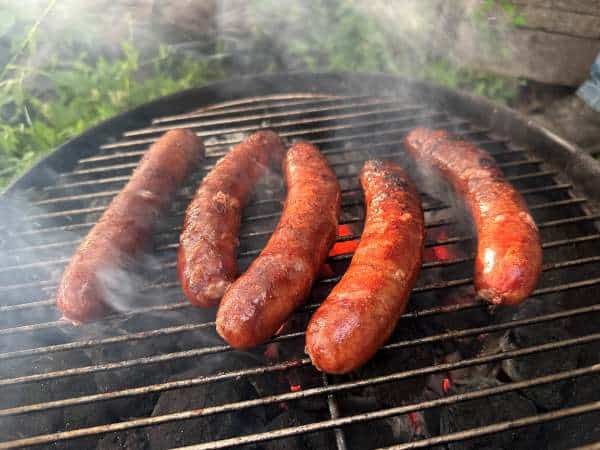
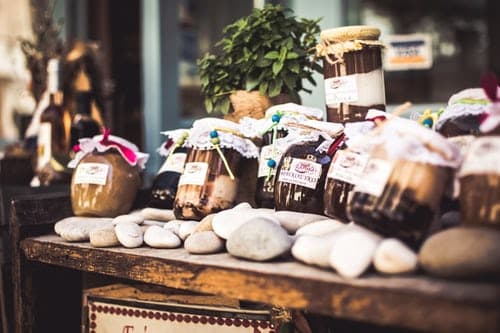
A producer adds value to a product by processing or changing its form before sale, which helps the producer sell it at a higher price and retain more revenue from the sale. For meat, adding value can involve adding ingredients to your products, such as spices in sausage or marinades on kebab meat. Another way to add value is to change the form of the meat by smoking, drying, or cooking it. Some value-added products include both added ingredients and a change in form, like fully cooked sausage or burgers served on-site with a bun and condiments.
What are the Options?
Your investment in time and money, and the regulations that apply to your operation, will differ depending on what products you decide to sell. Serving ready-to-eat food is a different proposition from selling packaged ingredients. Selling products for human consumption is different from selling products for pets. Here are some of the possibilities you might want to consider:
Fully cooked meat products can help your business reach new market sectors: people who are intimidated at the thought of cooking an unfamiliar cut of meat and on-the-spot impulse purchasers who want something they can eat right away.
Offering ready-to-eat foods like burgers, brats, or barbecue in a public venue is a great way to introduce new customers to your business and your products. However, launching a food service business that provides hot food cooked on site is a complex endeavor that requires compliance with applicable state and local food safety regulations. That’s an undertaking beyond the scope of this publication, but you can contact ATTRA by phone or online for help finding resources on the subject. It is important to note that offering samples of your meat products at the point of sale can also fall under food-service regulations, so you should learn what the requirements are in your location.
My family wanted a way to serve the impulse-buyer market without having to navigate the complexities of food-service regulations and investing in more infrastructure. The solution we found was to offer pre-packaged, cold, ready-to-eat meat products like snack sticks and summer sausage. They are products that people can purchase and consume on the spot. Jerky is another example of this type of product.
There are also fully cooked value-added products that aren’t usually consumed at the point of sale, such as hot dogs, smoked sausages, and cooked ham. Cooked and preserved products offer customer convenience and can have a longer storage life than raw products. However, producers must recognize that offering fully cooked products involves significant up-front investment in processing and packaging.
Value-added meats for cooking might include smoked or cured products like ham or bacon, sausage (bulk or in casings), and spiced or marinated cuts of meat. You will have to decide whether to store and market your products fresh, frozen, or in shelf-stable packaging. In addition, you will need to comply with applicable federal, state, and local regulations for producing, handling, transporting, and marketing your products.
Pet food and treats can also be a market for adding value to byproducts and low-value cuts of meat. Regulations for producing and selling pet food vary from state to state and may fall under the jurisdiction of a different agency than foods for human consumption. Be sure to research the requirements that apply in your location.
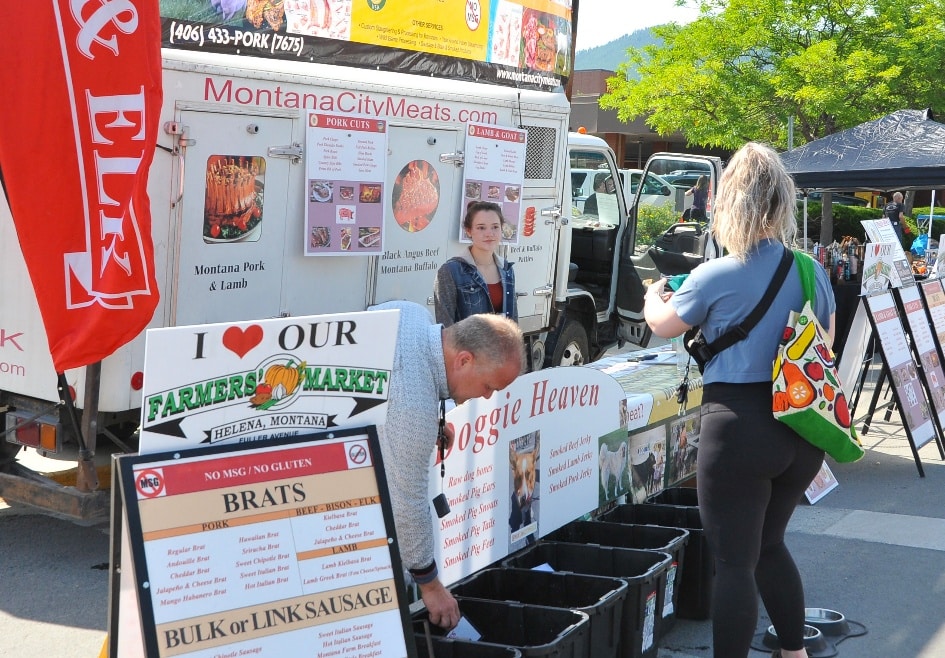
A meat vendor at a Montana farmers market offers a variety of value-added food products and pet treats. Photo: Emilie Ritter, NCAT
Logistical Considerations for Value-Added Meat Products
- Food-safety regulations
- Labeling
- Packaging
- Storage
- Shipping
- Economics
Once you have decided what value-added meat products you want to offer for sale, you have to decide how you are going to make them. The regulations for producing and selling value-added meat products vary significantly by state, so it is imperative to understand which agency or department—and there may be more than one—has jurisdiction in your state and what the specific requirements are. You may want to begin this research with your state’s department of agriculture, state and county departments of health, and state and local Extension service. Some states have cottage food laws that allow people to make products in their own home kitchen for retail sale. However, many of these laws specifically exclude products that contain meat. Your state may require meat processing in a commercial kitchen or by an inspected processing facility. In addition, state law may require that you have the specific recipe for any value-added product that you intend to sell pre-approved by a state agency. Complying with the food-safety regulations and labeling regulations for meat-based products within your state and local jurisdictions is imperative; be aware that it adds significantly to the learning curve and the production expense for your product compared to selling whole animals or cut-and-wrapped meat.
Processing and labeling requirements may differ based on your intended market. If you want to sell your product online or ship to out-of-state customers, each production step must be USDA inspected. If you intend to sell your products wholesale, inspection requirements may differ from what your state allows for direct-to-consumer retail sales. Also, regulations may differ depending on the type of meat involved. Many states have different regulations for poultry, rabbit, and exotics than they do for meat from other livestock. Different regulations may also apply for cooked and cured products than for raw products.
If you decide not to make the product yourself, but to have it produced by a licensed processor, this reduces your investment in infrastructure and labor but means that you must find a processor to work with and likely pay them for their services before receiving any revenue from product sales. Additionally, keep in mind that the costs of processing, packaging, transportation, and storage add substantially to the cost of the final product and often exceed the value of the meat itself. Make sure the market will bear the price you need to charge to cover your costs and make a profit. Consider packaging expensive products in smaller portions to keep the price manageable for consumers.
Having a processor make your product will most likely mean using a recipe that the processor has already had approved by the appropriate authorities. This may mean that you can have your product in hand more quickly, but it may also mean that your product will include ingredients that may not appeal to your customers. Some processors may be willing to work with you in having your own recipe approved and using it if you are contracting with them for a sufficient volume of product.
Sometimes the processor’s need to adhere to a pre-approved recipe can create problems for producers when particular ingredients aren’t available. For my family, this meant that when our meat was too lean to provide the amount of fat specified in the recipe, the processor supplemented with fat from another producer’s animal. This meant that we couldn’t guarantee to our customers that the resulting product met our own livestock production standards.
Working with a processor can also complicate product labeling. The licensed processor must put their own label on the product. There may be room on the processor’s label to include the name of your business as well, but it will most likely not feature your logo or branding. If the processor makes the same or similar products for other producers, it’s easy for customers to confuse products with nearly the same name and similar packaging, and your product could face direct competition in the marketplace.
My family decided to add a sticker with our farm’s logo to packages along with the processor’s label to help differentiate the products made with our meat from other products made by the processor. However, we learned that labels don’t stick well to frozen packages of meat, and the processor didn’t want the added work of applying our sticker before freezing the product. As a result, we’ve had many instances of consumers confusing our farm’s products with others made by the same processor.
Whether you have created your value-added meat product yourself or hired a processor, you have, by definition, increased your investment in that product. To recapture that added value, it’s important to protect your product with adequate packaging, provide proper and safe storage and transport, and achieve a timely sale. The higher your investment in the product, the more devastating it is when a package’s vacuum seal breaks, when a freezer fails, or when a product becomes too old to sell.
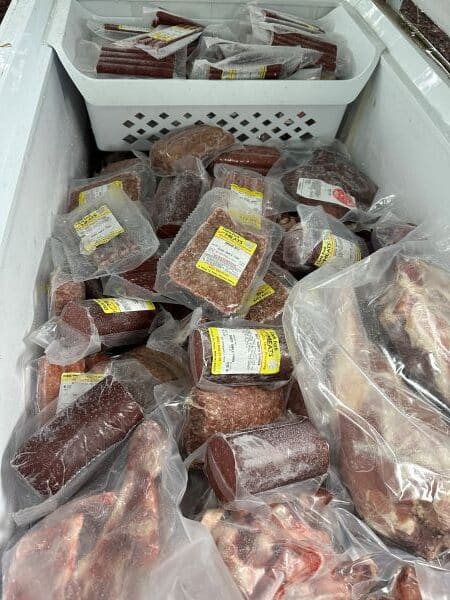
Offering a variety of value-added products means managing multiple production processes and inventories. Photo: Shady Maple Farm
Producer Benefits from Value-Added Meats
Value-added meat products can help livestock producers generate revenue in several ways:
- Unique products help capture loyal customers and serve as a memory point for your business.
- Value-added products can provide an outlet for older or cull animals.
- If you are marketing cuts, value-added products can help manage the inventory of less-marketable cuts.
- Adding value lets your product sell at a higher price point and holds the potential of greater profit for unique products.
- Curing or preserving can create products that are more shelf-stable to help offset market seasonality.
Value-added products can help meat producers reach new market sectors with ready-to-eat products.
Offering a unique, niche product can help capture a first-time customer and can keep that customer returning to your business for a product they can’t get elsewhere. It might be a common product with a distinctive taste, like a heritage sausage or jerky recipe, or a product that’s difficult to obtain locally, like seasoned gyro meat. A truly unusual product, or one made from a novel species, like lamb ham or lamb bacon, can also help customers remember your business. Finding a market niche and a loyal customer base for value-added products can allow a producer to sell meat at a considerably higher price point than the livestock market. In extreme cases, such as specialty flavored and aged hams, a single piece of cured meat may deliver as much profit as an entire live animal would bring at market.
Value-added options like sausage, snack sticks, and formed jerky can provide a market for mature animals that might not be desirable for sale as cut meat. In some countries, cured meat from older animals is a sought-after delicacy. Similarly, value-added products can be an option for managing cut-meat inventory, because they provide an outlet for cuts that don’t move quickly in the local market. Keep in mind, however, that when meat has to be handled and packaged multiple times, costs go up significantly. It may sound like a good idea to turn unsold roasts into snack sticks, but the labor involved in re-processing is likely to price the final product above what the market will bear.
Remember that your options for value-added products may also include pet foods and treats. Some producers have found success with products like freeze-dried liver treats or smoked bones that help them capture more value from each animal. Find out what the production and labeling requirements for pet products are in your state.
Look Before You Leap: Things to Know Before You Start
Value-added meat products can be the key to unlocking profit from livestock when they allow the producer to turn low-value animals and products into revenue streams, but entering any new enterprise requires careful consideration. ATTRA’s publication Evaluating a Farming Enterprise offers general guidance for anyone contemplating a new endeavor. There are also some considerations specific to the topic of value-added meat:
- Changing recipes is difficult.
- Niche products require consumer education.
- Dealing with consumers can be challenging.
- If you are using a processor, your operation becomes tied to them.
- Production schedules become longer and inventory management is more challenging.
- Up-front costs are higher and yield can be lower.
It can be difficult to find meat processors willing to work with small-scale producers in creating a value-added product and providing it on a regular schedule. If you rely on a particular processor to provide your value-added product, the fortune of your operation becomes tied to that processor: you are subject to their labor, scheduling, and pricing situations. As a livestock producer, you can’t easily take your business elsewhere if your brand reputation is constructed around a particular product look and taste.
Even if you’re producing a value-added meat product yourself, it’s not easy to alter your process if there are problems with ingredient supplies or if you decide that a recipe needs to be adjusted. The process of having a recipe approved by state and local health authorities can be time-consuming and expensive, so it’s not practical to change recipes at the spur of the moment. It’s worth testing a recipe extensively before submitting it for approval to avoid having your first ten customers tell you that it’s too salty once you’ve already invested in approvals and inventory. That said, reviewers seldom agree on matters of taste. “Too spicy!” and “Too bland!” are comments that my family regularly receives on the same product, in nearly equal measure.
Although offering unique value-added products can help you find a niche market, it also means that you will probably have to educate potential customers about what the product is and how to use it. Your product may be wonderful, but consumer unfamiliarity can limit sales. You may need to provide recipes, conduct cooking demonstrations, or offer taste tests.
Livestock producers who are used to dropping off animals at the sale barn will find that direct-marketing adds a whole new level of complexity to the business. The ATTRA publications Direct Marketing and Direct Meat Sales: Getting Started both provide guidance on launching a business that sells to end-use customers. Marketing value-added products adds complications because the producer has to manage the flow of ingredients as well as an inventory of finished products. It’s also important to remember the production time lag with value-added products whether you are making them yourself or contracting with a processor. It is important to plan ahead and be careful with inventory management so that there are no gaps in supply.
Inventory management for a range of value-added products is especially challenging. Some products sell better seasonally, and demand for products can change dramatically from year to year. This is challenging for the producer, because value-added meat products have a comparatively high up-front cost that the producer usually has to bear until the product sells. If the product doesn’t sell, the producer loses a significant investment.
Finally, it’s important for producers to recognize that making some value-added products reduces yield from a carcass, as only specific parts are used. In order to maintain revenue from the individual animal, it is vital to find alternative uses for the remaining parts that would otherwise become waste. The complexity of managing multiple markets, production processes, and product inventories demands significant time and attention.
The Bottom Line
Value-added products offer opportunities for livestock producers to capture more revenue from each animal, reach new markets, and establish brand loyalty. Value-added products have strong potential to generate income for producers, but beginners must recognize that managing their production demands a substantial investment in time and money.
Further Resources
ATTRA Publications
Beyond Fresh: A Food Processing Guide for Texas Farmers
Direct Marketing
Direct Marketing Lamb: A Pathway
Direct Meat Sales: Getting Started
Farm Branding: Selling Your Products Through Story
Working with Your Meat ProcessorOther Resources
Niche Meat Processor Assistance Network (NMPAN)
The Meat Locker, American Meat Sciences Association
USDA Food Safety and Inspection Service
Value-Added Meat Products
By Tracy Mumma, NCAT Agriculture Specialist
September 2026
©NCAT
IP679
 |
This publication is based upon work that is supported by the National Institute of Food and Agriculture, U.S. Department of Agriculture, under award number 20227042038269 to Sustainable Agriculture Research and Education (SARE). USDA is an equal opportunity employer and service provider. Any opinions, findings, conclusions, or recommendations expressed in this publication are those of the author(s) and do not necessarily reflect the view of the U.S. Department of Agriculture |
 |
|