Scaling Up Your Vegetable Farm for Regional Markets
Provided by:
Contents
-
Introduction: Scaling Up - Is It Right For You?
-
Organizing Your Farm
-
Planning and Managing a Scaled-up Operation
-
Food-Safety Planning
-
Marketing Channels
-
Risk Management and Insurance
-
Conclusion
-
References
-
Further Resources
-
Appendix A: Scaling-up Assessment Worksheet
-
Appendix B: Your Farm's Weakest Link
Written By


Related Resources
Planning for Profit in Susta...
Finding Land to Farm: Six Wa...
Positive Practices in Farm L...

Illustrated Guide to Growing...

NCAT Marketing Tip Sheet Ser...
Food Hubs: A Producer Guide
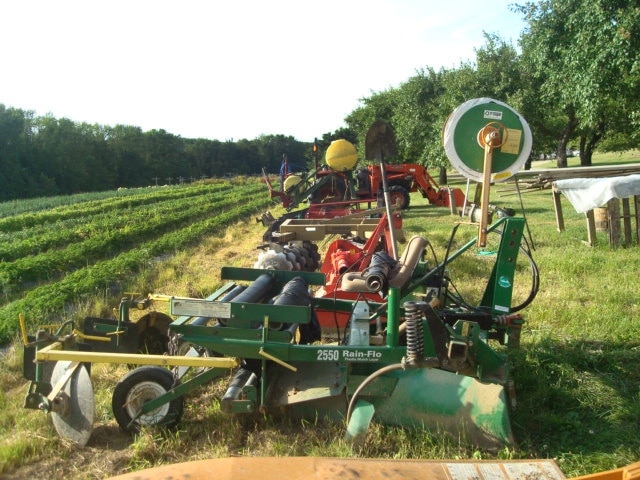
Equipment and Tools for Smal...
Intermediated Markets Case S...
Selling to Local and Regiona...
Abstract
This publication helps farmers decide if they are ready to expand their operations, whether to serve regional markets or to produce greater quantities for direct markets. It describes how organization and planning can help a producer meet the challenges involved in scaling up. This publication addresses important considerations for farm expansion, such as land, labor, food safety, marketing, and insurance. Find resources for additional support throughout the publication and in the Further Resources section.
Introduction: Scaling Up – Is It Right For You?
Local foods purchasing has moved beyond farmers markets into mainstream grocery stores and institutions. As consumers become more interested in purchasing local foods, new market channels have emerged. At the same time, many established farmers want to move out of time-consuming direct markets such as farmers markets and Community Supported Agriculture (CSA) into wholesale and intermediated markets.
Defining “Regional Markets”
In this publication we define “regional markets” as marketing channels that support a regional food supply chain. This can include direct-to-consumer markets that supply a region or intermediated marketing channels that aggregate and distribute within a given geographic region.
According to U.S. Department of Agriculture (USDA) Economic Research Service, intermediated markets include sales to grocery stores, restaurants, regional aggregators such as food hubs, as well as schools, universities, hospitals, and other institutions (Low et al., 2015). Intermediated market channels are considered a values-based supply chain because they prioritize local food purchasing and farmer well-being, which can lead to a higher financial return. In addition to higher return, some intermediated channels, including small grocery stores, maintain producers’ branding. Intermediated marketing channels are becoming important outlets for more experienced farmers (more than 5 years’ experience) and are an underutilized marketing opportunity. For the purposes of this publication, we will primarily focus on intermediated markets as potential marketing channels for producers who want to scale up.
A 2021 national survey of farmers on the use of intermediate and direct-to-consumer marketing channels found that intermediated market channels are an underutilized marketing opportunity for beginning farmers. Outcomes from this survey demonstrated that farmers who participate in intermediated markets do so because it diversifies their business. Many of them are motivated by the reliability of this market while also benefiting from the low marketing costs (Hughes and Pressman, 2022). Intermediated marketing channels may provide a higher return than typical wholesale channels. However, there are perceived barriers, including price point, food safety certifications, and volume requirements.
What is Scaling Up?
Scaling up can mean many things to a farm. It can simply mean producing more because your market demand is greater. In the context of this publication, it means expanding production capacity to produce for wholesale or intermediated markets or significantly expanding your farm to meet direct-market demands. It is important to keep in mind that there is not a one-size-fits-all approach to farm expansion. This publication will include some strategies, but your approach will depend on your existing resources and markets as well as how much risk you are comfortable with.
Economic success is often measured in growth, not efficiency and quality of life. It can seem natural and even expected to move forward with farm expansion. However, before considering farm expansion, it is important to ask yourself why you want to do it. What are your farm and lifestyle goals? Is it going to significantly affect your quality of life—for better or for worse? Consider revisiting your goals from a whole farm perspective.
If you have not developed goals for your farm or written your goals down, see the ATTRA publication Evaluating a Farming Enterprise for a template.
Why do you want to scale up?
Questions you might ask when you consider increasing your production:
- Do you have enough land and markets to support an increase in production?
- Can you move more product through your washing and packing facility?
- Do you have enough space in your cooler, delivery vehicle, etc.?
- Will you need to hire more employees, and do you have the management skills to manage a larger crew?
- Do you have a good farm administration and bookkeeping system? As your farm increases in size, this will likely become more complex, including more taxes and stricter insurance requirements (Courtens, 2025).
See Appendix A, “Questions to Ask Yourself Before You Expand Your Farm,” for a worksheet that prompts you to think about the primary reasons you want to expand your farm and what resources will be required to undergo expansion.
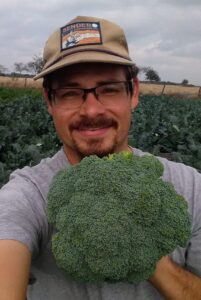
Cody Brown. Photo: NCAT
Case Study: Scaling Up Thoughtfully—Lessons from Cody Brown at Growtopia Farms LLC, Converse, Texas
Cody Brown, a small-scale farmer rooted in sustainable, community-focused production, offers a grounded perspective on what it truly takes to scale a farm responsibly. As the institutional and wholesale markets around him were increasingly seeking local products, Cody found himself navigating the tension between opportunity and practicality. He faced expectations for post-harvest handling, including field-level traceability, temperature logs, and strict processing standards for leafy greens. Additionally, he faced significant infrastructure challenges, including a lack of uniform packaging and no refrigerated vehicles.
These types of structural barriers, along with the high costs and complexities of certifications such as Good Agricultural Practices (GAP) and Food Safety Modernization Act (FSMA) compliance, are examples of some of the challenges many small farms face when trying to meet the demands of larger markets.
Cody has seen that specialization often allows farmers to scale more effectively than diversified production and has chosen to align his scale of operation with capacity rather than ambition. He has applied this measured approach by growing a few crops that require less infrastructure and intensive handling. Cody focuses on crops such as carrots, tomatoes, and squash that have longer shelf lives and greater institutional demand. He is building infrastructure gradually and intentionally, studying market expectations as he goes. Cody demonstrates that successful scaling requires strategic planning, the right tools, and the patience to grow at a pace that supports long-term viability. He knows that profitability is a non-negotiable element of sustainability and is scaling up with that in mind while continually reassessing his capacity and mission integrity. His story serves as a realistic roadmap for farmers seeking to expand without compromising their values or financial stability.
Organizing Your Farm
Typically, a farm that expands to sell through intermediated market channels moves from a very diverse operation to one that is more specialized, though that is not always the case. Nationally, there are several regional CSAs that have been scaled up to serve more than 1,000 members. Managing over 50 crops at that scale can be very difficult, but there are some farmers who have successfully pulled it off with strong planning and labor management.
In most cases, scaling up means intentionally reducing crop diversity. Fewer crops can allow for increased efficiency and consistency, but those crops must be available over a longer harvest window to meet the demands of wholesale buyers. When simplifying your crop mix, it becomes even more important to protect soil health through well-planned rotations, cover cropping, and other conservation practices.
Planning and Managing a Scaled-up Operation
It is critical to plan the expansion of your farm. Every time you increase the scale of your operation, you will experience growing pains. Planning for improvements and growth within your operation can help alleviate these. This section outlines several planning considerations and tools for scaling up a vegetable operation.
Planning Tools
Utilizing whole farm planning as a framework helps identify many connections and interactions within the farm. Whole farm planning also helps you develop an integrated approach to decision-making that considers all components of the farm business, including environmental, economic, and social components. The book Whole Farm Management, edited by Garry Stephens, is an excellent resource to get started. It includes appendices that walk producers through developing a whole farm plan.
In his book, Stephens says, “Whole farm planning is farmer-defined and farmer-driven, and the process will be different for each farmer and farm. This publication addresses these planning considerations along with some resources and worksheets to determine whether your operation is ready to scale up.”
A process of continuous improvement that identifies and addresses the weakest link for your farm is a critical practice for accomplishing your goals and financial viability (Diffley, 2012). Identifying and addressing the weakest link can be particularly impactful if you are contemplating changing markets or scaling up your operation. For more information on applying this strategy, see the “Weakest Link worksheet” in Appendix B. We have included this worksheet (with permission) from Atina Diffley’s book, Quality of Life: Tools and Systems For A Healthy Farming Partnership.
An important consideration, in addition to evaluating how scaling up affects your whole farm goals, is return on investment. In other words, if you need to invest in infrastructure, labor, or insurance to expand, will the return from those investments be profitable? The University of California Cooperative Extension program has developed an Excel-based Crop Profitability Calculator (link in Further Resources) to help produce growers find weak links in their production and help them identify profitable crops. There is also a useful “Scenarios Tool” to examine different production scales and pricing models. The calculator can compare two production scenarios at one time and any number of variables, including current and expanded production levels, increased acreage in produce, existing and modified marketing plans, and changes in pricing structures.
Another great resource to have on hand for all financial decisions and financial health assessments on your farm is Fearless Farm Finances (Chase and Dietman, 2017). Chapter 13 goes into detail about farm investment analysis.
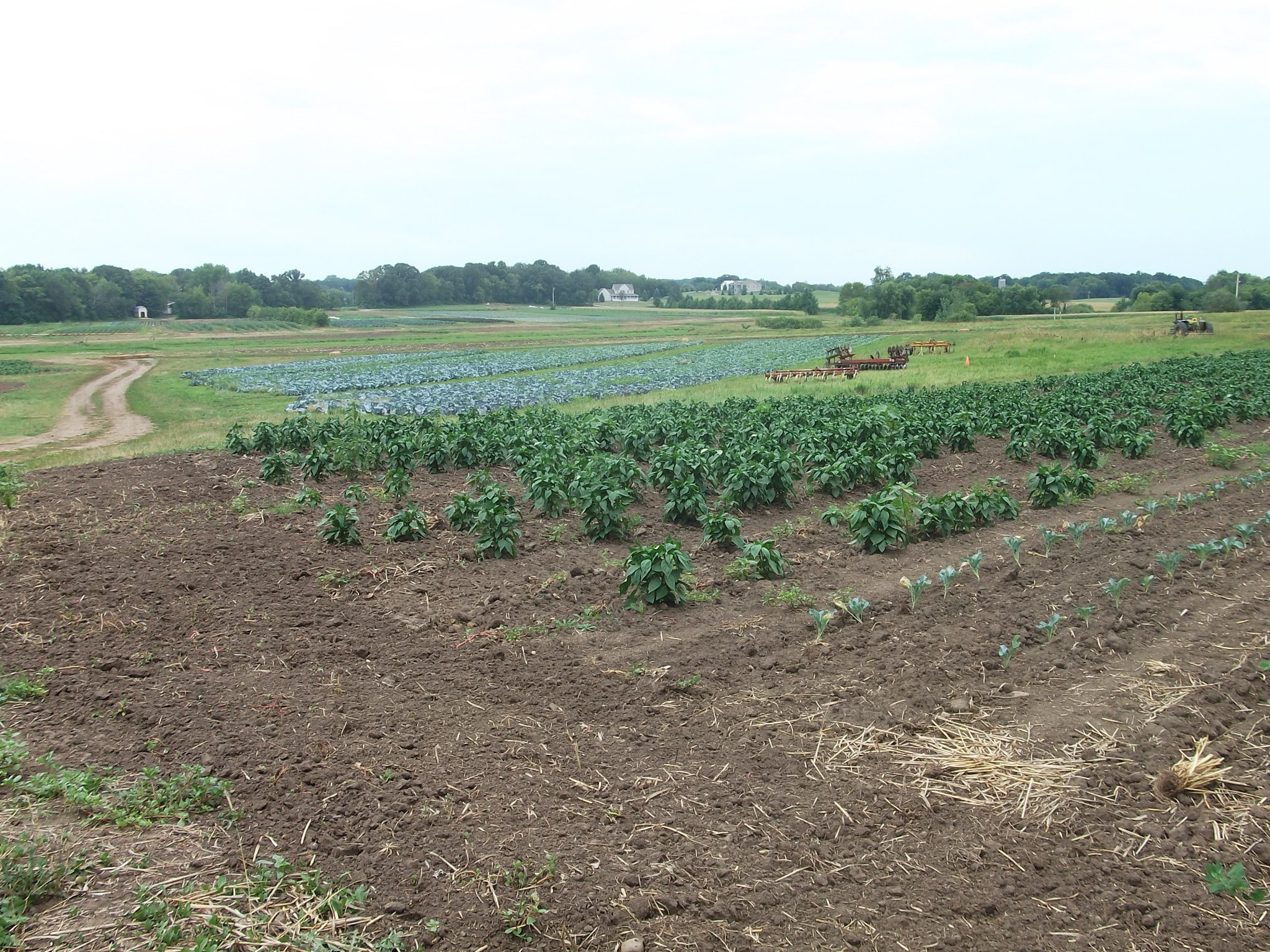
Gardens of Eagan, owned and operated by Atina and Martin Diffley of Organic Farming Works LLC, Minnesota. Photo: NCAT
Land
Access to land is often one of the most significant limitations when expanding a farm. This section outlines several pathways to securing land for growth.
Leasing
Leasing land can be a practical option when purchasing is not feasible or when you want to test production on a larger scale without committing to ownership. A fair, clear, and legally sound lease document protects both you and the landowner. Begin by researching typical rental rates in your region through your county Cooperative Extension office or local farmland preservation organization.
The ATTRA publication Tips for Farm Leases and Contracts: Creating Smart, Effective Documents can help you understand the considerations in developing a fair and effective farm lease.
Several high-quality tools are available to help farmers and landowners develop effective leases. The Farmland Access Legal Toolkit by the Center for Agriculture and Food Systems at Vermont Law and Graduate School offers lease templates, insights from experienced farmers, and innovative strategies for accessing land. If you have the ability to be creative with the leaser, the Iowa State University Ag Decision Maker lays some groundwork for understanding lease and rental agreement types (Iowa State University, No date), while Farm Commons provides a workbook to help you consider what your needs are in leasing and suggests language for modifying existing leases. See Further Resources for links to these tools.
When evaluating leased land, consider both the existing conditions and the long-term value of your effort. Severely degraded soil, heavy weed pressure, or inadequate access to water and electricity can significantly increase your costs and reduce productivity. Because you do not build equity through improvements, it is often best to lease land that is already in reasonable condition or that requires minimal investment.
Buying Land
If farm expansion aligns with your long-term goals, purchasing land may offer stability, security, and equity that leasing cannot. However, the cost of farmland continues to rise nationwide, making access a significant barrier for many growers. A report from the National Young Farmers Coalition, Land Policy: Toward a More Equitable Farming Future, highlights how high land prices, competition from non-farm buyers, and limited access to credit have made ownership increasingly out of reach (National Young Farmers Coalition, 2020).
Their work also documents broader policy and grassroots efforts to support farmers through down-payment assistance, capacity-building, cooperative ownership models, and land-access navigation services.
Financing remains one of the biggest challenges when transitioning from leasing to farm ownership. Most farmers access capital for farmland through a mix of commercial lenders, Farm Credit Services, USDA Farm Service Agency (FSA) loans, and personal or family equity, each with different requirements, terms, and levels of accessibility. The USDA FSA offers several loan programs designed to help farmers who cannot access conventional financing overcome these barriers, including Direct Farm Ownership Loans, Down Payment Loans for beginning farmers, and programs to support heirs’ property and land transition. Navigating these programs can be complex, and organizations such as RAFI-USA provide farmer-focused resources, borrower rights information, and one-on-one assistance to help producers prepare strong loan applications and work effectively with local FSA offices. Regardless of your lender, you should expect to provide a projected cash flow statement that demonstrates the financial feasibility of expansion.
When evaluating land to purchase, consider the property’s long-term suitability for your operation, including soil quality, water access, zoning, infrastructure, easements, flood risk, and the overall cost of needed improvements. Because expansion often requires significant upgrades such as irrigation systems, postharvest facilities, cold storage, or housing for seasonal labor, understanding these costs before purchasing is essential.
The ATTRA publication Finding Land to Farm lays out the six ways to access land, and ATTRA’s Farmland Access tipsheet helps farmers make informed decisions that support both immediate production needs and long-term soil stewardship. Several national organizations offer practical tools to support your land search. American Farmland Trust’s Farmland Information Center (farmlandinfo.org/farm-link-finder) provides nationwide land access guides, property evaluation worksheets, and directories of land-link programs. The BeginningFarmers.org resource page has other land-link tools. Find links to these publications and tools in Further Resources.
Together, these resources can help you navigate the financial, legal, and practical considerations of buying farmland and prepare a clear, realistic plan as you scale up your operation.
Table 1: Traditional Lending Options Available to Farmers
| Source: NCAT | ||
Source of Capital |
What it Offers |
Best For |
| USDA Farm Service Agency (FSA) | Direct Farm Ownership Loans, Down Payment Loans, Joint Financing, Heirs’ Property Relending Program. Lower interest rates; more flexible terms. | Beginning farmers, socially disadvantaged farmers, and farmers unable to qualify for conventional loans. |
| Farm Credit Services | Long-term real estate loans, beginning-farmer programs, and appraisal services. | Established or expanding operations with strong financials seeking ag-specialized lenders. |
| Commercial Banks & Local Lenders | Conventional mortgages, business loans, and refinancing options. | Farmers with strong credit, collateral, and reliable cash flow. |
| Personal Equity / Family Financing | Down payments, land contracts, family loans, and co-ownership arrangements. | Multi-generation farms, family transitions, farmers with limited external credit options. |
Infrastructure and Equipment
Expanding your farm will require a corresponding expansion of your infrastructure and equipment. If your current operation relies on hand tools, the investment needed to scale up can be significant. Choosing appropriately sized, practical, and context-appropriate tools and equipment is essential. Farms do not always need the biggest or most advanced equipment; over-investing can lead to a poor allocation of resources. The ATTRA publication Equipment and Tools for Small-Scale Intensive Crop Production can help you assess your needs as you scale up. A list of equipment commonly found on mid-scale, 20-acre diversified vegetable farms, as described and adapted from Vern Grubinger’s Sustainable Vegetable Production from Start-Up to Market can be found in Table 2, below.
Excerpt from Roxbury Farm Equipment Manual
©2025 By Jean Paul Courtens
Photo: Jean Paul Courtens and Roxbury Farm
Roxbury farm is a 375-acre integrated farm in Kinderhook, New York. They serve 1,000 families in the New York State Capital District, Columbia and Westchester Counties, and New York City, with vegetables, fruit, beef, pork, lamb, and chicken through a CSA model. In this excerpt, Jean Paul Courtens, the former co-owner of Roxbury Farm, describes their approach to managing and purchasing equipment at that scale.
Jean Paul Courtens, formerly from Roxbury Farm in New York, says, “The key to planning an efficient diversified farm is to adopt consistent bed sizes, create good access to your crops, and maintain consistent tractor wheel spacing in addition to good record-keeping before you decide to expand.” He suggests determining your units of measurement—length of bed, bunches, and pounds—and translating this by creating greenhouse and field planting schedules that are easy to read, easy to use, and easy to update so you can communicate with your crew.
Photo: Jean Paul Courtens and Roxbury Farm
At Roxbury Farm, the acreage is laid out in 49-foot sections with 11-foot driving lanes. Each section is divided into eight beds. Each bed has 6-foot centers allowing for 54 inches of growing space (top of the bed).
Roxbury Farm’s irrigation traveler can cover four of those sections in one pull. Their one-sided boom sprayer can spray four beds at a time. They always set aside a place to drive harvest trucks and tractors. The field arrangement is such that they can access fields in all weather and the crew never has to carry a full produce box more than 20 feet. The arrangement is also easier for recordkeeping.
Photo: Roxbury Farm
Each bed varies in length as the fields do not allow for standardization. If possible, that is preferred whereby the length of a bed is related to the ability of the traveler and amount needed for a regular harvest, avoiding growing more than one crop in a bed. Raised beds provide many advantages like better drainage during heavy rain, but ultimately it provides a grid on the farm whereby each bed can be worked and planted individually.
When you buy a piece of equipment, research the different makes and models. Call farmers who use the equipment to find out the pros and cons of its operation. Make sure there are dealers in your area that stock or order replacement parts for your future piece of equipment. When something breaks down and you must wait a few weeks for the parts, you can end up losing a lot of income.
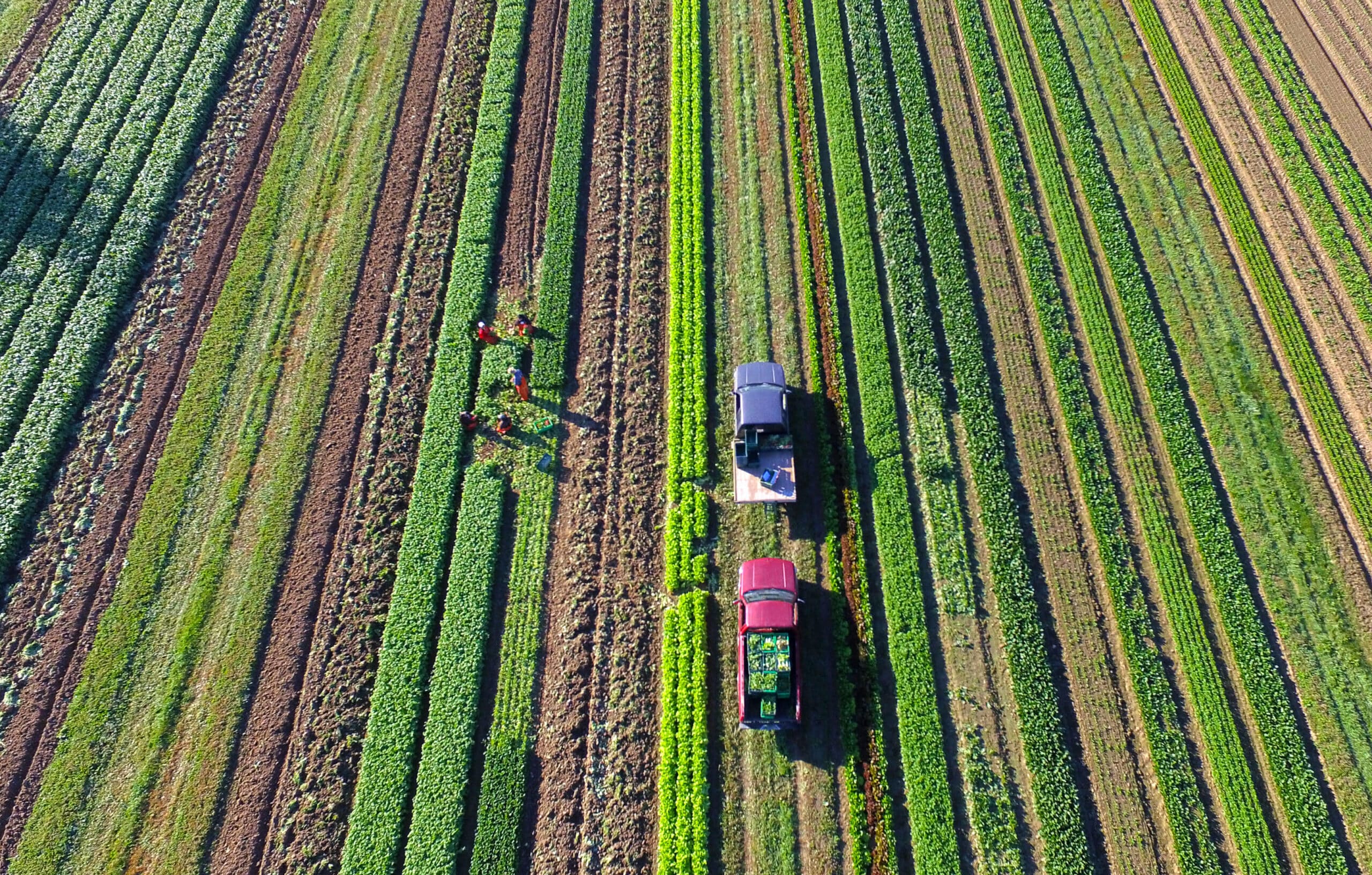
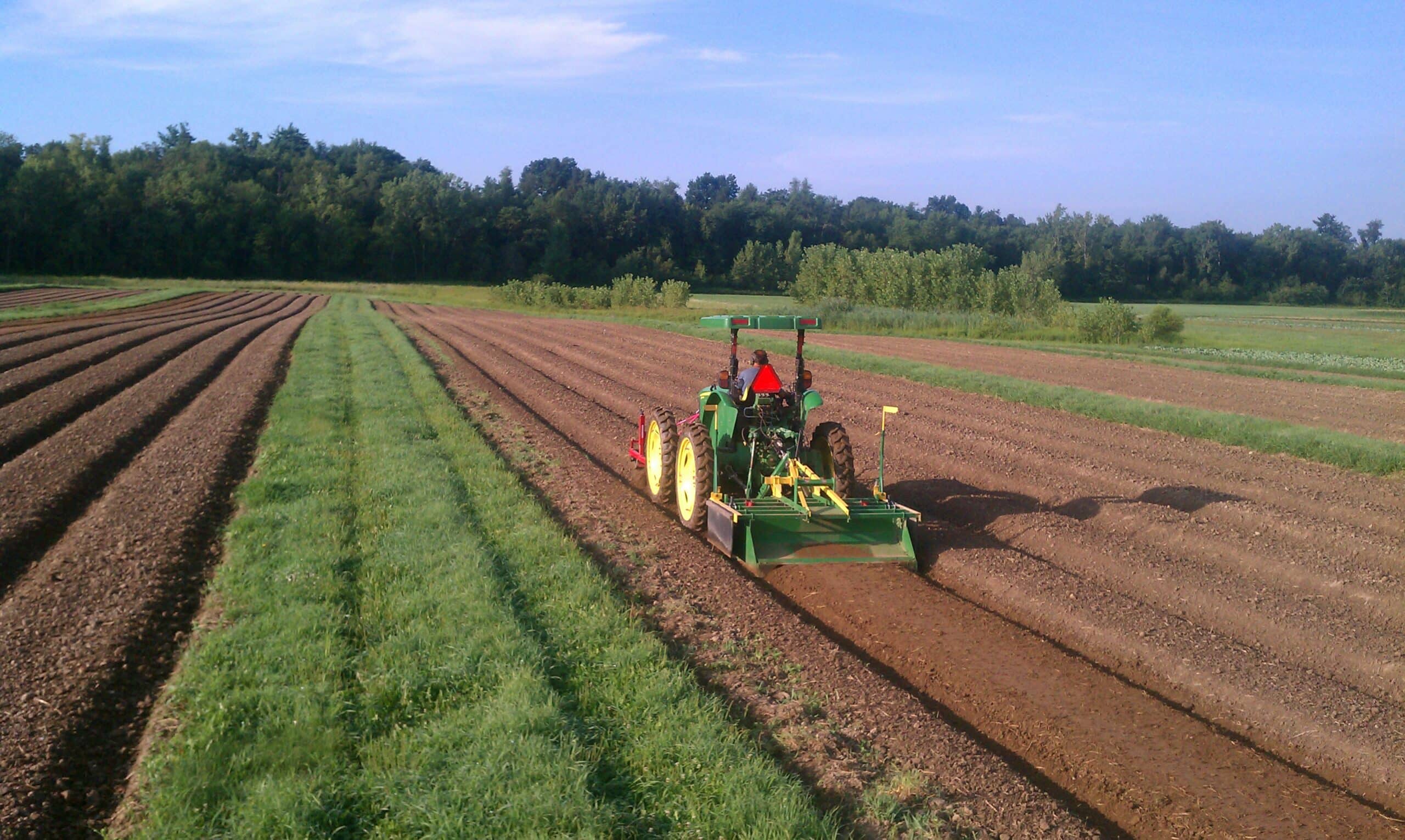
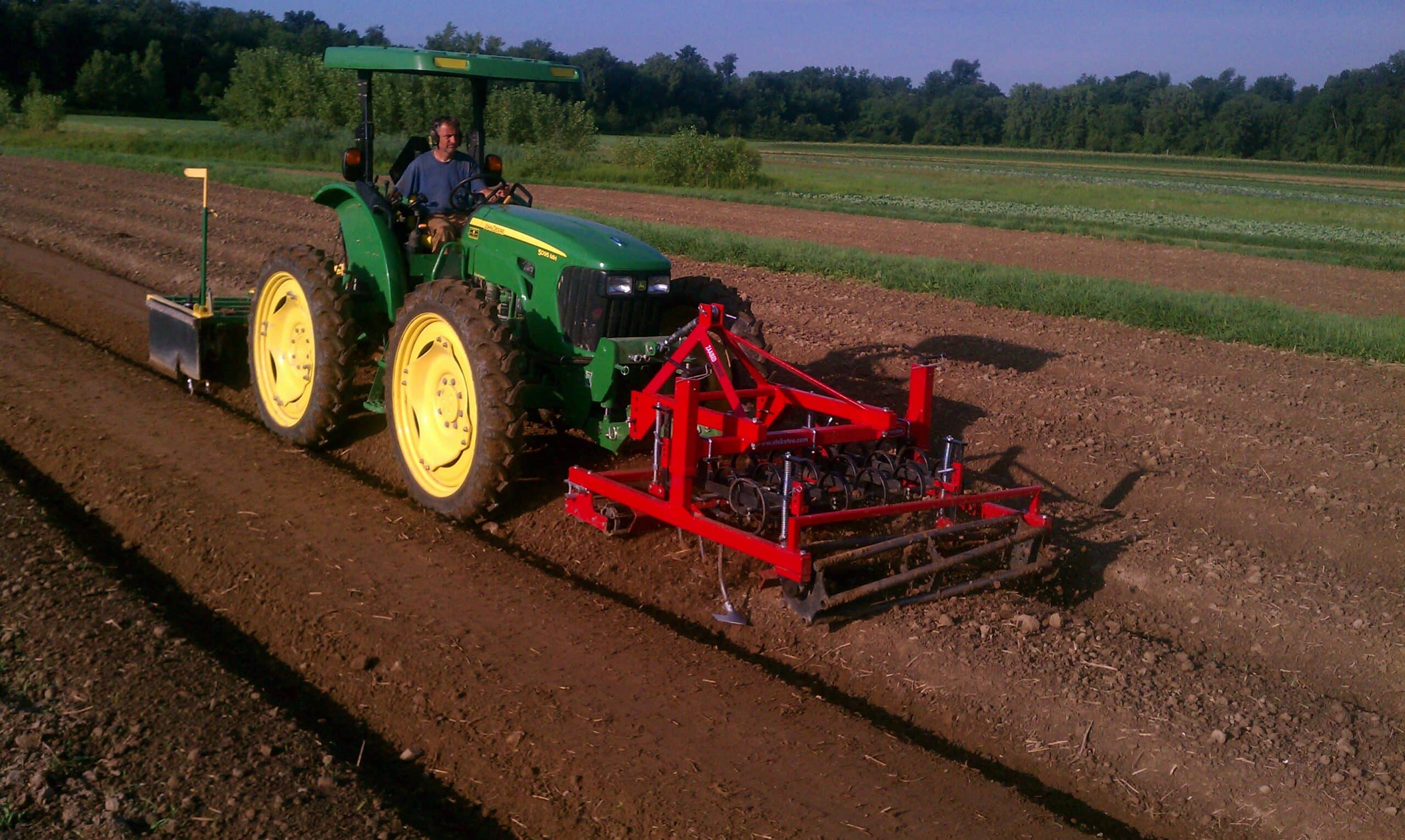
Table 2: Equipment found on mid-scale, 20-acre diversified vegetable farms
(Grubinger, 1999)
Category |
Equipment |
Primary Use |
| Tractors and Field Power | 50 to 75 horsepower tractor with loader | Primary tillage, moving compost or soil, pulling larger implements, and general field maintenance |
| 15 to 20 horsepower cultivating tractor | Bed cultivation, planting, and light field work | |
| Utility task vehicles | Transporting tools, seeds, and labor around the farm | |
| Pickup truck | Transporting tools, harvested crops, and labor on-farm and to markets | |
| Primary and Secondary Tillage | Three-bottom plow, three-shank chisel plow, or rotavator | Breaking up soil, incorporating residues, and preparing seedbeds |
| Disk harrow | Refining soil after plowing or chiseling, breaking up clods, and leveling fields | |
| Field cultivator | Preparing seedbeds, controlling weeds, and lightly incorporating organic matter | |
| Bed former or mulch layer | Shaping raised beds and laying plastic or organic mulch | |
| Manure or compost spreader | Even distribution of organic amendments | |
| Planting and Establishment | 6- to 8-foot seed drill | Seeding large areas with cover crops |
| Two-row tractor-mounted plate or drill seeder | Consistent seed placement for row crops; drill seeders work best | |
| Two-row tractor-mounted precision seeder | Accurate seed depth and spacing within rows | |
| Two-row mechanical transplanter | Automating transplanting to save labor and maintain spacing | |
| Crop Care | Boom sprayer | Applying fertilizers, biocontrol, or foliar amendments evenly |
| Basket weeder, spring-tine cultivator, cultivating sweeps, shanks, and shovels | Mechanical weed control without herbicides | |
| Irrigation lines, sprinklers, and pumps | Delivering water efficiently to crops | |
| Harvest and Postharvest | One-row potato harvester or root lifter | Efficient harvesting of root crops |
| Greens harvester | Efficient cutting of baby greens | |
| Harvest conveyor and wagon | Moving crops from the field to trucks while reducing labor | |
| Forced-air cooling system | Pre-cooling produce to initiate the cold chain and improve shelf life and food safety | |
| Barrel washer | Washing root crops | |
| Wash tanks, washing line, and sorting table | Cleaning, sorting, and preparing produce for market | |
| 2,000 cubic-foot walk-in cooler | Maintaining postharvest quality and extending shelf life | |
| Refrigerated and insulated delivery truck or cargo trailer | Transporting perishable crops while maintaining freshness | |
| General Farm Support | Flail mower, brush hog, or roller crimper | Managing cover crops, grass pathways, and overgrown areas |
| Hand tools and wheel hoes | Fine-scale planting, weeding, and harvesting | |
| Shop tools such as welder, drill, grinder, | Supporting equipment maintenance and on-farm repairs |
Labor
Labor is a critical factor when scaling up your farm. Vegetable operations typically require significantly more labor than other farm enterprises because the crops are harvested by hand. Labor costs can quickly take up a large portion of the gross income on a vegetable farm of any size, and managing employees requires additional planning, financing, and communication. If you are expanding your operation, hiring labor will likely be necessary. Finding and retaining reliable workers can be challenging. Some farmers choose not to scale up for this reason alone. Before hiring, consider whether you enjoy working with people and feel like you have the management skills needed to supervise a team. Check your state’s labor laws and understand that, at a minimum, you will need to pay workers’ compensation tax and meet the state’s minimum wage law. Find more information on labor requirements in the Further Resources section below.
Research from the Center for Integrated Agricultural Systems found that vegetable farms with more than 12 acres often have crews of 10 or more during the growing season. A 20-acre vegetable farm may require 12,500 or more total labor hours per year. The four large-scale organic operations in their study ranged from 462 to 613 total labor hours per acre, averaging 554 (Hendrickson, 2005). While this study may be over 20 years old, the numbers remain consistent for hours of labor per acre required for vegetable operations. Labor remains one of the highest costs for vegetable farms – rising wages and workforce challenges further underscore the importance of planning. More recent benchmarking by Pasa Sustainable Agriculture shows that, on average, the value of the work done by one full-time worker, owner, or employee is about $34,000 per year (Pasa Sustainable Agriculture, 2021).
Managing labor effectively is about more than wages; it requires communication skills, working with seasonal labor, and creating a safe and equitable work environment. ATTRA’s Beyond Basic Compensation: Using Bonuses, Profit Sharing, and Employee Ownership to Motivate and Retain Workers on Your Farm highlights strategies to increase retention and motivation, including performance-based bonuses, profit-sharing programs, and even opportunities for employee ownership. Similarly, the ATTRA publication Positive Practices in Farm Labor Management emphasizes the need for clear communication, structured training, and positive workplace culture to reduce turnover and build a more engaged crew.
The H-2A Visa program can provide a structured workforce for eligible participants. In 2024, the U.S. Department of Labor reported that about 385,000 H-2A positions were certified in the U.S., reflecting growing reliance on temporary foreign labor (USDA ERS, 2025). While H-2A workers require higher wages and additional costs for housing and transportation, they offer a consistent, trained, and documented labor pool. Farmers considering hiring H-2A workers should plan for recruitment, compliance with wage and housing regulations, and coordination with local and federal agencies to ensure the program meets their labor needs efficiently.
Apprentices vs. Hiring Farm Workers
Many farmers think that hiring apprentices or interns can help offset labor costs, but this is often not the case. Apprentices and interns generally require more supervision, in-field training, and structured learning because apprenticeship program operators are legally required to provide an educational experience along with the employment opportunity. Experienced farm workers, by contrast, can increase productivity more quickly and typically require less day-to-day oversight, reducing interpersonal and management challenges. No matter which route you choose—hired workers, apprentices, or interns—it is essential to verify credentials, clarify expectations, and make sure the person is a good fit for your farm’s workflow and culture. One tool ATTRA offers is an Internship Hub where farms can post internship opportunities and beginning farmers can search for internships that are right for them.
Legal considerations are a critical component of labor management. Farm Commons provides extensive guidance on farm employment law, worker classification (employee vs. contractor), and state and federal obligations. Their Shared Labor Arrangements guide discusses cooperative staffing models, which allow multiple farms to pool labor, share training costs, and reduce individual administrative burdens. Farm Commons also provides self-paced courses and resources covering payroll, I-9 compliance, worker benefits, manuals, and H-2A visa obligations, helping farmers build legally resilient labor systems.
It can feel intimidating when hiring for the first time, but resources like the Missouri Farm Labor Guide are built to provide resources specific to farmers rather than generic small-business advice. They break down the full employment process into clear phases: recruitment; hiring; onboarding, training and mentoring; operations; retention; and termination. If you are looking for a simple checklist, a Michigan State University publication titled Agriculture Employer Checklist outlines legal considerations for hiring farm labor. In addition, Penn State’s AgWorks program offers tools, templates, and farm-focused human resource guidance to help growers write job descriptions, understand labor laws, and navigate real-world farm management challenges. Labor and farm internship laws vary by state, so it is essential to check your state’s requirements. You can find contact information for your state at dol.gov/dol/location.htm. See the Further Resources section below for links to these publications and guides.
Table 3: Checklist of Requirements for Agricultural Employers
Adapted from the University of Missouri Extension, Missouri Farm Labor Guide (Milhollin et al., 2025).
Law or Regulation |
Where to Obtain Forms |
Requirements and Use |
| Required for all agricultural employers | ||
| Employer Identification Number (EIN) | IRS Form SS-4; 800-TAX-FORM; Obtain EIN by phone | Required for all employees Reporting and paying withheld taxes and employer matching for Social Security and Medicare. |
| State Tax Identification Number | dol.gov/dol/location.htm | Required for all employers withholding and reporting Employee State Income Tax. |
| Employment Eligibility Verification | INS Form I-9; U.S. Immigration and Naturalization Service; 800-870-FORM | Required for all employees. Completed when employee is hired and kept on file for three years after employee leaves. |
| Employee Withholding Information | IRS form W-4; 800-TAX-FORM; MO W-4/MO Department of Revenue 800-877-6881 | Required to be completed by all employees. Used to determine withholding amounts. Missouri W-4 meets Federal New Hire Reporting Requirements. |
| Division of Employment Security | Contact Employment Security or Job Service locally. | Form 2699 – determines if unemployment tax is required. |
| Annual Tax Return | Employer’s Annual Tax Return for Agricultural Employees; 800-TAX-FORM | Must match total of W-2’s. |
| H-2A Program Regulations | Farmers File Forms ETA-790/790A, H-2A Agricultural Clearance Order, filled with State workforce agency to show no U.S. workers are available. Followed by ETA-9142A, H-2A Application for Temporary Employment Certification, submitted to the Department of Labor’s Office of Foreign Labor Certification (OFLC) through FLAG system. After DOL approval, submit form I-129, Petition for a Nonimmigrant Worker: Filed with USCIS, requesting the H-2A visa for the foreign workers. | H2A workers are temporary foreign agriculture worker visa program. H-2A is a highly regulated labor program requiring Adverse Effect Wage Rate (AEWR) or higher wage, free and inspected housing, transportation reimbursement, guaranteed minimum hours, Written job orders approved by DOL: dol.gov/agencies/whd/agriculture/h2a Your Guide to Growth Using the H-2A Program by USA Farm Labor: usafarmlabor.com/h-2a-program-overview |
| Note that this table does not intend to provide legal advice. If in doubt, seek legal help from an attorney. An hour’s consultation will end up costing much less in the long run. | ||
Law or Regulation |
Who is Subject |
Requirements |
| Other requirements may or may not apply to all agricultural employees | ||
| Federal Unemployment Tax Act (FUTA) | Employers who paid cash wages of $1,500 in any calendar quarter, OR Employed one or more employee for 20+ weeks | Deposit taxes at an authorized financial institution. Report on IRS Form 940 800-TAX FORM |
| Workers’ Compensation | Not required for agricultural employers but worth considering if you have five or more employees. Provided by private insurance companies. | See National Map to find contact for your state workers’ compensation officials: dol.gov/agencies/owcp/wc |
| Minimum Wage Law | Employers who hire more than “500 man-days” of agricultural labor in any calendar quarter. (Man-day = at least one hour in any day). Family members exempt – sole proprietorship only. | Meet federal minimum wage or the 90-day training wage for newly hired 16- to 19-year-old workers. Some states have requirements for agriculture workers’ overtime; none exist federally. Agricultural Employment Under the FLSA: dol.gov/agencies/whd/fact-sheets/12-agricultural-employment-flsa |
| Child Labor Laws | Workers on other than parents’ farm: Under age 16 – not during school hours. Under age 14 – only with parent’s written consent. Under age 12 – may only work on parents’ farm. Child Labor Provisions of the FLSA for Agriculture: dol.gov/agencies/whd/fact-sheets/40-child-labor-farms | Restrictions for hazardous activities: Under age 14 – not permitted; under age 16 – must be trained by an agency giving certification. Hazardous activities include operating farm machinery, working with chemicals, work with breeding animals. Some states have set more requirements. Department of Labor: state child labor laws for agriculture: dol.gov/agencies/whd/state/child-labor/agriculture |
| Occupational Safety and Health Act (OSHA) | All agricultural employers are responsible; 10 or more employees require submission of injury records and inspections. | OSHA law requires employers to provide a workplace free from recognized serious harm, with some specific requirement for ag found under the 29 CFR Part 1928: Agriculture Standards. Employers should be ready to do employee safety training, hazard communication, (cgfg.org/wp-content/uploads/2025/05/Hazard-Communication-Program-Template-for-Ag-Employers-SAIF.pdf) and equipment safety. osha.gov/agricultural-operations |
| Environmental Protection Agency (EPA) | All employees who mix, load, apply or may otherwise be exposed to pesticides. | Worker Protection Standards to protect and inform employees. |
| Earned Income Credit (EIC) | Required for employees wanting advance EIC. | IRS Form W-5. Tax payments reduced by amount of EIC. |
| Migrant & Seasonal Agricultural Worker Protection Act (MSPA) | For employers who hire any seasonal agricultural workers, U.S. citizen or not. | It sets requirements for wage disclosure, safe transportation, and recordkeeping and protection from retaliation for these workers.
|
Food-Safety Planning
Scaling up your operation often means making changes to how you maintain food safety and can change which regulations your operation is subject to.
The Food Safety Modernization Act
The Food Safety Modernization Act (FSMA) is a national law enacted in 2011 that fundamentally shifted the focus of national food safety regulations with oversight from the Food and Drug Administration (FDA). Most relevant to this publication is the Produce Safety Rule that requires more stringent standards for growing, harvesting, and packing produce. In addition, there is guidance and regulation for post-harvest storage of fruits and vegetables and creating standards around crop traceability in case of a recall. There is an exemption for small farmers with an average annual value of produce sold over the previous three years of $25,000 or less.
There is also a qualified exemption for farms with food sales averaging less than $500,000 per year over the previous three years. A farm with a qualified exemption must still meet certain modified requirements. This includes disclosing the name and the complete business address of the farm where the produce was grown either on the label of the product or at the point of purchase. These farms are also required to establish and keep certain documentation (Food and Drug Administration, 2025). If you plan on scaling up, you will likely move out of the exemption status into qualified exemption. The Produce Safety Alliance (PSA) helps fresh produce growers prepare to meet the FSMA regulatory requirements. They hold interactive Grower Training Courses throughout the country and have excellent online resources about the Produce Safety Rule and FSMA. For more information, see cals.cornell.edu/produce-safety-alliance.
The Produce Safety Alliance course is required for a qualified exemption. It is affordable and helpful with whole farm planning and can provide guidance for your harvest and pack procedures. We suggest being proactive with food safety and taking this course even if you are exempt.
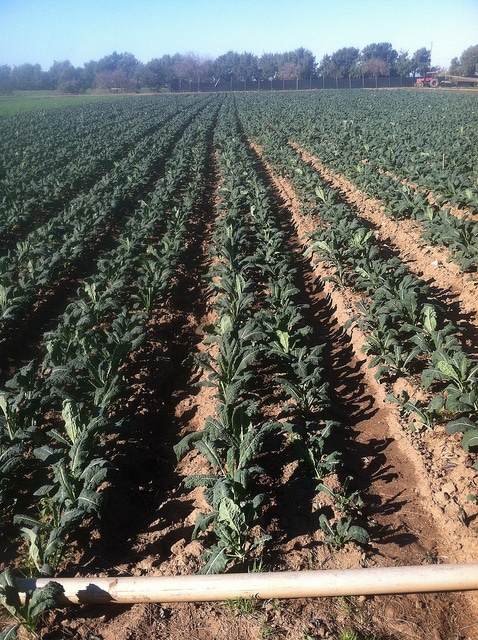
Field-based greens production will require a careful assessment of food safety practices. Photo: NCAT
Good Agricultural Practices, Hazard Analysis Critical Control Points, and Food Safety
Good Agricultural Practices (GAP) is a voluntary audit program that farms can go through to ensure that they are following basic food-safety protocols. While GAP is voluntary, many wholesale and intermediated distributors require a GAP audit. Your farm can be audited independently (through an independent contractor) or through the USDA GAP program. To learn more about the USDA third-party audit program, visit ams.usda.gov/services/auditing/gap-ghp.
Check out ATTRA’s Food Safety resources.
Farms that do on-farm processing, livestock farms, or farms that have a lot of post-harvest handling procedures (e.g., large-scale vegetable washing facilities) need to go n extra step. Hazard Analysis Critical Control Points (HACCP) is an internationally recognized procedure that assesses the weak areas in a food processing facility that may be cause for food-safety concerns. It is essentially an audit of your entire production and post-harvest handling systems. Once the weak areas are identified, you can address them. For example, if you identify an area on your farm where runoff from animal shelters could drain onto your vegetable fields, this would be considered a critical control point. Diverting the flow or moving the shelter would be possible ways to remedy the situation. For more information about HACCP see USDA’s Guidebook for the Preparation of HACCP Plans (link in Further Resources).
Marketing Channels
Expanding production requires a well-developed marketing plan along with consistent, high-quality products, especially when pursuing wholesale and intermediated markets. One of the most important questions to evaluate is whether you can reliably supply the volume and quality that buyers expect throughout the entire season. Strong crop planning and detailed recordkeeping are essential tools for making this determination.
The ATTRA publication Scheduling Vegetable Plantings for Continuous Harvest will help you plan crop successions to meet market demand.
Before investing in expansion, be sure to contact potential buyers and secure market outlets. It is important to consider the risks of relying on a single buyer. Too often, farms are recruited into new programs or institutional markets that are supported by temporary grants, only to find that the funding ends after their contract ends. Ask questions upfront and use those early years to strengthen and diversify your markets.
When meeting with a wholesale or intermediated buyer, arrive prepared with clear crop projections that outline expected volumes, timing, and consistency of supply. Bring a price list or your price expectations based on market research and your break-even analysis. These buyers will also want to review your food-safety protocols, whether that is a written farm food-safety plan or well-documented wash and pack procedures. Be ready to explain your invoice and delivery system, including how you track orders, schedule deliveries, and maintain product quality in transit. Provide current proof of insurance (general and product liability). Finally, prepare and practice a concise farm pitch that communicates who you are, what you grow, what sets you apart, and why your farm can be counted on to meet their needs consistently and professionally.
Below is a list of potential marketing channels along with considerations for mid-to-large-scale farms. Not every possible marketing channel is covered in this section; instead, the focus is on sales outlets that diversified growers most commonly access with relatively low risk and more reliable returns as they scale up. Find other sale avenues like wholesale distributors, terminal markets, packing houses, and produce brokers in ATTRA’s collection of marketing tip sheets that offers more detailed guidance on the expectations, pricing, logistics, and food-safety considerations for each of these channels. Farmers interested in intermediated markets can complete ATTRA’s Intermediated Markets Short Course, which provides an overview of selling through restaurants, food hubs, retailers (like small groceries and food co-ops), and institutions.
For growers looking for a practical, step-by-step approach to moving from direct sales to wholesale volumes, Cornell Small Farms Program’s Baskets to Pallets Teaching Manual is a widely used resource that walks through planning, aggregation, pricing, and relationship-building.
Considerations for Selling to Wholesale Markets
Excerpted from Wholesale Success by Family Farmed
- Buyers want larger quantities—many prefer pallets. Production should yield a consistent weekly supply.
- Build relationships with wholesale buyers and stay in touch regularly to communicate issues such as timing, quantity, price, quality, etc.
- Field heat must be removed with proper cooling. The “cold chain” must be maintained from the field to the customer with refrigerated storage of most fruits and vegetables.
- Products must be sorted uniformly to match USDA grades. See the USDA Grading Standard Web page for more information at ams.usda.gov/grades-standards.
- Food safety procedures must be followed, including necessary recordkeeping. Most require GAP certification.
- Understand where there is flexibility – on your part and the buyers’ part.
Grocery Stores
Grocery stores vary widely in volume and food-safety requirements. Independent grocery stores and food cooperatives are often more flexible and can accommodate smaller deliveries and occasional planned gaps in supply, making them a more accessible market for mid-scale farms. Larger chain grocery stores may only buy through their own regional distributor, creating additional barriers to getting your produce on the shelf.
The USDA’s Agricultural Marketing Service provides Grades and Standards, with specific uniformity standards for the quality, counts, package size and condition of fruit and vegetable commodities in the marketplace. The most reliable way to understand a store’s expectations is to contact the produce manager about their sourcing processes, delivery schedule, and certification requirements. Start talking to them early to allow the relationship to develop.
For more information on marketing to stores and food cooperatives, see ATTRA’s publication Tips for Selling to Grocery Stores.
Community Supported Agriculture (CSA)
CSAs are considered a direct market. They can be complex because they require the management of a variety of crops and customer relations. It is crucial to have experience with CSAs before considering expansion to a larger scale. Additionally, it’s important to clarify your goals for expansion. If your aim is to specialize and simplify the number and types of crops you grow, then a CSA may not be the best marketing option for you. Large-scale CSAs face many of the same challenges as wholesale operations, including higher production volumes, increased logistical demands, tighter scheduling, a larger customer base, and a heavier administrative burden. Without effective systems in place for legal compliance, recordkeeping, communication, and business management, it’s easy to become overwhelmed, lose customers, or experience financial stress.
Another way to use a CSA model to scale up is in a multi-farm or cooperative CSA model that allows growers to scale up by sharing the responsibilities of crop diversity, risk, and labor. In these collaborations, multiple farms contribute to a single CSA share, often coordinated by a lead farm or a nonprofit organization. This allows each farm to focus on crops that align with their specific strengths, ensuring a diverse weekly share for customers while distributing production risks. Local Harvest: A Multifarm CSA Handbook provides frameworks for planning and organizing logistics (Perry and Franzblau, 2010). Multi-farm collaborations can help farms expand sustainably, reduce administrative burdens, and enhance product diversity, making them a practical alternative for those looking to grow without the complexities of managing a large standalone CSA.
For more information on marketing through CSAs, see ATTRA’s publication Tips for Selling through CSAs—Community Supported Agriculture.

Attending a producer buyer mixer or meet and greet is a great way to connect with buyers in your state or region. Photo: NCAT
Restaurants
Selling to restaurants often involves smaller and sometimes inconsistent order volumes, which can be manageable for farms gradually scaling up, though opportunities vary by chef and restaurant. Some chefs seek small quantities of specialty products directly from farmers while sourcing larger-volume items from wholesale distributors. They often want a seasonal, regional, or signature item to feature as a special. A good starting point is to contact chefs who have expressed an interest in buying local food. Many local food organizations host events, farm-to-chef dinners, or networking sessions that connect producers with restaurant buyers and other wholesale markets.
Working with chefs provides an excellent opportunity to practice communication. Using tools like emails and online order forms can increase sales. These relationships can help build local connections and a reputation that may lead to additional wholesale opportunities or collaborations. For farms scaling up, restaurant sales may not be sufficient to support large growth on their own, but they can remain a component of a diversified marketing portfolio.
For more information, see ATTRA’s publication Tips for Selling to Restaurants.
Schools and Other Institutional Buyers
Selling to institutions such as schools, hospitals, and colleges can be a challenge because they often have tight budgets, long-term contracts with food service management companies, and limited cooking capacity. However, interest in sourcing local and regional products has grown significantly with hospitals and schools. It is likely that food safety requirements will be greater in these settings, and producers will need higher liability insurance. If you intend to sell to institutions, it is also important to consider whether you can provide a consistent quantity and supply. Contact the food service manager at the institution you are interested in selling to to find out their requirements. The Bringing the Farm to School: Producer Workbook, developed by NCAT, the National Farm to School Network, and the USDA Food and Nutrition Administration, offers resources to help producers understand and make a plan for selling to schools.
For more information on selling to schools or other institutional buyers, see ATTRA’s publication Tips for Selling to Institutional Markets.
Distributors
Produce distributors are businesses that aggregate product and resell in small or large quantities to their customers. Distributors may range in size from an individual with a van to a company with a fleet of 18-wheelers. Distributors primarily purchase directly from farmers, although they may also buy from brokers or packing houses. Because distributors manage risk across many buyers, they typically expect producers to meet established food safety standards and provide consistent documentation including invoices, lot tracking, and delivery records. For farms looking to scale up, working with a distributor often requires reliable volumes, consistent quality, and clear communication around availability and pricing. The North Carolina Cooperative Extension Publication, How to Sell Prsoduce to Distributors, helps guide conversations with distributors and lays out the expectations for farmers.
For more information on selling to produce distributors, see ATTRA’s publication Tips for Selling to Produce Distributors.
Aggregators and Food Hubs
All farmers, but especially limited-resource farmers, face barriers accessing distributors and accessing the processing infrastructure required to scale up efficiently (Barham et al., 2012). Aggregating products from multiple farms can help supply wholesale customers with easier logistics and can open up new sales opportunities for small to mid-scale growers. The rising market demand for local food has also renewed interest in producer cooperatives, which have been a staple of agriculture for a long time. Many of them are taking shape as food hub aggregators, a newer model of mission-driven distribution.
Food hubs are among the more common aggregation models supporting small and mid-scale farms. Food hubs are organizations that coordinate the aggregation of products from multiple producers and sell them into wholesale, institutional, or retail markets. Some food hubs operate virtually, coordinating orders and logistics without owning infrastructure, while others provide physical facilities for aggregation, cold storage, packing, processing, and distribution. These services allow farms to access markets that would otherwise be difficult to reach individually.
Many aggregators operate as marketing cooperatives, in which voting farm members aggregate their own products and collectively share post-harvest facilities, infrastructure and distribution. Their aggregated product is often sold directly to retailers or organized for large sales to a processor. Additional company profits are typically reinvested in the co-op. Learn more from The Collaborative Farming Podcast, which interviews co-ops and other collaborative models of farming.
In a study of farmers who were scaling up to meet the demand for local foods at a wholesale level, researchers found the following innovations used by aggregators to be most successful:
- Aggregators organizing pre-season planning among grower pools. This can help match supply to demand and give growers a better idea of what it costs to produce specific products.
- Buyers, growers, and distributors collaboratively forecasting product sales in advance of the season, so growers can plant accordingly.
- Aggregators and distributors providing buyers with product availability updates at least weekly during the growing season.
- Growers and entrepreneurs pooling resources to increase storage capacity, improve transportation efficiency, and streamline logistics.
- Collaborators developing processing infrastructure to build markets for blemished produce that may not make the cut for fresh-market sales but can serve as ingredients in processed foods.
Source: Day-Farnsworth et al., 2009
For more information, see ATTRA’s publications Tips for Selling to Aggregators/Grower Marketing Co-ops and Food Hubs: A Producer Guide.
Risk Management and Insurance
As your farm size increases, so does your risk. We recommend managing debt accordingly; do not borrow more than your assets allow and have a clear understanding of your farm’s financial situation before taking on more debt. Also, consider your farm’s business structure. A limited liability corporation (LLC) will protect your
personal assets.
For more information on the best business structure for expanding your farm business, see ATTRA’s Tips About: Farm Business Structures, and many excellent resources at farmcommons.org.
Crop Insurance
Insurance for crop production and product liability is an important risk management strategy. The larger your farm, the more financial risk you take on. Two broad sources of financial risks for farmers are yield loss—caused by weather, pests, and diseases—and the often high variability in prices for crops and livestock. One way to prevent a significant loss in revenue is to buy crop insurance. Generally, the greater the diversity is of the crops and livestock you grow, or the more niche they are, the more difficult it can be to obtain insurance that fully covers the value and risks of your production.
Whole-Farm Revenue Protection (WFRP) is an alternative federally subsidized insurance option for highly diversified or specialty-crop farmers of varying scale. WFRP is available in all 50 states and U.S. Territories. WFRP is the only crop insurance product with nationwide availability (USDA RMA, 2025). Many diversified farms are resistant to purchasing insurance because they are intimidated by the process or they do not think it is worthwhile. The publication, Beginners Guide to Crop Insurance, developed with the support of USDA’s Risk Management Agency, will help you get started and find an agent to check your eligibility. See Further Resources below for a link to this publication.
Product Liability Insurance
Most grocery stores and distributors require producers to carry product liability insurance. Product liability insurance helps protect you should the food you produce cause harm to consumers. It also helps to protect consumers should they get sick and incur large medical costs. It is wise, regardless of your market and farm size, to have product liability insurance. Wholesale markets may require additional coverage. Rates for product liability insurance vary by how much liability coverage you purchase and by your gross sales. Many stores and distributors will require a minimum amount of coverage—usually between $500,000 and $1 million.
Farm Commons has an extensive online toolbox that addresses many legal issues associated with marketing, including product liability insurance.
Conclusion
Scaling up can help you meet your farm goals and help reduce the complexity of diversified crop planning on your farm. If you decide to expand your farm, it is very important to consider how you will acquire land and equipment, manage labor, and adjust your marketing strategy. Consider the costs of these factors and how you intend to finance an expansion. Review your food safety protocols and liability insurance, and consider crop insurance as a risk management strategy. Finally, make sure an expansion aligns with your whole farm goals.
References
Barham, James, Debra Tropp, Kathleen Enterline, Jeff Farbman, John Fisk, Stacia Kiraly. 2012. Regional Food Hub Resource Guide. U.S. Department of Agriculture.
Courtens, Jean Paul. 2025. Roxbury Farm Manuals.
Food and Drug Administration (FDA). 2025. FSMA Final Rule on Produce Safety: Standards for the Growing, Harvesting, Packing, and Holding of Produce for Human Consumption. U.S. Food and Drug Administration.
Grubinger, Vern. 1999. Sustainable Vegetable Production from Start-Up to Market. Plant and Life Sciences Publishing, Ithaca, NY.
Hendrickson, John. 2005. Grower to Grower: Creating a Livelihood on a Fresh Market Vegetable Farm. Center for Integrated Agricultural Systems, Madison, WI.
Hughes, M. and Andy Pressman. 2022. Selling to Local and Regional Markets: Barriers and Opportunities for Beginning Farmers. NCAT.
Iowa State University Extension and Outreach. No date. Estimated Costs of Crop Production. Ag Decision Maker. Iowa State University, Ames, IA.
Low, Sarah, Aaron Adalja, Elizabeth Beaulieu, Nigel Key, Stephen Martinez, Alex Melton, Agnes Perez, Katherine Ralston, Hayden Stewart, Shellye Suttles, Stephen Vogel, Becca B.R. Jablonski. 2015. Trends in U.S. Local and Regional Food Systems. Report to Congress. USDA Economic Research Service.
Milhollin, Ryan, Robert Russell, Wesley Tucker, and Matt Ernst. 2025. Missouri Farm Labor Guide. Online posting. Columbia, MO: University of Missouri Extension.
National Young Farmers Coalition. 2020. Land Policy: Towards a More Equitable Farming Future. National Young Farmers Coalition, Hudson, NY.
Pasa Sustainable Agriculture. 2021. Financial Benchmarks for Direct Market Vegetable Farms. Millheim, PA. PDF.
Perry, Jill, and Scott Franzblau. Revised 2010. Local Harvest: A Multifarm CSA Handbook. Burlington, Vermont. Northeast Sustainable Agriculture Research & Education (SARE).
USDA RMA. 2025. U.S. Department of Agriculture, Risk Management Agency. Whole-Farm Revenue Protection Plan 2026. November.
USDA ERS. 2025. U.S. Department of Agriculture, Economic Research Service. Farm Labor.
Further Resources
Planning Resources
ATTRA Publications and Resources
Equipment and Tools for Small-Scale Intensive Crop Farmers. ATTRA publication. 2011. By Andy Pressman, Omar Rodriguez. National Center for Appropriate Technology, Butte, MT.
Details equipment and hand tools for intensive crop production soil preparation, planting, weed management, and harvesting.
Farmland Access Tipsheet. ATTRA publication. 2023. By Lee Rinehart. National Center for Appropriate Technology, Butte, MT.
Summarizes key land access strategies and considerations for farmers exploring ownership or leasing options.
Financing your Farm: Guidance for Beginning Farmers. ATTRA publication. 2011. By Hannah Lewis. National Center for Appropriate Technology, Butte, MT.
Explains traditional lending options, loan preparation, and funding strategies for beginning farmers.
Finding Land to Farm: Six Ways to Secure Farmland. ATTRA publication. 2009. By Kendra Johnson, California FarmLink; and Rex Dufour and Marisa Alcorta. National Center for Appropriate Technology, Butte, MT.
This publication outlines important considerations of farmers’ path to land leasing and ownership.
Tips for Farm Leases and Contracts: Creating Smart, Effective Documents. ATTRA publication. 2013. By Marisa Alcorta, Rex Dufour, and Tammy Howard. National Center for Appropriate Technology, Butte, MT.
Provides guidance on writing farm leases and contracts that reduce risk and clarify expectations.
Books
The Farmland Access Legal Toolkit. Center for Agriculture and Food Systems at Vermont Law and Graduate School. South Royalton, VT.
Provides legal tools, explanations, and templates to support secure and equitable farmland access arrangements.
Fearless Farm Finances. 2nd Ed. 2017. Chase, C., P. Dietmann, and J. Padgham. Marbleseed.
Workbook that helps farmers understand, organize, and improve their farm’s financial management and decision-making.
Scaling Up: Meeting the Demand for Local Food. 2009. Lindsey Day-Farnsworth, Brent McCown, Michelle Miller, and Anne Pfeiffer. Center for Integrated Agriculture Systems, Madison, WI.
This is a series of case studies of different farmers in Wisconsin who scaled up to meet wholesale markets.
Sustainable Vegetable Production from Start-up to Market. 1999. Vern Grubinger. Natural Resource, Agriculture, and Engineering Service.
A foundational book on vegetable production, marketing, and management practices for farms. Contains a list of equipment for mid-scale, 20-acre diversified vegetable farms.
Whole Farm Management from Start-up to Sustainability. 2019. Garry Stephenson, Ed. Oregon State University Center for Small Farms and Community Food Systems.
Covers integrated farm planning topics, including production, finance, labor, and long-term viability.
Wholesale Success: A Farmer’s Guide to Food Safety, Selling, Postharvest Handling, and Packing Produce, 3rd edition. 2013. Edited by Jim Slama and Atina Diffley. Oak Park, IL. projects.
A detailed manual on food safety, postharvest handling, and selling produce into wholesale markets. To purchase: 708-763-9920
Online Tools and Resources
Ag Decision Maker. 2024. Kevin Leibold. Iowa State University. Ames, IA.
Provides wholefarm financial analysis tools and benchmarks to support informed farm management decisions.
Baskets to Pallets Teaching Manual. Cornell University Small Farms Program.
A series of publications, lessons, and resources for farmers who want to transition their farm from direct markets to wholesale markets using farm-based examples.
Farm Loan Programs, USDA Farm Service Agency.
Federal loan programs that help farmers access capital for land, equipment, and operating expenses.
Farmers Workbook for Creating an Agricultural Lease. Farm Commons.
Prompts and guides farmers and landowners through creating clear, fair, and legally sound agricultural lease agreements.
Farmland Information. Center American Farmland Trust.
Provides nationwide land access guides, property evaluation worksheets, and directories of land-link programs.
Finding Land to Farm. BeginningFarmers.org.
Compiled list of links to land listing services and land link programs by state.
Resources for Resilient Farmers. RAFI.
Easy to understand information and assistance for USDA programs that would support greater farm resilience for farm operations. Questions can be directed to resourcesforresilientfarms@rafiusa.org.
Labor Resources
ATTRA Publications and Resources
Beyond Basic Compensation: Using Bonuses, Profit Sharing, and Employee Ownership to Motivate and Retain Workers on Your Farm. ATTRA publication. 2010. National Center for Appropriate Technology and California Institute for Rural Studies.
Explores alternative compensation strategies to recruit and retain farm employees.
Positive Practices in Farm Labor Management. ATTRA publication. 2008. National Center for Appropriate Technology and California Institute for Rural Studies.
Highlights labor management strategies that improve training and workplace culture to reduce turnover.
Online Tools and Resources
AgWorks Program. Pennsylvania State University.
Provides human resources (HR) tools, templates, and farm-focused HR guidance to help growers write job descriptions, understand labor laws, and navigate real-world farm labor management challenges.
H-2A: Temporary Agricultural Employment of Foreign Workers. Department of Labor.
Starting point for the federal program H-2A, which allows agricultural employers to hire temporary foreign workers to perform agricultural labor.
State Child Labor Laws Applicable to Agricultural Employment. US Department of Labor.
Summarizes state-specific child labor regulations applicable to agricultural employment.
Periodicals/ Publications
Agriculture Employer Checklist. 2020. By Stan Moore, Adam Kantrovich, Corey Clark, and Hohn Jones. Michigan State University. East Lansing, MI.
Helps farm employers comply with labor laws and best management practices.
Missouri Farm Labor Guide. 2025. By Ryan Milhollin, Rober Russel, Wesley Tucker, Matt Ernst. University of Missouri Extension. Publication # MX199. Columbia, MO.
A comprehensive reference on farm labor laws, payroll, and compliance requirements.
Produce and Food Safety
ATTRA’s Food Safety page
Online Tools and Resources
Produce Safety Alliance. Cornell University.
The Produce Safety Alliance (PSA) is a collaboration between Cornell University, FDA, and USDA to prepare fresh produce growers to meet the regulatory requirements included in the United States Food and Drug Administration’s Food Safety Modernization Act (FSMA) Produce Safety Rule.
USDA GAP Audit. Agricultural Marketing Service.
This page will help you find a Good Agricultural Practices auditor who serves your region or state. There are also resources about GAP audit requirements.
Periodicals/ Publications
USDA Guidebook for the Preparation of HACCP Plans. USDA Food Safety Inspection Service.
This is a guide for any vegetable farm that processes its products. It is intended for small establishments.
Marketing
ATTRA Publications and Resources
Bringing the Farm to School Producer Resources. 2022. National Center for Appropriate Technology, Butte, MT.
A workbook along with additional resources for producers who want to sell to schools.
Food Hubs: A Producer Guide. Andy Pressman and Chris Lent. 2013. National Center for Appropriate Technology, Butte, MT.
This publication helps producers understand important considerations and information and provides resources and case studies of selling to food hubs.
Intermediated Markets Tutorial. Andy Pressman and Daniel Prial. No date. National Center for Appropriate Technology, Butte, MT.
This four-part series provides recorded lessons on “Choosing an Intermediated Market,” “Guidelines for Selling to Intermediated Markets” and “Farm to Cafeteria Sales.”
Scheduling Vegetable Plantings for Continuous Harvest. Hakeem Holmes and Darron Gaus. Updated 2026. National Center for Appropriate Technology, Butte, MT.
A publication that provides resources and information on vegetable succession planting. Succession planting is an important skill for meeting the consistency requirements of intermediate and wholesale markets.
Tips for Selling to Different Marketing Channels—Tipsheet Series. Marisa Alcorta, Rex Dufour, Tammy Howard. 2012. National Center for Appropriate Technology, Butte, MT.
Thirteen tipsheets for selling to common marketing channels for farmers. Each tip sheet includes a list of pros and cons and tips for selling through each marketing channel.
Books
Local Harvest: A Multifarm CSA Handbook. 2010. Perry and Franzblau, 2010. Signature Book Printing. Published through a Northeast SARE project.
A handbook for farmers who want to work together to support a multi-farm community supported agriculture program. This can help reduce the number of crops products that a single farm needs to grow and can help set your CSA apart from competitors.
Online Tools and Resources
Grades and Standards. USDA Agricultural Marketing Service.
A USDA resource with the various standards and grade expectations often required for selling to wholesale markets. This is a great reference when a buyer expects specific grading and standardized packaging.
The Collaborative Farming Podcast. Host Farmer Jackson Rolett.
A podcast series dedicated to multi-owner farming models.
Periodicals/ Publications
How to Sell Produce to Distributors. Keirstan Kure, Lauren Horning, and Rebecca Dunning. 2018. Revised 2023. North Carolina State University Cooperative Extension.
This publication provides guidance to farmers and producers who are considering selling to distributors. This information will be useful to owners of small and medium-sized farms who have not previously sold their products to a distributor.
Risk Management
ATTRA Publications and Resources
Tipsheet About Farm Business Structures. Guy Ames. 2013. NCAT’s ATTRA.
This tipsheet provides a brief explanation of typical farm business structures.
Online Tools and Resources
Farm Commons provides legal resources for farmers and service providers. The following resources are just a few that apply to farm expansion.
Periodicals / Publications
A Beginners Guide to Crop Insurance. USDA Risk Management Agency.
A guide for farmers that are exploring the option of crop insurance from the USDA.
Appendix A: Scaling-up Assessment Worksheet
Questions to ask yourself before you expand your farm
This worksheet will prompt you to think about the primary reasons why you want to expand your farm and what resources will be required to undergo an expansion. Use the space provided below to answer your questions.
- What are your primary reasons for expanding the farm?
- Re-visit your farm and personal/family goals. Does this expansion align with your goals?
- Will you need access to more land? If so, how much and how will this be financed?
- >How will you sell your products once you expand? Consider the current demand for your products and your skills to meet increased demand. Write down how you will sell your products and what steps need to be taken to access new markets.
Appendix B: Your Farm’s Weakest Link
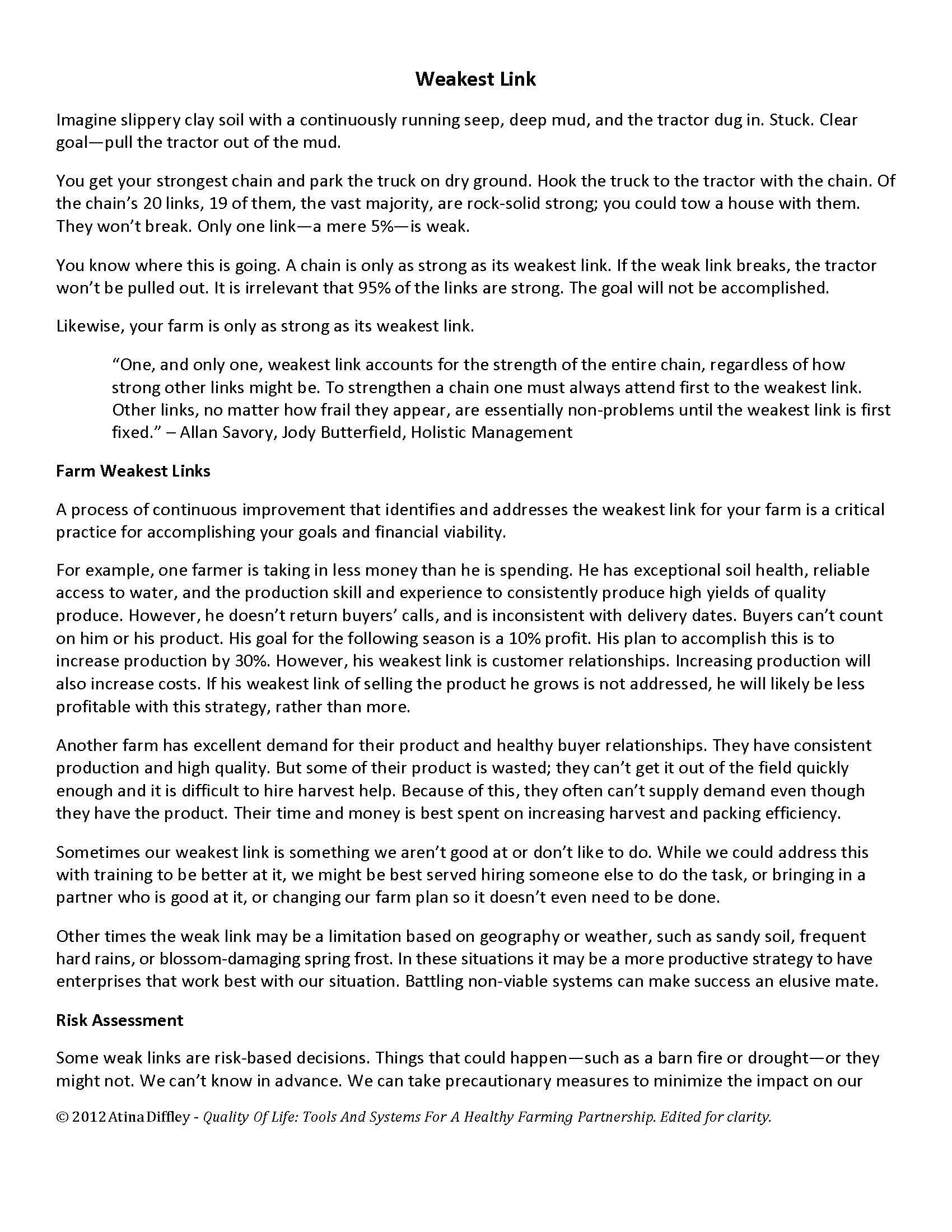
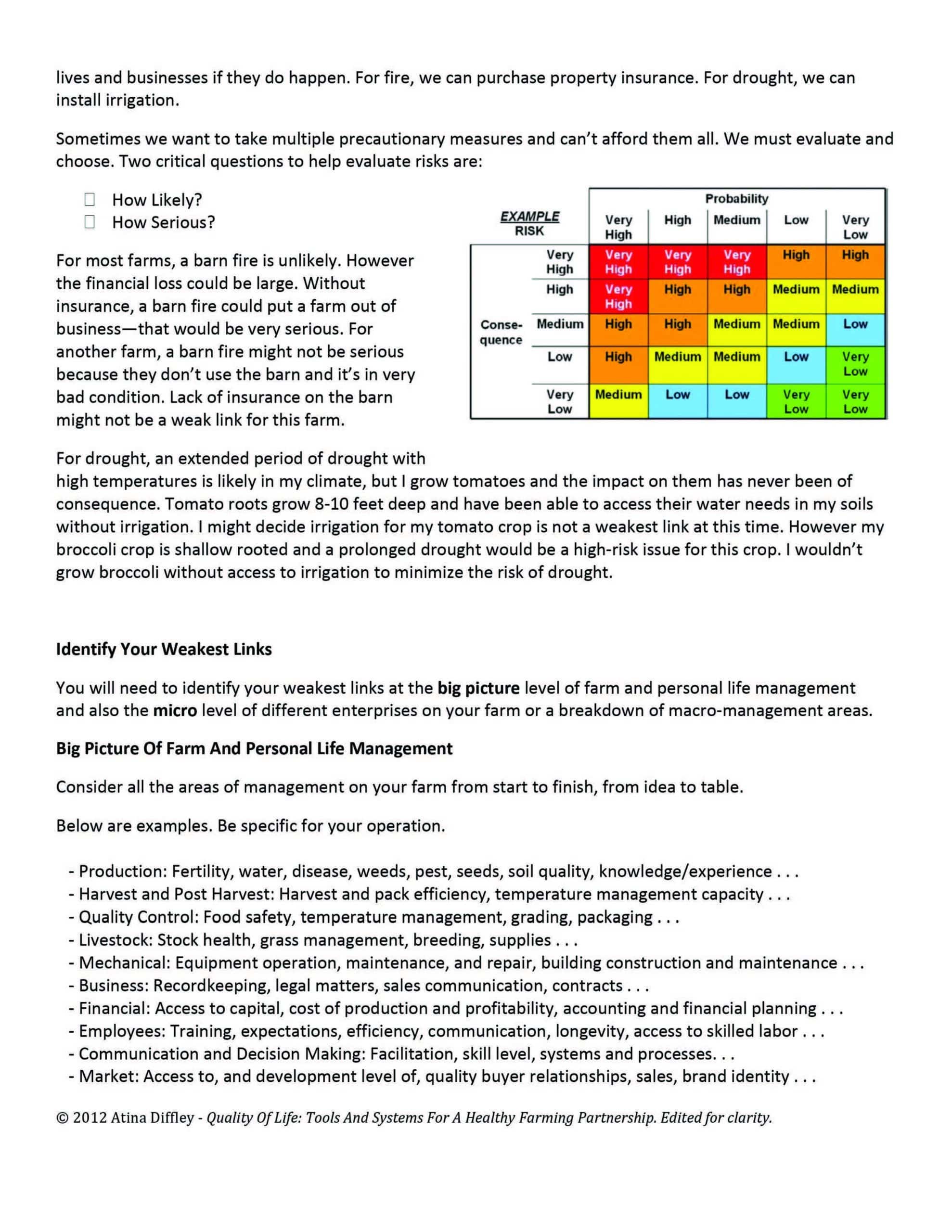
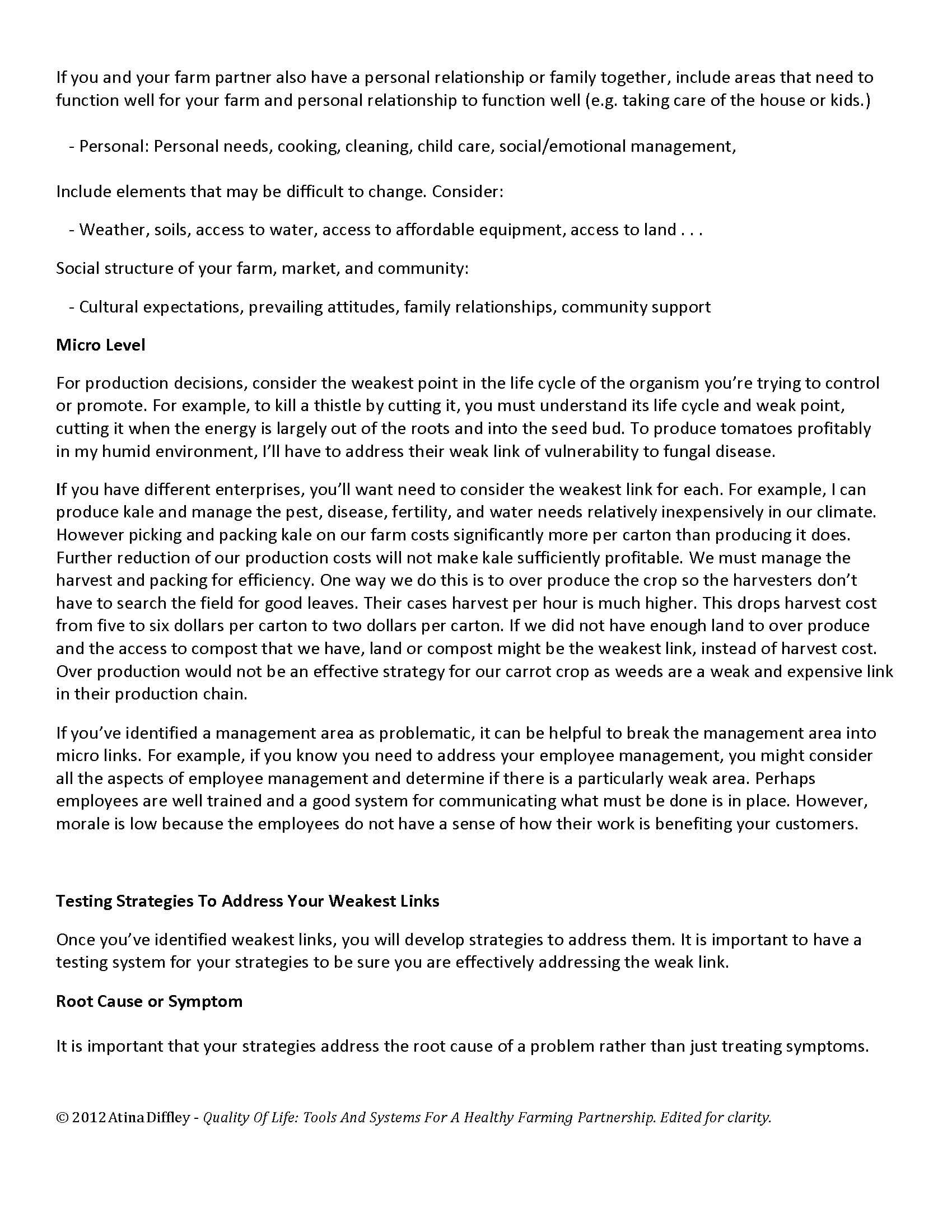
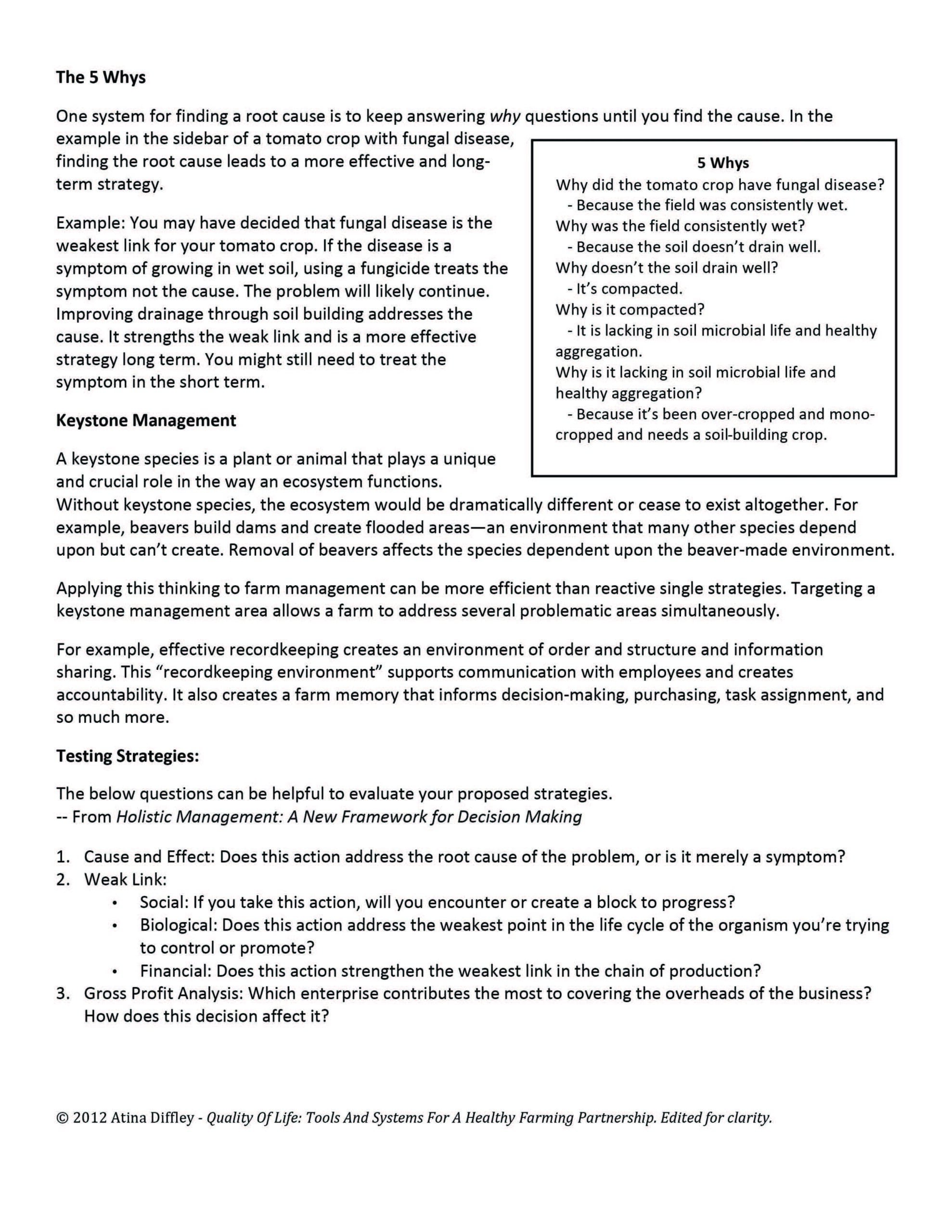
Scaling Up Your Vegetable Farm for Regional Markets
By Tammy Howard, NCAT Agriculture Specialist
June 2014; Updated November 2026 by
Tammy Howard and Audrey Kolde, NCAT Agriculture Specialists
©NCAT
IP464
This publication is produced by NCAT through the ATTRA Sustainable Agriculture program, under a cooperative agreement with USDA Rural Development.