Spawning Success at Mycoterra Mushroom Farm
Provided by:
Written By
Related Resources
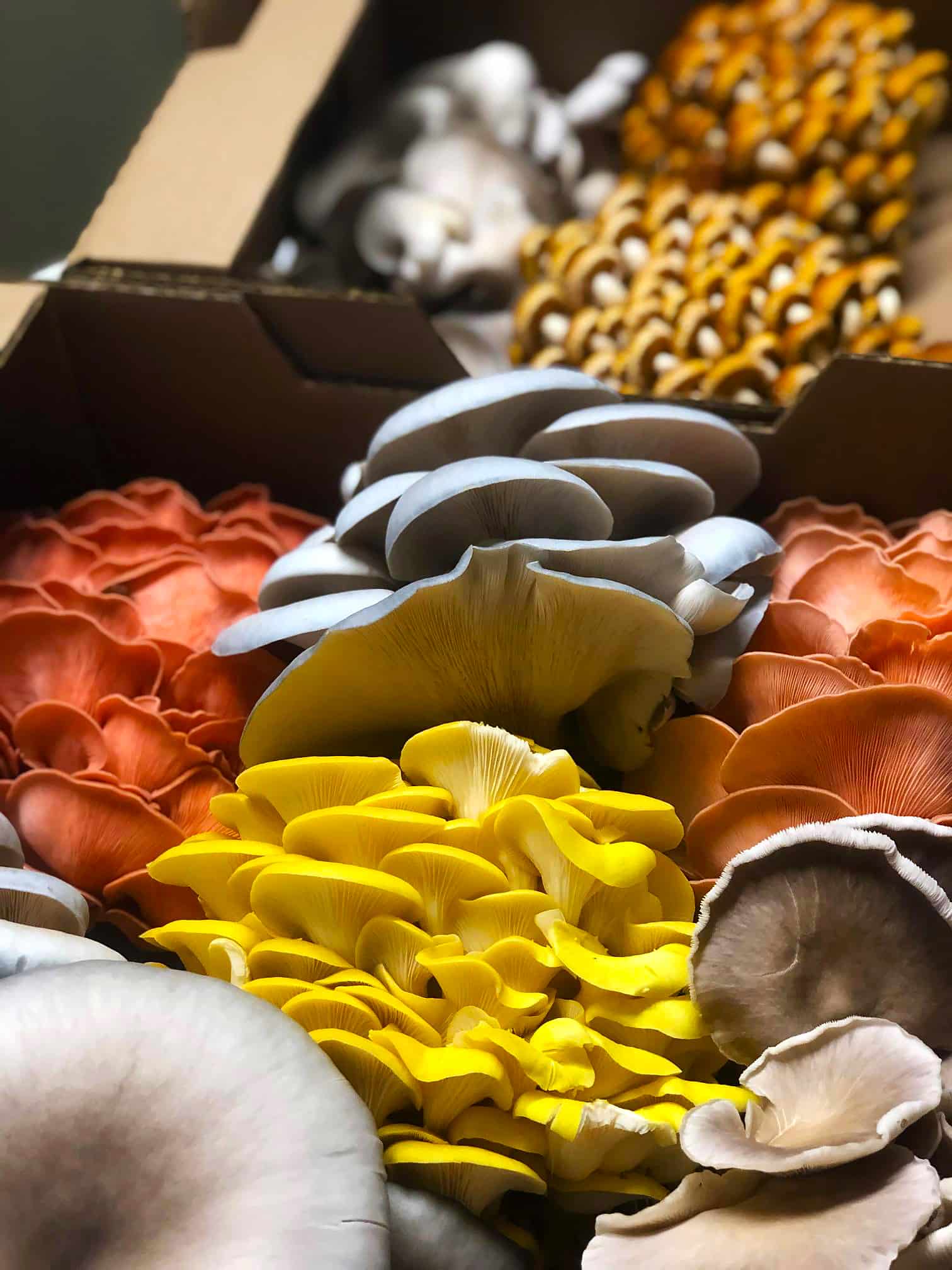
“I started the farm in the closet in the basement in my house in Westhampton,” says founder Julia Coffey. Those first bags of sawdust substrate, prepared eight at a time in a single pressure cooker, sold so fast that two weeks later she doubled capacity, and soon ten countertop cookers were running day and night. Output reached 500 to 600 pounds a month, fruited in two backyard greenhouses and sold at one or two local farmers markets.
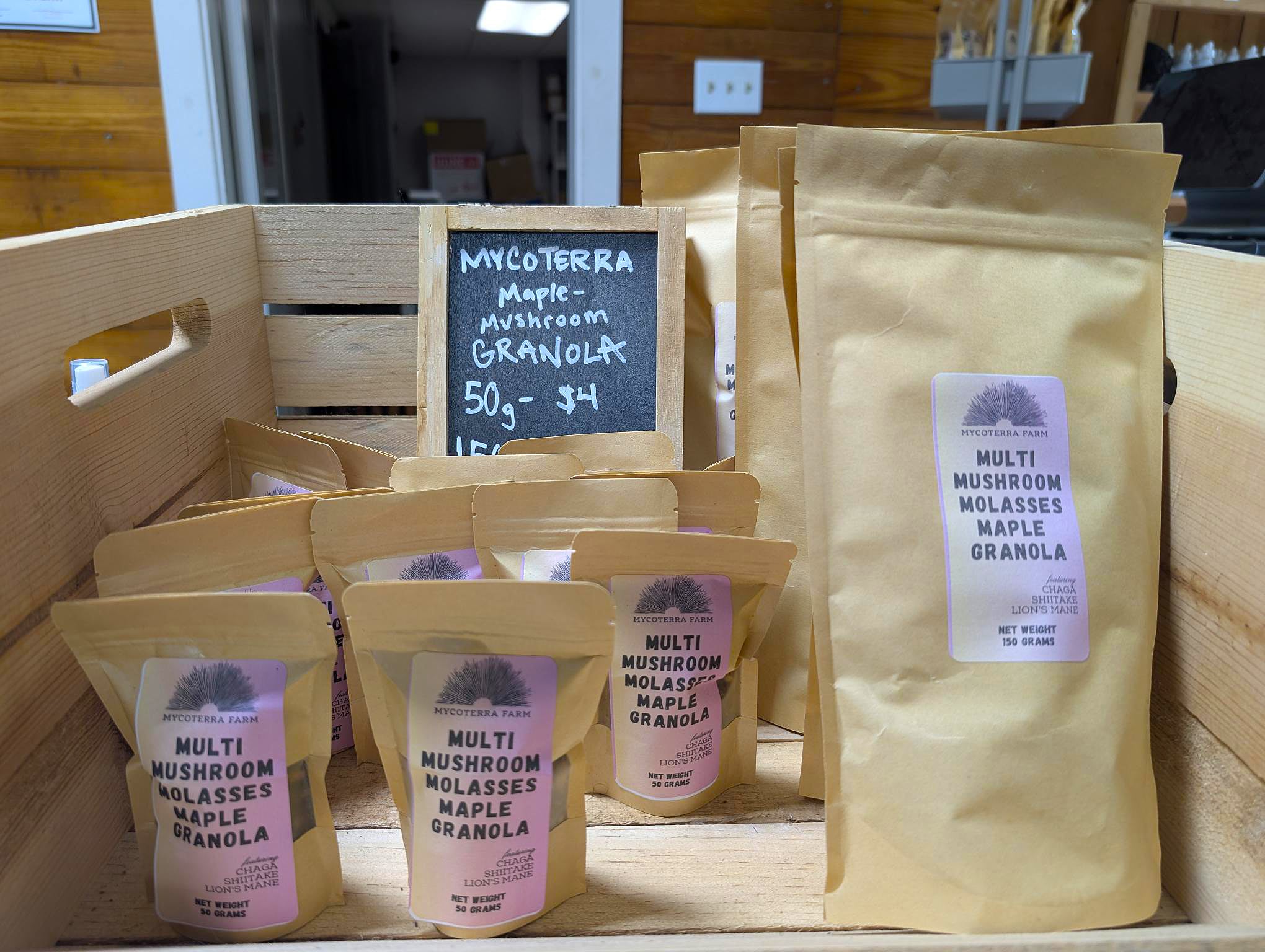
The markets became her classroom. Coffey recalls “fifteen-minute conversations” just convincing shoppers that lion’s mane was edible. Those conversations built a brand before the packaging did. Once she could no longer stand behind every stall, “the label had to do the talking.” A Community Involved in Sustainable Agriculture (CISA)-funded brand-development grant paired her with a local designer: “Aesthetic is not my strongest skill set, but I know it’s important. We went for a clean look with a subtle spore-print border, most people don’t even notice it’s spores.”
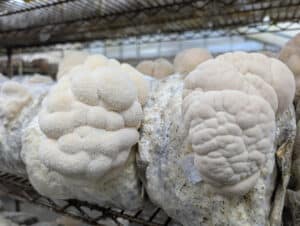
Lion’s mane mushrooms at Mycoterra Farm. Photo: Gabriella Soto-Velez
The name Mycoterra nods to her soil-science roots; growing mushrooms, she likes to say, is “feeding my soil-building aspirations.”
By 2016, Coffey had outgrown the basement and bought a vacant equestrian center whose riding arena perfectly fit a 33-foot autoclave she’d just purchased for $12,000, sight-unseen. Today hardwood sawdust, wheat bran (for shiitake) or soy hulls (for oysters and lion’s mane) are mixed, bagged, sterilized four hours at 20 psi, and inoculated in a purpose-built lab; surplus blocks are sold to other farms because, she says, “sterilization is the bottleneck, [and] our autoclave lets us do more than we need.”
Networking rather than cold-calling landed grocery accounts. Through the local-food nonprofit CISA, Coffey met Big Y (a popular Northeastern grocery store chain) executives at a press event: “They said, ‘We’d love to have you in our stores.’ I wasn’t ready yet, but I kept the relationship alive.” When production caught up, Mycoterra entered 52 Big Y produce departments. Lion’s mane, once a hard sell, is now a top product without in-store hand-selling.
The COVID-19 pandemic closed the farmers markets that once generated 80% of revenue, so Coffey launched Mass Food Delivery, aggregating her mushrooms and neighboring farms’ goods for home delivery across Massachusetts. When normal outlets reopened, she exited the service, having shifted to roughly 80% wholesale via regional distributors and co-ops, plus a single Somerville farmers market and a self-service roadside farm stand she named “Spore.”
Nothing goes to waste at Mycoterra. Spent substrate blocks become high-carbon compost. Since opening, she has sequestered more than 90 tons of carbon on just over half an acre, and soil organic matter levels have reached 10 to 12%, fueling a no-till market garden where veggies and birds alike flourish.
From closet to regional supplier, Mycoterra’s trajectory shows how disciplined growth, strong branding, and a closed nutrient loop can turn a basement hobby into a resilient, soil-nurturing enterprise.
This blog is produced by the National Center for Appropriate Technology through the ATTRA Sustainable Agriculture program, under a cooperative agreement with USDA Rural Development. NCAT.ORG/ATTRA.