

Stonecipher Farm: A Case Study in Relay Cropping for Season Extension
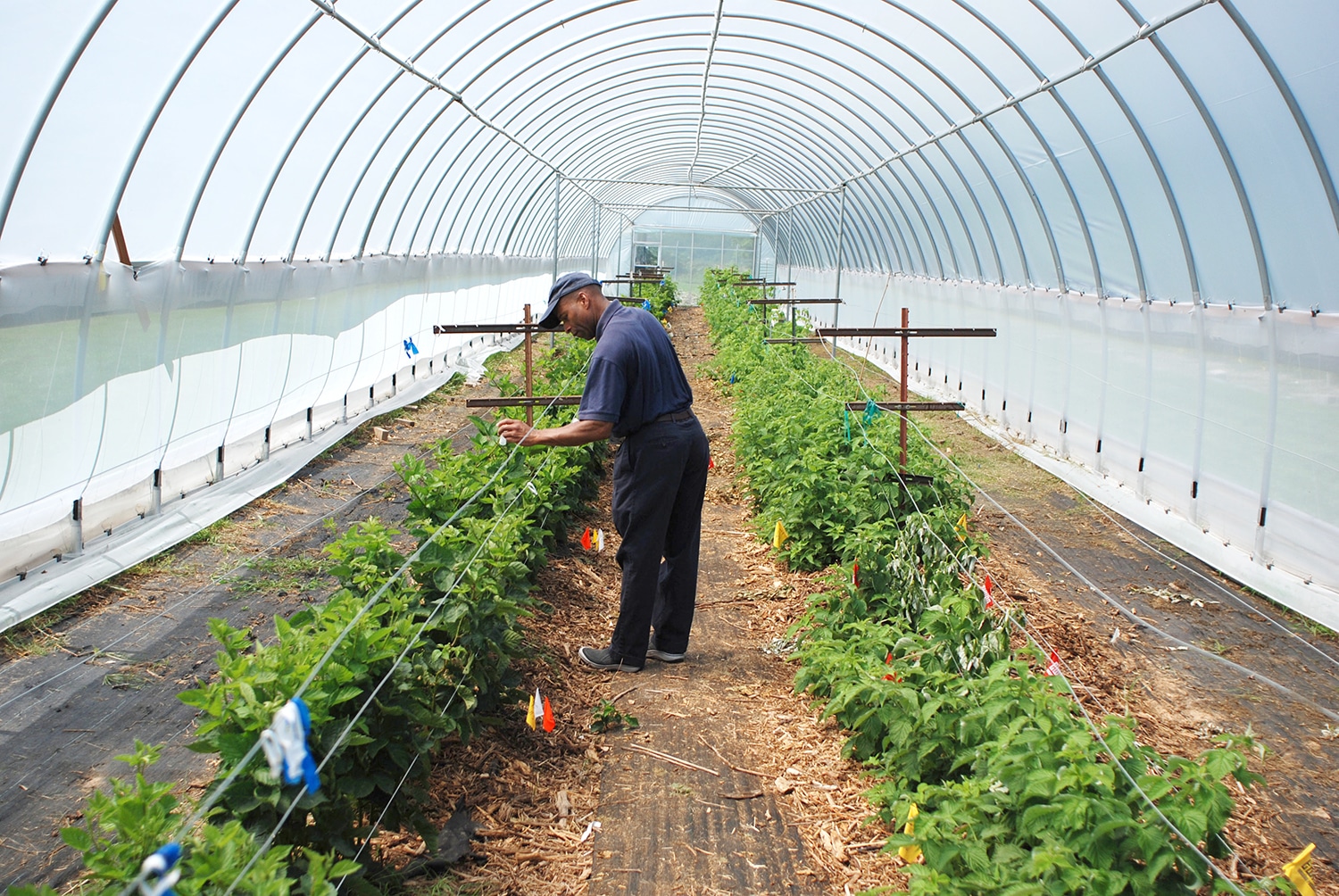
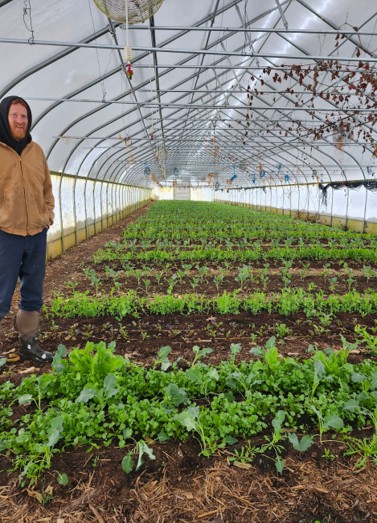
Ian Jerolmack of Stonecipher Farm in one of his ten season extension high tunnels. Photo: Stoneciper Farm
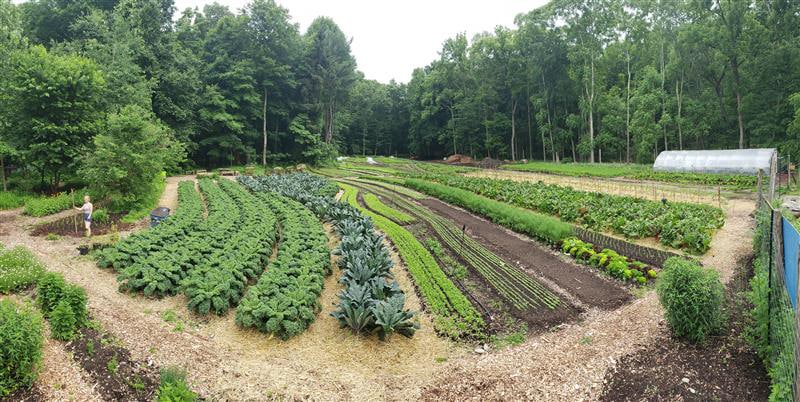
Stonecipher Farm, located in Bowdoinham, Maine, is a certified organic vegetable farm that employs various season extension techniques to supply fresh produce year-round.
Owner Ian Jerolmack purchased the property in 2008, fulfilling a longtime dream of building a thriving food production hub. Today, the farm operates with a team of six employees and produces hundreds of thousands of pounds of organic vegetables annually.
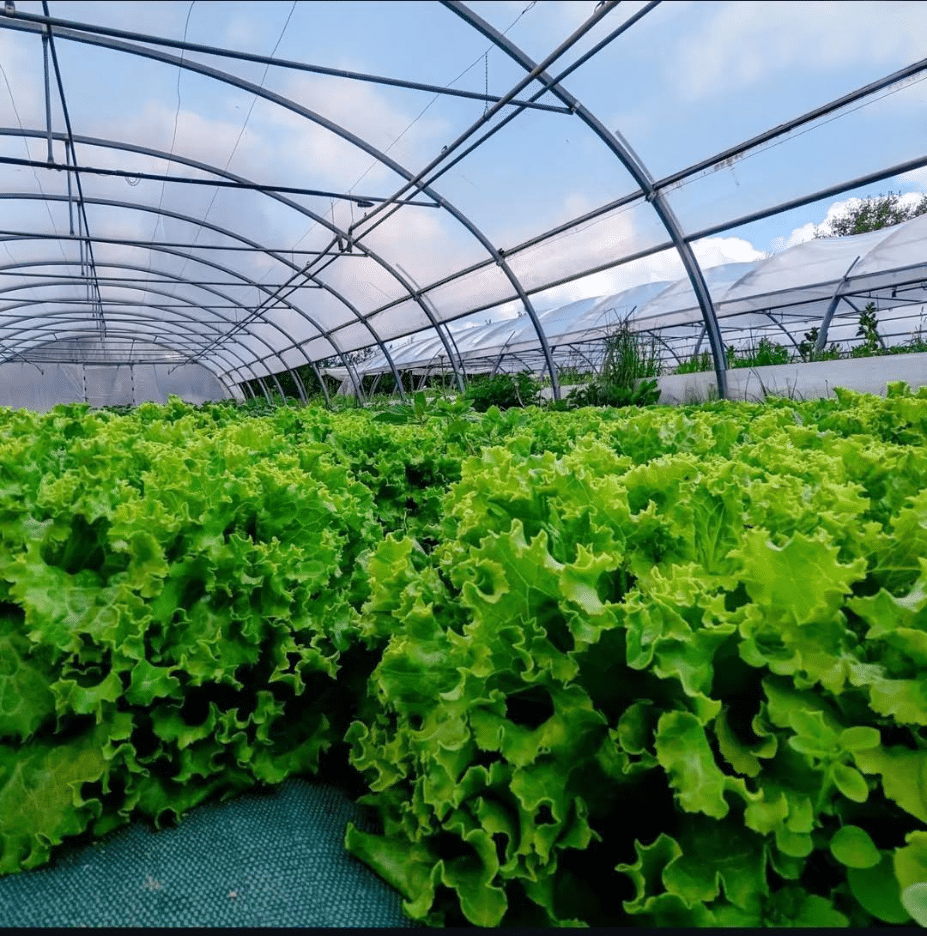
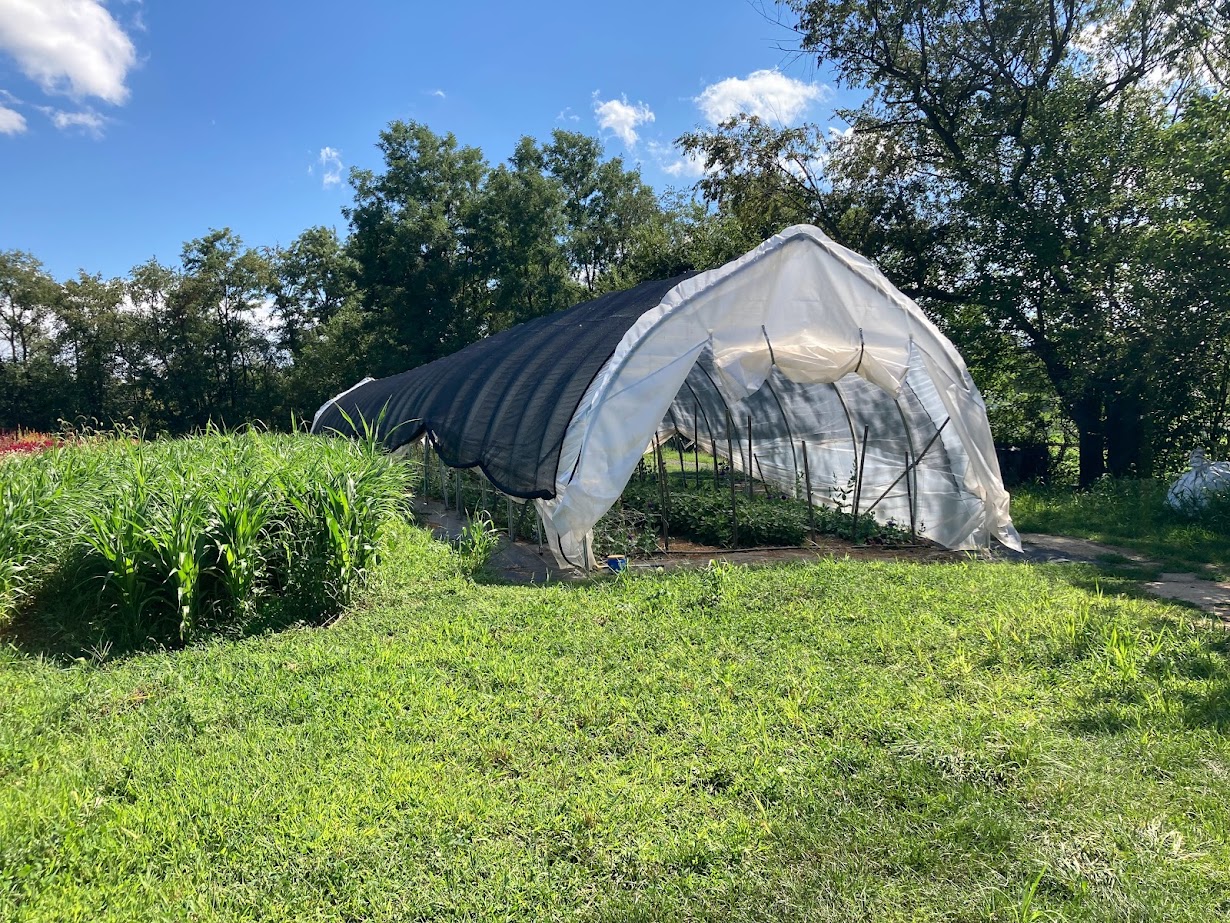
Like many diversified vegetable growers in the Northeast, Ian prioritizes maintaining a consistent supply of high-quality food throughout the year to retain customers during what would traditionally be the off-season. To achieve this, he has implemented a no-till management system along with 10 high tunnels covering over an acre of land. His innovative relay cropping techniques further support his ability to provide fresh produce to winter markets.
Relay Cropping for Year-Round Production
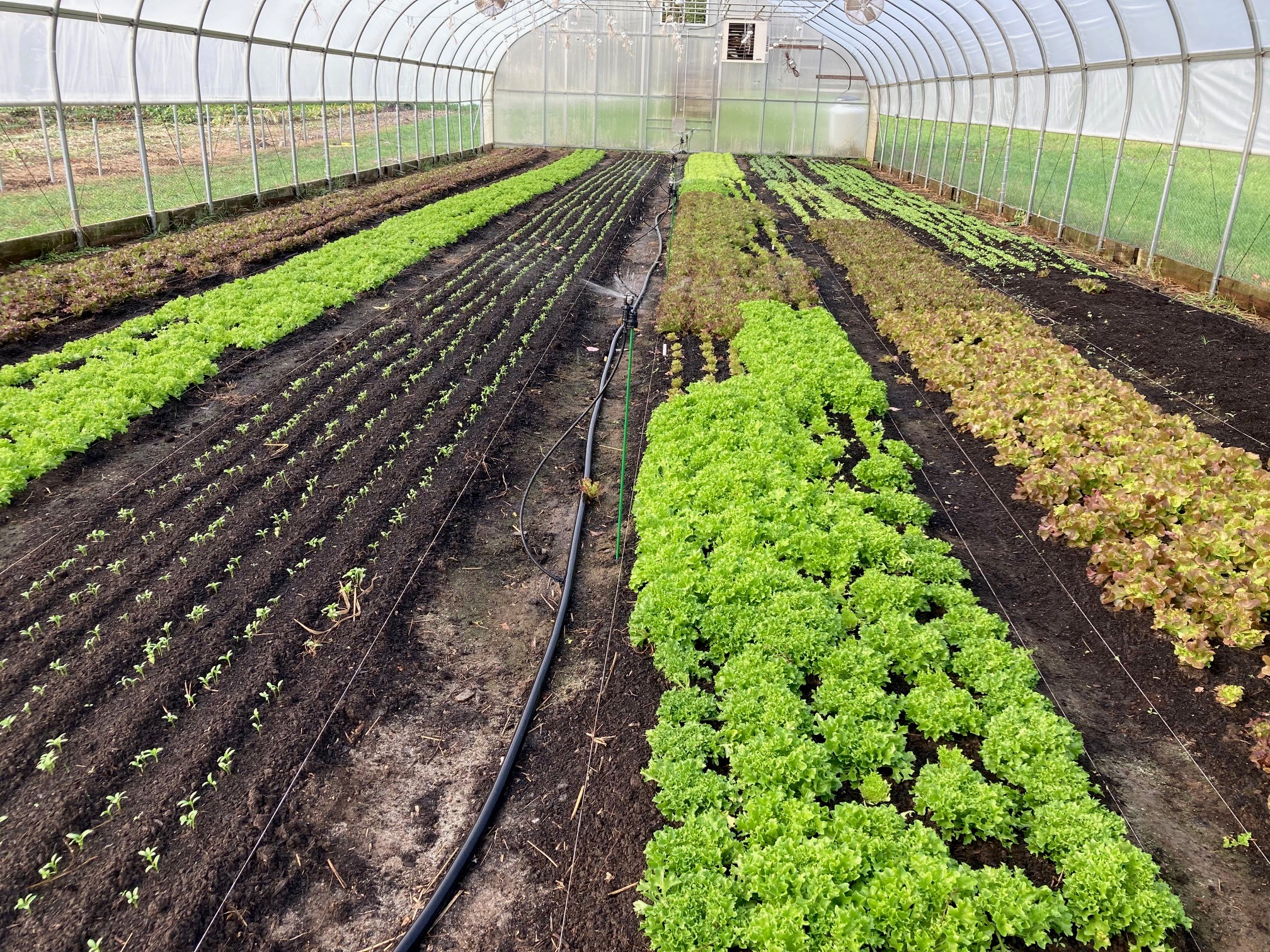
Relay cropping maximizes space, optimizes labor, and increases overall system diversity. Ian utilizes well-timed and strategic interplanting to grow multiple crops in the same beds simultaneously, effectively staggering and extending his high tunnel production season. He considers each crop’s days to maturity and canopy requirements to maximize vertical space and ensure efficient use of available sunlight.
A key factor enabling successful relay cropping at Stonecipher Farm is weed control through a deep compost no-till bed system. It would be impractical to manage weeds with hand-cultivation in the dense planting required for relay cropping. By using deep composting as mulch and eliminating tillage while maintaining high planting densities, Ian has created an efficient system where crops can transition seamlessly from one to the next.
Examples of Relay Cropping at Stonecipher Farm
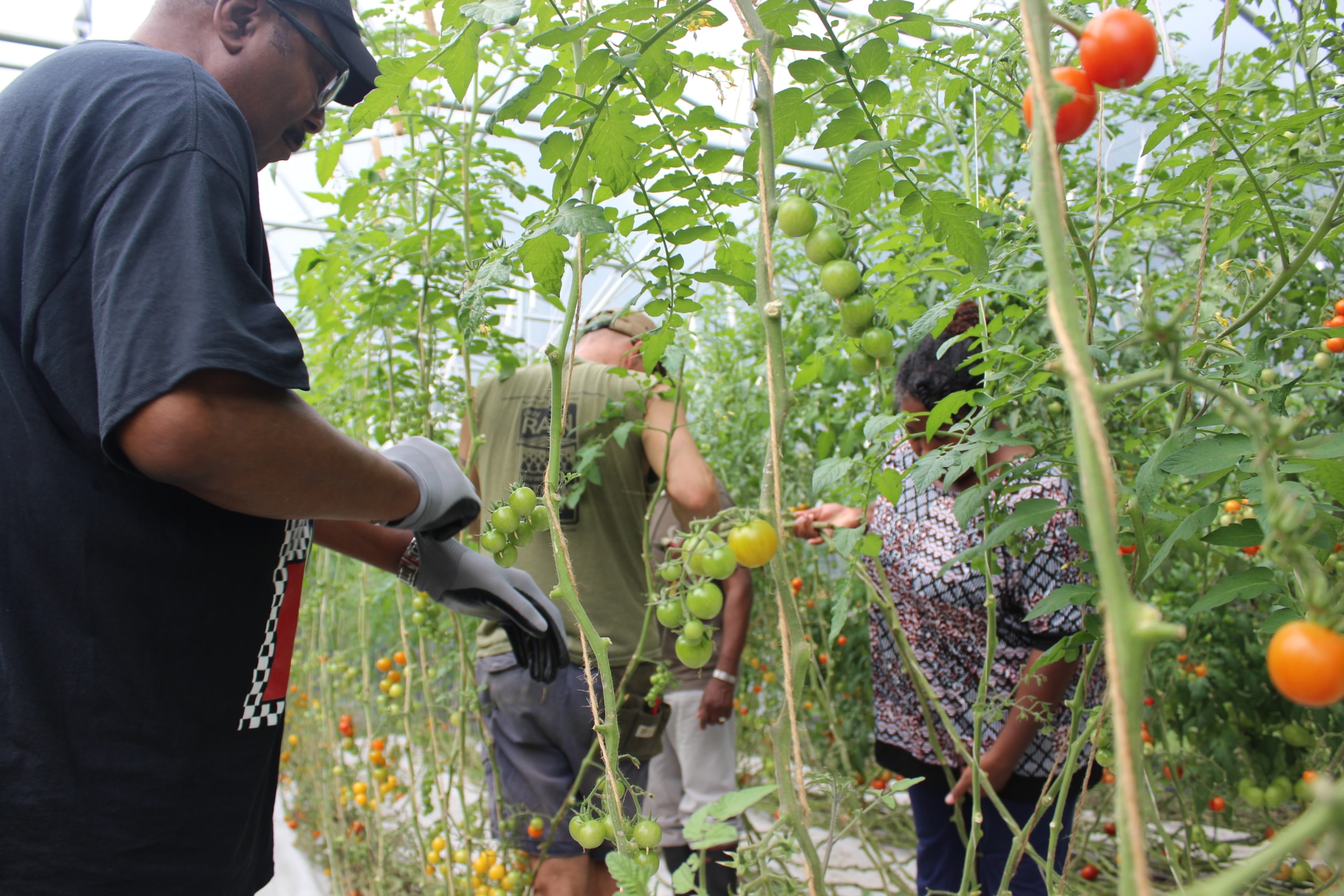
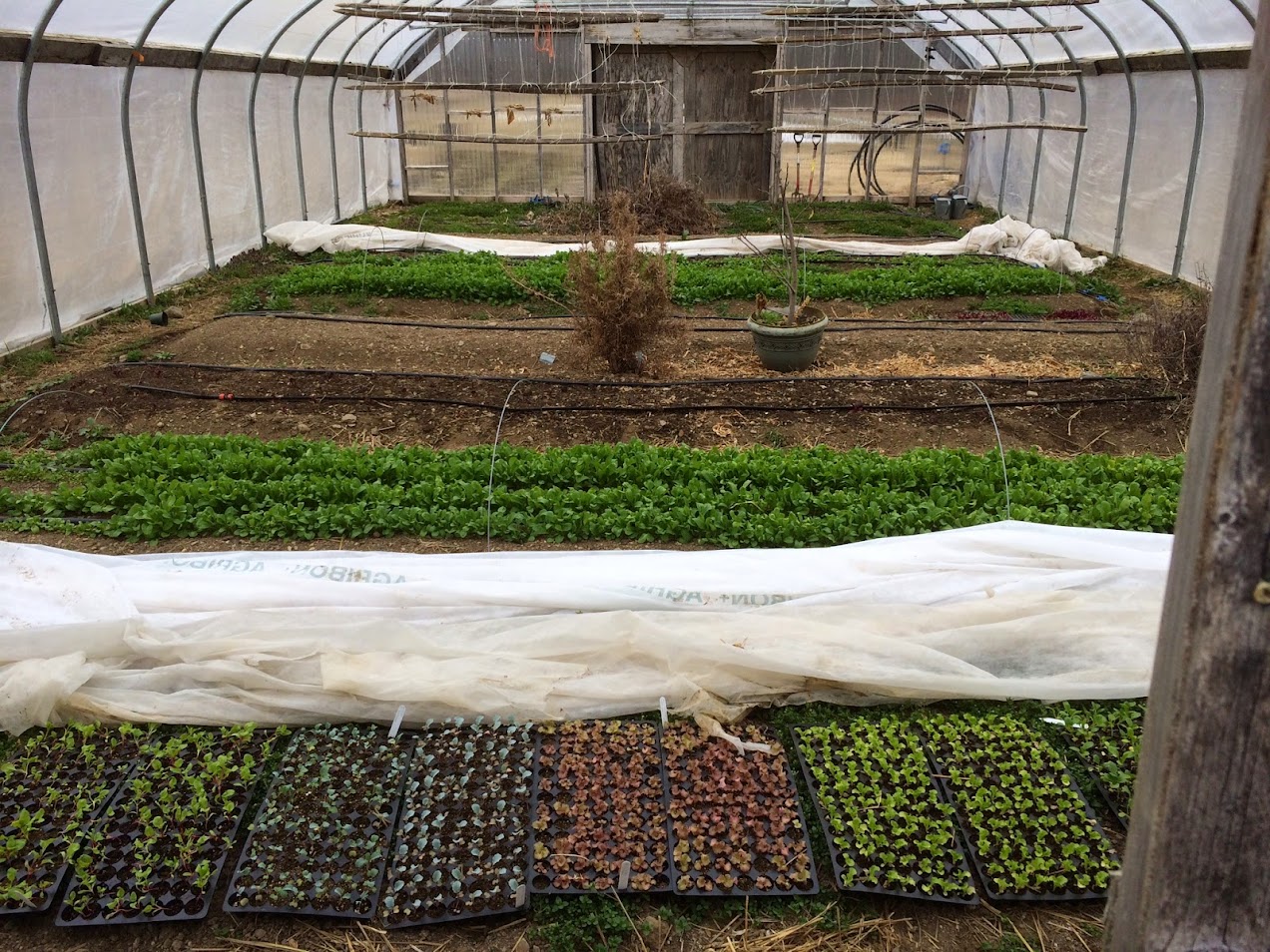
Planting in the high tunnels at Stonecipher is a nearly continuous process. For example, Ian gains an extra month of growth on winter Swiss chard by interplanting chard transplants into main-season tomato beds in September. This allows the late tomato harvest to continue through mid-October while the chard establishes itself. By the time Ian removes the tomato plants, the chard has already developed, enabling a winter harvest. The following February, Ian and his crew transplant fava beans directly into the same bed for a spring crop, while continuing to harvest the chard.
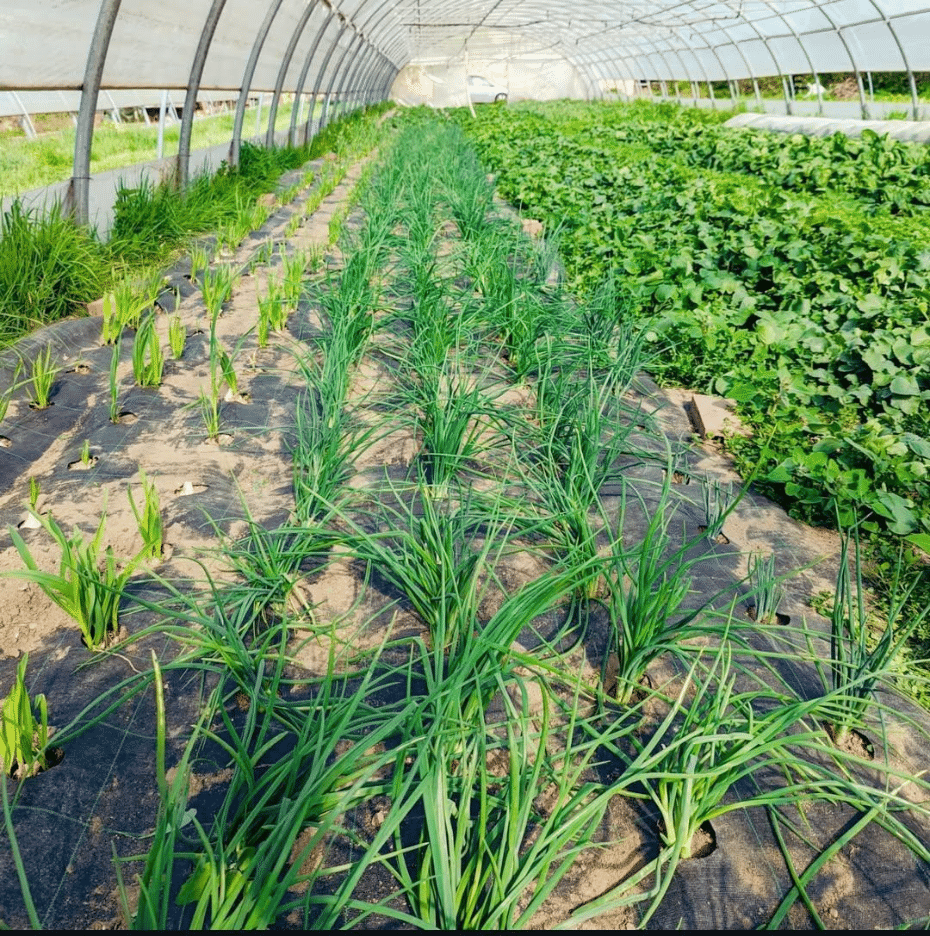
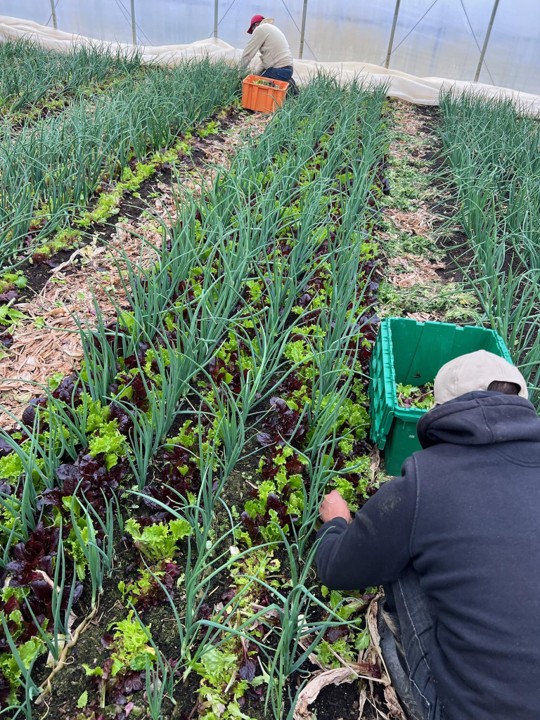
Greens being harvested from between rows of onions. Photo: Stonecipher Farm
Another effective relay cropping sequence involves onions and peppers. Pepper production in high tunnels can extend into early November. The crew starts onion transplants in early September but keeps them in their trays until the last peppers are harvested in November and the plants are removed. They then transplant the onions into the now-empty beds alongside rows of direct-seeded arugula or another fast-growing green. They harvest the greens throughout winter. When the greens harvest is finished, the onions can take over the bed and size up for an early spring harvest.
Similarly, Ian uses snap peas in combination with turnips or red beets. They transplant these crops all on the same day in mid-March using a paper pot planter. By late May, the beets and turnips have matured, and their harvest is nearly complete. Their growth is not affected by shade from the peas because they reach harvest stage before the peas are tall enough to have an impact. In early June, after the pea harvest is complete, the beds are replanted with peppers or cucumbers for summer production.
One of Ian’s fall relay cropping strategies involves direct-seeding parsley between rows of transplanted beets. They harvest the beets through December while the parsley (which has germinated and grown into small plants underneath the beets) remains. Once the beets are out of the way, more sunlight can reach the parsley, allowing it to size up for a spring harvest.
Managing Soil Fertility in Intensive Cropping Systems
Since relay cropping requires beds to remain in continuous production, managing soil fertility is essential. The challenge is to provide adequate nutrients for multiple crops while avoiding over-fertilization. At Stonecipher Farm, Ian relies on the fertilizer he applies to his summer crops to sustain the following winter crops. For example, rather than fertilizing cool season crops following tomatoes, he allows the residual fertility from summer amendments to carry over. Throughout the season, he monitors plant health and applies side-dress fertilizers as needed, particularly for alliums, which receive an additional fertility boost when planted in the winter high tunnels.
Labor Considerations and Profitability of Relay Cropping
Relay cropping for season extension requires additional labor and management, but Ian finds that the increased production and higher market prices in the offseason justify the extra effort. Winter-grown relay crops remain profitable at Stonecipher Farm, in part because the labor saved on hand cultivation can be reallocated to relay cropping tasks.
To ensure financial viability, Ian sets clear profitability targets for each crop bed. Both outdoor and high tunnel growing beds at Stonecipher are 500 square feet each. Outdoor beds must generate at least $1,000 per bed per season, whereas high tunnel beds need to bring in closer to $3,000 per bed to offset infrastructure costs. This level of productivity is made possible through the efficient and strategic season-extending relay cropping methods that have become a hallmark of Stonecipher Farm.
By leveraging high tunnels, no-till methods, and relay cropping strategies, the Stonecipher Farm team successfully extends the growing season, optimizes land use, and meets customer demand for fresh, organic produce year-round.
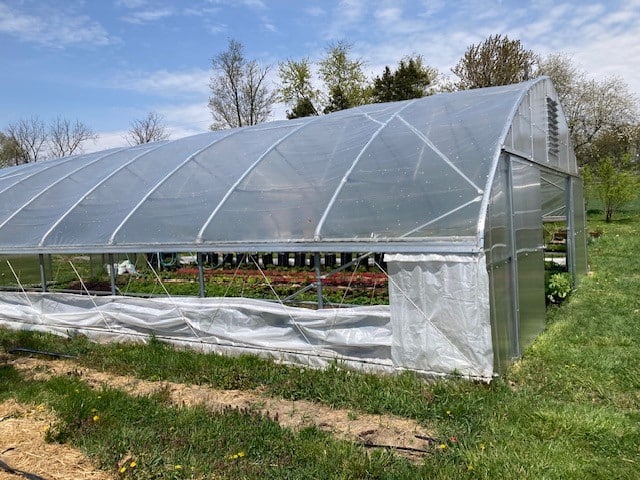
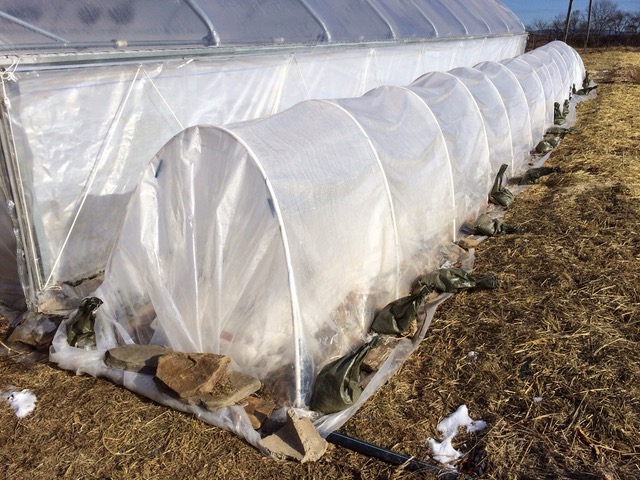
Roll down sides on a high tunnel allow crops to be protected from wind while ventilating the tunnel to control temperature and humidity. Photo: Chris Lent, NCAT
The Economics of Season Extension
Season extension can give farmers a real economic edge. By using techniques that protect crops from weather extremes, growers can produce diverse crops outside natural seasonal boundaries. These farmers can then supply markets when fresh, local produce is limited, often earning better prices while building a loyal customer base. Diversifying production across seasons also helps reduce the risks associated with monoculture and market saturation. In addition, greater crop diversity can improve soil health and decrease pest and disease pressure.
When implementing season extension practices, it is important to factor costs into your production planning. Whether you are investing in high tunnels, plastic mulches, row covers, or drip irrigation systems, each practice carries both upfront and ongoing expenses that influence overall farm profitability.
In general, farm expenses fall into two categories:
- Fixed costs are one-time or infrequent expenses that remain relatively stable, such as the purchase and installation of a high tunnel, irrigation infrastructure, or durable tools. These investments often have long lifespans and can be depreciated over time. The fixed costs tend to remain stable regardless of the amount of production.
- Variable costs change with the scale of production or are incurred seasonally, such as labor, seeds, fertilizers, mulch, and replacement materials.
Assessing whether season extension methods will be financially beneficial for a farm often involves partial budgeting, a method used to evaluate potential changes in income and expenses associated with adopting a new practice without requiring a complete analysis of all farm costs. The focus is on comparing the economic differences between the current system and the proposed changes (Ilic, 2004).
To effectively use partial budgeting for season extension strategies, consider the following steps:
- Identify the crop and extension method. Determine which crop you will grow and what season extension method you will implement.
- Calculate the costs of the new practice. Estimate all costs associated with adopting the practice, including materials (for example, plastic mulch or row covers), specialized equipment rentals or purchases, labor, water usage, and pest management. Factor in additional labor costs for the initial learning curve during the first season.
- Estimate the expected income increase. Project the additional revenue generated by the new practice. Calculate gross income by multiplying the anticipated yield (units produced) by the selling price per unit. Increased income can result from higher yields, improved crop quality, or accessing premium markets earlier or later in the season when produce is less available.
- Account for cost reductions. Identify any cost savings the season extension method might provide. For example, black plastic mulch can reduce weed pressure and the need for manual cultivation or herbicides, while row covers may minimize pest issues and reduce pesticide applications.
- Balance income and expenses. Sum both the projected income increases and cost reductions. Subtract the total costs of the new practice from these combined benefits to determine whether the technique would positively impact farm profitability.
By following this approach, growers can make informed decisions about whether season extension strategies align with their financial goals and operational capacity. This method also allows for more precise comparisons when evaluating multiple techniques side by side, ensuring the chosen strategies support both profitability and sustainability.
Although season extension structures and materials require investment, they provide opportunities for increased income by extending the growing season and enabling earlier spring or later fall harvests. This can help farmers capture premium market prices, maintain consistent customer supply, and make better use of farm labor and infrastructure throughout the year.
Just as important, growers should identify a marketing strategy that matches the timing of their extended harvests, such as targeting early spring farmers markets, winter CSA shares, school or institutional markets, or restaurant accounts seeking off-season produce. This ensures there is a reliable outlet for the crops when they are ready. For more guidance on connecting with the right markets and assessing farm costs and profitability, see the Further Resources section of this publication.
Season Extension Funding Sources
- NRCS EQIP: USDA’s Natural Resources Conservation Service (NRCS) offers cost-share funding for high tunnels through the Environmental Quality Incentives Program (EQIP). This program provides financial assistance to farmers for implementing conservation practices, including season extension. To be eligible for NRCS EQIP funding, growers must meet certain requirements, such as having at least $1,000 in annual sales related to agriculture, and they must provide a detailed business plan (Environmental Quality Incentives Program, n.d.).
- SARE Grants: The Sustainable Agriculture Research and Education (SARE) program offers grants for research and education projects related to sustainable agriculture, including season extension (Southern Agriculture Research and Education Grant, n.d.).
- OREI Grants: The Organic Agriculture Research and Extension Initiative (OREI) provides funding for projects that integrate research, education, and extension activities to address critical organic agriculture issues, including season extension (National Institute of Food and Agriculture, n.d.).
Please note that grant money you receive from these programs will need to be reported as income on your farm tax return.
Conclusion
There are a wide range of strategies for extending your production season, including planting techniques, crop variety selection, and using physical structures like high and low tunnels and row covers. By carefully choosing one or a combination of these methods—tailored to your region’s climate, soil types, topography, and market demands—you can increase the likelihood of improved yields, extended harvest windows, and increased farm profitability.
Season extension is not a one-size-fits-all solution, but with thoughtful planning and a focus on long-term sustainability, it can become a powerful tool to diversify crops, strengthen local food systems, and build farm resilience.
To further support your efforts, we have provided a list of additional resources and recommended ATTRA publications below, offering deeper insights into season extension practices and their applications across various climates and production scales.
References
Alagbo, O., Spaeth, M., Saile, M., Schumacher, M., and Gerhards, R. 2022. Weed management in ridge tillage systems—a review. Agronomy. Vol. 12, No. 4. p. 910.
Barrett, J. J., and DeLong, C. 2021. Variety Selection for the Home Garden. West Virginia University Extension.
Bartok, J. W. 2004. Shade houses provide seasonal low-cost protected space. Greenhouse Management & Production. May. p. 56–57.
Beddes, T., Caron, M., Hansen, S., and Gunnel, J. 2022. Extending the garden season. Utah State University Extension.
Bergtold, J.S., Smith, A., Lamb, M., and Duzy, L. 2020. Conservation Economics: Budgeting, Cover Crops, and Government Programs. In: Bergtold, J.S., Sailus, M. (eds.). Conservation Tillage Systems in the Southeast. Sustainable Agriculture Research and Education.
Brandle, J. R., and Finch, S. (n.d.). How windbreaks work. University of Nebraska Extension. EC 91-1763-B. Dou, S., Wang, H., Zhang, W., and Li, X. 2024. Strip tillage promotes crop yield in comparison with no-tillage based on a meta-analysis. Soil and Tillage Research. Vol. 240. 106085.
DT, S., Maitra, S., and Sairam, M. 2024. Enhancing rural economies with protected cultivation technologies. International Journal of Biological Sciences. Vol. 11, No. 1, p. 71–79.
EPA. 2021. Seasonality and climate change: a review of observed evidence in the United States. U.S. Environmental Protection Agency. EPA 430-R-21-002.
Evans, R. D. 1999. Frost protection in orchards and vineyards. Northern Plains Agricultural Research Laboratory.
Farm Plastic Supply. 2024. Aluminet shade cloth – 14’ wide.
Fronczak, S. and Galbraith, C. 2023. Cover crop considerations for vegetables. Michigan State University Extension.
Ghosh, P. K., Mohanty, S. R., Ray, P. K., and Ray, P. P. 2020. Mulching techniques to conserve the soil water and advance the crop production: A review. Current World Environment Journal. Special Issue (Sustainable Mining).
Gu, S. 2021. High tunnel farming. North Carolina Agricultural and Technical State University Cooperative Extension. ANR-21-01.
Ilic, P. 2004. Plastic tunnels for early vegetable production. University of California Agriculture and Natural Resources Small Farms Network.
Lamont, W. J. 2005. Plastics: Modifying the microclimate for the production of vegetable crops. HortTechnology. Vol. 15, No. 3. p. 477–481.
Mohler, C.L., and Stoner, K.A. 2009. Guidelines for Intercropping. In: Mohler, C. L., and Johnson, S. E. (eds.). Crop Rotation on Organic Farms: A Planning Manual. Sustainable Agriculture Research and Education Outreach.
Schmitt, M., and Rosen, C. 2024. Warmer winter presents benefits and challenges to soils. University of Minnesota Extension.
Further Resources
ATTRA Publications
Planning for Profit in Sustainable Farming
Evaluating a Farming Enterprise
Selling to Local and Regional Markets: Barriers and Opportunities for Beginning Farmers
Business Planning for Season Extension
Model Business Plan for Season Extension Hightunnels. 2010. By David S. Conner. Michigan State University Extension. Bulletin E-3112.
This bulletin takes a thorough look at budgeting for a high tunnel enterprise. This is an older resource so the costs and revenues presented are not current, but there are budget templets included to create your own high tunnel budget.
My One-High-Tunnel Business Planning Guide. 2025. By Harry Edwards. Rimol Greenhouse Systems.
This is a guide covering all aspects of planning a high tunnel enterprise on your farm. It includes goal setting, marketing considerations, production planning, soil management, and sample enterprise budgets.
Extension Web Pages and Articles
Center for Agriculture, Food, and the Environment at UMass Amherst: Greenhouse & Floriculture: Ventilation for Greenhouses.
University of Maryland Extension: High tunnel best management practices.
Oklahoma State University: High Tunnels.
Penn State Extension: High Tunnel Production.
Penn State Extension: Season Extenders and Growing Fall Vegetables.
High Tunnel Construction and Materials
Constructing a Low-Cost High Tunnel for Tall Crops (14.5’ wide by 10’ tall)
Maughan, T., Rowley, D., Black, B., & Drost, D. (2014). Constructing a low-cost high tunnel for tall crops (14.5’ wide by 10’ tall). Utah State University Extension.
This illustrated fact sheet walks growers through the steps of building an affordable, tall high tunnel suitable for crops like tomatoes or trellised cucumbers. It includes a materials list, diagrams, and cost estimates—ideal for those looking to expand protected growing space on a budget.
Constructing a Greenhouse or High Tunnel.
This instructional video shows step by step construction of a high tunnel. It discusses tools and techniques needed to complete a successful build.
High Tunnel Structures: The Basics.
This is a series of basic instructional videos by Penn State Extension on how to build a small high tunnel structure.
Farm Plastic Supply: 70% Aluminet Silver Shade Cloth
Koollite Plus Greenhouse Films: RKW Group
High Tunnel General Management
Basic Aspects of High Tunnel Soil Fertility Management. 2019. Vegetable Crops Hotline Newsletter. Issue 655. Petrus Langenhoven. Purdue University.
This article is a short overview of considerations in soil fertility management in high tunnel production.
High Tunnel Farming, Gu, S. 2021. High tunnel farming. ANR-21-01. Cooperative Extension at North Carolina A&T State University.
This comprehensive guide offers detailed insights into high tunnel agriculture, including construction techniques, crop selection, planting calendars, and soil health management. Especially helpful for growers in the southeastern U.S., it also provides broadly applicable strategies for successful high tunnel production.
Managing the Environment in High Tunnels for Cool Season Vegetable Production. 2018. By Elizabeth Maynard and Michael O’Donnell. Purdue University Extension.
This detailed publication looks at the importance of tunnel orientation, air and soil temperature, and relative humidity on cold weather growing in high tunnels. Best management practices for the tunnel environment are included.
Soil and Water Data is Critical for High Tunnel Growers. 2023. Petrus Langenhoven. Vegetable Crop Hotline Newsletter. Issue 716. Purdue University.
This short article focuses on water quality in high tunnel irrigation. Specifically, the two issues of water alkalinity and soil salinity are covered.
Water, Soil and Fertility Management in Organic High Tunnels. 2013. John Biernbaum. Michigan State University.
This is an informational paper on managing high tunnel soil health with proper irrigation, soil testing, and fertility management.
Season Extension Manuals and Guides
High Tunnel Pest Management – University of Vermont – Entomology Research Laboratory.
This is a tool kit of resources with links to conference presentations, factsheets, and publications. Most of the resources here focus on pest control in high tunnel production.
High Tunnels and Other Season Extension Techniques. By Vern Grubinger. Northeast SARE.
This publication talks about construction, crop selection, fertility, and the economics involved in season extension.
A Guide to Season Extension for Illinois Specialty Crop Growers.
By Terra Brockman, Cara Cummings, and Jeff Hake. The Land Connection.
This 49-page guide covers many techniques used for season extension. It touches on pros and cons and marketing considerations and contains several case studies. It’s targeted to Illinois growers but contains universal information on season extension.
Overwintering Vegetable Crops Planting Chart, Johnny’s Selected Seeds
High Tunnel Suppliers
This resource is run by researchers, extension specialists, professors, growers, technicians, and students collaborating to share experiences and knowledge about high tunnels.
Webinars
Cornell Cooperative Extension: Introduction to Winter Growing Webinar
Windbreaks
Natural Resources Conservation Service: Windbreak/Shelterbelt Establishment and Renovation (Ft.) (380) Conservation Practice Standard
USDA Forest Service: Agroforestry Notes
Windbreaks: An Agroforestry Practice
Season Extension Techniques for Market Gardeners
By Janet Bachmann, NCAT Agriculture Specialist
January 2005, Updated February 2026 by
Gabriella Soto-Velez and Chris Lent, NCAT Agriculture Specialists
©NCAT
IP035
Version 022526
This publication is produced by NCAT through the ATTRA Sustainable Agriculture program, under a cooperative agreement with USDA Rural Development.