Value-Added Vacation: A Visit to a Cheese Factory
Provided by:
Written By

Related Resources
In a previous blog I wrote about my experiences managing a farmers market and working for a cooperative grocery store. These experiences primarily took place in Wisconsin, a.k.a., the land of cheese. But for the nearly 15 years that I lived in the Midwest, I never toured a cheese factory or creamery! The closest I got was attending the Minnesota State Fair, where the rumors of sculptures made of butter were in fact true.
It wasn’t until I took a recent trip to the Oregon coast that I finally stepped foot into a cheese factory to see how one of my favorite foods was prepared and processed. There were few things that I truly wanted to experience on this trip, and a visit to the Tillamook Creamery was one of them. I was ready for some agritourism! And though this was certainly a large-scale agritourism operation, the principles I saw in action can be applied at any scale.
My interest in visiting the creamery was two-fold. First, I love cheese. I’ve been told my first words were “Cheese, please!” Second, through my role at NCAT, I’ve developed a passion for projects and initiatives that help create vibrant local food systems from start to finish and support all food system sectors: production, processing, distribution, consumption, and waste management. With this visit to Tillamook, I got the opportunity to see all these sectors at play on a large scale.
Stepping out of the car into the parking lot, you’re met with the unmistakable aroma of the cows that live in the red and white outbuildings surrounding the area. The visitor center has impressive curb appeal, with large windows allowing in lots of natural light. Guests can enjoy freshly scooped ice cream or share a batch of deep-fried cheese curds in its outdoor seating areas.
The interior of the visitor center is simple in its design. The main floor is dedicated to a cafeteria and gift shop, and on the second floor are the viewing stations where you get a firsthand look at how they make their cheeses. Brightly colored and easy-to-read podiums and wall art guide visitors around the room.
The factory was built in 1949. And though many things have changed, the recipe for starting the cheese has stayed the same: cultured milk, enzymes in the form of rennet, annatto for natural coloring, and salt. In just one day, farmers send nearly 1.6 million pounds of fresh milk, which is turned into cheese or ice cream within 24 hours. The milk is delivered to eight, eight-foot-tall cooking vats where the cheesemakers transform it from milk into curds and whey. This process takes 70 minutes from the time the vat starts filling until the curd is set, and each vat makes about three to four batches a day.
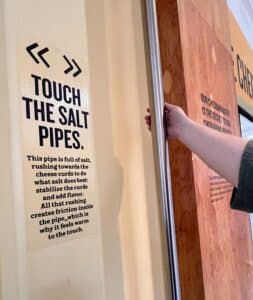
Part of the self-guided tour: getting to feel the heat from salt moving through metal pipes. Photo: Maura Henn
Once the curds form, the cheesemakers add salt to help stabilize the curds and add flavor. (Visitors can touch the pipe that is transporting the salt, which is pleasantly warm due to the friction the salt creates inside the pipe!) A vacuum line then sucks the curds into a hopper that compresses them into blocks of cheese that then are moved to cold storage for the aging process.
On the other side of the viewing room, visitors can see the packaging side of the plant, where the workers cut, weigh, bag, and shrink-wrap the cheese after it emerges from the months-to years-long aging process. An electronic checkweigher scale weighs each loaf as it rolls by on a conveyor belt. If the block is under or overweight, the conveyor kicks it to the side. A worker at that station takes that cheese and trims a slice or adds a slice to correct the weight, and any scraps go into the trim bins for a new life as shredded cheese, so nothing is wasted!
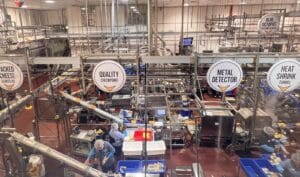
A view of where the cheese is weighed, packaged, and where the final quality control processes happen at the factory. Photo: Maura Henn
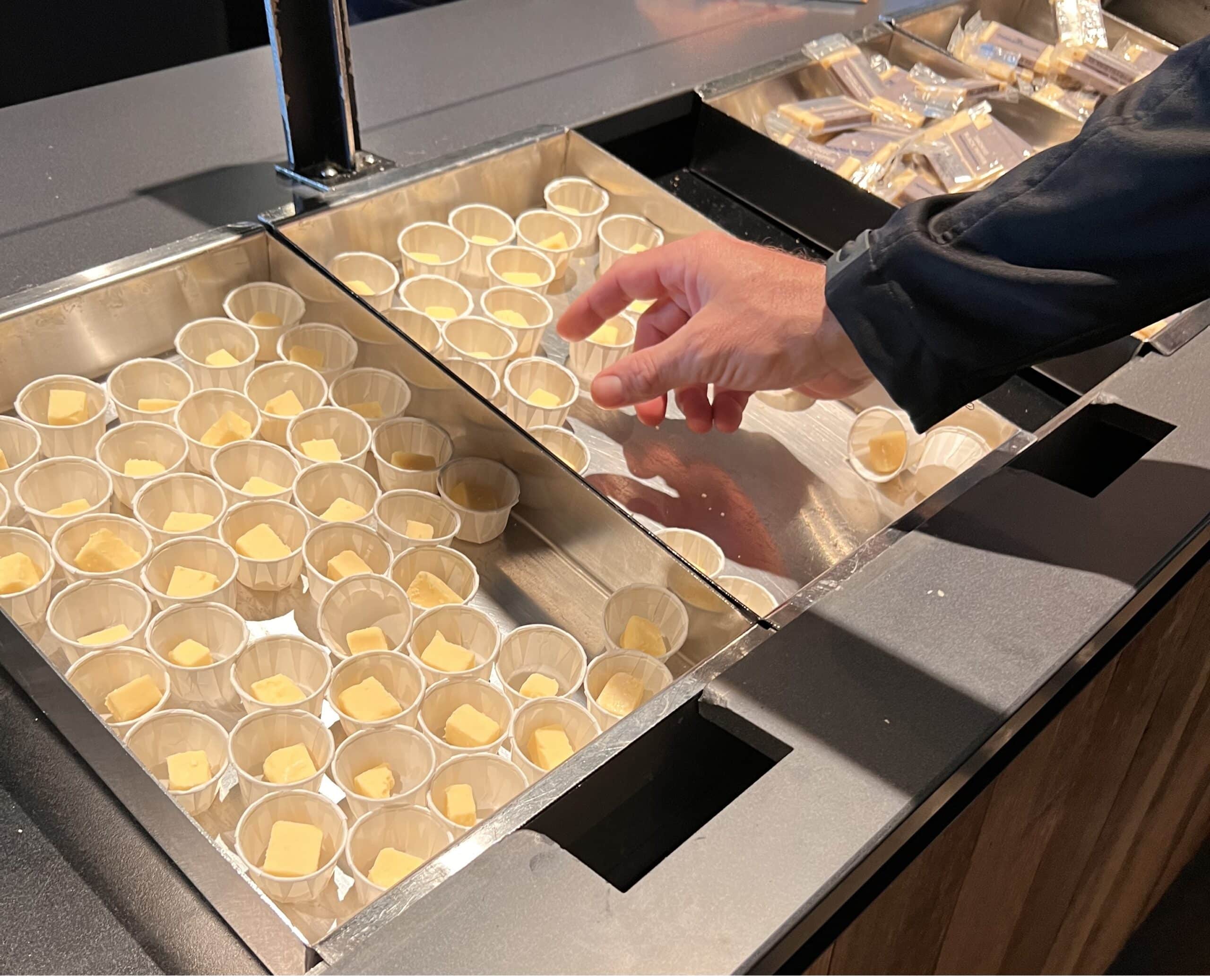
One of the most popular and exciting stages to view was the “Blue Octopus” vacuum-sealer. It moves like a merry-go-round with eight-chambers that open and close on the blocks of cheese, vacuum-sealing them. All throughout the process, workers make sure they are meeting safety and quality-control measures. It’s a fascinating process to witness, and once you have walked through each stage of the viewing room you get to sample the cheeses.
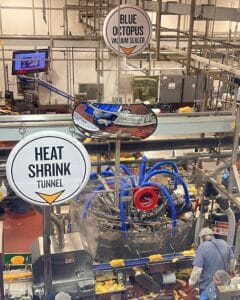
The “Blue Octopus” cheese packaging machine in action. Photo: Maura Henn
Of course, I also had to get a dish of freshly made ice cream before my visit ended. As I was sitting in the light-filled cafeteria enjoying it, I looked around at the other visitors also taking pleasure in their treats. Upstairs at the viewing stations, these same people watched the cheesemaking and packaging processes raptly. Presumably, many of them were also on vacation just like me. I imagine that when they return to their daily lives, they will have a new appreciation for how these staple grocery items get to their store coolers.
A visit to the cheese factory is a window into the complexities of food systems. Though we may have come for the cheese and ice cream, my fellow agritourists and I learned about the process of turning millions of pounds of milk to packaged cheese ready for purchase. And we left with a new appreciation for how much work, care, and skill that process takes. For producers thinking about agritourism as part of their farm business, consider what systems or processes you could share with potential visitors. You may be surprised by what will draw people’s attention and possibly turn them into loyal customers.
This blog is produced by the National Center for Appropriate Technology through the ATTRA Sustainable Agriculture program, under a cooperative agreement with USDA Rural Development. NCAT.ORG/ATTRA.