Beyond Barbed Wire: Virtual Fencing Now
Provided by:
Written By

Related Resources
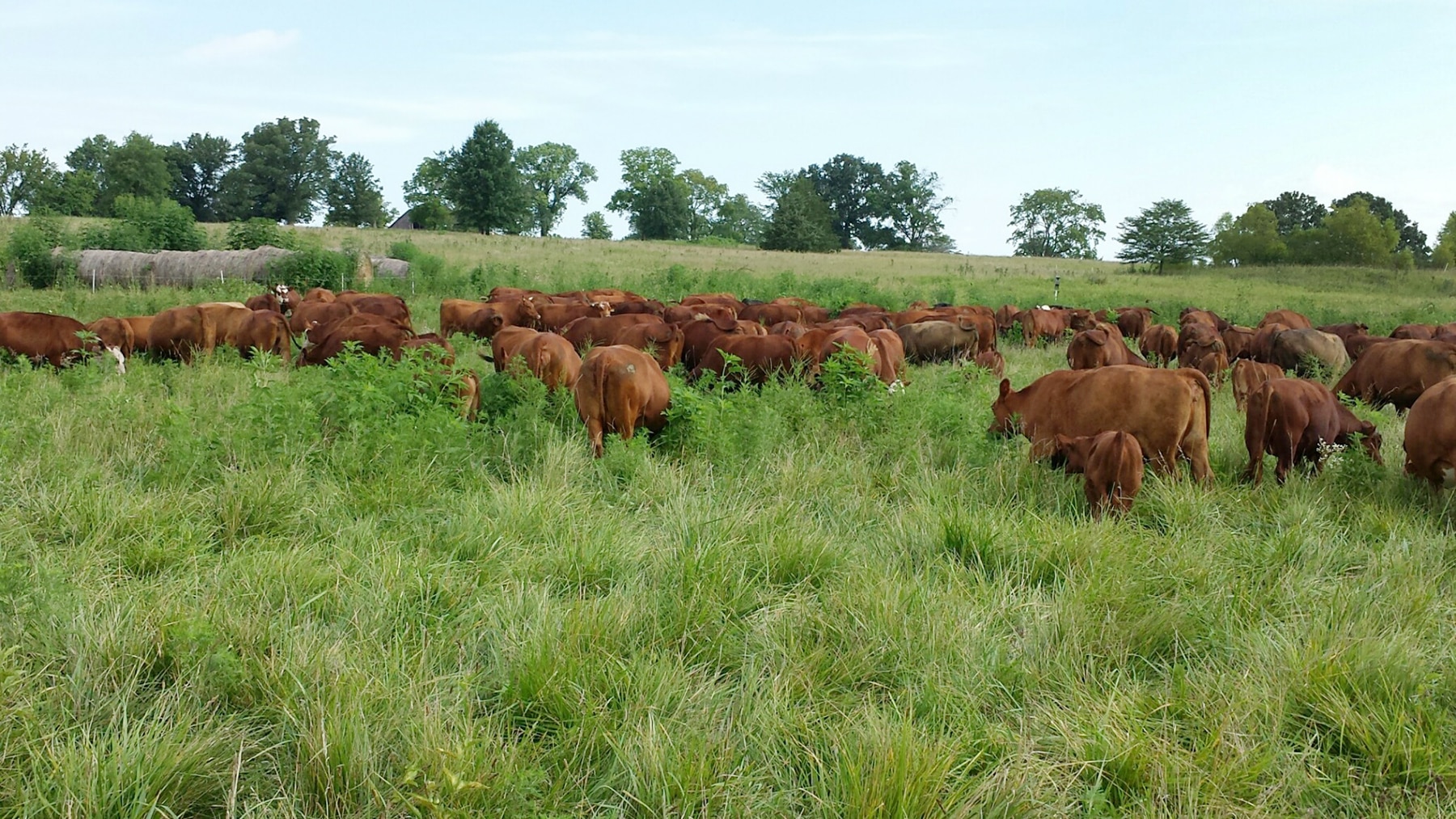
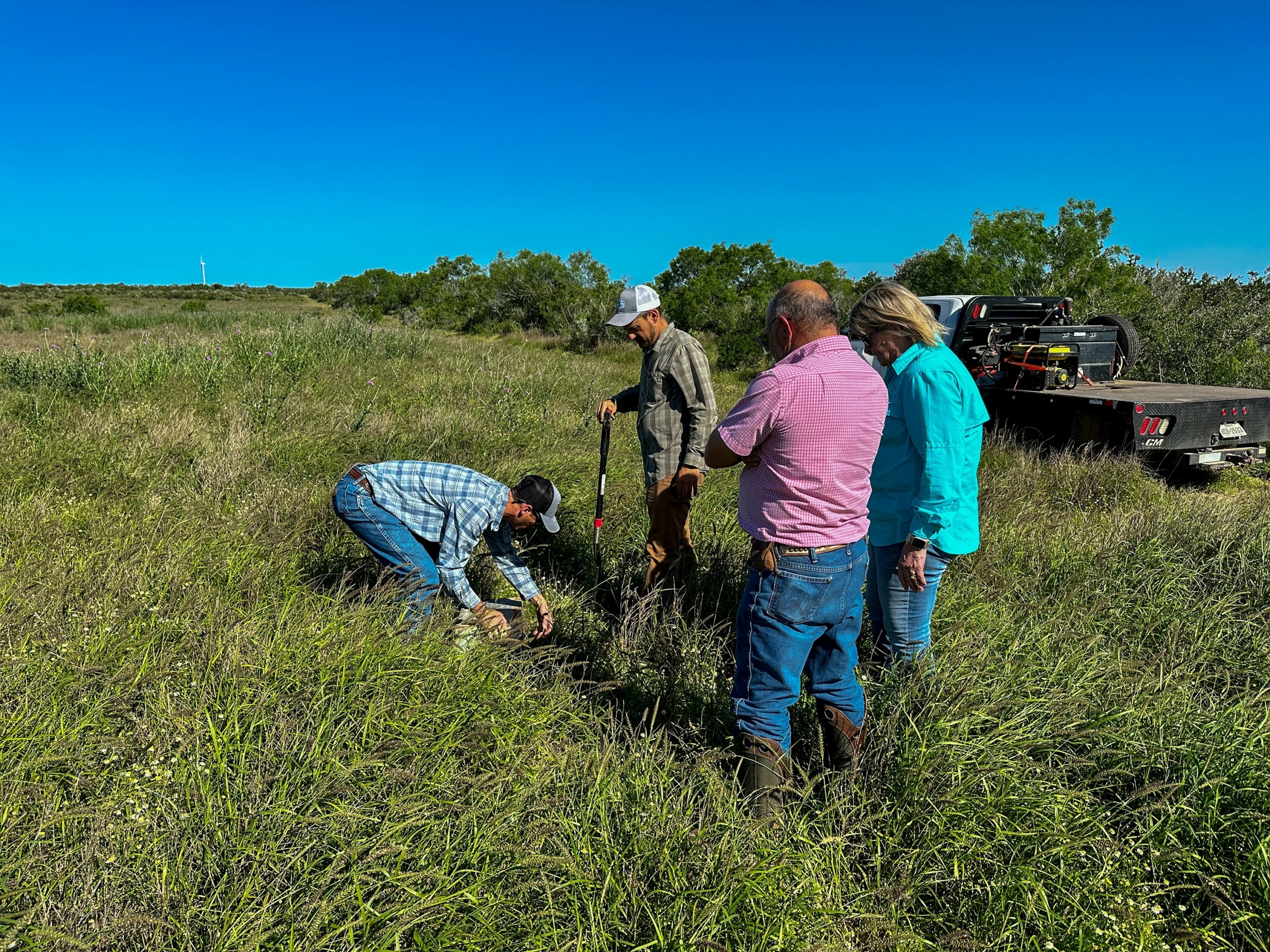
Over the past few years, we have been hearing a question increasingly often from the farmers and ranchers we work with: “What do you think about virtual fencing?” For both of us, our first reaction was usually some version of, “It’s interesting, but …” There was always a “but.”
The technology is expensive, especially the upfront costs. Rural cellular service has been a problem. Battery life is a concern. And, honestly, there is still something strange about the idea of telling a cow where she can and cannot go when there is nothing visibly there to stop her.
This past April, though, Darron was in the Rio Grande Valley talking with a producer who had experience with virtual fencing. It was the first conversation he had with a producer about the technology that didn’t include a list of caveats immediately afterward. The producer liked it. He already had tips, tricks, and lessons learned. Tracy heard a similar story from a producer in Montana’s Madison Valley, who found that he could even use virtual fencing to sort his herd. These experiences inspired us to explore further.
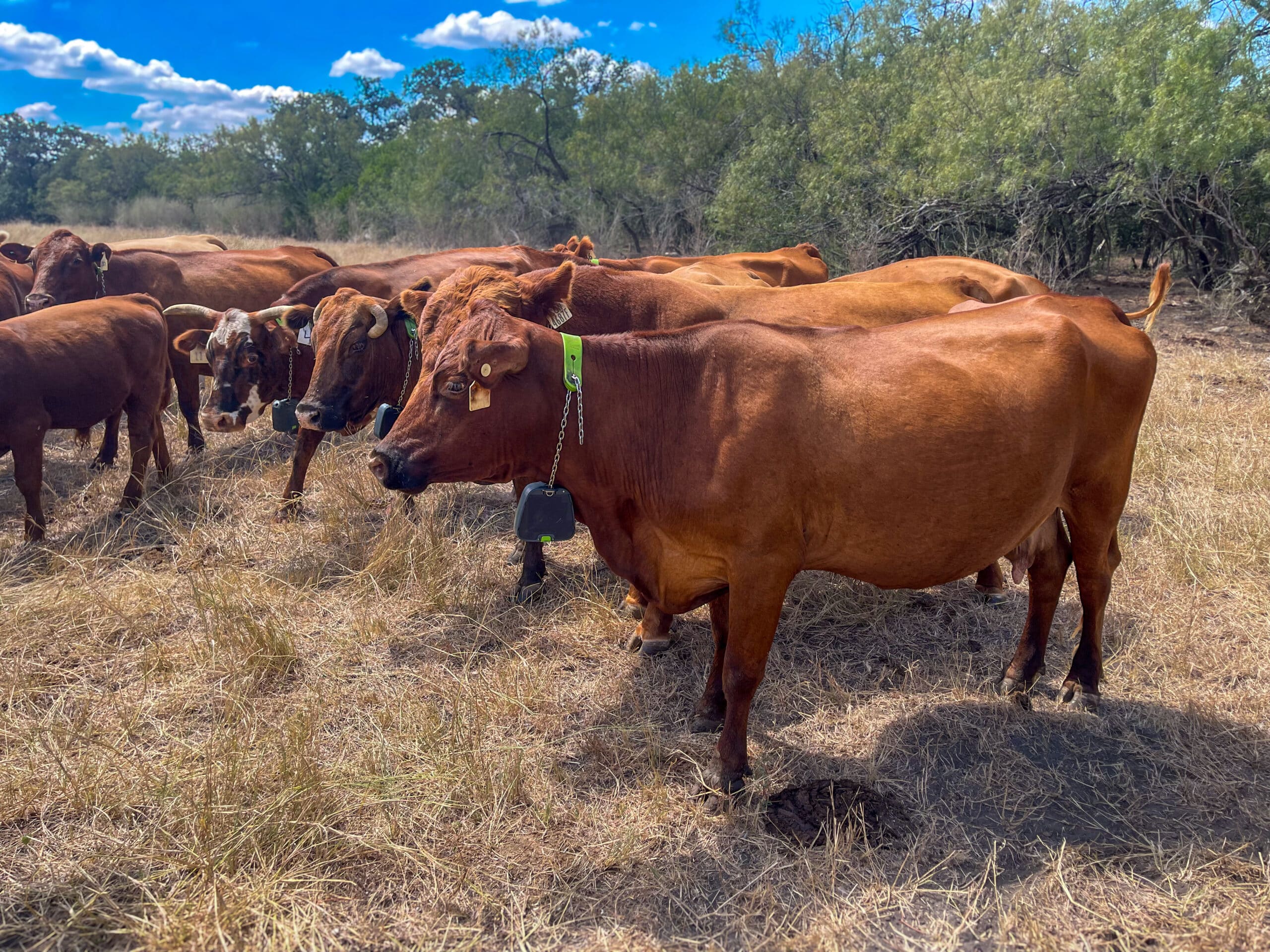
Virtual fencing is not particularly complicated in concept. Livestock wear GPS-enabled collars that communicate with a software platform. A producer draws a boundary on a phone or computer, creating a fence that exists only in the digital world. As an animal approaches that boundary, the collar gives an audio warning. If the animal continues toward the boundary, the collar delivers a mild electrical stimulus. Eventually, the animal learns that the sound means it needs to turn around. The fence isn’t visible, but the animal learns where it is. And that is where things get interesting.
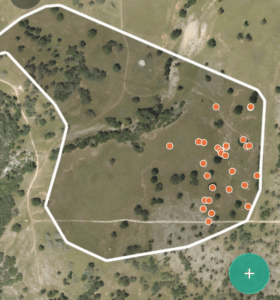
The white boundary is the virtual fence producers can easily draw on their app. The orange dots show where livestock are in real time. Photo: Garrett Kunz
California Rangeland Trust recently brought together representatives from four major virtual-fencing companies to talk about what is available to producers today: Vence, No Fence, Gallagher eShepherd (which ironically does not have options for sheep and goats, but will soon), and Halter. The differences between the systems these companies offer are significant. Some require a base station; others rely entirely on cellular or satellite communication. Some collars require batteries to be replaced when discharged, while others are solar powered and rechargeable. Some companies sell the collars outright, while others build the cost into a subscription. Some have minimum herd sizes.
The price range is equally broad. For example, Vence requires a roughly $10,000 base station, while No Fence does not. Gallagher’s eShepherd system can use a $5,000 base station where cellular service is poor. Halter requires a minimum of 100 head but uses both satellite and cellular communication. And then there are the ongoing costs: subscriptions, batteries, warranties, and contracts.
In other words, asking, “Which virtual fence is best?” is probably the wrong question. A better question is: “Which system, if any, makes sense for the way I ranch?” It isn’t automatically a good investment simply because the technology is getting better.
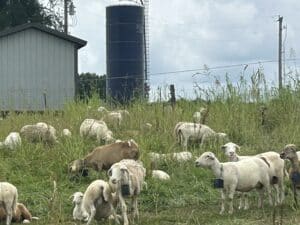
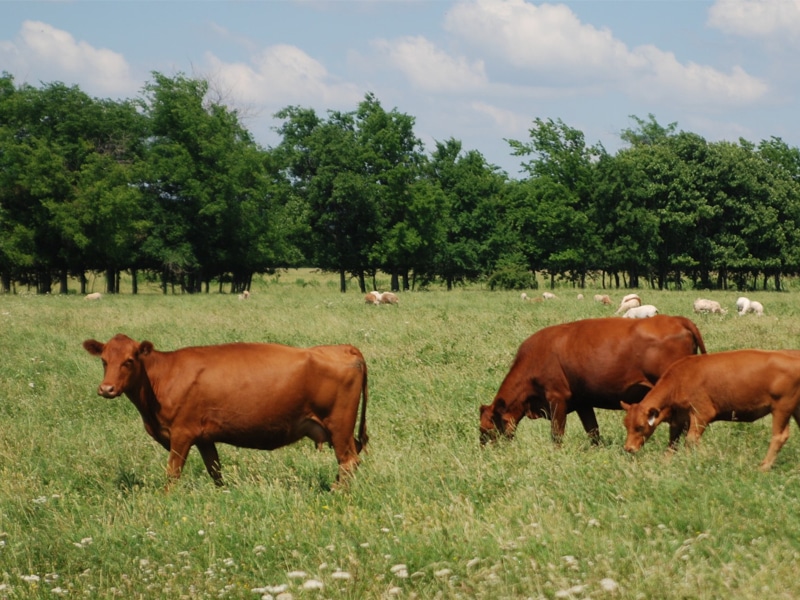
Virtual fencing can be used on sheep in addition to cattle. Photo: Linda Coffey
If you have a small herd in a small paddock, for example, virtual fencing may create more problems than it solves. Frequent boundary interactions increase collar activity and decrease battery life, as well as potentially making animals less responsive to the warnings because they’re experiencing them so often. Many company representatives are upfront about this limitation and acknowledge that their systems are designed for large-scale cattle operations.
Note that, depending on the ways you currently move your animals in a multi-paddock system, it will require some training time for your herd, and you, to get used to the way virtual fencing works. Not every animal respond to the system, either. A large ranch may be able to identify and cull individual animals that consistently challenge the virtual boundary. That is a very different proposition for someone with a small or registered herd.
Virtual fencing should not replace a good perimeter fence for keeping all your animals off critical areas like the road and neighbors’ yards and crops. If batteries fail or a collar rubs off, that animal won’t be contained. Also, remember that, unlike electric fencing, virtual fencing won’t play a role in deterring predators from accessing your livestock. Sometimes, fencing can be as important for keeping predators out as for keeping stock in.
But there are situations where virtual fencing starts to make a lot of sense. Maybe you need to rotate cattle through a landscape where putting up a physical fence is difficult. Maybe labor is your biggest limitation. With this technology, you can monitor movement of the herd in a large grazing allotment and locate animals whenever you are ready to gather them. Maybe you want to keep livestock away from a sensitive area without building another permanent fence. Or maybe you want to sort cattle without physically gathering the herd. Those aren’t hypothetical possibilities. Producers are already experimenting with these applications.
Virtual fencing isn’t without its challenges. Some users have had problems with collar durability, and changing collars in the field when batteries fail can be inconvenient and time consuming. Other users point out that both extreme weather and rugged terrain can make the use of virtual systems more expensive because they require more equipment. Realistically, the price of virtual systems can put them out of reach for many small-scale producers. The technology is still developing, and companies are continually improving their products, so it’s worth keeping an eye on product advances if you’re interested in trying virtual fencing.
Many early adopters of virtual-fence technology are sharing their experiences at grazing conferences and field days. Check our calendar to find events across the country. The best way to find out how virtual fence will work for you is to learn from the experiences of producers in terrain like yours, with stock and grazing systems similar to your own.
For producers interested in exploring the technology, USDA NRCS funding may also be available through programs such as EQIP and CSP. EQIP generally provides more flexibility for this type of investment. But just because there’s funding available doesn’t mean the technology is automatically appropriate.
That may be the biggest takeaway from our investigation of virtual fencing. It’s easy to get so excited about a new tool that we start looking for problems it can solve. Instead, perhaps we should do the opposite. Start with the problem. Start with the land. Start with the livestock. Start with the way you spend your time. Then ask whether the invisible fence belongs there. Because virtual fencing may be one of the most interesting new tools available to livestock producers. But a new tool isn’t necessarily a better tool. Sometimes the best technology is the technology that solves your problem. An appropriate technology.
Further Resources
No Fence, No Problem? Virtual Fencing on a Montana Forest Allotment, Ranchers Stewardship Alliance
https://www.youtube.com/watch?v=vqpLTZ2VTJM
Virtual Fencing Webinar Session 1: Comparing Companies and Rancher Experiences, California Rangeland Trust
https://www.youtube.com/watch?v=E5CIDt6bfOs
Virtual Fencing Webinar Session 2: Costs, Considerations, & Funding Opportunities, California Rangeland Trust
https://www.youtube.com/watch?v=gXJgUoAh1J4
This blog is produced by the National Center for Appropriate Technology through the ATTRA Sustainable Agriculture program, under a cooperative agreement with USDA Rural Development. NCAT.ORG/ATTRA.
Photo credit, top image: Kason Haby