Venta directa de carne: primeros pasos
Proporcionado por:
Índice
-
Introducción
-
Cómo conocer tu ubicación
-
Marketing: ¿Qué vender?
-
Marketing: Cómo vender tus productos
-
Normas para la venta de carne
-
Administración de Empresas
-
Claves para el éxito
-
Conclusión
-
Recursos adicionales
-
Apéndice: Marketing étnico de la carne de cordero y de cabra para las fiestas
Escrito por
Recursos relacionados
Cómo trabajar con tu procesador de carne...
Plantas procesadoras de carne: Mejorando la rentabilidad...

Marca de la granja: Cómo vender tu...
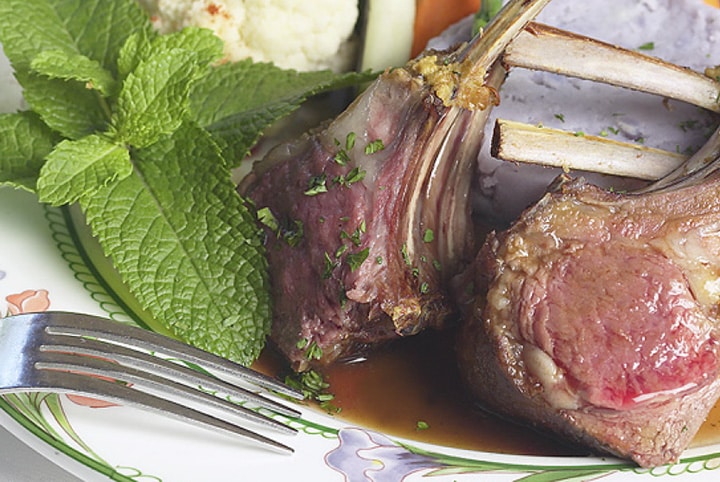
Consejos para la comercialización de ovejas y...
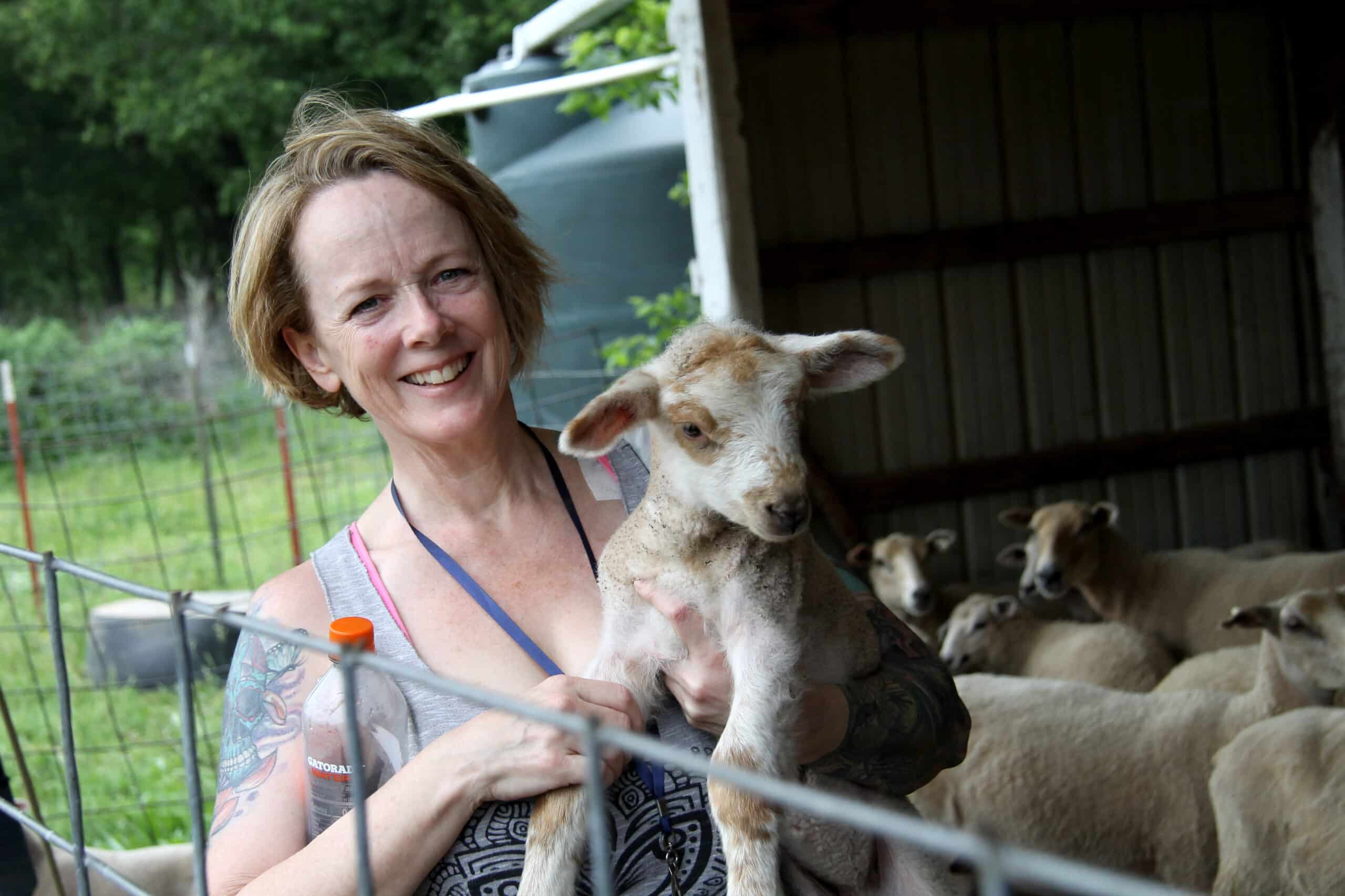
Comercialización directa de cordero: Un pat...
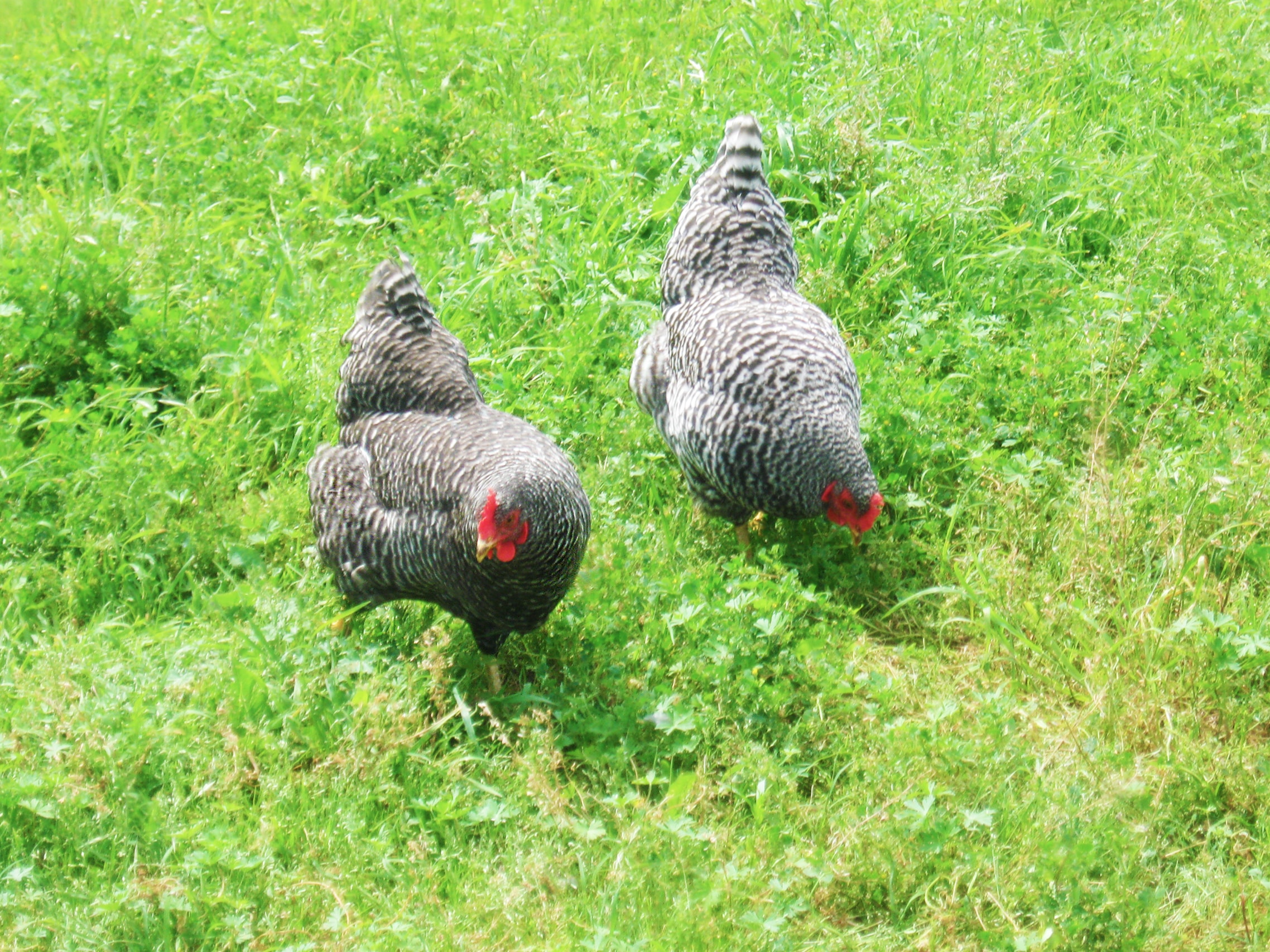
Hoja informativa: Productos avícolas orgánicos...
Episodio 128. Marketing directo...
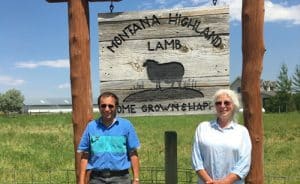
Episodio 129. Marketing directo...
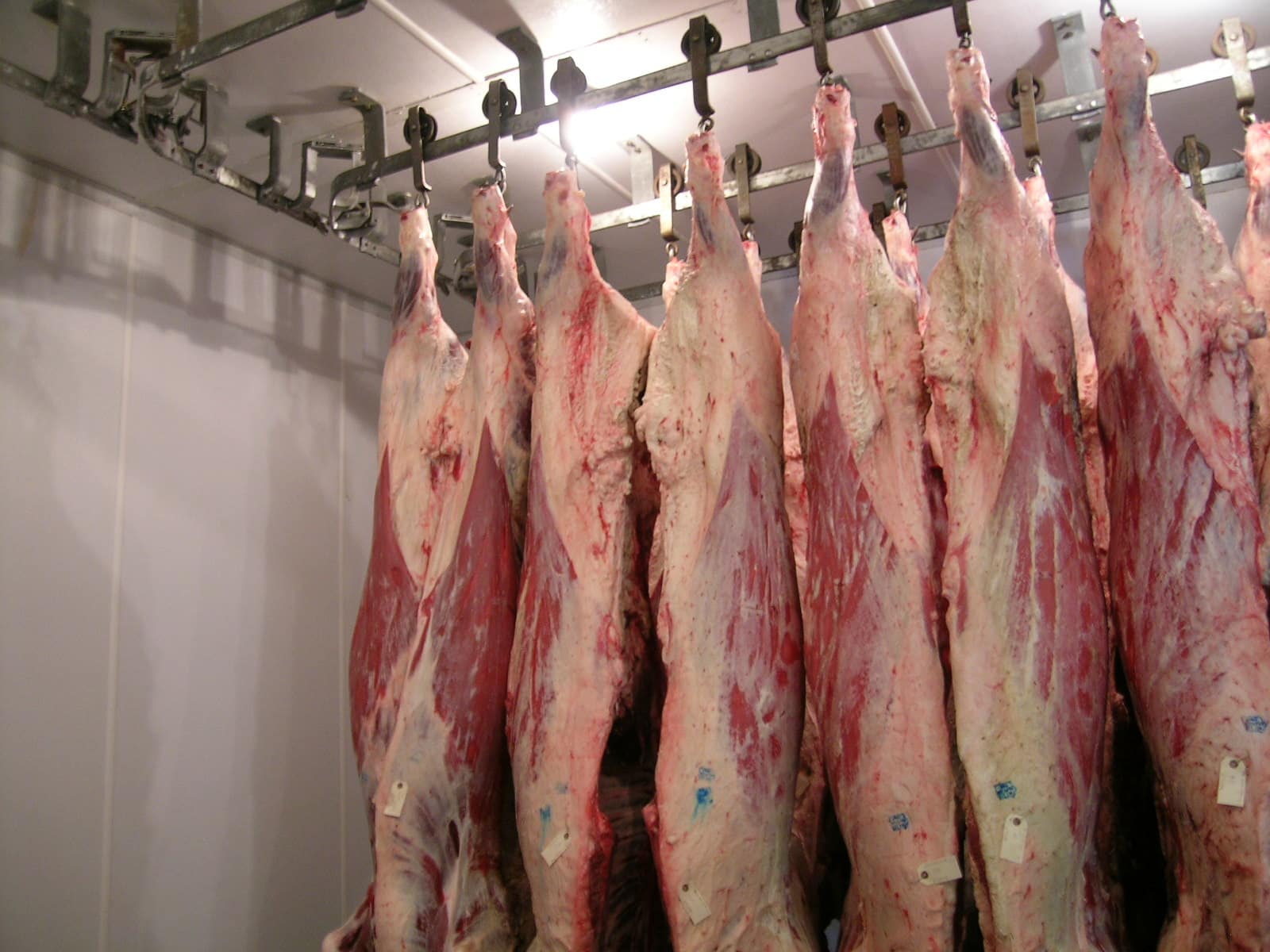
Episodio 136. Marketing directo...
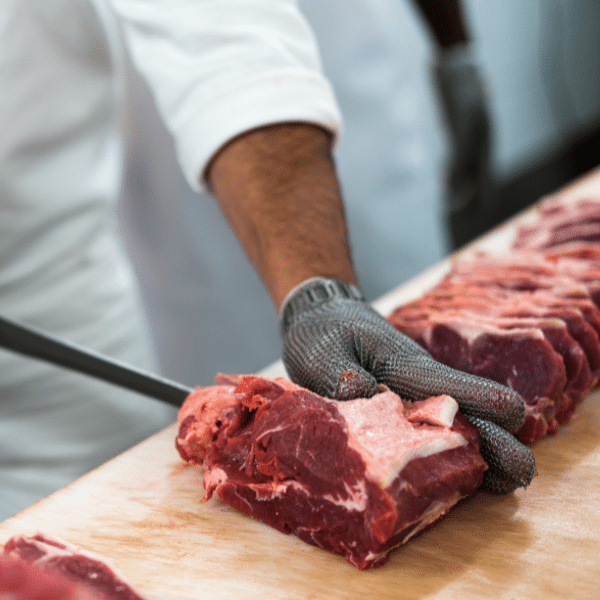
Episodio 137. Marketing directo...
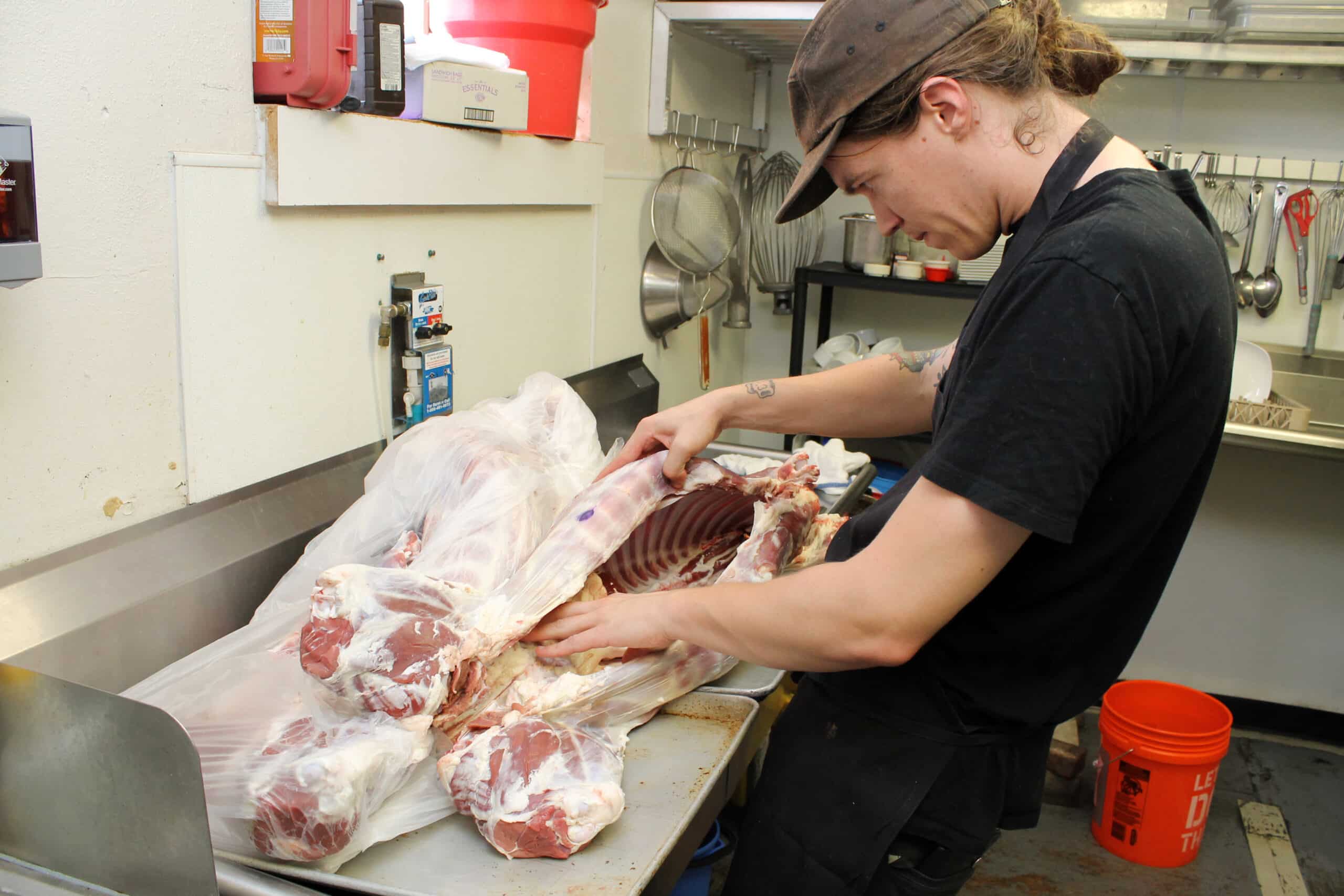
Los productores ganaderos sabrán que el éxito o el fracaso de su negocio depende de su capacidad para vender animales y obtener ganancias. Esta publicación describe los aspectos que deben tenerse en cuenta y los procesos necesarios para comenzar a comercializar ganado en forma de carne directamente a los consumidores, en lugar de seguir la ruta tradicional de venta de ganado como producto básico. Los autores, quienes son ganaderos y comercializadores en la vida real, describen técnicas de comercialización exitosas, comenzando por la ubicación y los factores que pueden impulsar la demanda, pasando por el procesamiento, la fijación de precios y las regulaciones de la venta a los clientes actuales interesados en alimentos locales, todo ello teniendo en cuenta la rentabilidad del productor. También se incluyen recursos para un estudio más profundo. Esta publicación es de gran utilidad para los productores que ya se dedican a la cría de ganado y desean mejorar su rentabilidad mediante la diversificación de la comercialización.
Introducción
Las carnes de producción local se han vuelto muy populares entre los consumidores que valoran adquirir productos de agricultores y ganaderos locales, para saber de dónde provienen sus alimentos y cómo se producen.
Los productores pueden aprovechar las ventas locales directas como una oportunidad para quedarse con una mayor parte de las ganancias y construir una base sólida de clientes. Sin embargo, la venta de carne requiere conocer el mercadotecnia, las regulaciones, el procesamiento, las relaciones con los clientes y la administración empresarial específicos de su localidad.
Un negocio local de carne de ganado se caracteriza por una relación de interdependencia entre el cliente, el productor y el procesador, y depende de la comprensión y la cooperación de todas las partes. Esta publicación aborda los factores importantes que los productores deben tener en cuenta al iniciarse en la venta directa de carne. Consulta con las autoridades estatales para obtener información relevante para tu localidad y así complementar los conocimientos generales que proporcionan los autores.
¿Y qué hay de las aves de corral y los conejos?
Aunque esta publicación no aborda el tema de las aves de corral ni los conejos, estas actividades siguen siendo relevantes para muchos productores locales de carne. Consulte las siguientes publicaciones gratuitas de ATTRA para obtener información sobre esas especies:
- Producción de pavos criados en pasturas
- Procesamiento de carne de aves de corral: cómo elegir un método para tu granja
- Procesamiento avícola a pequeña escala
- Producción sostenible de conejos a pequeña escala
- El procesamiento de la carne de aves de corral (entrada de blog)
SARE también cuenta con información relevante para los productores avícolas. Véase, por ejemplo, Avicultura en pastoreo del siglo XXI: Una guía empresarial de Letterbox Farm.
Cómo entender tu ubicación
El lugar donde vives influye en muchas de tus decisiones y oportunidades. Los clientes, los procesadores, la competencia, las regulaciones y los canales de comercialización dependen de la ubicación específica y afectan a tu negocio. Por ejemplo:
- ¿Quiénes viven en tu comunidad y qué mercados ofrecen para tus productos?
- ¿Hay grupos étnicos que prefieran determinadas especies, cortes o productos especiales?
- ¿Hay platillos tradicionales en la región?
- ¿Cómo afecta el ingreso mediano al mercado?
- ¿La clientela es rural o urbana?
- ¿Qué tan grande es el interés local en comprar directamente a los agricultores?
- ¿Dónde está la planta procesadora de carne más cercana para la especie que crías?
- ¿Cuentan con la inspección del USDA? (Esto influye en tus opciones de comercialización, como se explica más adelante en esta publicación.)
- ¿Cuánto cobran?
- ¿Qué servicios ofrecen? Por ejemplo, ¿se dedican al ahumado, al curado o a la producción de salchichas bratwurst o palitos de aperitivo?
- ¿Se adaptarán a tu horario y línea de productos deseados?
- ¿Cuánto tiempo dura el viaje y cuánto cuesta?
- ¿Quiénes son tus competidores?
- ¿Qué precios están cobrando?
- ¿Cómo vas a diferenciar tus productos de los de ellos?
- ¿A qué entidades debes consultar para conocer las normas pertinentes en tu estado?
- ¿Dónde puedes vender productos? (Nota: esto depende de la disponibilidad de
Procesamiento inspeccionado por el USDA o por las autoridades estatales. Consulte la sección sobre procesadores y
Tabla 1: Consideraciones sobre el uso de diferentes sedes).- Mercado de agricultores o Agricultura Apoyada por la Comunidad (CSA)
- Instituciones, restaurantes y tiendas de abarrotes
- Tienda agrícola
- Ventas en línea con envío
- Venta directa a particulares, por animales enteros o medios animales
Lo que puedas vender depende de la capacidad de procesamiento a la que tengas acceso, y el procesador que necesites dependerá de lo que quieran tus clientes y de cómo quieras vender los animales. Es posible que no todos los tipos de procesadores estén disponibles en tu localidad, y las regulaciones determinan cómo puedes vender según el procesador que utilices. Consulta el recuadro sobre «Tipos de procesadores de carne» para obtener una visión general.
Tu ubicación influye en tus opciones para los mercados directos al consumidor, por lo que es importante evaluar todos los factores mencionados anteriormente para tu zona antes de lanzarte a las ventas. Sin embargo, encontrar tu propio nicho puede ayudarte a construir un negocio exitoso en cualquier lugar. La siguiente sección aborda algunos puntos clave sobre el mercadotecnia. Las estrategias de mercadotecnia pueden marcar la diferencia entre el éxito y el fracaso de tu negocio, y no se logran por casualidad.
Tipos de procesadores de carne: inspeccionados y exentos
Plantas inspeccionadas por el gobierno federal o por el USDA: estas plantas pueden procesar carne para su venta en todo el país.
Plantas inspeccionadas por el estado: solo alrededor de la mitad de los estados cuentan con un programa de inspección estatal. Las plantas inspeccionadas por el estado pueden procesar cualquier tipo de carne, pero esta se marca para su venta únicamente dentro de ese estado.
Plantas de procesamiento a medida exentas: las plantas de procesamiento a medida pueden procesar carne para uso personal. La carne procesada en estas plantas lleva el sello «no para la venta». La carne procesada por estas plantas no puede venderse en cortes individuales, pero quienes compren un cuarto, la mitad o un animal completo pueden optar por utilizar una planta de procesamiento a medida para su procesamiento.
Sacrificio en la granja (exento de inspección): el propietario procesa los animales para su consumo personal (las normas varían según el estado).
Mercadotecnia: ¿Qué vender?
En esta sección se describen algunas de las preguntas que debes hacerte y las decisiones que debes tomar para definir una línea de productos viable. A medida que leas esta publicación, ten en cuenta tu capacidad de producción. La demanda de los clientes es el factor principal en el desarrollo de una empresa de venta directa de ganado, pero las consideraciones comerciales que se presentan en esta publicación también son importantes.
Clientes
Es imprescindible saber qué mercados existen dentro de una comunidad. Las diferentes culturas valoran ciertos cortes de carne por encima de otros, y la demanda de carne suele girar en torno a las fiestas y tradiciones de cada cultura, como el pavo, que es el plato principal del Día de Acción de Gracias, o el jamón en Pascua. Comprender las diversas etnias que hay en la comunidad puede ayudarte a desarrollar productos con potencial de mercado y te proporcionará un punto de enfoque para tus ventas. Por ejemplo, consulta el Apéndice para ver una lista de fiestas étnicas que influyen en las ventas de cordero y cabrito. Además, investigar el ingreso medio de tu zona puede orientarte a la hora de establecer los precios y determinar qué productos se venderían mejor. La presencia de un gran mercado urbano puede ofrecer una base de clientes más amplia y, a menudo, menos sensible al precio que un mercado rural.
Cómo vender tu historia
Antes de pensar en los productos que pretendes vender, ten en cuenta que lo primero que venderás es tu historia. La publicación de ATTRA «Farm Branding: Selling Your Products Through Story» ofrece ideas y orientación para pensar y diseñar el nombre de tu granja, el logotipo y otros componentes de la marca de tu granja. Recuerda que vender tus productos requiere conectarte con tus clientes para que elijan comprarte a ti en lugar de a la tienda u otros vendedores directos.
Las ventas directas de carne pueden realizarse en forma de cortes individuales, animales enteros o medios animales, o bien en paquetes de carne que contengan una selección de cortes específicos. Además, el productor puede optar por ofrecer una variedad de carnes (carnes de res, cordero, aves, etc.). ¿Qué es lo que quieren tus clientes potenciales? Por ejemplo:
- ¿Se prefieren dietas especiales para el ganado (alimentado con pasto, orgánico)?
- ¿Existen disposiciones relativas a los nitratos o nitritos en los productos de valor agregado?
- ¿Habrá alguna alergia problemática, como a la glutamato monosódico (MSG), de la que debas estar al tanto?
- ¿Hay grupos étnicos en la zona a quienes les entusiasme encontrar un producto?
- ¿Habrá compradores para productos especiales, como órganos, manteca de cerdo y huesos, que permitan generar ganancias adicionales?
- ¿Necesitas ofrecer a los clientes recetas y recursos en línea que te ayuden a impulsar las ventas de cortes menos populares, como huesos con tuétano, lengua de res, vísceras o jarretes?
- ¿Qué productos de temporada o emblemáticos querrán tus clientes? Por ejemplo, la demanda de carne para asar a la parrilla puede aumentar en verano, y la de carne para guisos o cortes para asar a fuego lento, en invierno.
El otro factor que influye en la decisión de qué vender, además de los intereses de los consumidores, es la disponibilidad de recursos en la granja. Vender carne implica cuidar del ganado en algún momento, por lo que evaluar el tiempo, la mano de obra, las finanzas, el alimento, el equipo y las necesidades del ganado sigue siendo fundamental para que la operación tenga éxito. Consulta la sección de Gestión empresarial para obtener más información sobre estos aspectos importantes del negocio.
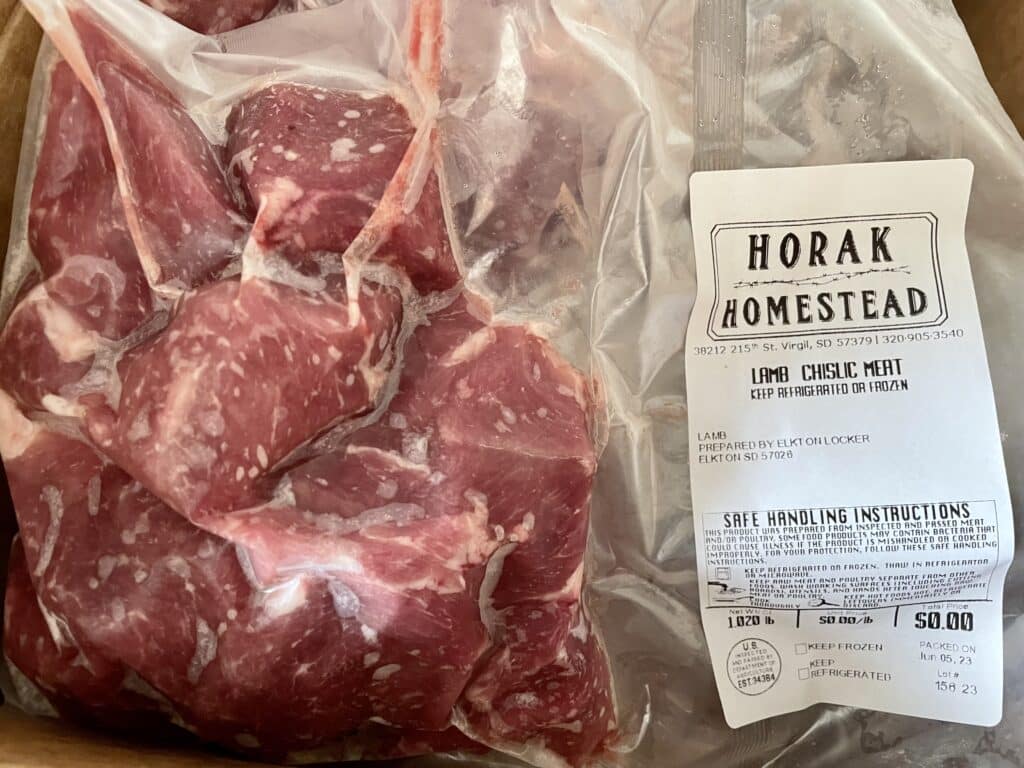
El chislic es una especialidad local de Dakota del Sur. ¿Qué cortes especiales busca tu comunidad? Colabora con tu procesador para ofrecer carnes de temporada y especialidades. Foto: Alisha Horak, Horak Homestead LLC
Procesadores
Dado que tu procesador de carne es un socio comercial fundamental, encontrar uno a una distancia razonable que pueda satisfacer tus necesidades y los deseos de tus clientes es clave para tu éxito. ¿Qué tan lejos tendrás que conducir para llegar a un procesador inspeccionado por el USDA? En algunos estados, la respuesta es «horas». Tus alternativas son recurrir a una instalación inspeccionada por el estado o a un procesador a medida. Un procesador a medida resulta útil cuando vendes medias reses y reses enteras a clientes para su consumo familiar. Los empaques llevarán el sello «No para la venta» para diferenciarlos y mantener la carne fuera del mercado. Esta carne suele ser más barata para el cliente porque se vende a granel, y es más fácil para el productor, por la misma razón. El cliente puede necesitar mucho espacio en el congelador y dinero en efectivo, especialmente en el caso de una res completa, por lo que no todos los clientes están interesados en esta opción.
Los clientes que deseen comprar cortes individuales y las instituciones que quieran vender al público (como supermercados, restaurantes y escuelas) deben contar con carne inspeccionada por el USDA. La excepción es que la carne procesada en instalaciones inspeccionadas por el estado puede venderse dentro de ese estado. Algunos estados tienen acuerdos de cooperación que permiten las ventas entre estados, pero no des por sentado que este sea el caso en el lugar donde vives. En resumen: la carne inspeccionada por el USDA puede venderse en cualquier lugar, pero las ventas de otros tipos de procesadores están restringidas.
Toma en cuenta el costo, tanto en tiempo como en dinero, de viajar hasta el matadero con el animal vivo y volver a recoger la carne. Si el matadero está cerca, eso representa una gran ventaja para tu negocio.
Estas podrían ser algunas de las preguntas que quieras hacerle al procesador:
- ¿Tienes certificación en manejo humanitario?
- ¿Realizan procesos especiales, como los de productos orgánicos, halal o kosher?
- ¿Qué tipo de material de empaque usas? (¿sellado al vacío? ¿envuelto en papel?)
- ¿Cuál es su sistema de etiquetado?
- ¿Cuáles son los cargos relacionados con la aprobación de la etiqueta?
- ¿Cuáles son sus precios?
- ¿Qué procesos de valor agregado ofrecen? (por ejemplo, ahumado, curado, elaboración de salchichas bratwurst o palitos de aperitivo)
- ¿Con cuánta anticipación hay que programar las citas?
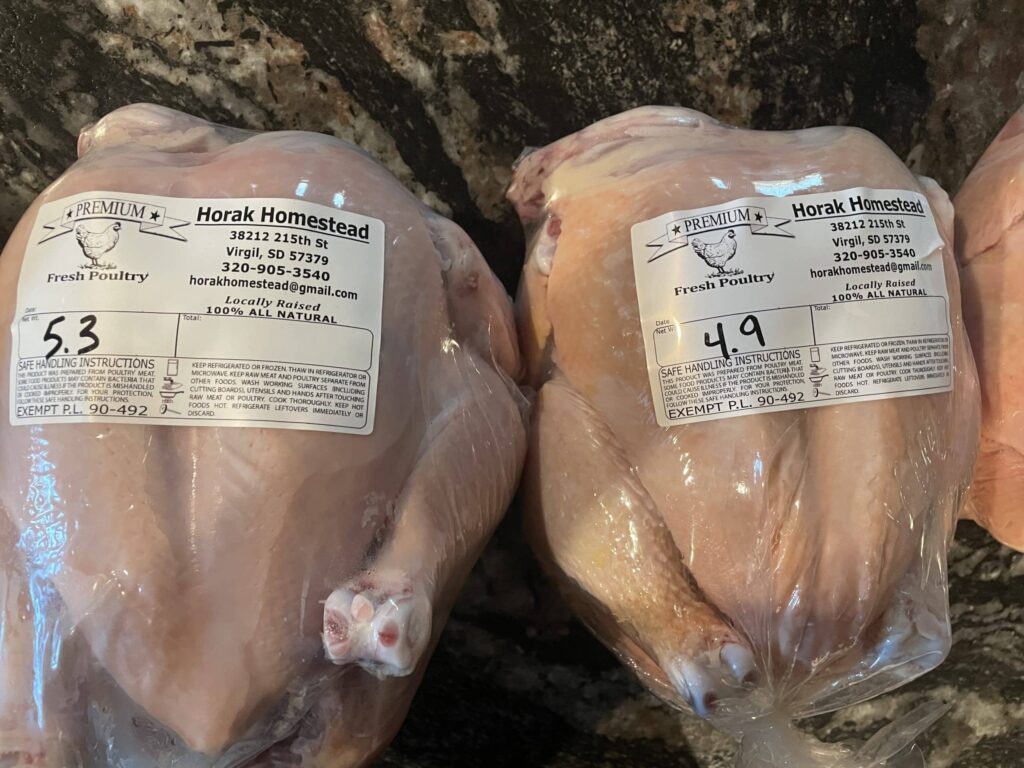
Una etiqueta agrícola debe contar con la aprobación correspondiente y debe incluir toda la información requerida. Un logotipo atractivo es un valor agregado y ayuda a transmitir la calidad profesional de un producto de primera. Foto: Alisha Horak, Horak’s Homestead LLC
Los procesadores de carne tienen un trabajo difícil. Consulte la publicación de ATTRA Cómo trabajar con su procesador de carne para comprender mejor su perspectiva y saber cómo trabajar de manera eficaz con su procesador. La calidad del trabajo de procesamiento varía, por lo que es recomendable buscar recomendaciones de productores locales. Cuando encuentre un buen procesador, haga todo lo posible por ser considerado y convertirse en un cliente que ellos quieran conservar.
Aspectos especiales a tener en cuenta en los productos de valor agregado
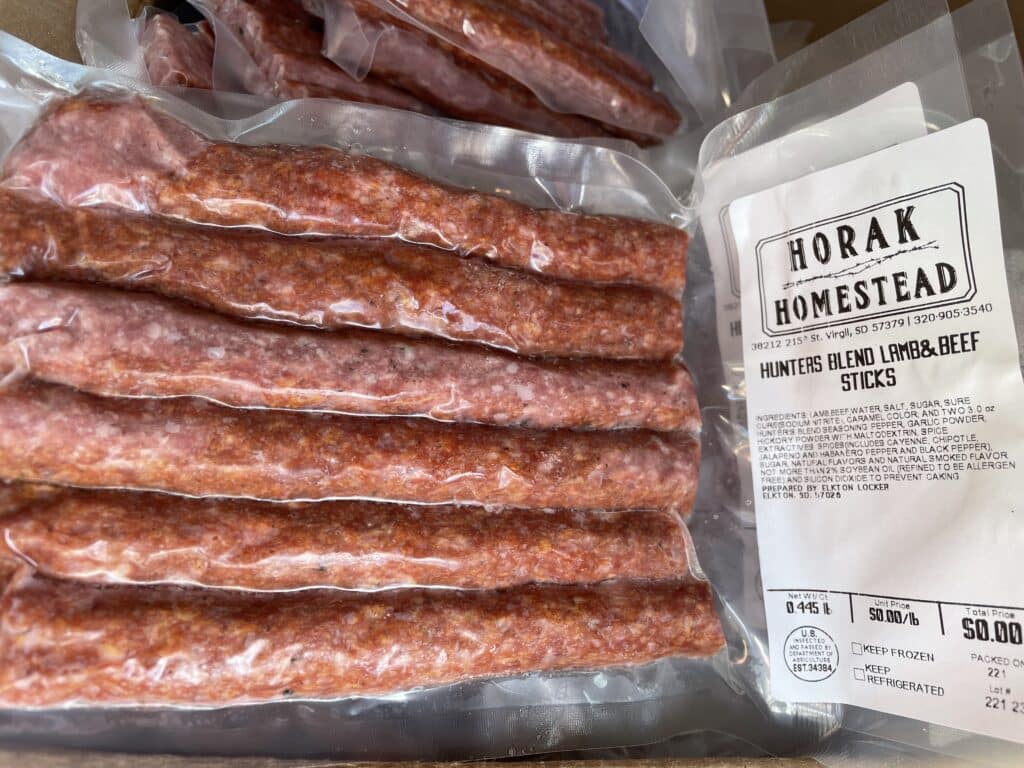
Es importante preguntar al procesador cuáles son sus opciones de productos de valor agregado y cómo se elaboran, para garantizar la transparencia hacia el consumidor. Productos como el charqui suelen contener nitratos o nitritos para facilitar el proceso de curado. Los ingredientes aparecen en la etiqueta de los productos inspeccionados, pero obtener con anticipación una lista de los condimentos utilizados puede ayudar al productor a decidir si se deben permitir en su producto colorantes, glutamato monosódico (MSG) o ciertos alérgenos. Además, los productos de valor agregado pueden tardar más tiempo en completarse debido a los procesos de marinado, curado y división en lotes. Averigua cuándo debes programar una cita con el procesador para garantizar un suministro oportuno a los clientes. Ten en cuenta que tal vez no sea factible mantener un suministro continuo de cortes populares, como el tocino, que a menudo se vende más rápido, lo que deja un exceso abrumador de otros cortes, como los asados de paleta.
Este empaque resalta el producto y deja mucho espacio para la etiqueta informativa. Los clientes querrán conocer los ingredientes de productos de valor agregado como estos palitos de carne. Foto: Alisha Horak
Almacenamiento
En muchos lugares, los productores tendrán que entregar varios animales al procesador de una sola vez y recoger una gran cantidad de carne en un solo viaje para reducir el tiempo y los costos de combustible que esto implica. Sin embargo, esto genera otro costo: el almacenamiento de tu producto. ¿Tu procesador alquila instalaciones de almacenamiento o tendrás que comprar tus propios congeladores? ¿Cuenta con el espacio adecuado (y la infraestructura eléctrica) para este fin, y puede cumplir con los requisitos sanitarios estatales para el almacenamiento de carne? Estas preguntas surgen a medida que su negocio crece y pueden limitar su capacidad. Para obtener información más detallada sobre cómo calcular cuánto espacio de congelación necesitará, según las libras de carne que puede esperar obtener de una canal, consulte los Recursos adicionales.
Revisa con frecuencia los congeladores para almacenar carne y equípalos con un termómetro y una alarma que te avise cuando se alcance la temperatura máxima. Los generadores de respaldo pueden ser útiles en caso de corte de luz.
Rango de precios
Establecer un precio por unidad es esencial para la rentabilidad. El costo de procesamiento, el costo de los animales, el rendimiento, el alimento, la mano de obra, la gasolina y el tiempo son factores que hay que tomar en cuenta al decidir cuánto cobrar. Puede ser útil comparar los precios de otros ganaderos locales, el mercado de subastas y las tiendas de abarrotes para determinar un rango de precios común. Hay que encontrar un equilibrio entre mantenerse competitivo y no menospreciar el esfuerzo invertido en la cría del producto. Si su producto se cría de manera única (por ejemplo, orgánico) o se procesa de manera especial (por ejemplo, kosher, halal), es posible que no tenga una comparación local. En ese caso, busca en línea otras empresas y toma en cuenta tu ubicación; luego, prueba tus precios en tu comunidad. Y, como siempre, es fundamental contar la historia de tu granja y de tu producto. ATTRA ofrece recursos para ayudarte con la fijación de precios de la carne. Las publicaciones de ATTRA «Direct Marketing Lamb: A Pathway» y «Hogs: Pastured and Forested Production» incluyen más información sobre cómo determinar los precios y otros aspectos de la comercialización de la carne.
Mercadotecnia: Cómo vender tus productos
Puedes producir las mejores chuletas de cordero, pero si nadie sabe que existen, no ganarás ni un centavo. La comercialización de tu producto es uno de los aspectos más importantes de tu explotación ganadera. Debes decidir cómo y dónde quieres comercializar tus productos. Tus estrategias pueden ir desde instalar un letrero publicitario a lo largo de la cerca de tu pastizal, frente a la carretera, hasta publicar anuncios en las redes sociales. Identificar quiénes (y dónde) son tus clientes potenciales puede ayudarte a determinar cómo llegar a ellos.
Independientemente de la vía de mercadotecnia que elijas, es muy útil tener siempre a la mano una tarjeta de presentación física o electrónica, ya que nunca se sabe cuándo podrías conocer a un cliente potencial. Tu negocio necesitará algunas herramientas promocionales, como un logotipo, una etiqueta y tarjetas de presentación. Consulta la guía de ATTRA «Marca agrícola: cómo vender tus productos a través de una historia» de ATTRA para obtener más información sobre cómo diseñar tu marca.
Puntos de venta
Considera cuál es el público objetivo de tus productos y hasta qué punto puedes llegar. Consulta la Tabla 1: Consideraciones sobre el uso de diferentes lugares, para ver una lista de las ventajas y consideraciones de cada una de las opciones que tienes en lugares donde se cuenta con procesamiento inspeccionado por el USDA. Cuando haya un procesador a medida disponible, podrías pensar en vender animales enteros o por mitades a los clientes. En ese caso, vendes el animal vivo y lo entregas al procesador en la fecha programada. Tu cliente te paga por el animal vivo, le da instrucciones de corte al procesador, le paga sus honorarios y recoge la carne. El productor puede optar por encargarse de parte del trabajo para que sea más conveniente para el cliente y, en ese caso, cobra lo suficiente para cubrir esas tareas. Esto puede permitir que el cliente compre carne local a granel a un precio más atractivo y que el productor evite cualquier costo de almacenamiento o inventario.
| LUGAR | VENTAJAS | CONSIDERACIONES |
| Mercado de agricultores o Agricultura Apoyada por la Comunidad (CSA) |
|
|
| Restaurantes/ Tiendas de abarrotes |
|
|
| Tienda agrícola |
|
|
| En línea/Envío |
|
|
Cara a cara: Mercado de agricultores
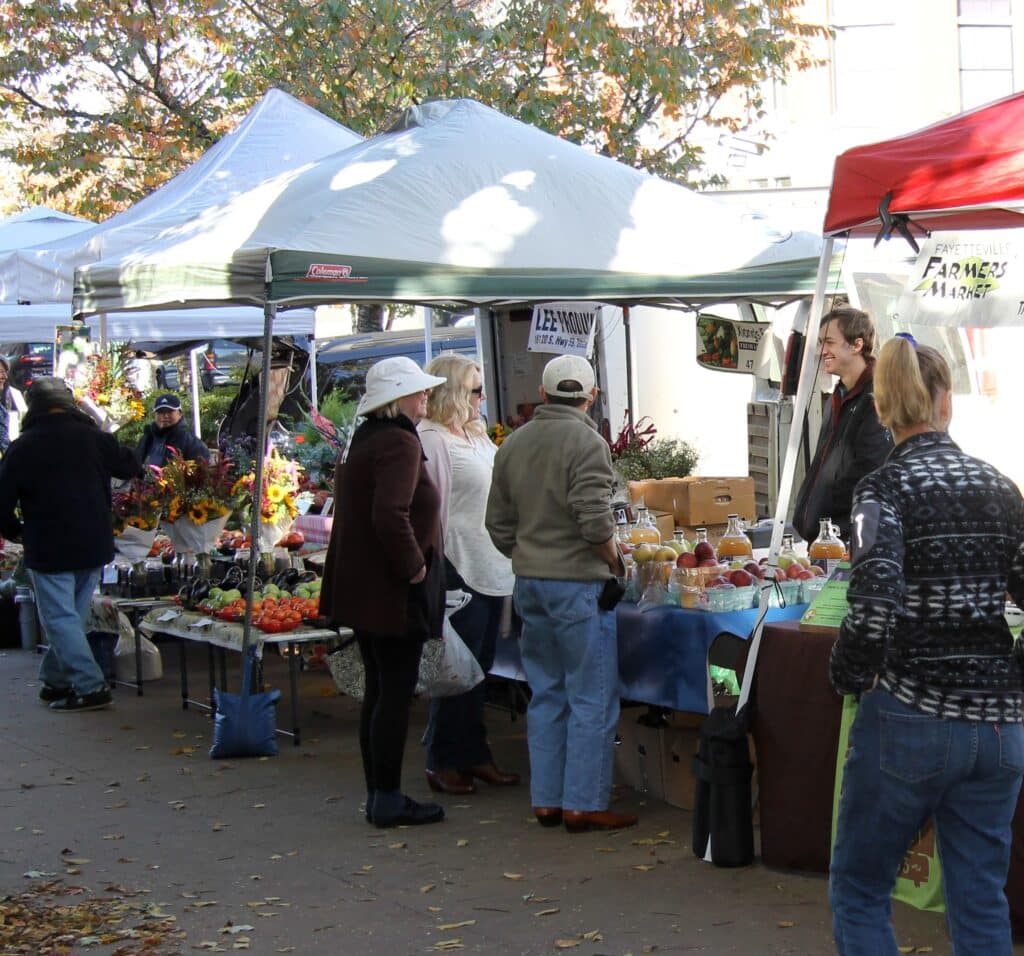
Los mercados de agricultores te permiten vender tu producto al tiempo que interactúas con tu clientela, lo que fortalece su confianza en tu producto. Los clientes pueden conocerte, preguntarte sobre tus prácticas, pedirte consejos sobre cómo preparar tu producto y desarrollar una relación contigo. Asegúrate de conocer a fondo tu producto, tus prácticas y la industria. Estar bien informado y poder responder a las preguntas de los clientes les da confianza para comprar tu producto. A los clientes les gusta saber que están contribuyendo a apoyar la agricultura local y, posiblemente, a ayudar a abordar problemas como el cambio climático o la salud del suelo. Los mercados de agricultores exigen un compromiso de tiempo considerable, y tu presupuesto debe incluir los gastos de mercadotecnia y la mano de obra necesaria para asistir a los mercados. Los mercados suelen requerir un compromiso de al menos medio día, y por lo general cobran una cuota por instalar un puesto.
Un mercado de agricultores con mucha afluencia de público y cercano a tu granja te ayudará a conocer a los clientes. Sin embargo, también te tomará mucho tiempo. Foto: Robyn Metzger, NCAT
Cómo conectarte con tu cliente
¡Conoce tu producto y cómo prepararlo! Hace poco, una clienta se puso en contacto conmigo para preguntarme cuáles eran mis formas favoritas de preparar chuletas de cerdo. Me dijo que normalmente solo las asaba a la parrilla, pero que quería aprender otras formas de prepararlas. Personalmente, disfruto cocinar y me gusta preparar platos de diversas cocinas de todo el mundo. Dicho esto, y sin conocer los intereses de esta clienta, le envié algunas recetas con diferentes estilos de preparación. Le envié chuletas japonesas tonkatsu con costra de panko, chuletas polacas empanizadas y fritas (Kotlet Schabowy) y chuletas vietnamitas a la parrilla con limoncillo. También le di algunas recomendaciones sobre acompañamientos para las chuletas. Pensé que estas recetas le permitirían probar una nueva forma de preparar las chuletas de cerdo, pero que fueran lo suficientemente fáciles de seguir como para que no se sintiera intimidada. A la semana siguiente, se comunicaron de nuevo para decirme que les habían encantado las chuletas vietnamitas al limoncillo y que querían comprar más chuletas de cerdo para probar las otras recetas. Hay tantas formas deliciosas de preparar el producto que producimos, pero es posible que los clientes no compren un corte porque no saben cómo prepararlo. Con algunas recomendaciones accesibles, podemos generar confianza en nuestros consumidores para que compren diferentes cortes que normalmente podrían pasar por alto.
–Tim Puczkowskyj, Sunning Dog Livestock, LLC
Presencia en línea: redes sociales y sitio web
Hoy en día, Internet forma parte integral de nuestras comunidades, y las redes sociales son cada vez más imprescindibles en tu estrategia de mercadotecnia. Es una forma relativamente sencilla y económica de llegar a una gran audiencia. El marketing en redes sociales también puede ser una forma eficaz de contar realmente la historia de tu negocio. Las redes sociales y los sitios web pueden considerarse como tu tarjeta de presentación en línea, pero con más detalles. Las fotos y los videos bien hechos, junto con los textos que los acompañan, ayudan a tu público a tener una experiencia totalmente inmersiva en tu negocio y a entender lo que están apoyando. Sin embargo, las redes sociales requieren constancia. Dada la forma en que funcionan los algoritmos, debes mantenerte al día publicando con regularidad. Si tus publicaciones no aparecen en los feeds de los usuarios, es probable que se olviden de ti. Otra opción es pagar por un sitio web, lo cual te permite realizar ventas en línea; sin embargo, es necesario tener conocimientos técnicos. También puede ser costoso: pagarle a alguien para que cree un sitio web puede costar miles de dólares y puede requerir cuotas anuales de mantenimiento.
Boletines informativos por correo electrónico
Sea cual sea la forma en que interactúes con los clientes, es una excelente costumbre recopilar sus direcciones de correo electrónico. Esto te permite crear un boletín informativo por correo electrónico para compartir tu historia y tu lista de productos de manera regular, lo que genera más ventas, mayor fidelidad de los clientes y una base más amplia, si tus clientes lo comparten con sus amigos y familiares. Esto puede ser un excelente uso del tiempo y te libera del problema de los algoritmos.
Ventas a instituciones: escuelas, restaurantes, mayoristas
Una forma de dar salida a grandes cantidades de producto es vender carne al por mayor a instituciones (supermercados, escuelas, hospitales, bancos de alimentos y prisiones). Pocos agricultores principiantes optan por vender a instituciones hasta que comprenden sus insumos y productos operativos. Aunque este canal de venta puede ofrecer un mercado confiable y permitir la diversificación, a algunos productores les ha resultado difícil satisfacer las demandas institucionales debido a la estacionalidad, los requisitos de empaque o de seguridad alimentaria, y los precios más bajos (descuentos por volumen o precios contractuales) en comparación con la venta directa al consumidor. Acceder a este mercado es un reto, pero tiene la ventaja de permitir establecer relaciones locales y hacer llegar el producto a los consumidores sin necesidad de un gran esfuerzo de mercadotecnia. Para obtener más información sobre la venta a instituciones, consulta la guía de ATTRA «Consejos para vender en mercados institucionales».
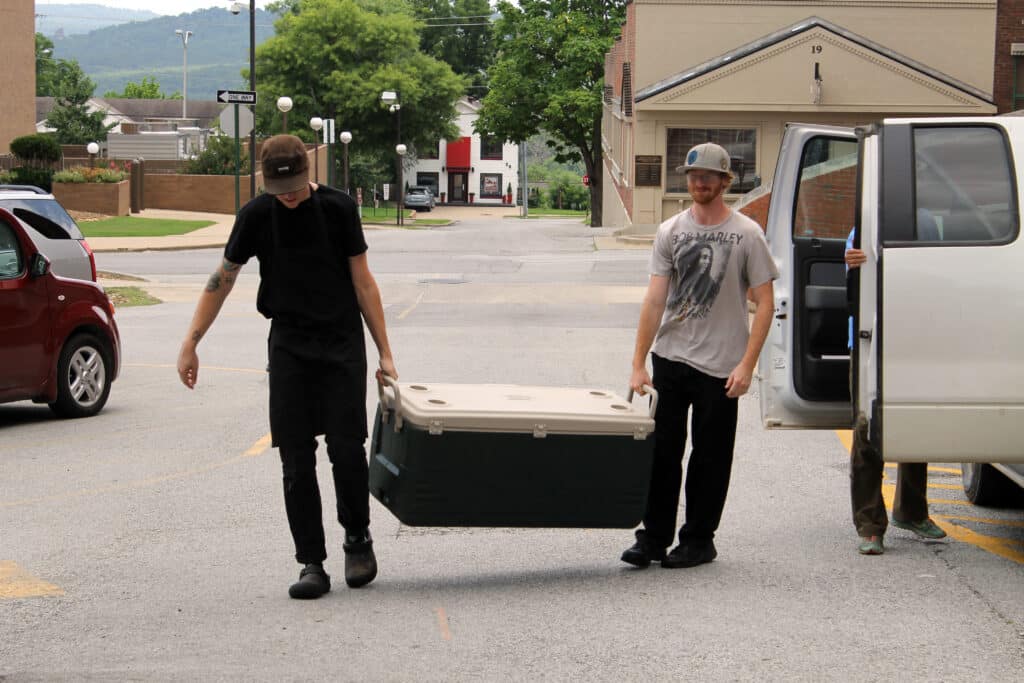
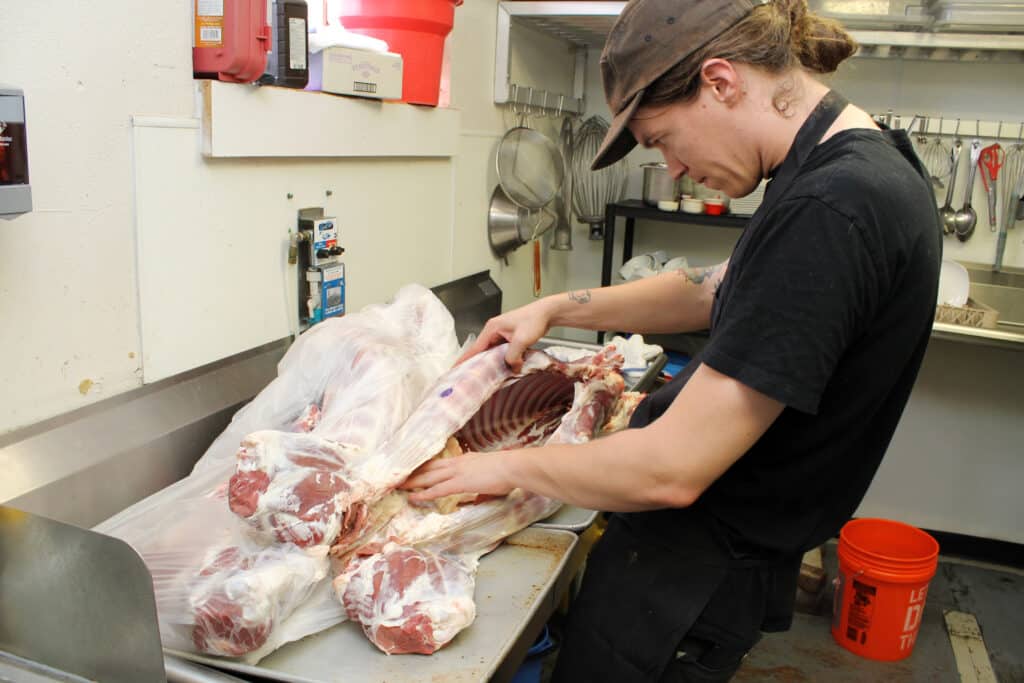
Vender un cordero entero a un restaurante es relativamente fácil y le permite al chef ser creativo al preparar diversos platillos. Que el nombre de tu granja aparezca en el menú aumentará tu visibilidad y podría generar nuevas oportunidades de venta. Aquí, dos empleados llevan un cordero refrigerado a la cocina, donde el chef lo cortará en las piezas deseadas. Para vender en el mercado de restaurantes, se requiere un procesamiento certificado por el USDA o por el estado.
Fotos: Robyn Metzger, NCAT
Cómo contar tu historia
Contar tu historia ayuda a fomentar la lealtad a la marca, y tener un producto único que los consumidores no puedan conseguir en ningún otro lugar contribuirá a impulsar las ventas. Por ejemplo, podrías desarrollar un sabor especial de salchicha bratwurst o de embutidos listos para comer. También podrías vender carne de cordero donde no está disponible en el supermercado local o comercializar una raza tradicional de cerdo. Agrega valor a tus productos al compartir tu historia y darle a tu cliente una razón para comprarte a ti. Un excelente servicio al cliente también ayuda a hacer crecer tu base de clientes. ¡Entender las necesidades de tus clientes es vital!
Sea cual sea la estrategia de mercadotecnia o la combinación que decidas utilizar, contar tu historia es imprescindible. Esto te ayudará a diferenciarte de otros productores y de las tiendas de abarrotes, y animará a los clientes a comprarte a ti. Tu historia puede incluir la historia de la tierra, las prácticas de manejo, tu historia personal y tu vínculo con tu negocio, la historia de la raza de ganado que crías o la inspiración que te mantiene motivado para dedicarte a la agricultura. Tu historia también puede resaltar la transparencia de tu negocio. A los consumidores les gusta entender cómo se producen sus alimentos y valoran la honestidad. Cuando los clientes comprenden tu proceso y tu historia, están más dispuestos a gastar un poco más para apoyar a las granjas familiares locales. Tu producto es muy diferente a la carne que se encuentra en el supermercado, y contar tu historia ayuda a identificarlo como una fuente confiable de alimentos. El boca a boca sigue siendo una forma tradicional de construir una reputación entre los consumidores.
Una vez que hayas decidido qué vías de mercadotecnia vas a explorar, prepárate para educar a tu público, lo cual forma parte del proceso de construcción de la historia. Los consumidores harán preguntas sobre tu producto, incluyendo los protocolos de alimentación y vacunación. Es posible que los clientes tengan inquietudes sobre los alérgenos y los ingredientes de los productos —especialmente los condimentos de los productos de valor agregado—, por lo que es importante saber exactamente qué contiene el producto. Además, a medida que cambian los precios y surgen nuevos desarrollos de productos, la comunicación y la transparencia son cruciales para responder al «por qué».
Afortunadamente, existen varios recursos disponibles que ofrecen información nutricional y recetas con carne. Consulte la sección «Recursos adicionales» al final de esta publicación. Poner a disposición de los clientes estos materiales en su puesto o a través de enlaces en línea les brinda inspiración para preparar deliciosas comidas con sus carnes. Ofrecer degustaciones también puede ser una excelente manera de atraer a los clientes y obtener comentarios sobre los productos. Si lo hace, asegúrese de cumplir con las normas de seguridad alimentaria que se aplican a las prácticas de degustación.
Normas para la venta de carne
Tu ubicación influye en las entidades que se encargarán de regular la venta de tu carne. Por ejemplo, es posible que debas cumplir con las normas establecidas por el Departamento de Salud del estado, del condado o de la ciudad, el Departamento de Agricultura, la Junta Estatal de Industria Animal o alguna otra entidad. Cada estado tiene nombres, organismos y procedimientos diferentes, y no podemos abordarlos todos en esta publicación.
Para saber con quién debes comunicarte, puedes llamar a tu Servicio de Extensión local o visitar el sitio web de la Red de Asistencia para Procesadores de Carnes Especializadas (NMPAN) y buscar a la persona de contacto de tu estado. Probablemente, la forma más rápida de obtener información sea consultar con otra persona de tu zona que venda carne. Te interesará saber sobre el etiquetado, el almacenamiento de la carne, las normas de los mercados de agricultores (si vas a vender allí), el impuesto sobre las ventas y más. Consulta la sección sobre Administración de Negocios para obtener más detalles.
No importa qué producto produzcas ni dónde lo vendas, debes cumplir con las regulaciones aplicables. Consultar las leyes estatales sobre alimentos caseros, visitar la junta de la industria ganadera, tu Servicio de Extensión local y el departamento de salud son buenos puntos de partida para conocer los requisitos.
Infórmate sobre las siguientes consideraciones, según sean relevantes para tus planes:
- Impuestos estatales y municipales sobre las ventas
- Contribuciones al fondo de desarrollo ganadero
- Requisitos de almacenamiento (por ejemplo, control de temperatura, registros del congelador)
- Requisitos de etiquetado (véase el recuadro adjunto)
- Normas para el servicio de alimentos (muestras, comidas)
- Seguro de responsabilidad civil
- Cualquier licencia adicional (por ejemplo, la de manipulador de carne)
- Reglas del mercado de agricultores
- Inspecciones estatales frente a inspecciones del USDA
Cuando vendes carne, pueden intervenir muchas entidades reguladoras con diferentes normas según el producto que se venda o el canal de venta. En última instancia, el lugar de venta y el volumen de ventas de tu producto determinan qué normas se aplican. Por ejemplo, si vendes carne a través de las fronteras estatales, es necesaria la inspección del USDA. Dado que las leyes estatales varían, es importante averiguar qué normas se aplican a tu situación, para que puedas evitar problemas de responsabilidad civil al vender los productos de manera legal.
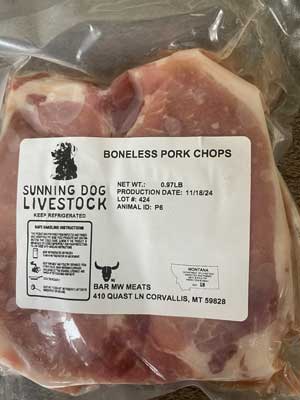
Esta etiqueta permite al productor rastrear la carne hasta un animal específico y muestra la fecha de envasado. Facilita la trazabilidad, la administración de inventario y el control de calidad. Foto: Tim Puczkowskyj, Sunning Dog Livestock, LLC
Etiquetado
El libro «Direct Marketing Lamb: A Pathway», de Dave Scott, publicado por ATTRA, contiene una sección excelente sobre el etiquetado de la carne. Toda la publicación ofrece información práctica, informativa y relevante para todos los productores ganaderos, sin importar qué tipo de carne planeen vender.
Administración de Empresas
Al iniciar una nueva forma de comercializar ganado, pueden surgir muchos problemas. En esta sección se abordan aspectos importantes de la gestión de tu negocio de comercialización directa, entre ellos el seguimiento de los costos y las ganancias, la identificación de los canales y métodos de venta más eficaces, y cómo manejar el trabajo físico y mental.
Origen del ganado
A medida que tu negocio crezca, tal vez debas replantearte cómo adquieres los animales. ¿Deberías criarlos tú mismo, como en un negocio porcino de cría integral desde el parto hasta el sacrificio? ¿O sería un mejor uso de tus recursos comprar animales destetados (denominados «animales para engorde» en la tabla adjunta) y criarlos a partir de ese momento? Por último, a medida que crezca la demanda de productos, tal vez desee ahorrar tiempo adquiriendo animales listos para el procesamiento («terminados»), o casi listos, a fin de surtir los pedidos rápidamente y manejar los problemas de oferta y demanda. Cada una de estas posibilidades tiene ventajas y consideraciones especiales, tal como se enumera en la Tabla 2.
Tabla 2: Adquisición de ganado para la venta de carne.
| Fuente: Recopilado por Alisha Horak, NCAT | ||
| FUENTE GANADERA | VENTAJAS | CONSIDERACIONES |
| Animales terminados |
|
|
| Alimentador |
|
|
| Animales reproductores |
|
|
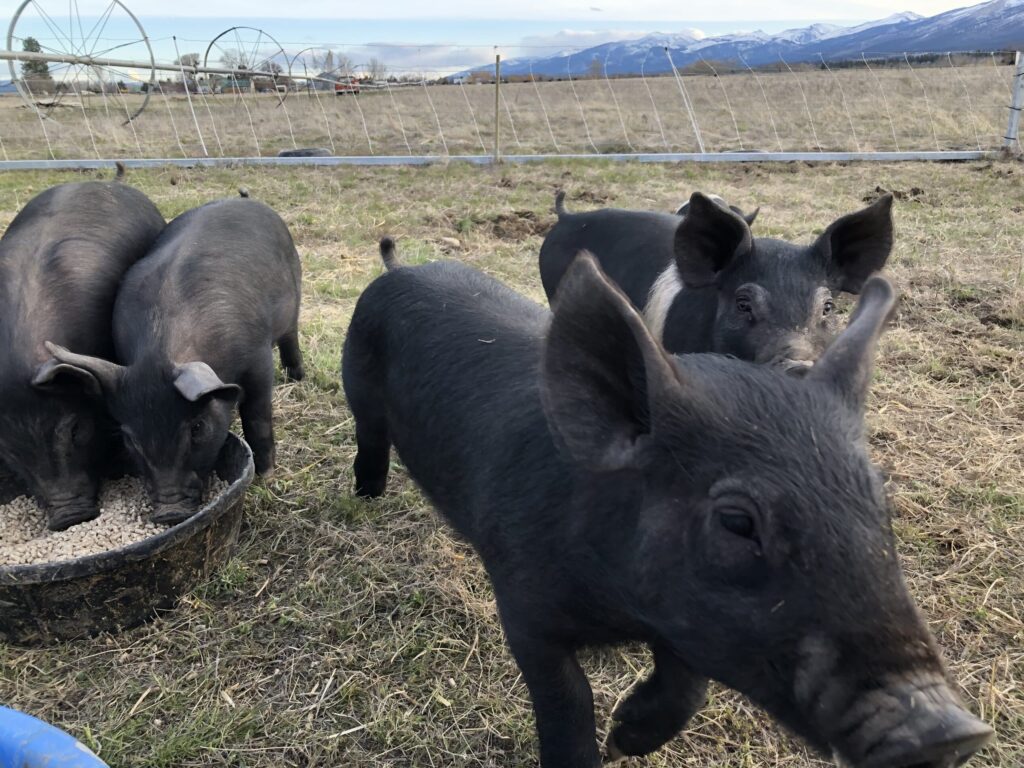
Un ganado sano y lleno de vida es la base del negocio. ¿Deberías criar tu propio ganado o comprarlo a otro ganadero? Toma en cuenta los costos de alimentación, la mano de obra y la logística para tomar una decisión. Foto: Tim Puczkowskyj, Sunning Dog Livestock, LLC
Flujo de efectivo
Si estás acostumbrado a vender en el mercado comercial o en un corral de subastas, y ahora decides engordar el ganado y vender cortes de carne en un mercado directo, hay varios aspectos que debes tener en cuenta:
- ¿Cuentas con los recursos alimenticios (pasturas y pienso comprado) para engordar a tus animales? ¿A qué costo?
- ¿Puedes permitirte esperar a recibir los ingresos por las ventas? Toma en cuenta los intereses si tienes un préstamo operativo.
- Al vender carne, tendrás que asumir los costos del alimento, el procesamiento y el almacenamiento en congelador antes de recibir cualquier ingreso por el animal. ¿Tienes el efectivo necesario para pagar esos costos?
- Cuando vendes animales vivos en un mercado ganadero, recibes el cheque por el animal completo en tus manos en más o menos una semana. Cuando vendes carne, tus ingresos llegan más lentamente y de manera gradual a medida que vas encontrando clientes. ¿Cómo vas a manejar este retraso?
- Consulta con tu estado para saber cuándo vencen los impuestos sobre las ventas. ¿Tienes un plan para pagar esos impuestos? Un recordatorio en el calendario de tu celular o algún otro sistema que te ayude a mantenerte al día con esto te ahorrará multas por pago atrasado. También podrías tener que pagar impuestos municipales sobre las ventas. Infórmate bien sobre dónde y cuándo pagarlos para evitar multas.
- Los mercados de agricultores cobran cuotas. Piensa en qué otras cuotas y gastos iniciales tendrás que pagar. ¡Asegúrate de tener un plan que no dependa de las tarjetas de crédito!
- ¿Cómo mantendrás el flujo de ventas durante la temporada baja? Por ejemplo, ¿puedes vender algunos animales enteros o medios animales, u otros productos, para reunir efectivo y pagar los gastos de procesamiento de tu próximo inventario para el mercado de agricultores? ¿Puedes encontrar un mercado que opere todo el año para seguir vendiendo tus productos? ¿Podrían las ventas de paquetes o una CSA de carne ayudar con el flujo de efectivo?
- ¿Se pueden vender animales más pequeños con un ciclo de producción más corto, como las aves de corral, para mejorar el flujo de efectivo y equilibrar los ingresos y los gastos?
- ¿Podrías distribuir la disponibilidad de los animales listos para la venta a fin de mantener un inventario más estable?
Estas son solo algunas de las preguntas que podrían ser relevantes para tu situación. Analiza cuidadosamente estos puntos al iniciar tu negocio y trata de crecer a un ritmo lo suficientemente lento como para mantener tu negocio en números negros. Consultar a un contador y a un profesional de impuestos con experiencia en el sector agrícola probablemente sea una inversión que valga la pena.
Llevanza de registros para la rentabilidad
Para que un negocio tenga éxito, debe ser rentable, pero ¿cómo sabes si estás ganando dinero? Llevar un registro de la siguiente información es una parte fundamental de la administración de tu negocio de venta directa:
- Costos de producción
- Costos de procesamiento
- Costos de transporte (relacionados con cualquier área del negocio)
- Costos de mercadotecnia
- Ventas
- Tendencias de ventas, incluyendo cuáles son los mejores lugares
- Ajustes de precios
- La trazabilidad de los productos, y
- El seguimiento de inventario, por mencionar algunos.
Ser organizado y meticuloso es lo más importante a la hora de llevar y revisar los registros. Es mejor ser diligente al registrar los datos, en lugar de esperar a tener «más tiempo más adelante».
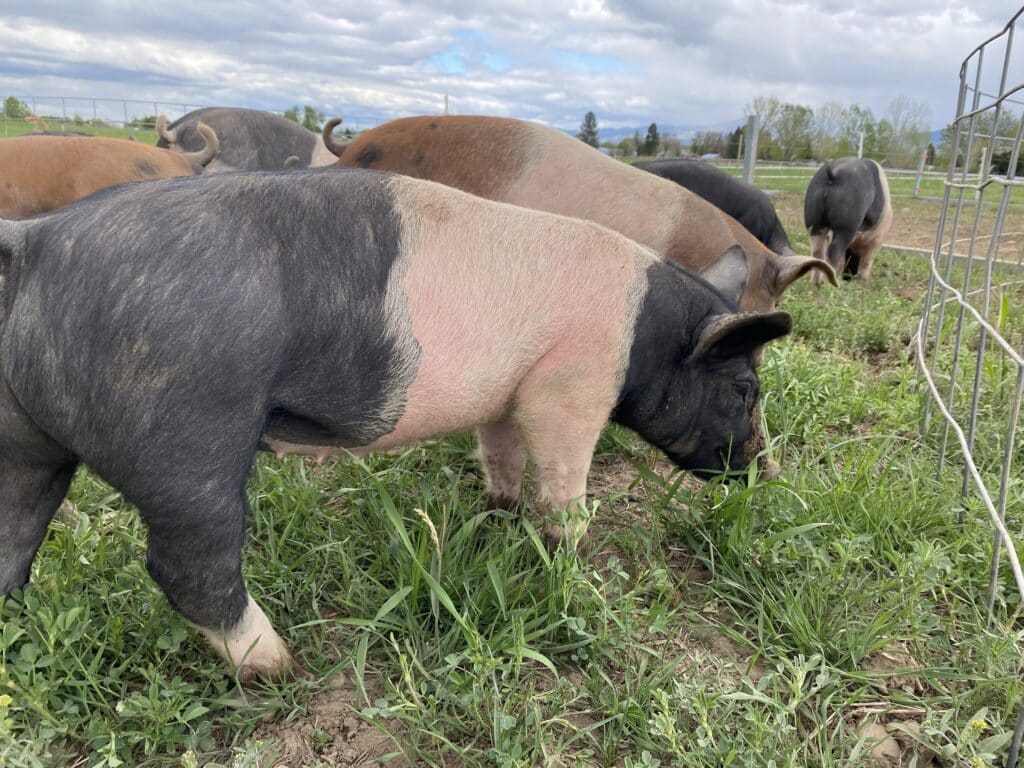
La cría de ganado al pastoreo es estacional: todos estos cerdos estarán listos para su procesamiento al mismo tiempo. ¿Cuál es tu plan para manejar el procesamiento y el almacenamiento de grandes cantidades de carne? Foto: Tim Puczkowskyj, Sunning Dog Livestock, LLC
Llevanza de registros para dar seguimiento a los clientes y al inventario
Es posible que las normas de tu estado te exijan llevar registros de ventas, los cuales son importantes en caso de una retirada de productos. Por lo general, debes registrar el número de lote, la fecha de procesamiento y la identificación del animal, así como la información de contacto de la persona o empresa que compró el producto.
Esto se puede registrar de varias maneras diferentes. Si estás facturando a tus clientes, puedes incluir la información relevante del producto en la factura y luego guardar las copias de manera organizada. Esta es una forma conveniente y eficiente de crear registros. Puedes realizar dos tareas a la vez. A menudo, incluyes la información del cliente en la factura, así que, ¿por qué no incluir también el número de lote y la identificación del animal?
Otro método consiste en crear una hoja de cálculo. Aunque esto añade un paso más a tu proceso de venta, es un método sencillo si no emites facturas o no cuentas con aplicaciones de facturación. Puedes crear una hoja de cálculo con una columna para cada dato que necesites:
- Fecha de compra
- Nombre del cliente
- Número de teléfono
- Número de lote
- Fecha de procesamiento
- Identificación de animales
- Corte de carne
El seguimiento de la información de ventas de tus clientes va de la mano con el seguimiento del inventario y las tendencias de ventas. Mantener un registro organizado de qué cortes se están vendiendo y dónde es útil para planificar el próximo lote de animales que se procesarán. Si tienes productos en varios puntos de venta, es importante llevar un registro de los diferentes cortes que tienes en cada uno de ellos. Así podrás analizar los datos para ver si ciertos cortes se venden mejor en distintos puntos de venta, si hay un efecto estacional en la demanda o cuándo reponer los estantes. Por último, el uso de estos datos puede ayudarte a determinar el número de cabezas en tu ganado y a planificar cuándo debes llevar los animales al matadero.
Mantenimiento de registros con fines fiscales
Llevar un registro de tus ventas y tus costos te ayuda a analizar tu rentabilidad, tus estrategias de gestión empresarial y tu desempeño en la administración de tu ganado, además de ofrecerte una visión general del éxito de tu negocio. Mantener registros de tus ventas y costos también es de vital importancia para presentar tus impuestos. Un contador fiscal necesitará estos documentos organizados en un sistema ordenado, lo que se traduce en un proceso de presentación más rápido y eficiente.
Ejemplo de hoja de cálculo. Fuente: NCAT

Los archivos bien organizados y etiquetados son una excelente manera de mantener en orden tus recibos físicos. Etiqueta cada carpeta por mes y año. Coloca tus recibos en orden numérico en su lugar correspondiente a lo largo del año. Cuando llegue el momento de presentar la declaración, tendrás todos tus recibos en un solo lugar protegido y listos para ser utilizados. No es raro ver a los productores arrugar los recibos y guardarlos a toda prisa en la guantera. Guardarlos de manera desorganizada puede provocar que se dañen, se vuelvan ilegibles o incluso se pierdan. Un poco de tiempo y disciplina pueden ser de gran ayuda para que la búsqueda de documentos sea más eficiente. Cuando se combina con los recibos, una hoja de cálculo de Excel puede llevar un registro de los costos para analizar el flujo de efectivo y las ganancias. Dominar Excel puede llevar algo de tiempo, pero familiarizarse con las funciones básicas puede ser suficiente para ayudarte a administrar tu negocio. Puedes clasificar las compras y ventas, calcular el flujo de efectivo y los gastos, y registrar información personalizada.
Las herramientas más útiles que pueden utilizar los productores son programas y aplicaciones como QuickBooks. Estas herramientas te permiten combinar la facturación, el control de inventario y la administración de recibos y gastos, y pueden funcionar como una interfaz de punto de venta. Este tipo de software suele requerir una suscripción, por lo que deberás determinar si tu negocio tiene una escala que justifique la comodidad y el costo de estas herramientas.
Al realizar ventas, deberás decidir si aceptarás solo efectivo o también tarjetas de crédito y débito. La posibilidad de aceptar tarjetas de crédito y débito puede aumentar las probabilidades de venta y es esencial para las ventas en línea. Cada vez es más común no tener efectivo a la mano. Ofrecer a los clientes varias opciones puede hacer que tu producto sea más accesible. Además, los pagos electrónicos te ahorran el viaje al banco para hacer un depósito, además de ofrecer cierta seguridad.
La desventaja de las tarjetas de crédito y débito es que, con frecuencia, cobran una comisión por transacción. ¿Agregarás esa comisión solo a las ventas con tarjeta o la distribuirás entre el costo de tus productos? Para poder aceptar estos tipos de pago, también necesitarás un punto de venta (POS). Un POS es un dispositivo o lugar donde se realizan las ventas y consiste en una combinación de hardware y software. Acepta diversos métodos de pago y registra los detalles de cada venta, incluyendo los artículos comprados, las cantidades y los precios. Además, puede ayudar a administrar el inventario y los impuestos sobre las ventas, y puede generar informes de desempeño de ventas. Estos servicios requieren una suscripción, pero algunos paquetes de contabilidad los incorporan en su software.
Estos dispositivos de punto de venta son útiles para aceptar pagos con tarjeta de crédito, llevar un registro de la información de los clientes, almacenar y enviar o imprimir recibos, y llevar un control del inventario. Los usuarios pueden pasar fácilmente sus tarjetas de crédito y, si así lo desean, guardar la información de la tarjeta para agilizar transacciones futuras. Cada venta se registra para garantizar su trazabilidad, lo que te brinda una referencia sencilla de tu historial de ventas.
Claves para el éxito
Al iniciar tu aventura en la venta de carne, busca un mentor que haya tenido éxito en este rubro y aprende de sus errores. Mantén tus costos bajos al principio, para seguir siendo rentable. Esto incluye estar atento a las cuotas recurrentes de los sitios web, las tarifas del sistema de punto de venta (POS), los seguros, las comisiones de los procesadores, así como el alimento para el ganado y el equipo. Intenta usar lo que ya tienes a la mano sin invertir demasiado en infraestructura hasta que tengas una idea de cómo irán las ventas. Además, empieza poco a poco con unos cuantos animales y date tiempo para aprender y crecer. Por ejemplo, necesitarás un plan para los cortes que no se vendan bien, o en caso de que los sellos de tus envases fallen. Tendrás que determinar la vida útil de tus productos para saber cuándo retirar un artículo de los estantes. En última instancia, tendrás que conocer tu producto a través de la experimentación. Esto te ayudará a facilitar las ventas, ya que los clientes apreciarán tu conocimiento de primera mano y tú tendrás más confianza en tu producto.
Conclusión
Para llegar a los clientes, tendrás que diferenciar tu producto contando la historia de tu granja y mostrando por qué deberían comprarte a ti. Después de eso, es esencial ofrecer calidad y consistencia en los productos para conseguir clientes habituales y aumentar las ventas gracias a las recomendaciones de boca en boca. Los productores deben estar preparados para educar a los consumidores sobre cómo se cultiva el producto y qué pueden hacer con lo que compran. Comercializar los productos entre el público objetivo puede ser un reto si te encuentras en una zona rural o si decides prescindir de recursos tecnológicos como las redes sociales. Sea cual sea tu filosofía de mercadotecnia, tendrás que encontrar la manera de dar a conocer tu historia al público.
La comercialización de productos cárnicos puede requerir mucho trabajo y una gestión intensiva, desde la cría del ganado hasta que el producto llega a manos del cliente; sin embargo, el margen de ganancia puede valer la pena para los pequeños productores que compiten con los precios de los productos básicos. Al fin y al cabo, el productor está satisfaciendo una necesidad o un nicho de mercado para los clientes de la zona. Tu ubicación influirá en gran medida en lo que sea viable para tu negocio, ya que determina la base de clientes, la disponibilidad de procesadores, la competencia, las regulaciones y la gestión empresarial.
Tómate el tiempo necesario para conocer tu negocio
“¡Está bien empezar poco a poco! Te permite familiarizarte con el negocio y forjar relaciones significativas con los clientes mientras haces crecer tu empresa. Ten en cuenta que puede tomar un par de años alcanzar una consistencia en las ventas mientras construyes esa base de clientes. Sin importar el canal que elijas para vender tus productos, es importante conocer tus límites (mentales, físicos y de tiempo) a medida que vas creciendo, porque en una pequeña empresa hay mucho trabajo detrás de escena (llamadas telefónicas, correos electrónicos, mantener las redes sociales o el sitio web, surtir pedidos) y tú tienes que desempeñar muchas funciones. También ten en cuenta que el ganado no funciona con un horario de nueve a cinco y necesita cuidados constantes. En última instancia, la honestidad y la integridad pueden ser fundamentales para ganarte el respeto de tus clientes.”
– Alisha Horak, Horak Homestead, LLC
Árbol de decisión sobre la comercialización directa de carne
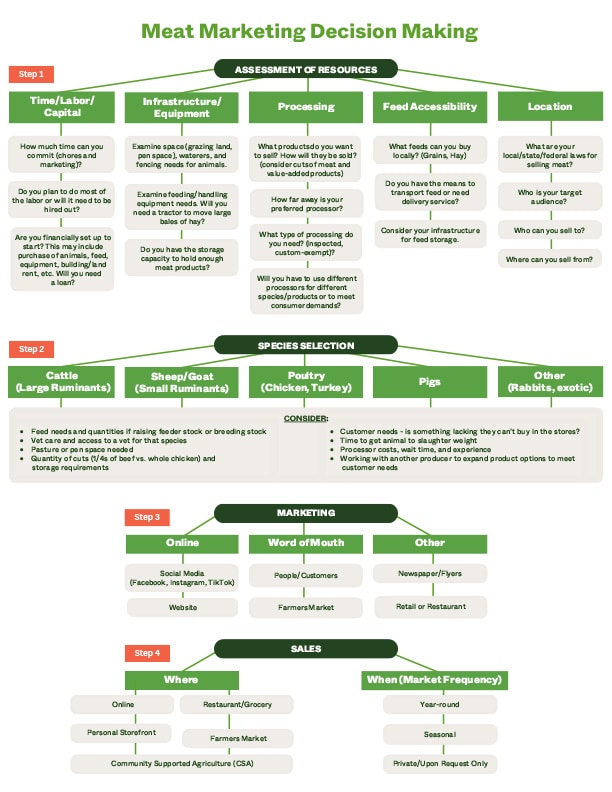
Fuente: Recopilado por Alisha Horak, NCAT
Recursos adicionales
LIBROS
La oficina del agricultor: herramientas, plantillas y habilidades para iniciar, administrar y hacer crecer un negocio agrícola exitoso, segunda edición. Julia Shanks. 2024. New Society Publishers, Isla Gabriola, BC VOR 1X0, Canadá. 250-247-9737. newsociety.com
Este libro no trata específicamente sobre el marketing directo de la carne, pero las habilidades, prácticas y conocimientos que adquieras al leer y poner en práctica las enseñanzas de esta obra te ayudarán a tener éxito en aspectos importantes de la gestión de tu negocio. El autor es un agricultor y comprende algunas de las complejidades a las que te enfrentas en tu negocio, y este libro está al día en cuanto a las herramientas disponibles. Para establecer tus sistemas, evaluar tu rentabilidad y determinar dónde y cómo mejorar financieramente, vale la pena dedicar tiempo a estudiar este libro.
Ganado alimentado con pasto: Cómo producir y comercializar carne de res natural. Julius Ruechel. 2006. Storey Publishing, North Adams, MA.
Este libro, completo e interesante, profundiza en muchos aspectos de la producción y comercialización de carne de res que también son relevantes para otros productores, especialmente los de ovejas y cabras. Comenzando por los fundamentos, cuenta con una amplia sección sobre infraestructura y administración, otra sobre planificación empresarial y comercialización, y finalmente una sección que te ayudará a redactar tu propio plan de negocios. NO aborda el marketing por Internet ni las herramientas modernas para el mantenimiento de registros y la comercialización, pero vale mucho la pena leerlo para ayudarte a comprender de manera integral cuáles pueden ser los desafíos y las oportunidades.
Cómo comercializar directamente tu carne de res. Jan Holder. 2005. SARE Outreach.
El libro «Cómo comercializar directamente tu carne de res» describe cómo una pareja utilizó el rancho familiar para poner en marcha un negocio rentable de carne de res alimentada con pasto, enfocado en las ventas directas al consumidor. Desde el sacrificio hasta el empaque, pasando por el etiquetado y la publicidad, Jan y Will Holder transforman sus experiencias de la vida real en una narrativa cautivadora, repleta de consejos prácticos.
El nuevo ganadero: El negocio de la cría y venta de carne ética. Rebecca Thistlethwaite y Jim Dunlop. 2015. Chelsea Green Publishing, White River Junction, VT. 802-295-6300. chelseagreen.com
Sea cual sea la especie de ganado que críes y sea cual sea la forma en que quieras comercializar tu carne, este libro te servirá de guía útil. Los autores llevan años dedicándose a esto y han llenado el libro con información práctica en la que tal vez no hayas pensado. Hay capítulos sobre la cría de aves de corral, ovejas y cabras, cerdos, ganado vacuno y animales exóticos, como conejos, bisontes, alces y venados. Hay capítulos que abordan las regulaciones, las opciones de venta, la logística del sacrificio y el despiece, el procesamiento en la granja y el procesamiento móvil, el empaque, el etiquetado y el almacenamiento en frío, la comercialización, así como la gestión financiera y la fijación de precios. A lo largo del libro se presentan perfiles de otras granjas, lo que brinda ejemplos y situaciones de la vida real en cada página. Los apéndices incluyen descripciones detalladas de las instrucciones de corte para diversas especies, y los autores explican las diferencias entre los cortes, para que puedas estar mejor informado y preparado para ayudar a tus clientes y trabajar con tus procesadores. Es un libro práctico, interesante y sumamente útil que te ayudará a comprender y tener éxito en el negocio.
Inicia tu granja: La guía definitiva para convertirte en un agricultor sostenible del siglo XXI. Forrest Pritchard y Ellen Polishuk. 2018. The Experiment, LLC. Nueva York, NY. theexperimentpublishing.com
Se trata de agricultores entusiastas, bien informados y con amplia experiencia que comparten lo bueno, lo malo y lo feo con la esperanza de que TÚ puedas evitar algunos de los escollos y logres construir una granja saludable y rentable que te ofrezca a ti y a tu familia una excelente calidad de vida. Está bien escrito, es reflexivo, entretenido y alentador, a la vez que honesto y útil. No hay muchos gráficos ni fotos; sin embargo, si le dedicas 20 minutos de tu tiempo y atención, sin duda querrás leer y disfrutar el libro completo, y aumentarás tus posibilidades de éxito como agricultor. Este libro aborda aspectos que no suelen mencionarse y concluye cada capítulo con preguntas de repaso para ayudarte a aplicar los conceptos a tu propia situación.
SITIOS WEB
General
Recursos de ATTRA sobre el procesamiento de carne
Explora la amplia variedad de podcasts, seminarios web y publicaciones gratuitas de ATTRA relacionadas con la comercialización directa y la producción de carne y aves de corral. Llama al 800-346-9140 para recibir ayuda a la hora de encontrar materiales o para hacerle una pregunta específica a un especialista.
Fundación para la Protección de los Animales Destinados al Consumo (FACT)
Esta organización ofrece capacitación para agricultores y consumidores, cuenta con un directorio en el que puedes incluir tu granja para que otros la encuentren, organiza un programa de mentoría y tiene un programa de pequeñas subvenciones, llamado «Fund a Farmer», que brinda apoyo a quienes tienen negocios basados en pastoreo. Los seminarios web ofrecen información sobre producción y comercialización. No te pierdas la información de comercialización que puedes utilizar para aumentar la demanda de tu carne criada en pasturas, los seminarios web gratuitos y los programas que se enumeran. Explora la pestaña «Para consumidores», así como la pestaña «Recursos para agricultores».
NC Choices – Centro de Sistemas Agrícolas Ecológicos
Una colaboración entre la Universidad Estatal de Carolina del Norte, la Universidad Estatal Agrícola y Técnica de Carolina del Norte y el Departamento de Agricultura y Servicios al Consumidor de Carolina del Norte. En el sitio web de NC Choices hay numerosos recursos útiles.
Red de Asistencia para Procesadores de Carnes de Nicho (NMPAN)
Esta organización es una fuente increíble de información tanto para los procesadores como para quienes necesitan sus servicios. Busca recursos que ayuden a los productores de carne a comprender las regulaciones y a mejorar la comercialización; hay muchos seminarios en línea sobre estos temas, así como enlaces a otros cursos educativos y organizaciones. Para conocer las regulaciones aplicables en tu localidad, los contactos estatales son un excelente punto de partida.
Investigación y Educación en Agricultura Sostenible (SARE)
Los proyectos de SARE se pueden buscar, y sin duda hay muchas joyas en el sitio. Empieza por este enlace y luego explora el sitio. El libro mencionado anteriormente, *Cómo comercializar directamente tu carne de res*, es solo un ejemplo.
Escuela de Carnes del Oeste, Educación Continua de la OSU
Este es un curso en línea con 20 horas de clase. Muy recomendable y con una excelente relación calidad-precio.
Trabajo con los clientes y mercadotecnia
Folleto de recetas
Cursos y seminarios web
Cursos gratuitos para ayudarte a fijar precios y llegar a los clientes. Algunos cursos son de pago, pero los gratuitos te permiten dar los primeros pasos. Consulta también el podcast de Charlotte Smith, «The Profitable Mindset».
Explora este sitio para encontrar mucha información útil sobre mercadotecnia. Hay un podcast, y puedes escucharlo o leer los resúmenes.
Fundación para la Protección de los Animales Destinados al Consumo (FACT)
Materiales para ayudar a informar a tus clientes sobre los beneficios de los productos criados en pasturas.
Blogs y publicaciones
Comercialización de carne de cordero y cabra para las fiestas. Servicio de Extensión Cooperativa de la Universidad Estatal de Pensilvania.
El cordero y el cabrito son platos tradicionales para las fiestas, lo que representa una excelente oportunidad para que los productores de ovejas y cabras de carne planifiquen sus temporadas de cría, de modo que puedan comercializar sus corderos o cabritos con el tamaño adecuado para estas fiestas. La Industria Ovina Estadounidense ha colaborado con el Departamento de Economía Agrícola de la Universidad Texas A&M y con el Centro de Investigación en Agroindustria, Alimentación y Economía del Consumidor para estudiar el mercado no tradicional de cordero en Estados Unidos, que incluye a los consumidores de origen étnico. Estos investigadores estiman que «las poblaciones minoritarias representan alrededor del 58 % del consumo total de cordero en EE. UU. y que casi tres cuartas partes de los consumidores de cordero pertenecientes a minorías preparan el cordero en casa». El sitio web del Centro de Recursos del Cordero ofrece información sobre cómo comercializar el producto entre los consumidores de origen étnico.
Venta de carne frente a venta de ganado: recursos para ganaderos que comercializan directamente por Daniel K. Macon. 4 de junio de 2018. Extensión Cooperativa de la Universidad de California.
El autor incluye un enlace a un estudio exhaustivo de 2017 que analiza los costos y los rendimientos del engorde de ganado de carne con pastoreo. Este estudio señala costos en los que tal vez no hayas pensado y puede ayudarte a analizar los costos de tu propio negocio, sin importar la especie, y a examinar detenidamente los aspectos económicos. El autor agrega detalles interesantes e información adicional basada en su propia experiencia como vendedor directo, destacando específicamente el tiempo que requiere esta actividad y el costo de oportunidad asociado a ese tiempo. Sea cual sea tu negocio, vale la pena leerlo.
Precios
Una calculadora de precios basada en el rendimiento de las piezas es una herramienta esencial para un negocio de comercialización directa de corderos. El Lambulator está diseñado pensando en los pequeños productores que comercializan directamente. Es fácil de entender y usar, incluso si no tienes experiencia con Microsoft Excel. Solo tienes que ingresar los pesos de las piezas y los precios, y dejar que la herramienta haga los cálculos por ti. En un instante, calculará los porcentajes de rendimiento de la canal, la utilidad neta individual y promedio por cordero, así como tu utilidad bruta y neta total. Incluso te permitirá probar diferentes escenarios de precios, en caso de que aumenten tus costos de producción o comercialización.
Cómo fijar el precio de tus cortes de carne. Por Brian Moyer. Programa de Pequeñas Granjas de la Universidad de Cornell
Con estas herramientas, deberías poder hacer un cálculo aproximado de la cantidad de producto que tendrás a la venta, cuáles son tus costos y cuánto tendrás que cobrar a tus clientes para seguir siendo rentable.
Véase también La calculadora de precios de la carne de Cornell
Calculadora de precios de cortes de cordero. Universidad Estatal de Dakota del Sur
La venta directa de cordero a los consumidores puede constituir una salida comercial rentable para tu negocio. El cordero se puede vender antes del procesamiento, en forma de canales enteras o medias, o como cortes individuales; sin embargo, saber cómo fijar el precio del cordero para los clientes puede ser un reto. Ahí es donde este recurso puede ayudarte. Todo comienza por conocer tu punto de equilibrio para asegurarte de que tus costos estén cubiertos. La mejor forma de estimar los costos de insumos es utilizando tus registros o los precios estimados en tu zona. Luego, puedes ajustar tu margen o recargo para alcanzar la ganancia deseada. Existen varios recursos que pueden servir como punto de partida para fijar los precios de los cortes de cordero, entre ellos el Informe Nacional Mensual del USDA sobre Cordero y Cabra Alimentados con Pastoreo y el Desglose Estimado Nacional de Cortes de Cordero. A veces, la fijación de precios puede ser un proceso de prueba y error, basado en lo que tus clientes están dispuestos a pagar, sin dejar de garantizar que tu negocio de venta directa sea exitoso.
Trabajar con procesadores
«Cómo trabajar con su procesador de carne», de ATTRA
Los agricultores que deseen vender carne directamente a restaurantes, tiendas de abarrotes o consumidores necesitan un socio confiable y calificado: el procesador de carne es un miembro esencial del equipo y un activo para el negocio. Esta publicación sugiere algunas formas clave de trabajar de manera eficaz con un procesador de carne y enumera recursos para obtener más información.
¿Cuántas libras de carne podemos esperar de un animal de carne? por Randy Saner y Brianna Buseman. Extensión de la Universidad de Nebraska.
Los consumidores que compran un animal vivo para su procesamiento a medida suelen sorprenderse por la cantidad de carne de res que reciben, el espacio que necesitan en el congelador y el hecho de que no recuperan todo el peso vivo del animal en cortes para la venta al por menor. En este artículo se explica cómo calcular cuánta carne recibirás al comprar un animal para su sacrificio.
Calculadora de carne de res. Montana Ranchers Beef Co.
Esta calculadora te ayudará a calcular cuánta carne necesitará tu cliente según sus hábitos alimenticios y culinarios, lo cual puede servirte para orientarlo a la hora de hacer un pedido.
Apéndice: Marketing étnico de la carne de cordero y de cabra para las fiestas
| Fuente: Comercialización de carne de cordero y cabra para las fiestas, Penn State, https://extension.psu.edu/marketing-lamb-and-goat-for-holidays | |||||
| VACACIONES | 2025 | 2026 | 2027 | 2028 | EL MUNDO ANIMAL |
| Eid ul Adha – Fiesta del Sacrificio | 6 y 7 de junio | 27 al 30 de mayo | 16 al 19 de mayo | Mayo 5 | Corderos y cabritos de un año, de más de 60 lb |
| Año Nuevo islámico | junio 26 | junio 16 | junio 5 | Mayo 25 | Sin especificaciones; la carne de cordero es común |
| Pésaj | Del 12 al 20 de abril | 1 al 9 de abril | Del 21 al 29 de abril | Del 10 al 18 de abril | Corderos de 30 a 55 lb; alimentados con leche |
| Pascua de la Roma Occidental | abril 20 | abril 5 | 28 de marzo | abril 16 | Corderos de 30 a 45 lb; cabras de 20 a 40 lb; alimentados con leche |
| Pascua ortodoxa | abril 20 | abril 12 | Mayo 2 | abril 16 | Corderos de 40 a 55 lb, cabras de 25 a 50 lb; alimentados con leche |
| Ramadán, el mes del ayuno | Del 28 de febrero al 30 de marzo | 17 de febrero - 18 de marzo | 7 de febrero - 8 de marzo | 28 de enero - 26 de febrero | Corderos de 60 a 80 lb, cabras de 60 lb |
| Eid al-Fitr: fin del Ramadán | 30 y 31 de marzo | 19 y 20 de marzo | 9 y 10 de marzo | 26 y 27 de febrero | Corderos de 60 a 80 lb, cabras de 60 lb |
| Rosh Hashaná – Año Nuevo judío | 22 al 24 de septiembre | 11 al 13 de septiembre | 1 al 3 de octubre | 20 de septiembre - 22 de septiembre | Corderos de 60 a 100 lb |
| Mawlid al-Nabi – Nacimiento del Profeta | 4 de septiembre | 25 de agosto | 14 de agosto | 2 de agosto – 3 de agosto | Sin especificaciones |
| Día de Acción de Gracias | Noviembre 27 | Noviembre 26 | Noviembre 25 | Noviembre 23 | Corderos para sacrificio, de 110 lb o más |
| Janucá | Del 14 al 22 de diciembre | Del 4 al 12 de diciembre | 24 de diciembre - 1 de enero | Del 12 al 20 de diciembre | Corderos y cabritos jóvenes; kosher; alimentados con leche |
| Navidad | 25 de diciembre | 25 de diciembre | 25 de diciembre | 25 de diciembre | Corderos de 40 a 60 lb; cabras de menos de 50 lb |
Venta directa de carne: primeros pasos
Alisha Horak y Tim Puczkowskyj, especialistas en agricultura del NCAT
Mayo de 2026
©NCAT
IP674
Versión 051426
 Esta publicación se basa en un trabajo financiado por el Instituto Nacional de Alimentación y Agricultura del Departamento de Agricultura de los Estados Unidos (USDA), mediante la subvención número 20227042038269 otorgada a Investigación y Educación en Agricultura Sostenible (SARE). El USDA es un empleador y proveedor de servicios que promueve la igualdad de oportunidades. Cualquier opinión, hallazgo, conclusión o recomendación expresada en esta publicación es responsabilidad de los autores y no refleja necesariamente la postura del Departamento de Agricultura de los Estados Unidos.