Every Mickle Mek a Muckle: Building a More Resilient Food System in the Virgin Islands
Provided by:
Written By
Related Resources
I had the opportunity to speak in July at the first Virgin Islands Agricultural Conference, which was held in conjunction with the Caribbean Crop Conference. The day’s conversations covered sustainable agriculture, organic farming, integrated pest management, funding opportunities, conservation, and programs supporting the next generation of Virgin Islands farmers.
I was there representing the Southeast Transition to Organic Partnership Program, or SE TOPP, but what struck me was how these individual topics fit into a much larger conversation about the future of food production in the Virgin Islands.
The Territory, as Virgin Island residents call it, has set an ambitious goal of producing 30% of its food locally by 2040. Increasing local food production could strengthen food security, support farmers, keep more food dollars within the local economy, and reduce dependence on imports.
But on an island, how that food is produced matters just as much as how much is produced.
Growing Food While Protecting What Surrounds Us
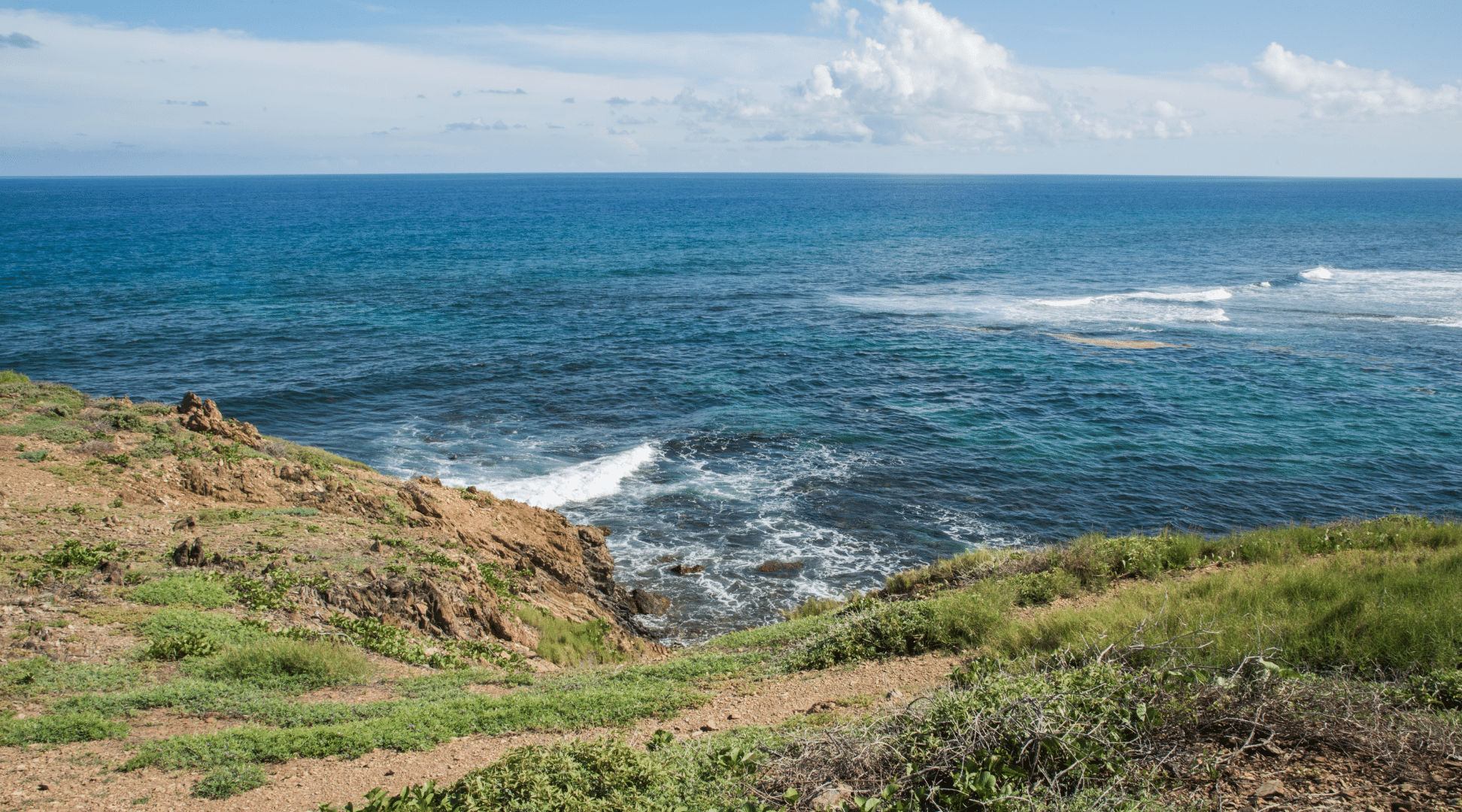
The impacts of agricultural decisions do not stop at the boundaries of the farm. Soil, nutrients, pesticides, and other materials carried by runoff can move downstream and into coastal waters. In the Virgin Islands, those waters support coral reefs, fisheries, recreation, and a tourism economy closely connected to the health and beauty of the Caribbean environment.
That connection helps explain why sustainable and organic agriculture were important parts of the conference. If the Virgin Islands is going to substantially increase local food production, there is an opportunity to ask not simply how to grow more food, but how to build an agricultural system that can produce more while protecting the natural resources on which the islands depend.
I returned to the Virgin Islands just a month after the conference, and that question became much less theoretical.
When the Rain Doesn’t Come
I arrived on St. Croix on August 22 amid the results of an extreme drought. Just days earlier, the USDA had designated St. Croix, St. Thomas, and St. John as primary natural-disaster areas because of the drought, opening access to federal emergency loan assistance for eligible agricultural producers.
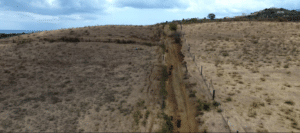
A cattle farm in St. Croix during the drought of July 2026. Photo: Gabriella Soto-Velez
The dry conditions had been developing for months. By July, federal drought reporting classified the entire U.S. Virgin Islands as being in Extreme Drought and described severe soil cracking, vegetation stress, depleted farm ponds, limited feed availability, and increasing production costs. On St. Croix, livestock producers were already rotating animals and culling herds as pastures and water supplies diminished. While I was there, several small-ruminant farmers I know shared that they had lost dozens of sheep. Pastures that would normally provide forage simply weren’t producing enough feed.
And reducing a herd before animals reach that point isn’t necessarily a simple solution either. Farmers described limitations in slaughter, freezer capacity, cold-storage, and other agricultural infrastructure which can make it difficult to move animals into the local food system when environmental conditions force a producer to quickly reduce a herd. On an island, there are fewer alternative markets and fewer places for animals to go.
The effects of water scarcity weren’t confined to farms. In Frederiksted where I was staying, my neighborhood experienced a lack of running water during my visit.
Seeing those conditions firsthand changed the way I thought about some of the conversations we’d had at the conference only weeks earlier.
Resilience is Bigger Than the Farm
It would be easy to look at a drought like this and ask farmers simply to become more resilient. Plant more drought-tolerant crops. Mulch more. Improve irrigation. Build healthier soils.
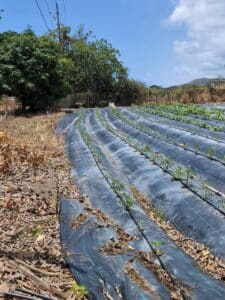
The 2026 drought has led to irrigation limitations on local farms in St. Croix, making local production more challenging. Photo: Gabriella Soto-Velez
Those things matter. But there is a limit to what any individual farmer can accomplish when faced with months of inadequate rainfall, expensive imported feed, limited water, or insufficient processing and storage infrastructure.
That doesn’t mean that farmers, agencies, universities, nonprofits, or policymakers aren’t working to address these problems. In fact, drought preparedness in the Territory itself has advanced considerably in recent years. Until 2019, the Virgin Islands wasn’t even included in the U.S. Drought Monitor. Virgin Islands Congressional Delegate Stacey Plaskett’s office worked with the USDA to change that, and in 2023 the Territory was also incorporated into NOAA’s operational monthly and seasonal drought outlooks. Those changes were accomplished through collaboration among federal and territorial agencies, the University of the Virgin Islands, farmers, environmental monitoring volunteers, and others.
That progress matters. The drought data being collected today are part of what allows conditions to be formally recognized and farmers to access certain federal disaster programs. At the same time, the current drought illustrates how much work remains to build a food system capable of weathering these events.
This isn’t about assigning blame to one agency or institution. Island agriculture faces extraordinary geographic, financial, infrastructural, and environmental constraints. Many of the people working within these organizations are confronting the same challenges alongside farmers. Rather, acknowledging the gaps is part of figuring out what resilience actually requires.
What Can Sustainable Agriculture Contribute?
Organic agriculture cannot make it rain.
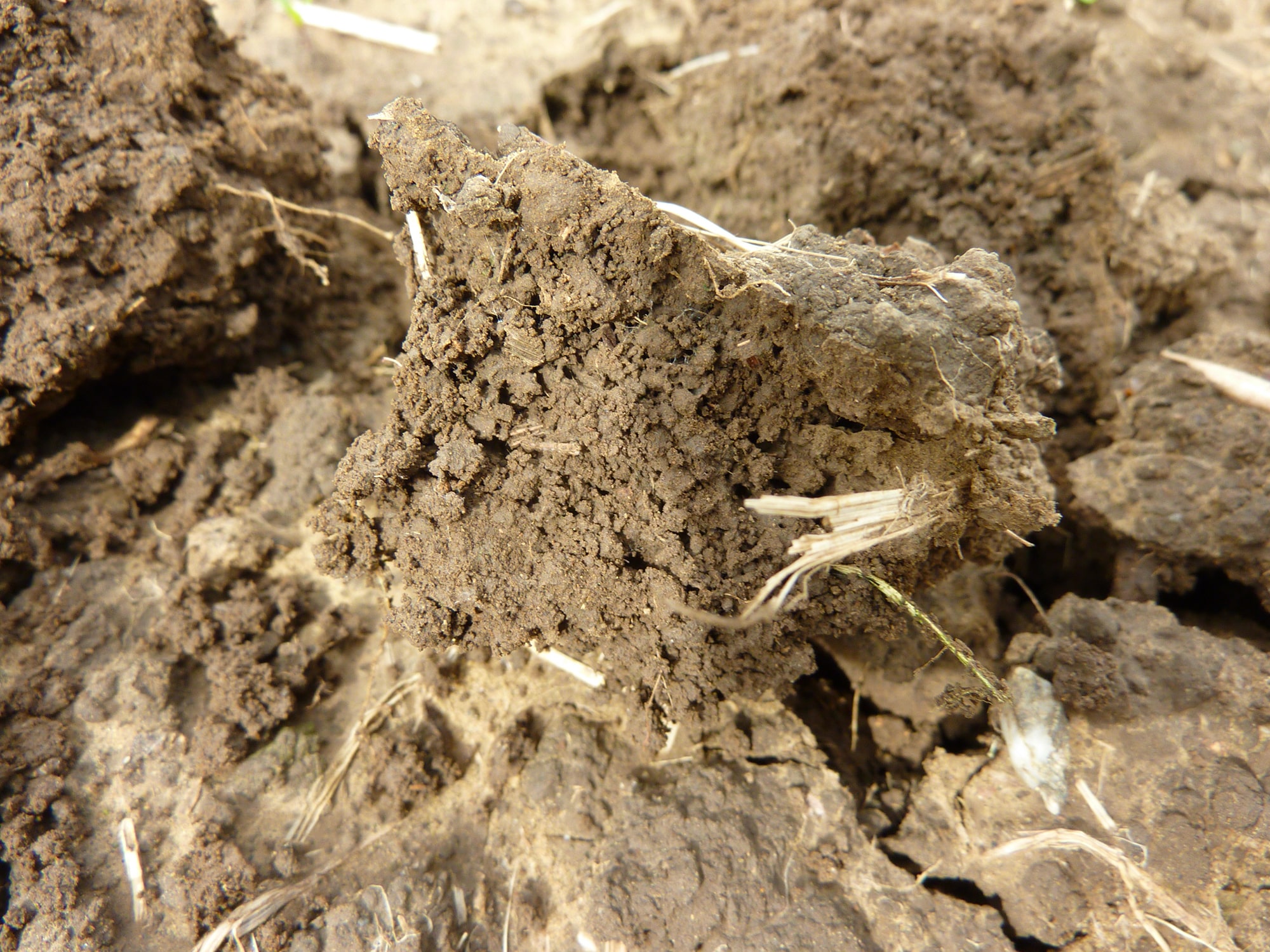
A cover crop cannot solve a territory-wide water shortage, and mulch cannot create cold-storage infrastructure. But many practices associated with organic and sustainable agriculture can make individual farms better equipped to use the resources that are available.
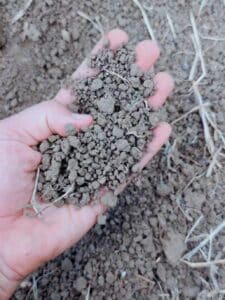
Mulching the soil can create protection for your soil in times of drought. This mulched soil at a farm in the USVI still has good soil structure. Photo: Gabriella Soto-Velez
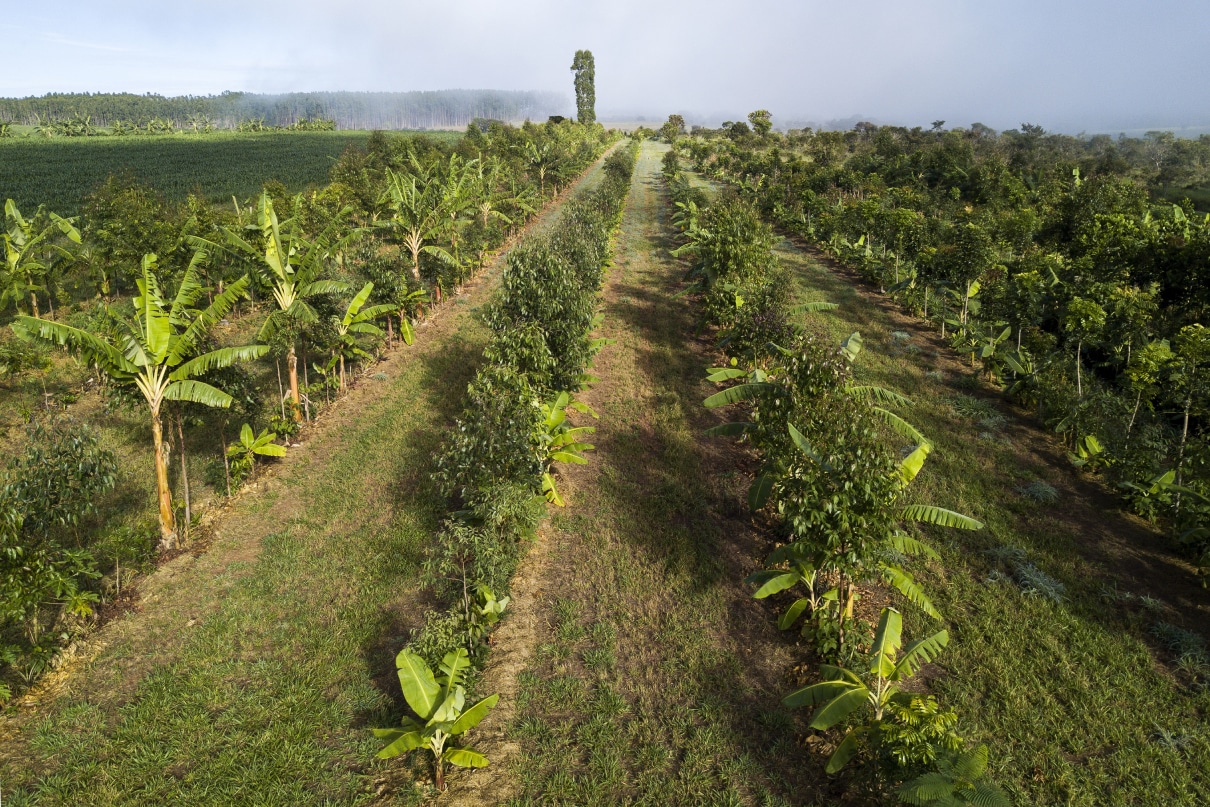
Mulching can reduce evaporation and protect the soil surface from extreme temperatures. Keeping living roots in the ground and using cover crops can protect soil and improve its function. Increasing soil organic matter can improve important soil physical properties. Diversified cropping systems, perennial vegetation, and agroforestry can provide shade, wind protection, and more varied microclimates. Vegetative barriers and other conservation practices can slow runoff and give rainfall more opportunity to infiltrate.
Integrated pest management offers another example. Increasing biodiversity, monitoring pest populations, encouraging beneficial insects, and using cultural and biological controls can reduce reliance on pesticides rather than treating pesticide application as the first response to every pest.
None of these practices is a silver bullet. Their value comes from layering practices together and adapting them to the realities of each farm. And many provide benefits beyond drought resilience. Keeping soil in place and increasing infiltration means less sediment and fewer nutrients leaving agricultural land during heavy rain. Reducing unnecessary pesticide applications can decrease risks to non-target organisms. Creating more diverse farms can support beneficial insects and other wildlife.
In this way, some of the same practices that can make a farm more resilient during dry periods can also help protect the waters, reefs, and fisheries surrounding these islands.
Building Resilience from Both Directions
Reaching the Virgin Islands’ food-production goals will therefore require more than asking farmers to change how they farm. It will require work from both the bottom up and the top down. Farmers can experiment with cover crops, mulch, crop diversity, agroforestry, water conservation, integrated pest management, and other practices appropriate to their operations. At the same time, those efforts need to be supported by investments in water infrastructure, processing and cold storage, markets, technical assistance, research, emergency preparedness, funding, and policies designed around the realities of farming on small islands.
There will always be constraints. There will also be competing priorities, limited budgets, and disagreements about which investments should come first. But bringing those challenges into the conversation is not about diminishing the work already being done. It is about recognizing what will be necessary if the Territory is serious about building a stronger and more self-reliant food system.
There is a Jamaican saying that I have always loved: “Every mickle mek a muckle.”
In other words, little by little, small things add up.
That feels particularly fitting for agriculture in the Virgin Islands. No single farmer can solve drought. No government program can make every farm resilient. No organic practice can fix missing infrastructure. And no single conference can transform a food system.
But a farmer keeping another acre of soil covered matters. Better drought monitoring matters. Another water-storage system matters. Cold-storage capacity matters. Protecting another hillside from erosion matters. Helping another farmer access technical or financial assistance matters.
Each is another drop in the drought-resilience bucket.
And as the Virgin Islands works toward producing more of its own food, perhaps the most important measure of success won’t simply be how much food is grown. It will be whether the food system that emerges is better able to withstand the next drought, storm, or supply-chain disruption while protecting the land and water that sustain it.
Every mickle mek a muckle. And on islands where every drop of water counts, every step toward resilience does too.
This blog was produced with support from the USDA’s Transition to Organic Partnership Program, part of the USDA Organic Transition Initiative and administered by the Agricultural Marketing Service National Organic Program.