Consejos para vender por Internet

Proporcionado por:
Escrito por


Recursos relacionados
Consejos para vender en los mercados de agricultores...
Consejos para vender en la carretera...
Consejos para vender a Aggregat...
Consejos para vender a instituciones...
Consejos para vender a mayoristas...
Consejos para vender productos agrícolas...
Consejos para vender productos agrícolas...
Consejos para vender con Agrito...
Serie de hojas informativas de marketing de NCAT
Internet es una herramienta de comunicación y mercadotecnia que puede brindar exposición ante un gran número de clientes potenciales. Se puede utilizar para promocionar tu granja con fotos y mapas, recibir pedidos en línea, mostrar la disponibilidad de productos, mantenerte en contacto con tus clientes actuales y complementar otras formas de venta, como las CSA o los mercados de agricultores. Los agricultores pueden tener presencia en Internet a través de su propio sitio web o utilizando un sitio web administrado por un tercero.
En este mercado, puedes esperar:
- Menor volumen de producto
- Precio unitario más alto
Ventajas
- Puedes dar a conocer a mucha gente tu granja, su historia, su gama de productos y su ubicación.
- Ahorras tiempo en marketing y ventas, ya que tu sitio web o tu presencia en línea siempre está disponible para los clientes.
- Se puede desarrollar un sitio web básico con unas instrucciones mínimas.
- Los sitios web de terceros pueden utilizarse para tener presencia en Internet con una inversión mínima de tiempo y recursos.
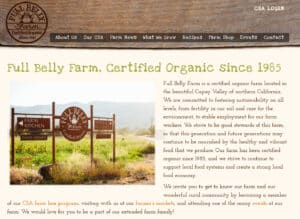
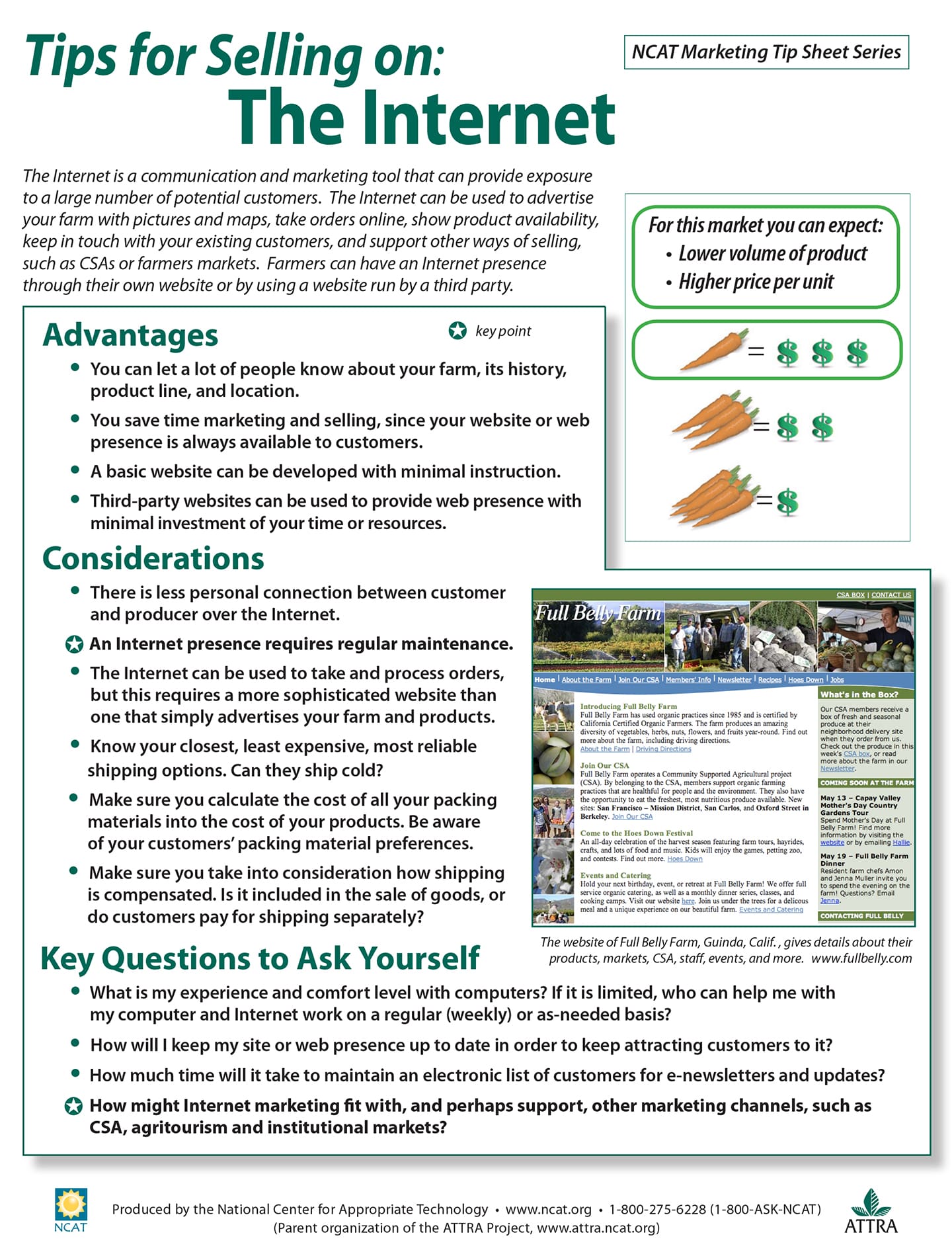
El sitio web de Full Belly Farm, en Guinda, California, ofrece información detallada sobre sus productos, mercados, CSA, personal, eventos y mucho más.
Consideraciones
- Una presencia en Internet requiere un mantenimiento constante.
- A través de Internet, la conexión personal entre el cliente y el productor es menor.
- Se puede usar Internet para recibir y procesar pedidos, pero esto requiere un sitio web más sofisticado que uno que simplemente promocione tu granja y tus productos.
- Conoce las opciones de envío más cercanas, más económicas y más confiables. ¿Ofrecen envíos refrigerados?
- Asegúrate de incluir el costo de todos tus materiales de empaque en el precio de tus productos. Ten en cuenta las preferencias de tus clientes en cuanto a los materiales de empaque.
- Asegúrate de tener en cuenta cómo se cobran los gastos de envío. ¿Están incluidos en el precio de venta de los productos o los clientes pagan los gastos de envío por separado?
Preguntas clave que debes hacerte
- ¿De qué manera podría el mercadotecnia en Internet complementarse con otros canales de mercadotecnia —como las CSA, el agroturismo y los mercados institucionales— y, tal vez, apoyarlos?
- ¿Cuál es mi nivel de experiencia y comodidad con las computadoras? Si es limitado, ¿quién puede ayudarme con mis tareas relacionadas con la computadora e Internet de manera regular (semanal) o cuando lo necesite?
- ¿Cómo mantendré actualizada mi página o mi presencia en la web para seguir atrayendo clientes?
- ¿Cuánto tiempo lleva mantener una lista electrónica de clientes para los boletines electrónicos y las actualizaciones?
Consejos para vender por Internet
- Define tus objetivos para la presencia de tu granja en Internet. Este proceso te permitirá determinar qué recursos (mano de obra, conocimientos especializados, software, hardware) necesitas para alcanzar esos objetivos.
- Haz que tu sitio web sea fácil de usar y fácil de encontrar. Pide opiniones a tus amigos y clientes.
- Elige una dirección de sitio web (“nombre de dominio”) que sea breve, significativa, fácil de escribir y fácil de recordar.
- Diversifica tus estrategias de mercadotecnia. No dependas de tu sitio web como único canal o herramienta de mercadotecnia para tu negocio.
- Considera la posibilidad de usar Facebook y Twitter para conectarte con un gran número de clientes potenciales.
- Mantén un blog y usa otras redes sociales para mantener a los clientes interesados en lo que está pasando en tu granja.
- Dirige a las personas a tu sitio web.
—Crea e intercambia enlaces con sitios web relacionados.
—Incluye la dirección de tu sitio web en «Buy Fresh Buy Local» y otras guías agrícolas.
—Utiliza un boletín electrónico que incluya un enlace a tu sitio web.
—Incluye la dirección de tu sitio web y tu correo electrónico en todo el material impreso de tu granja.
—Regístrate en sitios web que promocionen productos locales, como www.localharvest.org.
Recursos
- Las filiales de «Buy Fresh Buy Local» promueven los alimentos producidos localmente. Busca una filial cercana para encontrar posibles clientes para los productos de tu granja y para aprender más sobre el mercadotecnia local y en Internet.
- Foodzie ayuda a los pequeños productores de alimentos y a los agricultores de todo Estados Unidos a llegar a nuevos clientes y a conectarse directamente con quienes buscan alimentos y regalos. El costo de este servicio depende de las ventas de los productos.
- Local Harvest es un directorio a nivel nacional de pequeñas granjas, mercados de agricultores y otras fuentes locales de alimentos. El sitio ayuda a los consumidores a comprar lo que desean directamente de los agricultores y ganaderos que lo producen.
- CSAware es un programa de software para la Agricultura Apoyada por la Comunidad (CSA) personalizable y fácil de usar. Permite a los miembros de tu CSA inscribirse en tu programa en línea, avisarte cuando vayan a estar fuera de la ciudad y pedir cualquier producto especial que ofrezcas. Como administrador, puedes ver y administrar toda esa información, definir el contenido de las cajas cada semana, gestionar la información de tus puntos de entrega, enviar correos electrónicos a algunos o a todos tus miembros, imprimir listas de cosecha, etiquetas para las cajas y hojas de registro de miembros, así como realizar otras funciones.
- Harvie (antes Small Farm Central) fue fundada por un exagricultor que dirigía una CSA. La empresa ofrece, a cambio de una cuota, apoyo a los agricultores para que desarrollen su propio sitio web como parte de su estrategia de mercadotecnia. Ofrece una prueba gratuita, así como tarifas variables y distintos niveles de servicio de apoyo para ayudarte a desarrollar y mantener tu sitio web. El sitio también brinda servicios de administración de miembros a las CSA y permite a los agricultores vender productos en su sitio web.
- «Cómo comercializar directamente productos agrícolas en Internet» (un PDF de 50 páginas para descargar) es una guía excelente para establecer objetivos de mercadotecnia en Internet, investigar a los consumidores en línea, crear y promocionar un sitio web, y aprovechar la experiencia de diversos agricultores que utilizan Internet para impulsar sus ventas. Cuenta con una buena sección de recursos con enlaces a programas, artículos y publicaciones relevantes.
Consejos para vender por Internet
© 2012 Centro Nacional de Tecnología Apropiada (NCAT)
Por Marisa Alcorta, Rex Dufour y Tammy Hinman, NCAT
IP428
Esta publicación ha sido elaborada por el Centro Nacional de Tecnología Apropiada a través del programa de Agricultura Sostenible de ATTRA, en el marco de un acuerdo de cooperación con el Departamento de Desarrollo Rural del USDA. Esta publicación también ha sido posible, en parte, gracias al financiamiento del USDA/NIFA/OASDFR.