Putting Mental Health First in Agriculture

Provided by:
Written By
Related Resources

Supporting Farmers and Ranchers Through Stress, Uncertainty, and Resilience
Farming has never been an easy profession. Every season brings uncertainty, and many of the factors that determine success are beyond a farmer’s control. Extreme weather events, rising input costs, labor shortages, equipment breakdowns, and market volatility can all affect a farm’s financial stability and future.
And farming is also more than a job. For many farmers and ranchers, agriculture is a way of life tied closely to family, land, identity, and community. The boundaries between work and personal life are often difficult—or impossible—to separate. There is no simple clocking out at the end of the day when the animals still need care, the crops still need attention, and the farm’s financial future may depend on decisions that cannot wait until tomorrow.
That combination of personal commitment and constant uncertainty can create significant stress. In agriculture, we often talk about resilience. We talk about healthy soils, diversified farms, strong local food systems, and communities that can withstand disruption. But resilience should not mean expecting people to absorb unlimited stress without consequence. A farm cannot be truly resilient if the people holding it together are quietly falling apart.
The Pressures Farmers Carry
According to the Centers for Disease Control and Prevention, agriculture is one of the most dangerous occupations in the United States and has among the highest suicide rates of major industry groups.
The seriousness of this issue is reflected in a striking reality: suicide prevention hotline information has become common on some dairy payment statements buyers distribute to their farmers.
For many farmers, however, talking about mental health challenges can be difficult. They may believe that they should be able to handle problems on their own, they may have concerns about stigma, or they may worry about privacy in close-knit rural communities. Access to mental health services can also be more difficult in rural areas, where there can be fewer providers and longer distances to care.
Recent research from the University of Illinois Urbana-Champaign and the USDA Economic Research Service has also connected chronic stress to the growing gap in natural-cause mortality between rural and urban communities.
These challenges are not simply the result of individual circumstances. They are connected to the systems in which people live and work. The farmer who is worried about the market may also be worried about debt. The producer struggling with a labor shortage may also be exhausted from working seven days a week. The veteran beginning a farm enterprise may be navigating pressures that are not visible in the business plan.
As agricultural service providers, we have learned that the question someone brings to us is not always the only question they need assistance with.
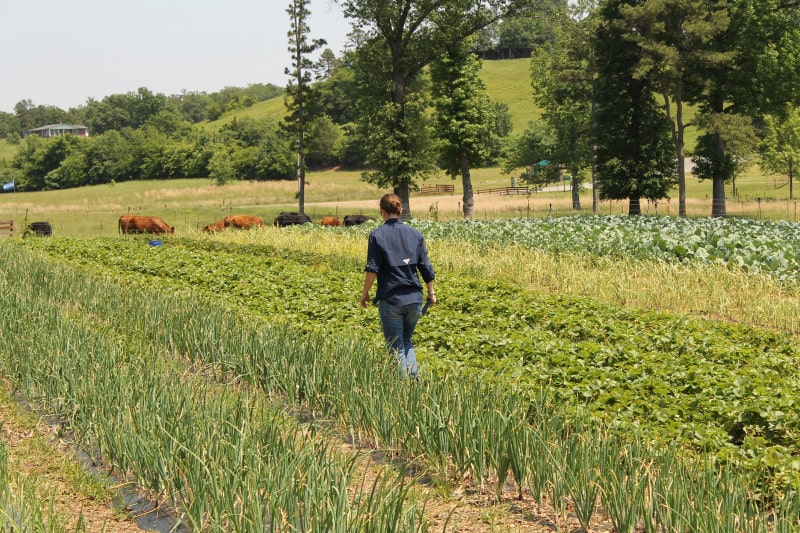
Even though farmers often work alone, they don’t have to go it alone. Photo: Preston Keres, USDA
Supporting the Whole Person
NCAT specialists work with farmers, ranchers, veterans, beginning farmers, and rural communities every day. Our conversations often focus on practical issues: soil health, conservation, business planning, markets, production systems, and farm finances. Those practical issues matter. But they do not exist in isolation from the people experiencing them.
A farmer may come to us with a question about finding a better market. Beneath that question may be mounting financial pressure.
Someone may ask about changing their production system while also wondering how much longer they can continue working at the pace they have maintained for years.
A beginning farmer may be focused on building a viable enterprise while also dealing with the uncertainty and personal pressures that come with starting something new.
We believe agricultural service providers have an important role to play in recognizing the whole person behind the farm operation. That does not mean that agricultural specialists should become mental health professionals. It does mean that we should be prepared to recognize when someone may be struggling, listen without judgment, and help connect them with appropriate resources.
Investing in Our Own Capacity
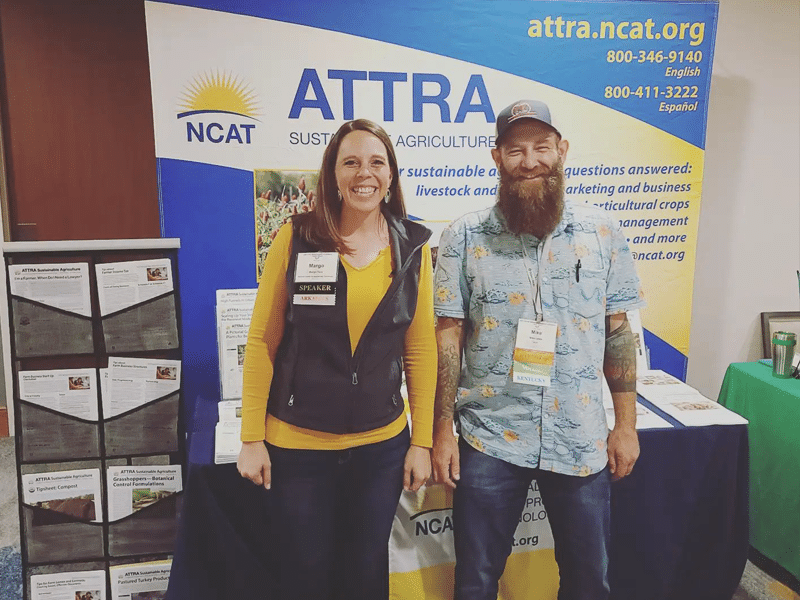
In July, more than 20 NCAT specialists completed Mental Health First Aid training and certification through the National Alliance on Mental Illness of Los Angeles (NAMI). This was a deliberate investment in our staff and in the farmers and communities we serve.
NCAT has worked with farmers and rural communities for decades. Our staff are often in conversations with people who are facing significant economic, environmental, and personal pressures. We wanted our staff to be better prepared to recognize potential mental health challenges and respond appropriately.
The training provided a deeper understanding of how stress, anxiety, depression, and other mental health challenges can affect individuals, families, and communities. It also helped staff recognize some potential signs that someone may be struggling, including:
- Increased irritability or frustration
- Withdrawal from family, friends, or community activities
- Changes in sleeping or eating habits
- Difficulty concentrating or making decisions
- Feelings of hopelessness or overwhelming worry
- Loss of interest in activities they once enjoyed
- Increased use of alcohol or other substances
These signs do not necessarily mean that someone is experiencing a mental health crisis or a diagnosable mental health condition. They may, however, indicate that a person is carrying more than we can see.
Mental Health First Aid training emphasizes practical steps for responding to someone who may need support: assessing immediate risk, listening without judgment, offering reassurance and information, encouraging appropriate professional help, and supporting healthy coping strategies. Our role is not to diagnose farmers or provide clinical treatment. Our role is to be better prepared to notice, listen, and connect people with appropriate support.
Resilience Requires Support
We often talk about the importance of risk management and support systems in agriculture. Farmers diversify their enterprises to reduce risk. They build relationships with markets and customers. They rely on neighbors during emergencies. Communities develop networks to share knowledge, resources, and assistance.
No farm is truly self-sufficient. Every farm depends on soil, water, weather, markets, infrastructure, knowledge, and other people. The idea of the independent farmer can sometimes obscure how much every agricultural enterprise depends on relationships and systems of support.
The same is true of the people who operate those farms.
Resilience is not the ability to withstand unlimited pressure without consequence. Resilience comes, in part, from having the relationships, resources, and support necessary to recover when life becomes difficult.
That is why farmer well-being must be part of the conversation about agricultural resilience. A healthy farm requires more than healthy soil, sound finances, and good production practices. It also requires people who have the support they need to keep going.
A Commitment to Farmer Well-Being
At NCAT, we are committed to learning how to better support the farmers, ranchers, veterans, and rural communities we serve. Investing in Mental Health First Aid training for more than 20 members of our staff is one part of that commitment.
We are not a mental health care provider. But we are often already in the room, on the phone, or at the farm with people who are navigating difficult circumstances. By building our own awareness and understanding, we can become better agricultural service providers and better connectors, getting people the resources they may need.
For us, supporting agriculture means supporting the whole person. The strength of our farms and rural communities depends not only on the land, the animals, the crops, and the businesses—but also on the people who care for them.
Resources for Farmer Well-Being
NCAT’s Farmer Well-Being web page includes ATTRA resources on farmer mental health and emotional well-being, including:
Farm Stress and Emotional Well-Being, Part I
Farm Stress and Emotional Well-Being, Part II
If you or someone you know is experiencing a mental health crisis or thoughts of suicide, contact the 988 Suicide & Crisis Lifeline by calling or texting 988.
This blog is produced by the National Center for Appropriate Technology through the ATTRA Sustainable Agriculture program, under a cooperative agreement with USDA Rural Development. NCAT.ORG/ATTRA.