Avoid the Foul Smell of Spring: Prevent Varroa Mites in Beehives
Provided by:
Written By

Related Resources


Imagine a late-March day in New Jersey: beautifully crisp, slightly damp, and filled with the fresh promise of early spring. You have just arrived at your honey bee apiary with all the tools to crack open your hives for the first time this beekeeping season. You spent the winter studying the latest beekeeping research, cozy in front of the fireplace, learning about cutting-edge bee research, reading up on automated honey harvesting systems, and you were even calculating how many new beehives you could expand to this spring. At Thanksgiving and then again at Christmas you impressed your family and friends with long-winded orations about the complexities of the honey bee hive biology and the nuances of hive inspections. You waxed poetic about the beautiful craft of apiculture. With wide eyes full of awe, your family and friends listened about this unique topic, lured in by potential gifts of future sweet, golden honey that may grace their pantries.
And now, here you are walking up to your 25 hives, which you had so diligently insulated, wind protected, and ensured had adequate winter honey stores in late November. But as you approach the hives, there seems to be a problem.
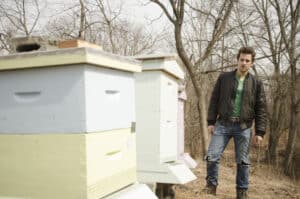
The author inspecting his hives in winter.
You do not hear anything. No buzzing. You do not see any bees flying. No activity coming out of the hive entrances, no lone forager bees flying out for cleansing flights. Just nothing. You stand outside your hives looking very closely at the mouse guards and entrance reducers you had so painstakingly attached to the front entrances of the hives to prevent mice taking up residency inside them in the winter. You can hear the cold whip of the last bit of winter wind rushing over the tops of nearby trees. As this wind dips down into the apiary, you smell something foul. It is the smell of death and rot. There is something seriously wrong.
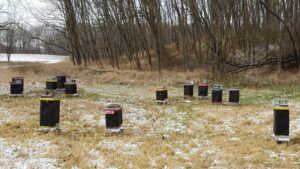
Hives wrapped in tar paper for winter. Photo: Adam and Lacey Ingrao
You become very concerned and anxious, and you can suddenly feel this bucolic winter scene starting to turn desolate, cold, and empty. One by one, you crack open the top of your hives and peel off the entrance reducers on the front. Each hive you open continues to reinforce what you had been fearing. Inside each hive cavity you find a nightmare of moldy old brood and pollen frames, and you can see down in the bottom of the hive a layer of dead bees piled on the floor. As you work through pulling out frames, you smell a waft of unpleasant fermentation, and as you leverage out each brood frame with your hive tool, you breathe in the putrid scent of rotting bee corpses. The stench wafts out and fills the air around the apiary. This hive is dead, and it appears to have died early in the winter before the bees could consume their honey stores.
This is one of the loneliest experiences you can have as a beekeeper. It bears with it the crushing shock and reversal of your high expectations for the season. It is a feeling akin to failing a test or sleeping on the job. You feel lied to about your future, your dreams, and it makes you question your level of acumen and intuition around beekeeping. As you work through the hives, you find one after the other dead. Similarly dead are your dreams of successful, abundant summer beekeeping and a bountiful honey harvest. All those ambitions were snatched away in a cold winter chill, and the beekeeping season has not even started yet.
Sadly, this is not a fictional story. For me, this was a very real nightmare I experienced one March in the mid-2010s when I lost 23 of my 25 overwintered beehives. Embarrassing, humbling, and above all, demoralizing. What happened? What went wrong?
The answer is Varroa Mites (Varroa destructor). Due to my poor monitoring, poor treatment practices, and lack of management plans, a huge population of varroa mites grew inside my beehives, killing my productive honey bee colonies just as winter set in.
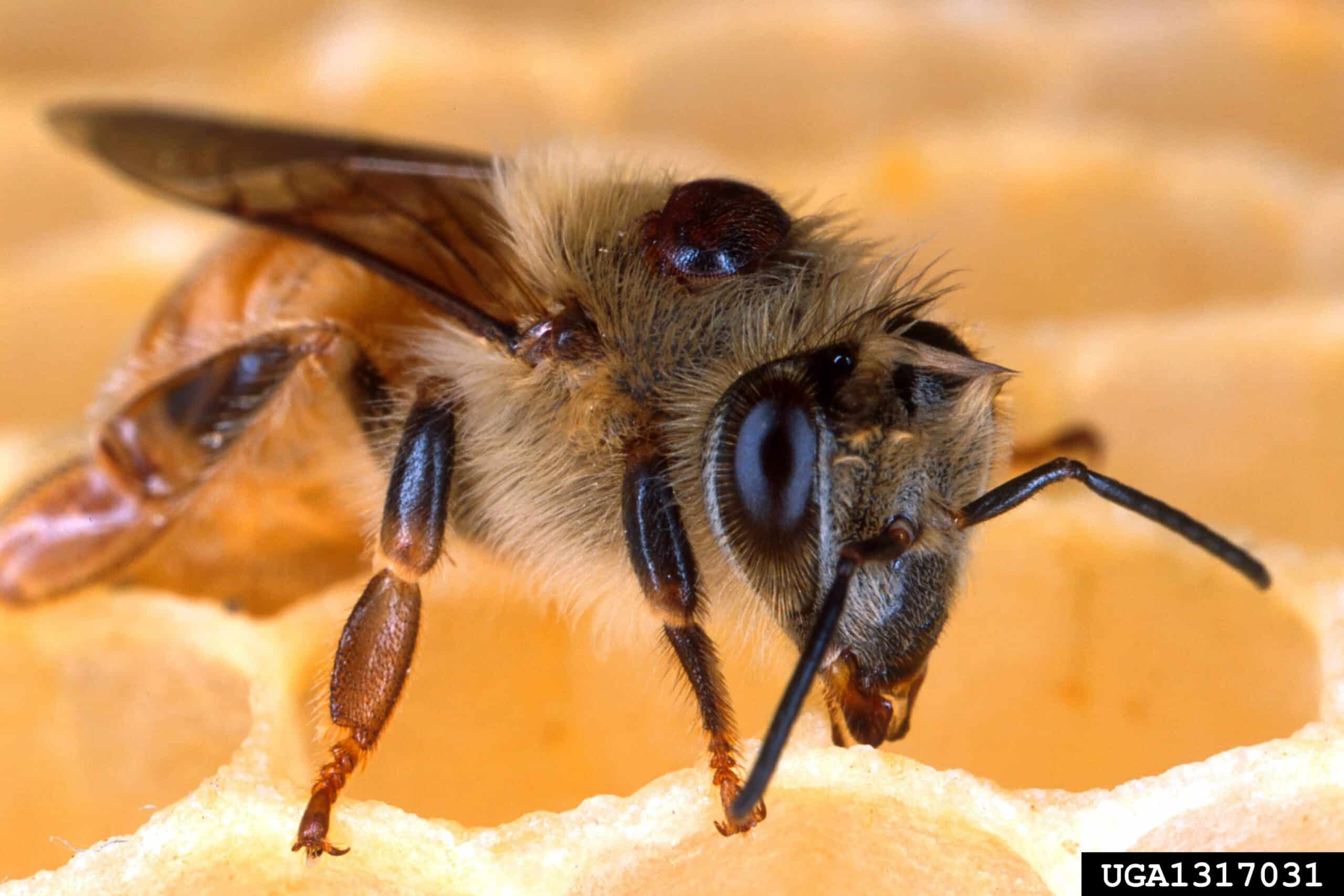
Varroa mites, often casually referred to as just “varroa” or “mites,” are the most ubiquitous pest and are the sworn enemy of beekeepers around the world. These mites are about the size of a sesame seed, have a reddish-brown color, and can be seen by the vigilant eye of an experienced beekeeper. The varroa mite is one of the primary causes of hive death and economic losses for many beekeepers in the United States (Rosenkranz et al., 2010). It weakens bees’ immune systems, steals valuable resources from the bees’ bodies, and encourages the spread of a variety of diseases in the hive (Becchimanzi, 2020).
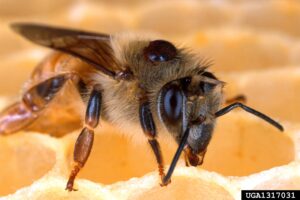
Varroa mite on the back on a honey bee. Photo: Scott Bauer, USDA Agricultural Research Service, Bugwood.org
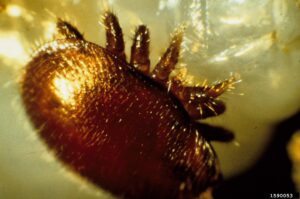
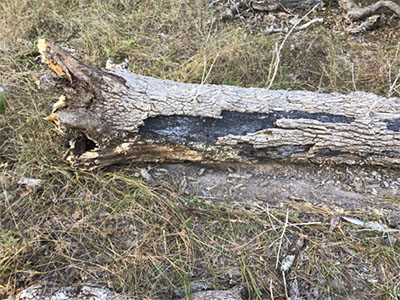
Varroa Mite on honey bee pupae. Photo: Georgia Department of Agriculture, Bugwood.org
This pest demands that a beekeeper develop a strategy for regular monitoring and an understanding of season-appropriate treatments. Effective honey bee stewardship hinges on one critical premise: successful beekeeping requires a mastery of varroa management.
Breaching the Hive: The Mites’ Path Inward
Varroa mites can enter a hive in a variety of ways. Varroa mites spread between colonies by “hitchhiking” on foraging bees. A forager carrying a mite may visit a flower to collect pollen or nectar. A mite can detach and remain on the flower until a different forager from another colony visits the same flower (Peck et al., 2016). From there the mite can climb onto the new bee, ride to a new hive, and introduce varroa to an otherwise healthy colony. Also, bees robbing a weak or dying hive infested with varroa provide a free exit for the mites on the backs of the robber bees, who unknowingly transport mites to their own colony (Peck and Seeley, 2019).
The impact varroa mites have on honey bee health cannot be overstated! For many years, we have known that varroa mites are vectors for transmitting at least eight different viruses to honey bees, but recent research has suggested they transmit many more (Damayo et al., 2023). While feeding on the pupae or adult bees, varroa mites transfer viruses via the exchange of fluids from their mouths into the bee’s body (Damayo, 2023). The impact on bee health is exacerbated because as mites feed, they also suppress the bee immune system (Morfin, 2023). Often, the most abundant, productive, and growing colonies harbor the most mites because they are rapidly reproducing and raising new bees, which means there is a rapidly reproducing mite population. This is a lesson I experienced firsthand on that cold day in late March.
Varroa Mite Detection and Monitoring
You should assume that your hive has varroa mites. Understanding the amount of varroa mites based on the time of year will help you decide which treatment options to use. A sign that varroa may be present in large numbers is evidence of Deformed Wing Virus (DWV), specifically if you see malformed and shriveled wings that render the bees incapable of flying. DWV is always present in a beehive but rarely has visible symptoms; however, it is one of the common and visible viruses that varroa mites spread between bees.
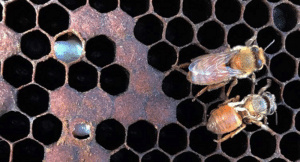
Honey bee with Deformed Wing Virus. Photo: Mona Chambers, USDA ARS Carl Hayden Bee Research Center
Alcohol Wash and Powdered Sugar Shake
Regular monitoring is one of the most important components of successful varroa management. Treating only when mite levels exceed established thresholds helps reduce unnecessary pesticide use and slows the development of miticide resistance. You can find excellent resources on how to properly execute an alcohol wash and sugar shake in the Additional Resources section below and in the forthcoming ATTRA publications, Varroa Mite Management and Beekeeping Fundamentals.
Treatment Thresholds: Industry Standards
Treatment decisions are based on the number of mites found per 100 bees.
- Spring (April through July): Treat when mite levels reach one mite per 100 bees (1%).
- Late summer and fall (August through October): Treat when mite levels reach two mites per 100 bees (2%).
IPM Control and Treatments for Varroa
Effective varroa management takes more than applying a treatment once mite levels run high. Integrated Pest Management (IPM) pairs regular monitoring with several complementary strategies to keep mite populations below damaging levels, limit unnecessary pesticide use, slow the development of pesticide resistance, and promote long-term colony health. Rather than relying on a single control method, IPM emphasizes prevention, informed decision-making, and choosing the least disruptive option that achieves effective control.
Management Practices for Varroa Control
The table below describes many of the management options and their associated purpose. The options included in the table are also arranged in order beginning with the least disruptive for the colony.
IPM Actions and Their Purposes for Varroa Control
| IPM Category | Action / Practice | Purpose |
| Prevention and Good Management Practice | When purchasing a nuclear colony or package, use a reputable breeder who breeds for hygienic behavior. | Gives your colony a leg up in the fight against varroa |
| Re-queen every 1-2 years with hygienic or varroa-resistant stock. | Improves grooming and hygienic behavior against mites | |
| Avoid nutritional stress, pesticide exposure, and overcrowding. | Enhances immune function and colony resilience | |
| Maintain strong colony population relative to brood volume. | Helps to better thermoregulate the hive and defend from mites | |
| Hive and Apiary Hygiene | Conduct regular mite monitoring (i.e., alcohol wash, sugar roll, sticky boards). | Provides early detection and informs treatment thresholds |
| Remove drone brood periodically (drone trapping). | Exploits varroa preference for drone brood cells to reduce mite load | |
| Replace old/dark comb every 3-5 years. | Reduces buildup of mites, pathogens, and pesticide residues | |
| Process a dead hive promptly (known as “deadout”). | Reduces potential mite spread to other colonies | |
| Clean hive tools and equipment regularly. | Reduces spread of mites between colonies | |
| Minimize drifting and robbing between colonies. | Reduces horizontal transfer of mites | |
| Hive Placement and Environmental Management | Space colonies as far apart as is reasonable. | Reduces drifting, robbing, and inter-colony mite spread |
| Ensure adequate forage availability throughout the year. | Improves nutrition and strengthens colony immunity | |
| Storage and Equipment Management | Freeze or cold-store unused comb when not in use. | Kills or suppresses mites |
| Traps and Mechanical Control | Use screened bottom boards. | Increases natural mite drop and reduces reinfestation |
| Use sticky boards. | Monitors infestation levels and provide partial mite removal | |
| Utilize drone comb removal. Install drone frames into the hive on the edge of a brood nest. Frames should be removed 10 to 24 days later, with maximum number of capped cells on the frame. Freeze drone frame for 48 hours to kill mites and re-insert back into hive.
|
Exploits mite preference for drone combs; frames concentrate a large amount of drone brood in one location in the hive | |
| Utilize brood Interruption (splits, queen caging, artificial swarming). | Breaks varroa reproductive cycle by removing brood availability | |
| Biopesticides / Chemical Controls | Use organic acids (formic, oxalic, lactic acid). | Direct mite mortality with low residue risk |
| Use essential oils (thymol, menthol, eucalyptol). | Disrupt mite physiology and reproduction | |
| Use synthetic miticides and rotate them carefully (amitraz, fluvalinate, coumaphos). | Effective knockdown when resistance is managed. Rotation of chemical classes prevents development of resistant mite populations | |
| Apply treatments during broodless or low-brood periods. | Maximizes exposure of mites to treatments and increases efficacy |
Table created by Eric Fuchs-Stengel and Omar Rodriguez.
I hope you can benefit from the mistakes I made as a new beekeeper so that you will be able to start your beekeeping career off a little bit better than I did. Please feel free to reach out to me via askanag@ncat.org with questions or to let me know if there is other beekeeping information you need from us at ATTRA.
References
Becchimanzi, A. R. Tatè, E.M. Campbell, S. Gigliotti, A.S. Bowman, and F. Pennacchio. 2020. A salivary chitinase of Varroa destructor influences host immunity and mite’s survival. PLOS Pathogens. Vol. 16, No. 12. p. e1009075. Doi.org
Damayo, James E., McKee, R. C., Buchmann, G., Norton, A. M., Ashe, A., and Remnant, E. J. 2023. Virus replication in the honey bee parasite, Varroa destructor. Journal of Virology, 97(12), e0114923. https://doi.org/10.1128/jvi.01149-23
Morfin, Nuria, Goodwin, P.H., Guzman-Novoa, E. 2023. Varroa destructor and its impacts on honey bee biology. Front. Bee Sci. 1:1272937. doi: 10.3389/frbee.2023.1272937
Peck, David. T., Seeley, T. D. 2019. Mite bombs or robber lures? The roles of drifting and robbing in Varroa destructor transmission from collapsing honey bee colonies to their neighbors. PloS One, 14(6), e0218392. https://doi.org/10.1371/journal.pone.0218392
Peck, D.T., M.L. Smith, and T.D. Seeley. 2016. Varroa destructor mites can nimbly climb from flowers onto foraging honey bees. PLoS One. Vol. 11, No. 12. p. e0167798. journals.plos.org/plosone/article?id=10.1371/journal.pone.0167798
Rosenkranz, P., Aumeier, P., and Ziegelmann, B. 2010. Biology and control of Varroa destructor. Journal of Invertebrate Pathology, 103 Suppl 1, S96–S119. https://doi.org/10.1016/j.jip.2009.07.016
Additional Resources
Honey Bee Health Coalition. 2026. Tools for Varroa Management: A Guide to Effective Varroa Sampling & Control. 9th ed. The Keystone Policy Center, Washington, DC. https://honeybeehealthcoalition.org/wp-content/uploads/2026/08/Tools-for-Varroa-Management-Guide-9th-Edition.pdf