Ficha de identificación de ATTRA: Insectos de la manzana
Proporcionado por:
Escrito por


Recursos relacionados
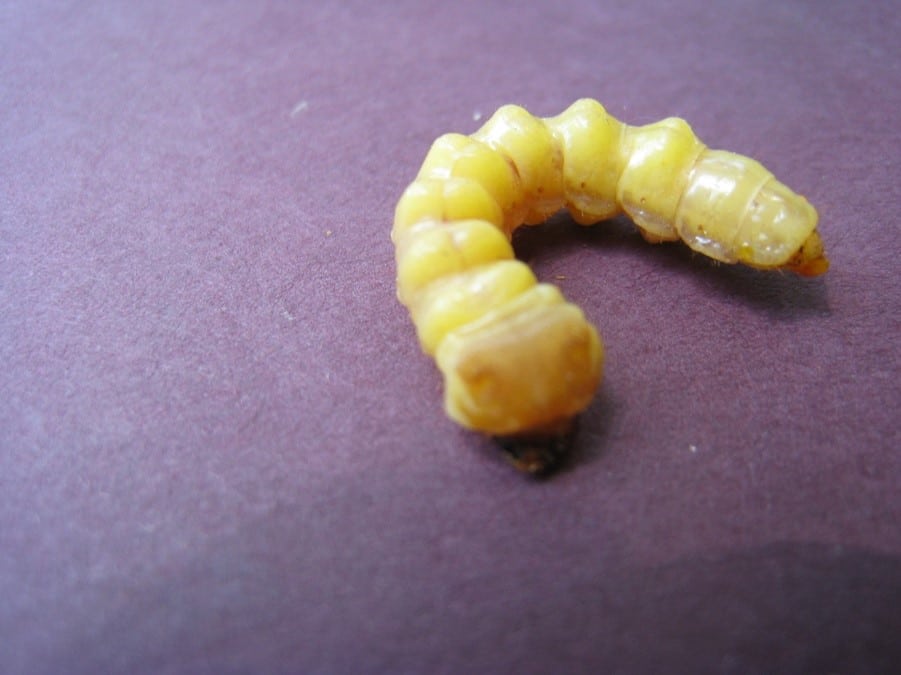
Hay varios insectos clave que afectan la producción de manzanas. Usa esta práctica guía para identificar algunas plagas de insectos y para saber más sobre sus causas y soluciones. Para obtener información más específica sobre estos insectos, o para conocer más sobre los insectos de la manzana que no se tratan aquí, consulta la publicación de ATTRA Manzanas: Guía de producción orgánica.
Insectos
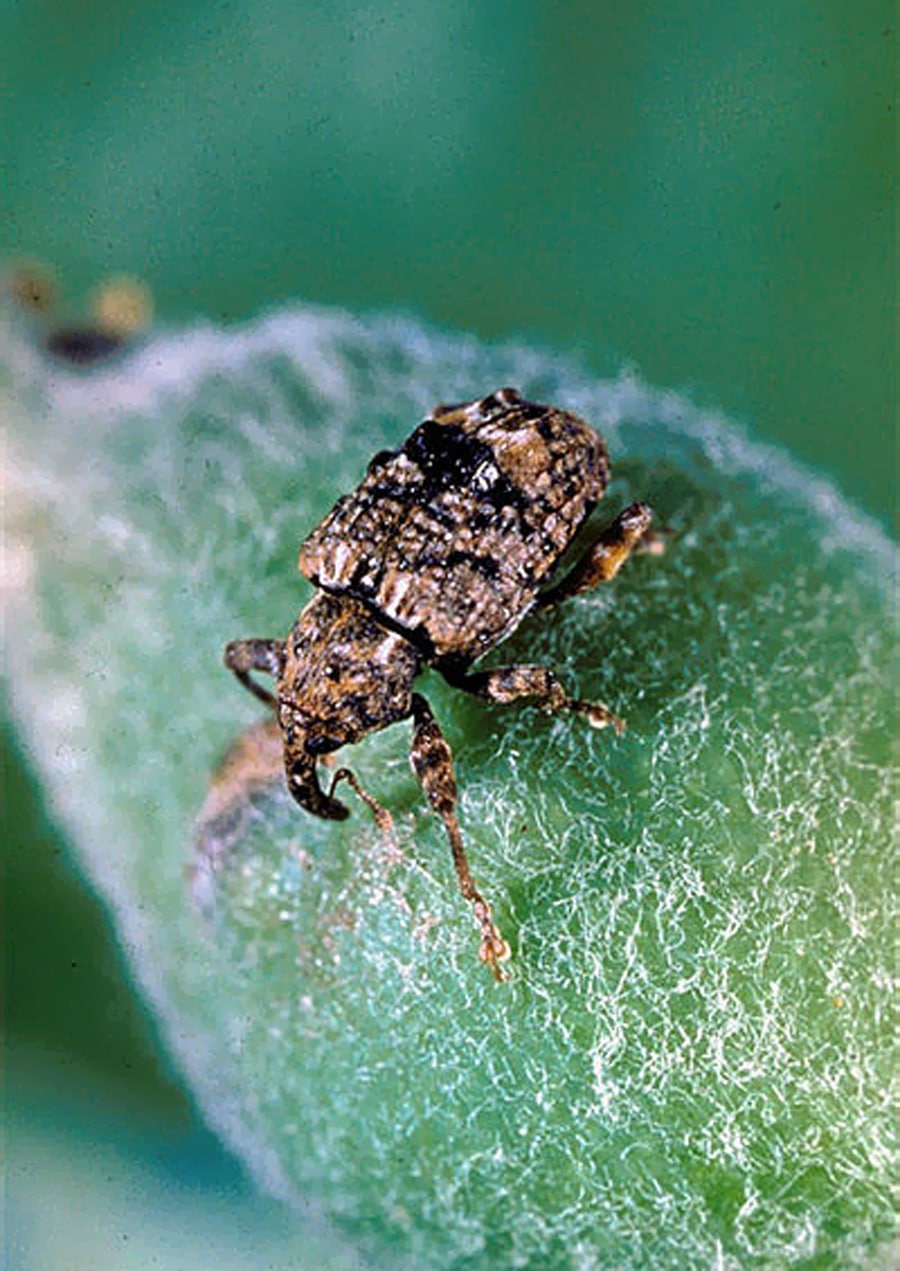
Curculio adulto de la ciruela. Foto: Universidad de Clemson, Bugwood.org
Gorgojo de la ciruela
El curculio de la ciruela es un pequeño gorgojo de color marrón que se encuentra en el este de Estados Unidos.
Después del apareamiento, la hembra perfora un pequeño orificio en la piel de un fruto en desarrollo, deposita un solo huevo y luego hace un corte en forma de media luna debajo del orificio para proteger el huevo y evitar que sea aplastado por el fruto en crecimiento.
El daño interno en los frutos es causado por larvas que excavan galerías, lo que provoca la caída prematura de los frutos (“caídas de junio”)
Los adultos se alimentan de fruta a finales del verano y en otoño. Las heridas causadas por su alimentación suelen ser el primer indicio de la presencia de adultos.
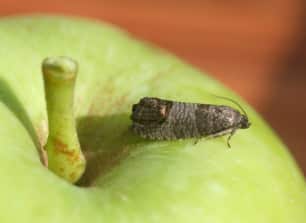
Polilla de la manzana. Foto: Whitney Cranshaw, Bugwood.org
Polilla de la manzana
La polilla de la manzana, Cydia pomonella, es una polilla adulta pequeña y de color gris poco llamativo que vuela principalmente de noche, por lo que a menudo pasa desapercibida a menos que se la atrape.
La presencia de «excrementos» en el tallo o en el extremo del cáliz del fruto indica que las larvas se están alimentando en el interior del fruto.
La polilla de la manzana está presente en todas las regiones productoras de manzanas de Norteamérica.
En las regiones relativamente frías, la polilla de la manzana puede tener solo una generación, mientras que en las zonas más cálidas donde se cultiva el manzano, puede llegar a tener de dos a tres generaciones por temporada.
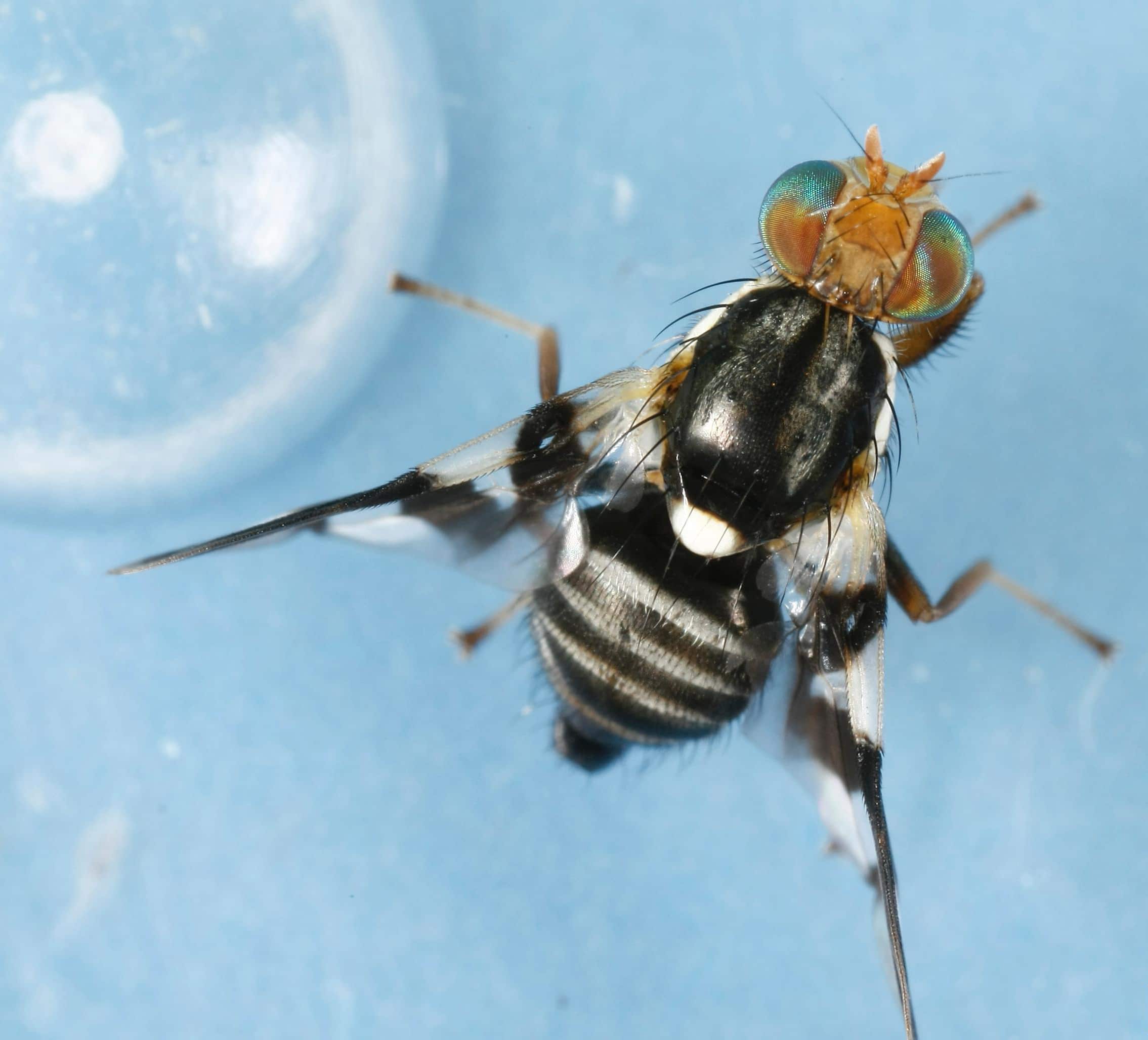
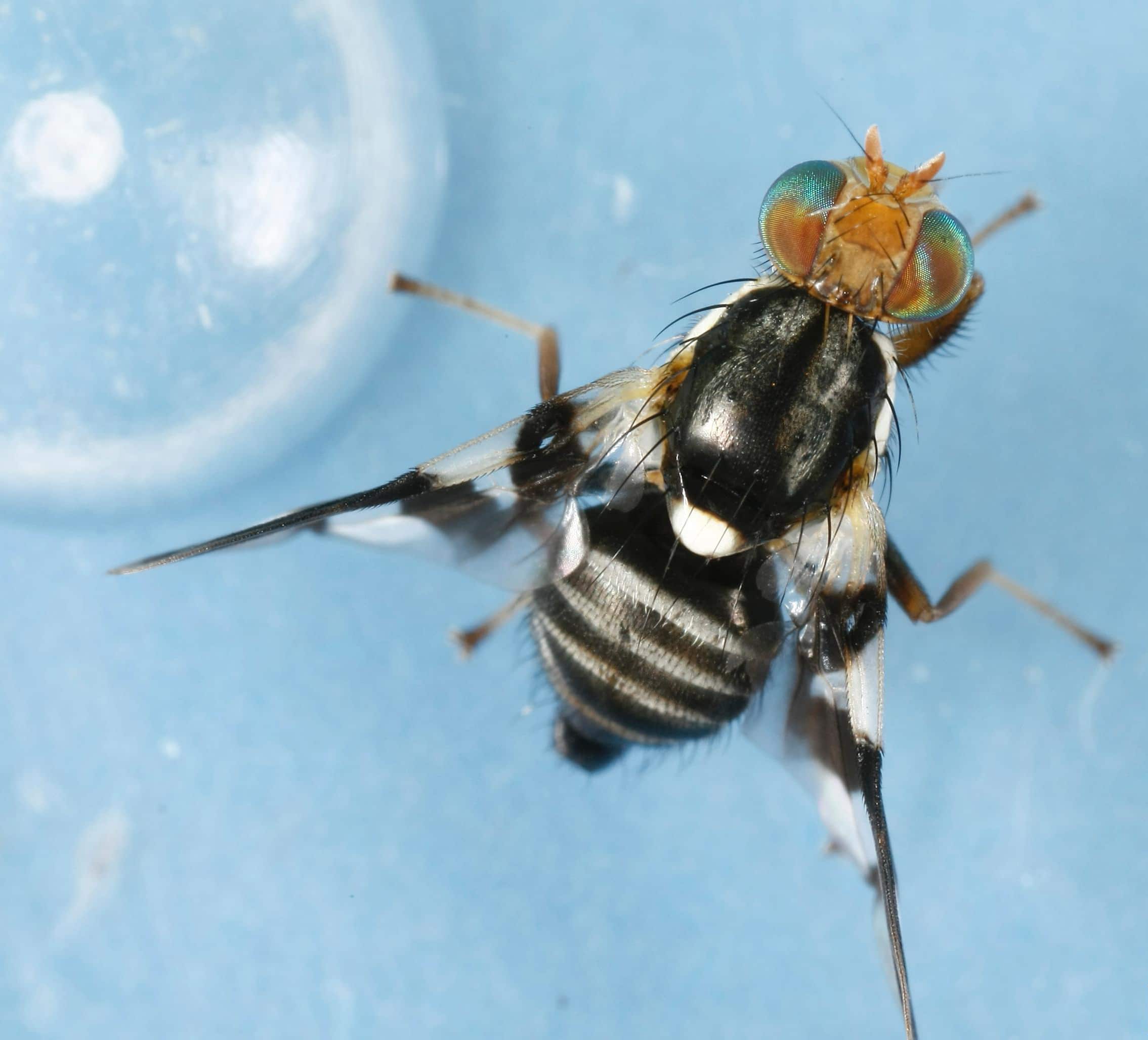
Gusano de la manzana. Foto: Joseph Berger, Bugwood.org
Gusano de la manzana
La mosca de la manzana, Rhagoletis pomonella, se encuentra principalmente en el noreste y en la parte norte del Medio Oeste.
El adulto es una mosca pequeña y negra con el abdomen y las alas rayados.
El ciclo de vida adulto de la mosca de la manzana es mucho más tardío que el del picudo de la ciruela y el gusano de la manzana.
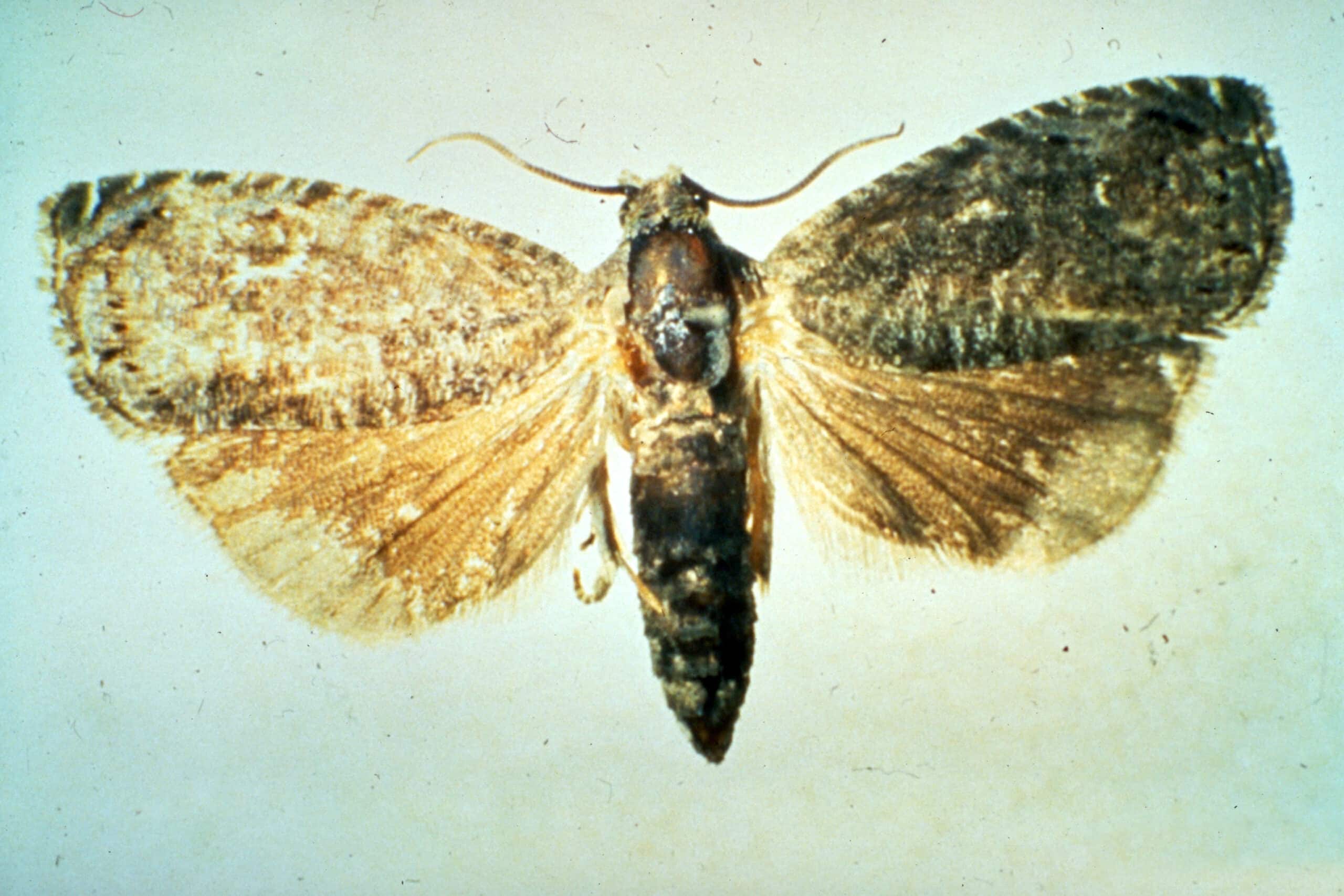
Polilla oriental de la fruta. Foto: G. Morvan, Bugwood.org
Polilla oriental de la fruta
Una plaga que ataca directamente a la fruta y que excava túneles al azar por toda la pulpa, no solo alrededor de la cavidad de la semilla.
Las larvas de la polilla de la fruta suelen alimentarse de las puntas suculentas de los brotes.
La polilla adulta es similar a la polilla de la manzana, con la que está emparentada, y, al igual que esta, rara vez se ve, salvo en las trampas.
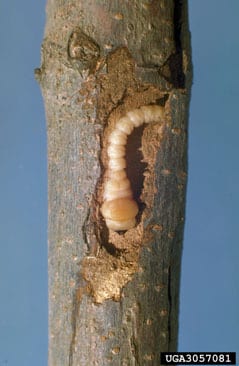
Barrenador de cabeza plana. Foto: James Solomon, Bugwood.org
Barrenador
Hay dos especies de barrenadores de cabeza plana que invaden los manzanos: Chrysobothris femorata en el este y mali en la costa del Pacífico.
Los adultos emergen de los árboles del bosque entre finales de abril y principios de mayo y comienzan a poner huevos debajo de las escamas de la corteza de los árboles. La unión del injerto es uno de sus lugares favoritos para la puesta de huevos.
El barrenador de cabeza redonda del manzano, Saperda candida, ataca al árbol cerca del nivel del suelo.
El barrenador del cornejo, Synanthedon scitula, se alimenta principalmente del tejido de los nudos en los portainjertos clonales.
Busca señales de daño causado por el barrenador, como excrementos mezclados con aserrín en la base del árbol y en el orificio de entrada de la plaga.
Soluciones clave de bajo uso de pesticidas y orgánicas
Gorgojo de la ciruela
El monitoreo biológico —la inspección sistemática del huerto para detectar la presencia o medir la densidad poblacional de las plagas— brinda información fundamental para elegir las estrategias de control y determinar el momento adecuado para aplicarlas. El protector de cultivos Surround WP, a base de arcilla de caolín, es una opción para el manejo del curculio de la ciruela. Se trata de una película de partículas no tóxica que crea una barrera entre la plaga y su planta huésped. El programa estándar de fumigación con Surround para el curculio de la ciruela comienza con la primera caída de pétalos y continúa con entre seis y ocho fumigaciones semanales, o hasta que termine la infestación. Surround se puede combinar con la captura masiva de adultos del curculio para reducir el número de generaciones posteriores. Arar el huerto durante el período pupal («etapa de capullo») es un método de control mecánico eficaz para el siguiente año de producción. Las aves de corral y los cerdos en pastoreo que se alimentan en el huerto de las larvas que caen de los frutos y de los escarabajos adultos pueden ayudar a controlar el curculio, aunque es necesario cumplir con los requisitos de seguridad alimentaria cuando el ganado se encuentra en el huerto.
Polilla de la manzana
Entre los métodos de control no tóxicos más eficaces contra la polilla de la manzana se encuentra la interrupción del apareamiento mediante feromonas. Este enfoque enfrenta dos problemas generales: las dificultades para mantener una distribución uniforme y duradera de las feromonas en todo el huerto y las complicaciones derivadas de la biología y la distribución inicial de la polilla de la manzana. Para los productores orgánicos, probablemente no sea factible lograr una supresión adecuada utilizando únicamente la interrupción del apareamiento, pero combinarla con trampas de luz negra mejora el control. El monitoreo de los grados-día puede ayudar a determinar el mejor momento para las aplicaciones de fumigación. Se ha demostrado que un virus de la granulosis, identificado originalmente en la polilla de la manzana, es eficaz para el control de las larvas de la polilla de la manzana en etapas tempranas. La avispa Trichogramma se utiliza cada vez más en los huertos de EE. UU. como organismo de control biológico contra la polilla de la manzana. Las prácticas de saneamiento y culturales pueden ayudar a reducir las poblaciones de polilla de la manzana. El protector de cultivos Surround WP, a base de arcilla de caolín, ahuyenta a los insectos de varias maneras. El programa estándar de rociado con Surround para la primera generación de la polilla de la manzana comienza con la primera caída de pétalos y continúa con entre seis y ocho rociados semanales o hasta que termine la infestación.
Gusano de la manzana
Para monitorear los niveles de la población adulta, se cuelgan en el huerto esferas rojas recubiertas de una capa pegajosa e impregnadas con un olor que atrae a las moscas. Si se utilizan suficientes esferas, es posible atrapar a las moscas en masa. Esta técnica puede reducir o eliminar la necesidad de aplicar pesticidas. La eliminación de espinos y de manzanos abandonados o descuidados cerca del huerto debería ayudar a reducir la afluencia de moscas al huerto. Las moscas son susceptibles al piretro, la rotenona y la tierra de diatomeas. Además, investigaciones recientes sobre la película de partículas Surround han demostrado que permite mantener las poblaciones de gusanos dentro de niveles aceptables si se rocía poco después de la cuajada.
Polilla oriental de la fruta
La polilla oriental de la fruta es relativamente fácil de controlar con insecticidas, especialmente si las fumigaciones se programan utilizando trampas de feromonas disponibles en el mercado. Desafortunadamente, debido a los diferentes ciclos de vida, las fumigaciones contra el gorgojo de la ciruela y la polilla de la manzana no controlan a la polilla oriental de la fruta. Las fumigaciones contra esta plaga suelen ser necesarias más adelante en la temporada, cuando pueden resultar perjudiciales para los insectos beneficiosos. Un sistema de interrupción del apareamiento basado en feromonas (Isomate-M) ha demostrado ser eficaz y está registrado para su uso en manzanas.
Barrenos
Mantener a los árboles en buen estado de vigor es una importante medida de protección de primera línea contra los barrenadores, ya que un árbol con buen vigor podrá ahogar a una larva invasora con su savia. Los árboles afectados por la sequía son mucho más susceptibles a los barrenadores; por lo tanto, es esencial un riego adecuado. La eliminación de los árboles de guayabillo (Amelanchier spp.) que se encuentren muy cerca del huerto puede ayudar a controlar al barrenador de cabeza redonda, ya que el guayabillo es uno de sus huéspedes preferidos. Plantar de manera que el injerto o la unión del brote quede a menos de una pulgada del suelo debería inhibir el desarrollo de nudos de barrilla, previniendo así el ataque del barrenador del cornejo. Para todas las especies de barrenadores, las larvas pueden retirarse del tronco con una navaja o un trozo de alambre. Quizás la mejor protección no química contra todas las especies de barrenadores sea envolver las 12 a 18 pulgadas inferiores del tronco con malla para ventanas (el metal, la fibra de vidrio o el nailon son todos efectivos). Asegura la parte superior con un alambre retorcido, asegurándote de aflojarlo y volver a atarlo al menos una vez al año. La parte inferior debe quedar bien ajustada contra el suelo o también asegurada con un alambre retorcido.
Ficha de identificación de ATTRA: Insectos del manzano
Por Tammy Hinman y Guy K. Ames, especialistas en agricultura del NCAT
Publicado en noviembre de 2014
©NCAT
IP483, espacio 495
Esta publicación ha sido elaborada por el Centro Nacional de Tecnología Apropiada a través del programa de Agricultura Sostenible de ATTRA, en el marco de un acuerdo de cooperación con el Departamento de Desarrollo Rural del USDA. ATTRA.NCAT.ORG