Peonías: una planta perenne de gran valor que genera ganancias y alegría
Proporcionado por:
Escrito por

Recursos relacionados

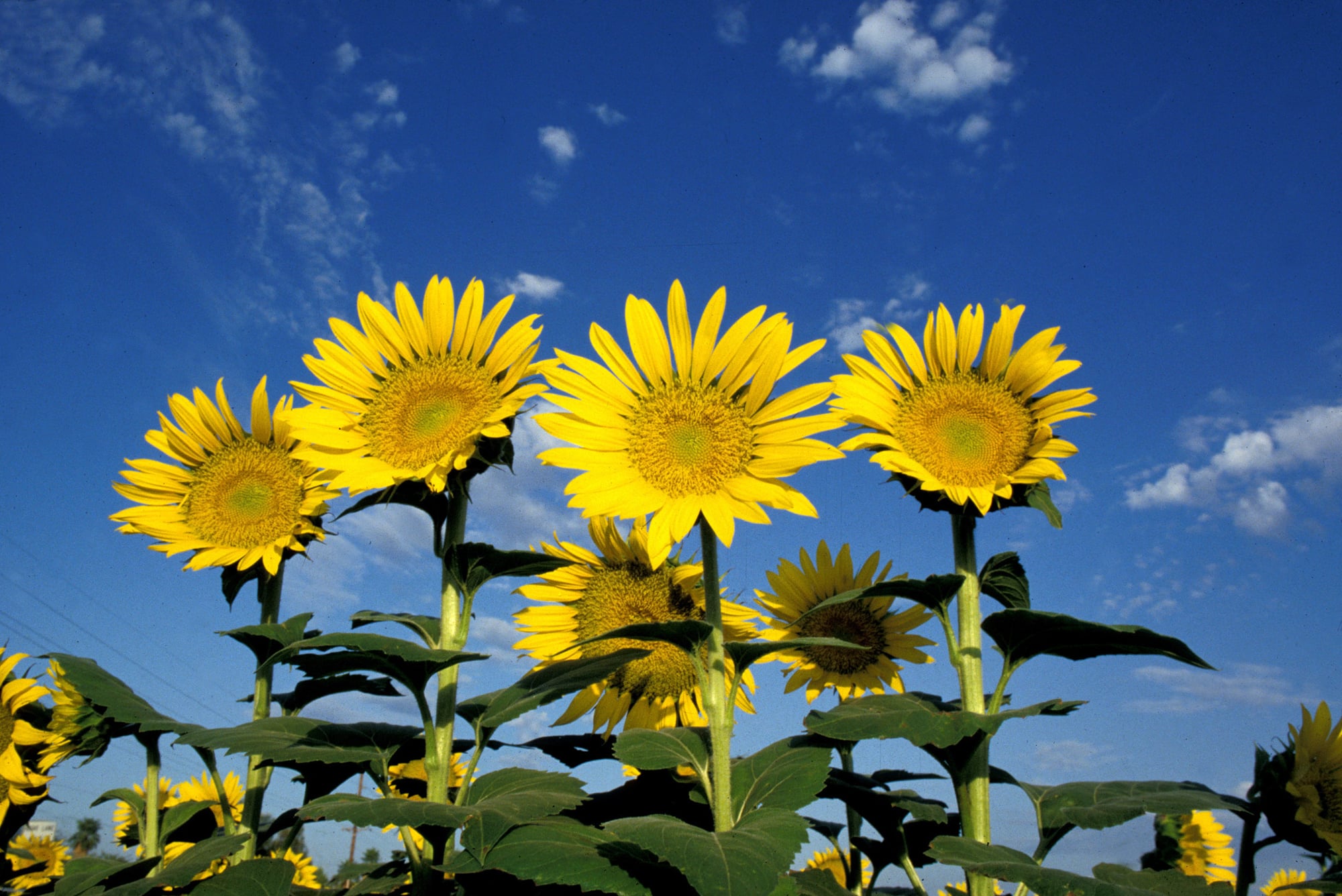
Tres años después de plantar 15 peonías en mi granja de Carolina del Norte, por fin tuve la suerte de obtener aproximadamente 45 flores magníficas en tallos robustos. Las llevé a una floristería local, ¡y me las compró todas a cinco dólares cada una! Me dijo: «Te compraré todas las peonías que me puedas traer durante las próximas dos semanas». Faltaban dos semanas para el Día de las Madres. Estaba tan emocionada que pasé los siguientes tres días conduciendo por el pueblo, tocando puertas para preguntar si podía comprar sus peonías en flor. Terminé ganando más de mil dólares en un fin de semana. Y eso, amigos, fue lo que financió mi primer pedido al por mayor de peonías a granel.
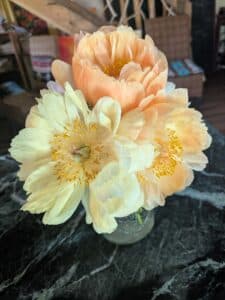
Peonías «Coral Sunset» de la granja de Danielle. Foto: Danielle Crocker
Pocos cultivos igualan el puro deleite y el potencial comercial de las peonías herbáceas (Paeonia lactiflora). Como entusiasta de las plantas perennes, me atraen aquellas que regresan año tras año, lo que aporta un valor adicional a una pequeña granja. En el oeste de Carolina del Norte, nuestras frescas temperaturas primaverales brindan el ambiente ideal para estas impresionantes flores. Más allá de la alegría que me brindan, las peonías son muy versátiles. Puedes venderlas como tallos recién cortados, divisiones de raíces a granel o en macetas, o secar las flores que no se vendieron para utilizarlas en coronas y arreglos florales de invierno.
Para cultivar peonías con éxito se necesita dedicarle cierta atención durante su ciclo de vida, pero, sobre todo, se necesita paciencia. Como dice un refrán popular: «El primer año duermen, el segundo se arrastran y el tercero dan un gran salto».
Estrategia de abastecimiento y siembra
Mientras tú puedes cultivar peonías a partir de semillas, comprar raíces desnudas con tres a cinco «ojos» garantiza un crecimiento mucho más rápido y menos mantenimiento en general.
Cómo conseguirlas: Si tienes una granja de peonías cerca, ponte en contacto con ellos y averigua cuándo venden esquejes. Una búsqueda rápida en Internet debería ayudarte a encontrar granjas de peonías locales. De lo contrario, Van Engelen Inc. y Farmer Bailey – Farmer Bailey Inc. son dos de mis sitios web favoritos para comprar peonías a granel a precios razonables.
Suelo y sol: Las peonías prefieren un pH del suelo de entre 6,5 y 7,0. Es imprescindible que el suelo tenga un excelente drenaje para evitar que se pudran las raíces. Crecen mejor con sol por la mañana y sombra por la tarde, o bajo la luz del sol tamizada a lo largo del día.
Profundidad y espaciado: Al plantar, asegúrate de que los ojos superiores (yemas de donde se desarrollan los tallos) de la corona radicular queden entre 1 y 2 pulgadas por debajo de la superficie del suelo. Plantarlas demasiado profundas puede impedir que florezcan. Como mi objetivo es la producción comercial, las planto a una distancia de 2.5 pies entre sí dentro de las hileras. Las peonías maduras pueden crecer de 3 a 4 pies de alto y de ancho, así que eventualmente dividiré o aclararé las plantas para darles más espacio.
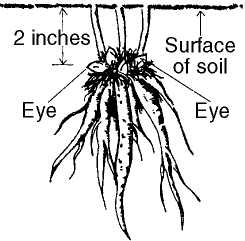
Profundidad adecuada para plantar los rizomas de peonía, con los ojos a dos pulgadas por debajo de la superficie del suelo. Fuente: Universidad de Clemson
Agua: Asegúrate de regar bien después de plantar, especialmente si el suelo está seco en el momento de la siembra. Una vez que se han establecido, las plantas son muy resistentes a la sequía.
Requisitos de frío: Las peonías necesitan un período de latencia fría para crecer bien. Plantarlas desde mediados del otoño hasta finales del invierno les proporciona las horas de frío necesarias. Aquí en Carolina del Norte, prefiero plantarlas en octubre o noviembre.
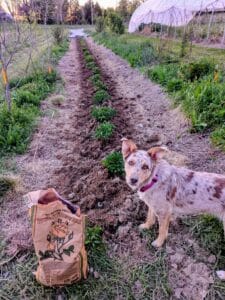
Una hilera de peonías recién plantadas. Diggity, el perro de Danielle, está muy orgulloso de su trabajo. Foto: Danielle Crocker
Mantenimiento de los cultivos y cuidados a largo plazo
Las peonías son una inversión a largo plazo, y los dos primeros años ponen a prueba la paciencia.
Sacrificar las primeras flores: Durante los dos primeros años después de la división, recomiendo cortar todas las cabezas florales antes de que se abran. Esto obliga a la planta a canalizar su energía hacia el desarrollo del sistema radicular en lugar de hacia la reproducción. Para el tercer año, serás recompensado con una profusión de tallos fuertes y abundantes.
Malezas y soportes: Mantén los canteros libres de malezas durante la fase inicial de establecimiento. Una vez maduras, las peonías superan fácilmente a las malezas de principios de primavera. Si dejas que las flores se abran, se volverán bastante pesadas, así que colócalas en soportes para evitar que se doblen y se rompan. Sin embargo, si cosechas los capullos antes de que se abran (lo cual se recomienda), por lo general no necesitan soporte.
Fertilización: Lo ideal es aplicar un fertilizante completo con bajo contenido de nitrógeno, como 5-10-5 o 5-10-10, a razón de 2.5 libras por cada 100 pies cuadrados a principios de la primavera. No permitas que el fertilizante entre en contacto directo con el tejido de la planta, ya que esto puede dañarla.
Regeneración de plantas madre: Si quieres dividir tus plantas maduras para ampliar tu campo o vender portainjertos, hazlo en septiembre u octubre, una vez que las plantas hayan entrado en letargo.
Control de plagas y enfermedades
La mayor amenaza para un cultivo saludable de peonías proviene de las enfermedades fúngicas y bacterianas.
Prevención de enfermedades: Las peonías son susceptibles al tizón bacteriano, al tizón por Botrytis, al tizón por Phytophthora, al oídio, a la pudrición de la raíz, a la agalla del cuello, al tizón del sur y a la marchitez por Verticillium. El control cultural más eficaz es la higiene: corte todas las plantas a ras de suelo cada otoño y retire los residuos del campo para interrumpir los ciclos de las enfermedades.
Insectos: Esté atento a los nematodos, las cochinillas, los trips, los escarabajos de las rosas y los escarabajos japoneses. También notará que las hormigas se agrupan en torno a los capullos cerrados; simplemente se alimentan de la savia dulce y no dañan a la planta. Y, al contrario de lo que dice la creencia popular local, las hormigas no son realmente necesarias para que los capullos se abran.
La ventana de la cosecha
La cosecha comercial comienza en el tercer año y se extiende desde abril hasta mediados de junio, dependiendo de las variedades específicas y la ubicación.
La etapa del malvavisco: Para venderlas de inmediato, corta las flores cuando los capullos se sientan suaves y esponjosos, exactamente como un malvavisco.
Consejos para el almacenamiento en frío: Para un marketing estratégico, puedes cortar los cogollos mientras aún están compactos y almacenarlos en un refrigerador. Es posible conservar estos cogollos compactos hasta por tres meses, lo que te permite forzar la floración más adelante en la temporada, cuando la oferta en el mercado disminuye y los precios alcanzan su punto más alto. Sin embargo, este método requiere un control preciso de la temperatura y conlleva cierto riesgo si no se gestiona correctamente el entorno.
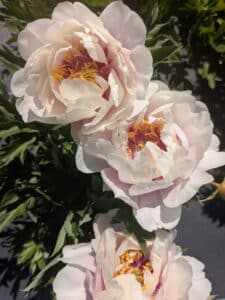
Un ejemplo de flores de peonía arbórea. Foto: Danielle Crocker
Hay muchos tipos diferentes de peonías, como las herbáceas, las híbridas-herbáceas, las arbóreas o leñosas y las peonías Itoh. Y, por supuesto, cada uno de esos tipos cuenta con variedades únicas. La Sociedad Estadounidense de la Peonía es un excelente recurso si quieres saber más sobre ellas.
Por lo general, no recomendaría cultivar peonías en zonas más cálidas que la Zona 7, pero he conocido a personas que las cultivan con éxito en la Zona 8. Solo asegúrate de informarte bien sobre las particularidades de las distintas variedades de peonías antes de hacer una compra al por mayor que resulte costosa. Al fin y al cabo, ¡te animo a que experimentes con moderación y hagas lo que te haga feliz!
Este blog es una producción del Centro Nacional de Tecnología Apropiada (NCAT) a través del programa de Agricultura Sostenible de ATTRA, en el marco de un acuerdo de cooperación con el Departamento de Desarrollo Rural del Departamento de Agricultura de los Estados Unidos (USDA). NCAT.ORG/ATTRA.