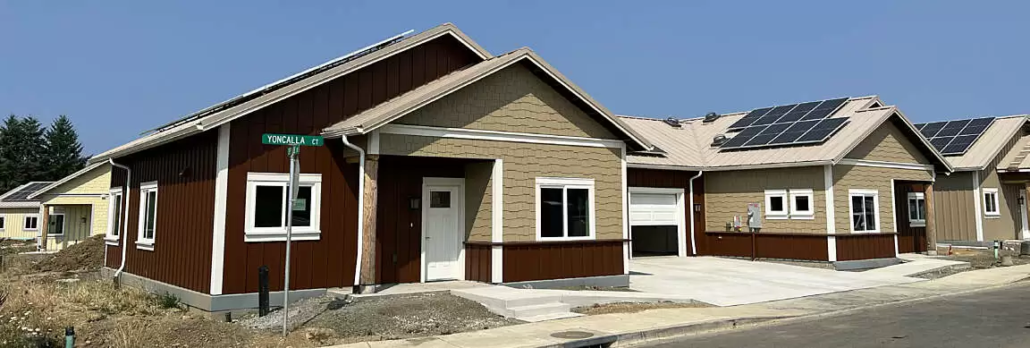
Confederated Tribes of Grand Ronde elder housing duplex. Source: BetterBuiltNW
10 Recommendations of the Montana Homes Collaborative
By Carl Little, NCAT Energy Analyst
Introduction
In 2021 and 2022, with record-high housing prices and increasing energy costs, the Northwest Energy Efficiency Alliance (NEEA) and the National Center for Appropriate Technology (NCAT) partnered to tackle these challenges by establishing the Montana Homes Collaborative. The goal of the Collaborative, comprised of housing stakeholders, is to determine best practices for building affordable and energy-efficient homes in Montana. In these times of energy uncertainty, our homes must be efficient to act as a buffer against future energy cost fluctuations. This page identifies and explains the Collaborative’s 10 initial recommendations and proven techniques that are integral to building homes that are both affordable and sustainable by prioritizing energy-efficiency measures that will, in turn, allow homeowners to enjoy affordability and comfort over the life of their homes.
The recommendations on this page are centered around energy-efficient design based on tried-and-true building practices. Such measures allow homeowners to enjoy consistent temperatures across every room and a constant supply of fresh, filtered air that helps reduce indoor pollutants, dust, pollen, and other allergens.
Fortunately, the building industry is increasingly focused on building science, an area of study based on observation, testing, and retesting. Many events of the past, especially the energy crises of the 1970s, increased our interest in understanding how buildings behave, especially regarding energy use. Many of the early efforts to build more energy-efficient buildings led to unforeseen consequences to occupant health and building durability. Building science continues to evolve with experience and testing, and the recommendations on this page have been studied through building science and incorporated into building codes, with some measures exceeding code requirements.
Recommendation 1: Building Size, Shape
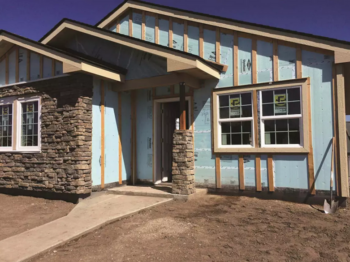
Habitat for Humanity Flathead Valley housing project. Source BetterBuiltNW
The first principle that affordable home designers should consider is the size of a home. Generally, smaller homes are more affordable and, if built to applicable codes or to the recommendations of the Collaborative, use less energy than a larger home built to the same standards. Current trends in housing – especially single-family homes – are toward larger and larger homes. The Collaborative discussed whether to recommend a square-foot-per-occupant standard but ultimately decided only to recommend careful consideration of the overall square footage of a home. Designers in the Collaborative made the point that home size is a very personal consideration with many variables for each family.
The shape of a home also affects affordability. Complex shapes and roof lines, while often aesthetically pleasing, increase construction costs. A simple rectangle-shaped home is the most affordable in terms of both construction cost and energy efficiency. Every corner and bump-out in a complex design creates more exterior exposure that will need added insulation and air sealing, whereas a simple rectangle minimizes exterior wall space.
Recommendation 2: Orientation
Orientation can allow homeowners to take advantage of the sun. By facing the long side of a home to the south and the short sides to the east and west, a house will capture solar heat in the winter and block solar gain in the summer. To minimize overheating during the spring and fall, designers should limit the amount of west-facing glass. When positioning buildings to maximize solar benefit, overhangs can help manage heat gain and glare. Energy consumption for space heating can be reduced by locating rooms so that the daily sequence of activities align with the path of the sun to take advantage of available solar energy. This approach is referred to as climate-responsive design. Moreover, a home with a larger south-facing roof slope is perfect for adding solar panels at a later date, if not included in the initial design.
Recommendation 3: Foundations
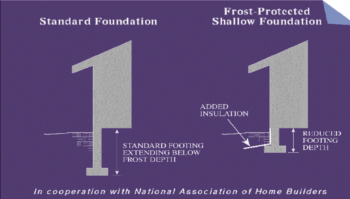
Frost-Protected Shallow Foundation. Source: National Centers for Environmental Information
In discussing the different types of foundations, the Collaborative recommends the frost-protected shallow foundation (FPSF) as the most cost-effective foundation with no loss in energy efficiency.
A FPSF is a very practical alternative to deeper, more costly foundations in cold regions with seasonal ground freezing and potential for frost heave. FPSF results in a shallower frost penetration depth around the building due to soil that has been warmed by both the building and geothermal heat. The insulation around the foundation perimeter conserves and redirects heat loss through the slab toward the soil below the foundation. Geothermal heat from the underlying ground also helps to warm the soil and raise the frost depth around the building.
FPSFs are most suitable for slab-on-grade homes on sites with moderate- to low-sloping grades. Slab-on-grade FPSFs can be constructed with a single concrete pour, eliminating multiple inspections and reducing construction time.
The International Residential Code (IRC) allows construction of a FPSF in heated buildings.
The FPSF is a special case that is addressed in Section R403.3 of the 2021 IRC. An FPSF is only allowed in buildings with a monthly mean temperature maintained at a minimum of 64°F. The reason for this requirement is that this foundation strategy is dependent on heat generated by the building warming the ground below the footing. Section R403.3 specifies vertical R-value, minimum depth of the insulation, and horizontal R-values at corners and non-corner walls. The IRC states that R-values greater than those specified by R403.3 may be required to meet energy conservation standards. R-10, as required by the IECC, becomes the minimum R-value allowed for most counties in Montana.
Recommendation 4: Wall Assemblies and Building Envelope
The 2021 IECC energy code requires R-21 for above-ground walls. The Collaborative considered a number of wall assemblies, including double-studded walls, walls with continuous exterior insulation, structural insulated panels (SIPs), and staggered stud walls to meet or exceed code requirements. Each has benefits and each is designed to stop thermal bridging and create a tighter air-sealed building envelope. Thermal bridging occurs when the studs in a wall, which have less insulation quality than the surrounding insulation, allow heated or cooled air to escape to the outside through these less insulated portions of a wall. However, it is estimated by the Montana Building Industry Association that over 90% of houses built in Montana use conventional framing, with 2×6 framing members. Alternatives to this conventional method of building are, depending on location and availability of materials, usually more expensive with a longer payback period than most homeowners are willing to accept. The Collaborative concluded that instead of recommending a particular wall assembly, builders should research their local market for cost and availability. For instance, Montana Habitat for Humanity is utilizing SIPs in its new homes in some areas with good results in cost and energy efficiency.
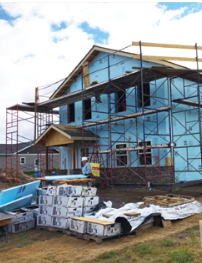
Habitat for Humanity Flathead Valley. Source: BetterBuiltNW
The Collaborative concluded that quality insulation and meticulous air sealing of the building envelope should be emphasized for their greater cost savings and reduced payback time.
For insulation, it’s not just the amount of insulation but also the quality of the installation that makes all the difference. Quality insulation in energy-efficient homes improves insulation effectiveness, especially when using fiberglass-batt insulation, which is prone to defects, including gaps and areas of compression. One way of ensuring quality insulation is to utilize advanced framing. This system of framing, compared to more conventional framing methods, reduces the wood frame percentage of the wall while maintaining structural integrity. This cost-effective framing system results in a more energy-efficient home with lower material and labor costs. The core of the system is that walls are constructed with 2×6 or larger studs 24” on center instead of 16” and corners are constructed to allow insulation to be extended into the corner instead of the more conventional solid triple-studded corners that do not allow for insulation. Homeowners that are interested in utilizing advance framing should inquire with their designer and building contractor. The Engineered Wood Association (APA) has more information on advanced framing and a downloadable construction guide available on its website at apawood.org/advanced-framing.
Fiberglass batts are the most affordable option for wall insulation; however, they are notoriously hard to install without gaps or areas of compression. Gaps occur in corners and around electrical boxes, plumbing, and openings through a wall. Compression occurs when batts are stuffed behind wiring or plumbing, or other mechanical devices, reducing the effectiveness of the insulation. In the real world, a code-compliant R-21 wall, even with best practices, may end up effectively as only an R-15 wall, and in typical installations may be less than R-11. To counter this deficiency, designers and builders often incorporate a spray foam installation that expands to fill gaps and voids. However, the tradeoff is added expense and potential off-gassing from the spray foam into the habitable space. A system coined flash and batt utilizes spray foam in a thin layer to seal and fill any voids with the remainder of the cavity filled with batt insulation. The collaborative is hesitant to recommend spray foam because of expense and off-gassing potential and instead encourages the use of dense-packed cellulose or rock wool insulation if additional insulation measures are warranted.
Roofs and attics are among the most effective places to spend time and resources insulating and sealing for leaks. For affordability, attics and roofs should be constructed using engineered trusses that includes a raised heel, or what is commonly known as an energy truss. This raised heel on the truss allows full depth of insulation to be extended over the home’s exterior walls, ensuring there are no gaps or compression of the insulation where the ceiling meets exterior walls.
The 2021 IECC energy code path requirement for ceilings and attics is R-49 insulation. R-38 meets code if that level is achieved over the entire attic when an energy truss is used. Additionally, any attic hatches must be insulated to the same level and the opening sealed with a gasket.
Recommendation 5: Windows and Doors
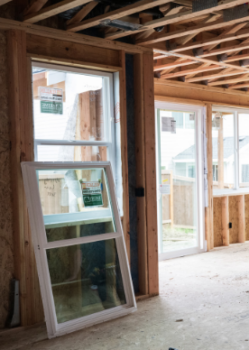
Triple-pane window installation. Source: BetterBuiltNW
The National Fenestration Rating Council (NFRC) provides window labeling that is required by the energy code. The lower the U-factor, the better the window performs at stopping heat flow. The lower the U-factor, the warmer the interior surface will be, improving comfort. A window with a U-factor of 0.30, as required by the energy code, is equivalent to approximately R-3. By comparison, the surrounding wall should be R-21 or better. In addition to the R-value of the glass opening, homeowners and designers should pay particular attention to the quality of the air seal of windows and doors. Because windows and doors are a major source of air leakage and heat loss, they are one of the best areas to invest in higher quality to minimize energy loss.
Recommendation 6: Heating and Cooling
High-efficiency heating and cooling systems are engineered and installed to deliver more comfort, improved indoor air quality, and quieter operation. A heating and cooling system must be designed, installed, and commissioned properly to perform well. Traditionally in Montana, natural-gas-fired boilers or forced-air furnaces have been the heating sources of choice, but the Collaborative is recommending that new homes utilize newer technology of cold-climate heat pumps (CCHP). According to the U.S. Department of Energy in a news release in July 2022 titled, “DOE Announces Breakthrough in Residential Cold Climate Heat Pump Technology,” CCHPs can provide high-efficiency heating in very cold temperatures without producing greenhouse gas emissions and can save families as much as $500 a year on utility bills. For this reason, the Collaborative recommends the use of CCHPs with ductless mini-splits for maximum efficiency and affordability. The challenge in Montana is that this technology is new enough that many HVAC contractors are not aware of its availability or are not familiar with the calculations for the appropriate size of a unit.
Recommendation 7: Ventilation
In the past, building codes have assumed that “fresh air” would be provided through operable windows and normal leaks in the building exterior walls, ceiling, and floor. Research has shown that we can’t rely on these “leaks” to provide adequate ventilation. In the meantime, we have introduced thousands of chemicals into our houses through building materials, finishes, packaging, furniture, carpets, clothing, and a myriad of other products. Effective ventilation systems remove moisture, odors, and chemicals from the air and replace it with fresh, filtered outdoor air. This can be accomplished by a properly designed heat recovery ventilator (HRV) or an energy recovery ventilator (ERV). HRVs recover heat from exhaust air, while ERVs recover heat and moisture from the exhaust air and transfer it to supply air. Traditionally, HRVs were used in cold climates because ERVs were known to fail from frost accumulation. However, as more research is being conducted and better technologies are being utilized, ERVs are becoming more common in cold, dry climates like Montana. Designers and homeowners should discuss and decide the best alternative for their area and contractor availability. More information on these systems is available from the Cold Climate Housing Research Center at cchrc.org/heat-recovery-ventilators/.
Recommendation 8: Lighting and Appliances
 Light emitting diode (LED) lights are now commonplace and provide better lighting performance, higher efficiency, and lower cost. Lighting with the ENERGY STAR label offer significant cost savings and longer lifetimes compared to standard products and should be utilized in any new or existing home.
In addition, a comprehensive package of ENERGY STAR-certified appliances can reduce energy cost, while increasing performance, quality, and durability. Since appliances account for nearly 20% of the energy usage in an average household, it makes good sense to purchase appliances that will save money in the long run.
Recommendation 9: Independent Testing
Energy-efficient homes should undergo a rigorous testing routine during and at the completion of construction, including blower door testing to test the building envelope’s airtightness. Current Montana code calls for a minimum of 4 air changes per hour @ 50 pascals (4 ACH50). However, the Collaborative recommends a much tighter house, with 2 ACH50 as a minimal goal.
Additionally, if ducts are present in the house, duct tightness, exhaust fan airflows, supply register airflows, and refrigerant for heat pumps should all be tested before occupancy. Duct tightness testing is only required by code when some of the ducts or the air handler is located outside of the conditioned space, but it is good practice regardless of duct location.
Recommendation 10: Solar Ready
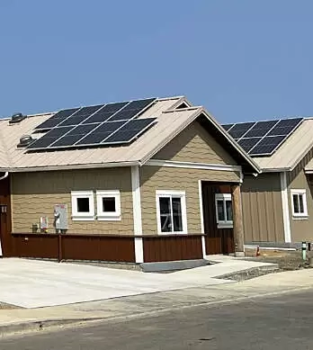
Confederated Tribes of Grand Ronde elder housing rooftop solar. Source: BetterBuiltNW
Solar photovoltaic systems are becoming more cost-effective and, although the homeowner may not be ready for solar at the time a home is constructed, it is a smart practice to invest in ensuring that the house can easily add solar when timing and resources are right. The added features that are easily incorporated into the design and construction phase include: proper solar orientation with solar exposure within +/- 45 degrees of south, a roof design that accounts for solar array, 1-inch metal conduit from the proposed solar array location to the future inverter location and from the designated inverter location to the electrical service panel, and a 4-inch chase or two 2-inch chases from the utility room to the attic space below the future solar array location.
2024 Update
In the 2023 session, the Montana Legislature passed, and the governor signed into law, a number of pieces of legislation meant to create more affordable housing in Montana. While none of the legislation includes energy-efficiency measures or changes in the building codes, the legislation is designed to lead to a number of alternative forms of housing. These laws will take effect January 1, 2024. The following is a summary of the laws passed and signed into law.
SB 528: Revise zoning laws related to Accessory Dwelling Units (ADUs)
This law requires municipalities to adopt regulations that allow a minimum of one ADU on a lot or parcel that contains a single-family dwelling. After the law takes effect, homeowners will, by state law, have the right to build ADUs on their property. ADUs are defined in the law as, “… a self-contained living unit on the same parcel as a single-family dwelling of greater square footage that includes its own cooking, sleeping, and sanitation facilities and complies with or is otherwise exempt from any applicable building code, fire code, and public health and safety regulations…” The ADU may be attached, detached, or internal to the single-family dwelling on a lot or parcel. Additionally, if the auxiliary dwelling unit is detached from or attached to the single-family dwelling, it may not be more than 75% of the gross floor area of the single-family dwelling or 1,000 square feet, whichever is less.
Municipalities may not:
- Require that a lot or parcel have additional parking to accommodate an ADU or require fees in lieu of additional parking;
- Require that an ADU match the exterior design, roof pitch, or finishing materials of the single-family dwelling;
- Require that the single-family dwelling or the ADU unit be occupied by the owner;
- Require a familial, marital, or employment relationship between the occupants of the single-family dwelling and the occupants of the ADU;
- Assess impact fees on the construction of an ADU;
- Require improvements to public streets as a condition of permitting an ADU, except as necessary to reconstruct or repair a public street that is disturbed as a result of the construction of the ADU;
- Set maximum building heights, minimum setback requirements, minimum lot sizes, maximum lot coverages, or minimum building frontages for auxiliary dwelling units that are more restrictive than those for the single-family dwelling on the lot;
- Impose more onerous development standards on an ADU beyond those set forth in this section; or
- Require a restrictive covenant concerning an ADU on a parcel zoned for residential use by a single-family dwelling. This subsection may not be construed to prohibit restrictive covenants concerning ADUs entered into between private parties, but the municipality may not condition a permit, license, or use of an ADU on the adoption or implementation of a restrictive covenant entered into between private parties.
SB 382: The Montana Land Use Planning Act
This law applies to towns and cities in counties of at least 70,000 people. Signed by the governor on May 17, 2023, this bill requires municipalities of 5,000 residents or more in a county with a population at or exceeding 70,000 to plan for the housing they need to accommodate population growth. The new law will shift public participation in land-use planning to earlier in the process by inviting more public input as growth plans are developed and then limit the ability to stop housing developments later in the process at the permitting level. It also requires that local zoning codes treat manufactured homes like site-built houses, allowing greater utilization of less-expensive manufactured housing.
HB 819: Create Montana Community Reinvestment Act
This law allocates $175 million toward housing initiatives and authorizes an additional $50 million for low-interest loans to developers who build rent-restricted apartments.
SB 245: Revise Municipal Zoning to Allow Multifamily and Mixed-Use Development
This law revises municipal zoning to allow multifamily and mixed-use development requires that cities of 7,000 or more residents allow apartment-style housing in most areas set aside as a commercial zone.
SB 323: Allow for Duplex, Triplex, and Fourplex Housing in City Zoning
This law allows for duplex, triplex, and fourplex housing in city zoning and makes duplex housing allowable on any home lot in cities with 5,000 or more residents, preempting regulations that currently set aside some areas for single-family homes only.
Published by NCAT with funding from NEEA

Practical Farmers of Iowa Grazing Infrastructure Cost-Share
Apply by September 30, 2024.
Practical Farmers of Iowa members can apply for up to $2,500 in cost-share funding to purchase portable, temporary fencing supplies; water transport and distribution supplies; and limited portable housing for grazing livestock. The current funding opportunity is for Iowa residents only. The program supports aspiring or existing graziers who wish to adopt regenerative grazing practices that improve forage, soil, and water quality and also helps them expand their livestock enterprises through improved grazing management.
New Tool Identifies Optimal Photovoltaic Materials for Agrisolar Performance
Scientists from Swansea University in the United Kingdom have developed a new tool to help identify optimal photovoltaic (PV) materials capable of maximizing crop growth while generating solar power in agrivoltaic installations. The team has developed an innovative freeware tool that predicts the light transmission, absorption, and power generation of different PV materials in nearly any location, using geographical, physical, and electrical measurements. Researchers report that by carefully selecting PV materials with specific bandgaps and absorption properties, it’s possible to fine-tune the color of light transmitted through semi-transparent PVs to hit the crops, which mainly absorb red and blue light to photosynthesize.
Seeding Root Crops
By Audrey Kolde, NCAT Agriculture Specialist
As a nongenerational farmer, most of my agricultural experiences before entering the field of farming and food systems had huge impacts on my decision to farm, from childhood memories of wild blackberries to college-age harvesting of carrots.
I love direct seeding crops; it feels like an act of faith that the seeds won’t fail, or the weeds won’t choke them out. It never seems to lose its wonder, the careful bed preparation that ends in straight rows of seedlings. Or sometimes, the rushed bed flip is good enough. Please, Jesus, take the wheel. With either farming style, I want to make sure you have the 411 behind-the-scenes of some of my favorite roots.
Prepping my bed can be a quick flip for my later successions, but let’s pretend that I am coming out of the rest period of the garden (July and August for me), so I get to do some TLC ahead of planting. I use a silage tarp to break down plant matter from previous crops. Then, I decrease the seedbed. There are a number of ways to do this, including tilling, flaming, solarizing, and stirrup. Now it’s time to water and sprout, and then repeat the process to kill these sprouts.
As I switch seasons, I also like to keep tabs on my soil temperature with a thermometer or at the nearest extension research center to ensure that my roots will germinate. If I can help it, I don’t waste seeds on soil that is too hot or too cold. It is the best tool to know when to plant since every year brings an irregularity to the climate.
Next, I want the bed to have a near-perfect texture. I want to see no debris or chunks in the bed, a beautiful tilth to the soil, and a level bed top. I need this textural perfection for the seeding tools made for freshly tilled and shaped beds.
How do I make that happen? I remove debris with a rake, use a wheel hoe or a push tiller set at a shallow depth, or add an inch of compost. Then I add a broadfork to break up the tiller pan for deeper roots.
Ready to start planting? The following are some seeding options to consider.
And here are some tips for growing a few of my favorite root vegetables:
Beets
Germination soil temp: 40 to 90°F degrees
Soil PH: 6 to 7.5
Days to germination: 5 to 8
Days to harvest: ~40 to 55
Prefers soil 65 to 75°F
Thin to 3” to 4″ apart or 6″ for winter storage
I’ve found that beets bring some challenges to be aware of. The beets’ seeds are dried fruits that contain a cluster of two to six seeds. After planting, thinning them out is essential to ensure healthy growth. When seeding, it’s crucial to stay vigilant because the irregular shape of the seeds can potentially clog up a machine. To address this problem, some seed companies have begun producing pelleted seeds to prevent clogging and ensure smoother planting.
Jang seeder. Photo: Audrey Kolde, NCAT
Carrots
Germination soil temp: 45 to 85°F
Soil pH: 5.5 to 7
Days to germination: 7 to 21
Days to harvest: ~35 (baby) to 75
Prefers soil 60 to 70°F
Thin to 2″ apart
Carrot seeds are tiny and difficult to sow evenly. Some farmers sow carrot seeds with sand or coffee grounds to achieve better spacing. You can use seed tape or pelleted seeds if that makes your life easier and helps reduce thinning and wasted seeds. Personally, this crop is what made me upgrade to a more precise seeder. The real trick to carrots is maintaining the moisture that they require. You can achieve this by watering two to three times per day or laying fabric like burlap sacks over the soil and watering them.
Turnips
Germination soil temp: 60 to105°F
Soil pH: 5.5 to 7
Days to germination: 2 to 5
Days to Harvest: ~38 to 50
Prefers soil 40 to 75°F
Trim to 2″ to 4″ apart
Turnips can germinate at 105°F! That is impressive! And also counterintuitive, since turnips like cooler soil temperatures during growth, but this can be achieved by mulching once they germinate. I like to use insect netting to keep those flea beetles at bay so I can sell the turnips with greens on.
Starting seeds in beautiful, meticulously prepared soil is always the dream. But the reality of farming often has other plans for us. Don’t worry. By better understanding your growing conditions and your tools, you can escape the worst of last-minute panic seeding, with fingers crossed that they germinate. Instead, you can make educated decisions on controlling the weather in your microbiome, like the mad scientist you are. I’m rooting for you!
Related ATTRA Resources:
Equipment and Tools for Small-Scale Intensive Crop Production
Sustainable Weed Management for Small and Medium-Scale Farms
Other Resources:
Vegetable Growing Guides, Cornell University
The Best Vegetable Seeders for Market Gardening — The Earthway Seeder
The Vegetable Gardener’s Bible
This blog is produced by the National Center for Appropriate Technology through the ATTRA Sustainable Agriculture program, under a cooperative agreement with USDA Rural Development. ATTRA.NCAT.ORG.
Heating, Ventilation, and Air Conditioning: Design it Right
Father/daughter Team Tackles Sustainable Carbon Venture
How one Southern startup recycles farm waste to purify water, build green, and generate power.
As an entrepreneur running a business incubator in the Memphis area, Bryan Eagle knew nothing about the organic charcoal product known as biochar. He wasn’t alone, as the material made from plant waste occupies an obscure niche in agricultural communities and isn’t widely used in the U.S. However, the modernization of an ancient technique has opened up a world of possibilities, and biochar is poised to take off as the green solution to a slew of 21st-century problems.
Biochar is a stable carbon material made from plant-based biomass. Far from a new concept, biochar is as old as agriculture itself. Indigenous people have effectively added burned organic waste to fields for millennia, but the idea that biochar could be perfected for industrial uses and to mitigate climate change has been around for less than 20 years.
Bryan says he first ran across biochar through a nonprofit venture focused on leveraging technologies from the local university network in Memphis. “The professor who created this approached me, and I knew nothing about clean tech, ag waste, or biochar. But the more I read about it, the more excited I became about the potential,” he said. “We saw early on that this could be a powerful tool in addressing climate change, not just in our business but on a global basis, that’s very quick, very low-cost.”
Bryan’s company, Glanris, now produces a designer Biocarbon that functions as everything from a soil amendment to a filler in asphalt, concrete, drywall, and a filter for air and water. Unlike traditional biochar products made from waste wood, Glanris has a sustainable and locally grown raw material supply of rice husks.
“We started this journey in 2019 to look at what we can do with all the ag waste generated across the river in Arkansas,” Bryan said. He approached Riceland Foods, the largest rice producer in the state, to find a way to repurpose their waste material. “There are 60-acre landfills that are being filled up with rice hulls,” he said, “so we set up to try to find a greener alternative.”
Glanris superheats the husks using a process called pyrolysis, which removes combustible gasses in the absence of oxygen and seals carbon into blackened biochar granules. Instead of plant material burning or rotting and being released into the atmosphere as CO2, biochar stabilizes the carbon content so it doesn’t break down. The pyrolysis units pump out a patented Biocarbon product resembling coal-black shards of confetti, which is packaged in 300-pound “Supersacks” or smaller boxes and shipped all over the globe.
“The rice mills are paying $12-20 per ton to haul this stuff away,” Bryan said. If you can instead turn it into products that give you heat, electricity, and water filtration, we make more selling our biocarbon into the environmental remediation market than they do from the rice.”
Follow the green
As founder and CEO, Bryan started small while thinking big. One shrewd move was to make his new company a family affair. When his daughter Anastasia Eagle returned to the South, her business and PR skills were quickly put to use at Glanris.
“When we first started the company, we were a two-person operation. That’s startup life. We’ve worn many hats on our heads, we’ve been able to do it all,” she said. “Now that we’re able to expand and grow, I am getting more back into the marketing side.”
Anastasia is thankful to be part of something that will help the region and community she cares about so much.
Bryan’s billion-dollar question is, “What does it take to get the funding you need to get this industry to scale?”
Bryan says the keystone of biochar’s economics is securing a long-term revenue stream that includes research, development, and application funding in the Farm Bill.
The National Center for Appropriate Technology (NCAT) is asking Congress to invest in biochar research to provide more insight into its larger-scale applications through the next Farm Bill under the bipartisan Biochar Research Network Act. If passed, the bill will authorize the U.S. Department of Agriculture (USDA) to establish a national-scale research program to test different biochar types in different soils and circumstances. With better research will come innovation and practical tools for farmers, ranchers, foresters, and businesses to lean into biochar as a climate solution.
“Hopefully, it will reach a critical mass where we can survive without subsidies, but it’s still needed,” he said. “Without support in the farm bill, the biochar industry would all but dry up. Biochar has so much potential to impact other areas, but we need to buy time to get into these markets.”
Making the move
After several years in the biochar business, he concluded that the only way to make money is to maximize carbon credits and take advantage of all possible revenue streams, which means using biochar in water systems, construction, and power generation in addition to ag uses.
That’s part of why Bryan and his employees decided to relocate the business to California. The state offers many green energy incentives, and there is a tremendous volume and diversity of forest and ag waste. Farmers can’t burn crop waste like nut shells or take them to landfills, so pyrolyzing is a great solution.
“There’s a huge demand for biochar in Sacramento Valley, and there are grants paying people to apply biochar as part of a remediation and soil improvement strategy,” he said. “Vineyards, orchards, row crops–farmers are trialing this stuff and finding out it has huge advantages.”
Glanris is making a last push to get funding for their $22M project in California, with $20M raised so far. The first phase in California is projected to produce 13,000 tons of biochar per year and generate 2.5 megawatts of electricity. “We’ve already got a 20-year power purchase agreement with a municipality that will sell [generated power] back to the grid,” Bryan said.
He believes green jobs are the jobs of the future, and the California project is expected to create around 20 jobs in its first phase that will pay at least double the prevailing wage for farm workers. As he grows this first instillation and expands to other cities in California, he hopes to create hundreds of green jobs.
A Mid-Scale Anaerobic Biodigester Creates On-Farm Renewable Energy
By Chris Lent, NCAT Agriculture Specialist
Finding ways to turn “waste materials” into useful resources on the farm has always fascinated me. On my farm, I tried to reuse and recycle resources as much as possible to close the off-farm input loop. I think farms can become more resilient as they rely on fewer off farm inputs. So, when I heard of the mid-scale anaerobic digester being installed at Dickenson College Organic Farm as a demonstration of how small dairy farms can utilize manure and other waste streams to produce on farm energy, I was eager for the opportunity to visit the farm and help spread the word to other farms.
In November 2023, NCAT Agriculture Specialist Eric Fuchs-Stengel and I had that opportunity. We traveled to Dickenson College Organic Farm in Carlisle, PA to visit Matt Steiman, Farm Energy and Livestock Manager at the farm. The farm is a beautiful certified organic working farm situated on 90 acres in the south-central part of the state where they grow vegetables and raise beef, lamb, and layers. Eric and I were there to shoot a video tour of the newly installed, mid-scale anaerobic biodigester that transforms manure from a neighboring dairy, as well as food waste from the college dining hall and local restaurants, into natural gas that can be used to generate heat and electricity.
This biodigester project comes after years of biofuel research and experimentation by Steiman at the college. The idea of using waste products from the farm and local area to produce fuel and power greatly intrigued Steiman, so he started making biodiesel that converted waste cooking oil into fuel to run equipment on the farm. Since the glycerin byproduct from biodiesel production can be useful in anaerobic digestion of organic matter that produces natural gas, he started experimenting in 2010 with small anaerobic digester systems to utilize glycerin, leading to a series of larger systems and culminating with the latest farm-scale biodigester.
The process of anaerobic digestion for production of natural gas is straightforward. A sealed tank creates an anaerobic, or oxygen-free, environment where a slurry of organic matter can be “eaten” or digested by microbes that thrive at certain temperatures in low-oxygen conditions. The methane gas given off from the microbes in this process rises to the top of the tank to an outlet tube where it can be collected and used as a fuel source for heat or electric production. The leftover digestate, which contains all the nutrients from the original waste material, is collected and spread on farm fields.
The size and cost of this new biodigester project required very specific design considerations to ensure that it was sized properly to match the expected waste flow and operate as intended. The digester tank is a 10-foot tall, 115,000-gallon, 50-foot-diameter cement tank buried 8 feet in the ground and sealed with a heavy-duty rubber covering. In the tank are heater pipes and an agitator to mix the slurry. A free-style barn was built next to the tank to house the dairy cows and heifers. At one end of the barn are three in-ground cement tanks that make up the waste-collection system for the digester. One tank is for daily manure collection, the second is for food waste collection (up to 3 tons per day), and the third is for collecting the digestate material remaining after the digestion process. The digestate goes through a liquid removal process and can then be used for bedding in the barn. The liquid portion of the digestate is staged to be used as a nutrient source for the farm’s crop fields and compost piles.
This digester is sized to produce enough gas to match a 50-kilowatt (kW) combined heat and power (CHP) engine. An engine from the European company TEDOM adapted to biogas was chosen for the job. The power produced will first be used to supply the power needs of the farm and the biodigester itself with excess electric production being sold back to the local utility company. This unique 150-cow-scale digester is small compared to other on farm digesters in the United States.
Matt Steiman explaining how an industrial grinder works to break down up to 3 tons of food waste a day so it can be pumped to the digester tank. Photo: NCAT
Funding for this project was secured from multiple sources, including NRCS’s Environmental Quality Incentives Program (EQIP). For farmers looking for biodigester funding, Steinman had several suggestions. First, he said, talk to your Natural Resources Conservation Service (NRCS) county office. In addition, the Rural Energy for America Program (REAP) is a grant program administered through USDA’s Rural Development office. Through REAP, farmers and rural businesses who meet grant criteria can apply for grant funding up to 50% of the cost of an on-farm alternative energy project, including anaerobic biodigesters. Steiman also suggested talking to your state Department of Agriculture and Department of Environmental Management or Protection as funding sources. It is also worth investigating local conservation districts and utility companies that may offer funding for on-farm alternative energy projects.
With this new biodigester, Steiman and Dickenson College are using farm and food-waste streams to generate renewable energy right on the farm and reduce greenhouse gas emissions. With nearly 5,000 dairy farms in Pennsylvania alone with an average herd size of 100 cows, this project is intended to showcase how biogas production can work for mid-sized farms across the state and the country. The college is partnering with Penn State University and agriculture producer groups like PASA Sustainable Agriculture to use this project as an on-the-ground demonstration of properly sized biodigester design and implementation and to educate farmers on the benefits of biogas production at this scale.
Related ATTRA Resources:
Episode 350. Mid-Scale Biodigester with Matt Steiman of Dickinson College
Biodiesel Use, Handling, and Fuel Quality
Micro-Scale Biogas Production: A Beginners Guide
Anaerobic Digestion of Animal Wastes: Factors to Consider
Other Resources:
Biogas – Dickinson College Organic Farm
Organic Farm Dickinson College – YouTube
Rural Energy for America Program Renewable Energy Systems & Energy Efficiency Improvement Guaranteed Loans & Grants
On-Farm Energy Initiative, NRCS
This blog is produced by the National Center for Appropriate Technology through the ATTRA Sustainable Agriculture program, under a cooperative agreement with USDA Rural Development. ATTRA.NCAT.ORG.
For one Montana rancher, success starts in the soil
Combining worms and biochar has big potential for soil health
In the dry, rugged hills of Eastern Montana, third-generation rancher Steve Charter has managed to carve out a living practicing his own brand of regenerative agriculture. It starts with caring for his soil at a microscopic level to help the rest of the food chain flourish. His current prize crop is an animal that no livestock grower would think to raise, but one that’s essential for a healthy ecosystem: worms.
“I’ve been doing it for about seven years, and we have several worm beds that we feed,” Charter said. “We’re focusing more on what’s going on under the soil than on the surface–that’s where all the really new exciting ideas are happening.”
Adding New Life to the Land
Charter isn’t using the worms themselves–more what they leave behind. Vermicast is, simply put, composted worm poop. Their “castings” create a rich black loam packed with beneficial organisms, natural acids and hormones. The worms’ digestive systems break down nutrients like nitrogen and calcium, making them easier for plants to absorb. Vermicast is almost always a net improvement to any soil.
The first thing Charter did with the vermicast was mix it in his water tanks so the cattle would ingest the microorganisms. “It has amazing health and production benefits. It’s almost magic in a way,” he said.
On his family’s ranch north of Billings, Charter is constantly experimenting with ways to add new life to the land by manufacturing biodiversity with a cocktail of unlikely ingredients. Beneficial microbes and fungi are generated through a process that uses vermicast and biochar to infuse tiny life and nutrients into the grassland pastures.
Biochar is a charcoal-like substance and the byproduct of superheated organic matter that can be turned into compost, animal fodder, and even building materials. When used correctly, biochar can pack a punch far above its weight in building soil structure and fertility. Made up of millions of microscopic cells, there is as much surface area in a teaspoon of biochar as in a football field.
“When we do our vermicast or biochar, it passes through the manure and gets charged with all this biological activity,” Charter said. “There are major studies with good data showing that biochar fed to animals has really strong health effects. It’s possible to restore the range by using our animals to spread the biology and get them to do the work for us.”
Plowing, overgrazing, chemicals and invasive species have degraded a range that’s been in constant production since the 1800s. Charter says he has implemented innovative grazing practices since taking over the ranch in the 80s, aiming to recreate the buffalo’s effect on the land.
Soil health isn’t just on the minds of producers like Charter. The National Center for Appropriate Technology (NCAT) is asking Congress to invest in biochar research to provide more insight into its larger-scale applications through the next Farm Bill under the bipartisan Biochar Research Network Act. If passed, the bill will authorize the U.S. Department of Agriculture (USDA) to establish a national-scale research program to test different biochar types in different soils and circumstances. With better research will come innovation and practical tools for farmers, ranchers, foresters, and businesses to lean into biochar as a climate solution.
‘We don’t have to know it all’
Modest and self-deprecating, Charter admits he’s still learning about regenerative agriculture. He says the industry has a long way to go before these practices are used on a large scale, but things are constantly changing. Lingering questions about research and scalability can be answered with more research and government funding from the Farm Bill currently winding its way through Congress.
“There’s a lot of pieces to the puzzle,” Charter said. “Our soil knowledge has really advanced in the last 15 years. To get benefits, we don’t have to know it all. We can just start experimenting. It’s going to take some key research, but I don’t think we need to let that stop us.”
Montana Roadmap to Home Energy Efficiency and Affordability
Confederated Tribes of Grand Ronde elder housing duplex. Source: BetterBuiltNW
10 Recommendations of the Montana Homes Collaborative
By Carl Little, NCAT Energy Analyst
Introduction
In 2021 and 2022, with record-high housing prices and increasing energy costs, the Northwest Energy Efficiency Alliance (NEEA) and the National Center for Appropriate Technology (NCAT) partnered to tackle these challenges by establishing the Montana Homes Collaborative. The goal of the Collaborative, comprised of housing stakeholders, is to determine best practices for building affordable and energy-efficient homes in Montana. In these times of energy uncertainty, our homes must be efficient to act as a buffer against future energy cost fluctuations. This page identifies and explains the Collaborative’s 10 initial recommendations and proven techniques that are integral to building homes that are both affordable and sustainable by prioritizing energy-efficiency measures that will, in turn, allow homeowners to enjoy affordability and comfort over the life of their homes.
The recommendations on this page are centered around energy-efficient design based on tried-and-true building practices. Such measures allow homeowners to enjoy consistent temperatures across every room and a constant supply of fresh, filtered air that helps reduce indoor pollutants, dust, pollen, and other allergens.
Fortunately, the building industry is increasingly focused on building science, an area of study based on observation, testing, and retesting. Many events of the past, especially the energy crises of the 1970s, increased our interest in understanding how buildings behave, especially regarding energy use. Many of the early efforts to build more energy-efficient buildings led to unforeseen consequences to occupant health and building durability. Building science continues to evolve with experience and testing, and the recommendations on this page have been studied through building science and incorporated into building codes, with some measures exceeding code requirements.
Recommendation 1: Building Size, Shape
Habitat for Humanity Flathead Valley housing project. Source BetterBuiltNW
The first principle that affordable home designers should consider is the size of a home. Generally, smaller homes are more affordable and, if built to applicable codes or to the recommendations of the Collaborative, use less energy than a larger home built to the same standards. Current trends in housing – especially single-family homes – are toward larger and larger homes. The Collaborative discussed whether to recommend a square-foot-per-occupant standard but ultimately decided only to recommend careful consideration of the overall square footage of a home. Designers in the Collaborative made the point that home size is a very personal consideration with many variables for each family.
The shape of a home also affects affordability. Complex shapes and roof lines, while often aesthetically pleasing, increase construction costs. A simple rectangle-shaped home is the most affordable in terms of both construction cost and energy efficiency. Every corner and bump-out in a complex design creates more exterior exposure that will need added insulation and air sealing, whereas a simple rectangle minimizes exterior wall space.
Recommendation 2: Orientation
Orientation can allow homeowners to take advantage of the sun. By facing the long side of a home to the south and the short sides to the east and west, a house will capture solar heat in the winter and block solar gain in the summer. To minimize overheating during the spring and fall, designers should limit the amount of west-facing glass. When positioning buildings to maximize solar benefit, overhangs can help manage heat gain and glare. Energy consumption for space heating can be reduced by locating rooms so that the daily sequence of activities align with the path of the sun to take advantage of available solar energy. This approach is referred to as climate-responsive design. Moreover, a home with a larger south-facing roof slope is perfect for adding solar panels at a later date, if not included in the initial design.
Recommendation 3: Foundations
Frost-Protected Shallow Foundation. Source: National Centers for Environmental Information
In discussing the different types of foundations, the Collaborative recommends the frost-protected shallow foundation (FPSF) as the most cost-effective foundation with no loss in energy efficiency.
A FPSF is a very practical alternative to deeper, more costly foundations in cold regions with seasonal ground freezing and potential for frost heave. FPSF results in a shallower frost penetration depth around the building due to soil that has been warmed by both the building and geothermal heat. The insulation around the foundation perimeter conserves and redirects heat loss through the slab toward the soil below the foundation. Geothermal heat from the underlying ground also helps to warm the soil and raise the frost depth around the building.
FPSFs are most suitable for slab-on-grade homes on sites with moderate- to low-sloping grades. Slab-on-grade FPSFs can be constructed with a single concrete pour, eliminating multiple inspections and reducing construction time.
The International Residential Code (IRC) allows construction of a FPSF in heated buildings.
The FPSF is a special case that is addressed in Section R403.3 of the 2021 IRC. An FPSF is only allowed in buildings with a monthly mean temperature maintained at a minimum of 64°F. The reason for this requirement is that this foundation strategy is dependent on heat generated by the building warming the ground below the footing. Section R403.3 specifies vertical R-value, minimum depth of the insulation, and horizontal R-values at corners and non-corner walls. The IRC states that R-values greater than those specified by R403.3 may be required to meet energy conservation standards. R-10, as required by the IECC, becomes the minimum R-value allowed for most counties in Montana.
Recommendation 4: Wall Assemblies and Building Envelope
The 2021 IECC energy code requires R-21 for above-ground walls. The Collaborative considered a number of wall assemblies, including double-studded walls, walls with continuous exterior insulation, structural insulated panels (SIPs), and staggered stud walls to meet or exceed code requirements. Each has benefits and each is designed to stop thermal bridging and create a tighter air-sealed building envelope. Thermal bridging occurs when the studs in a wall, which have less insulation quality than the surrounding insulation, allow heated or cooled air to escape to the outside through these less insulated portions of a wall. However, it is estimated by the Montana Building Industry Association that over 90% of houses built in Montana use conventional framing, with 2×6 framing members. Alternatives to this conventional method of building are, depending on location and availability of materials, usually more expensive with a longer payback period than most homeowners are willing to accept. The Collaborative concluded that instead of recommending a particular wall assembly, builders should research their local market for cost and availability. For instance, Montana Habitat for Humanity is utilizing SIPs in its new homes in some areas with good results in cost and energy efficiency.
Habitat for Humanity Flathead Valley. Source: BetterBuiltNW
The Collaborative concluded that quality insulation and meticulous air sealing of the building envelope should be emphasized for their greater cost savings and reduced payback time.
For insulation, it’s not just the amount of insulation but also the quality of the installation that makes all the difference. Quality insulation in energy-efficient homes improves insulation effectiveness, especially when using fiberglass-batt insulation, which is prone to defects, including gaps and areas of compression. One way of ensuring quality insulation is to utilize advanced framing. This system of framing, compared to more conventional framing methods, reduces the wood frame percentage of the wall while maintaining structural integrity. This cost-effective framing system results in a more energy-efficient home with lower material and labor costs. The core of the system is that walls are constructed with 2×6 or larger studs 24” on center instead of 16” and corners are constructed to allow insulation to be extended into the corner instead of the more conventional solid triple-studded corners that do not allow for insulation. Homeowners that are interested in utilizing advance framing should inquire with their designer and building contractor. The Engineered Wood Association (APA) has more information on advanced framing and a downloadable construction guide available on its website at apawood.org/advanced-framing.
Fiberglass batts are the most affordable option for wall insulation; however, they are notoriously hard to install without gaps or areas of compression. Gaps occur in corners and around electrical boxes, plumbing, and openings through a wall. Compression occurs when batts are stuffed behind wiring or plumbing, or other mechanical devices, reducing the effectiveness of the insulation. In the real world, a code-compliant R-21 wall, even with best practices, may end up effectively as only an R-15 wall, and in typical installations may be less than R-11. To counter this deficiency, designers and builders often incorporate a spray foam installation that expands to fill gaps and voids. However, the tradeoff is added expense and potential off-gassing from the spray foam into the habitable space. A system coined flash and batt utilizes spray foam in a thin layer to seal and fill any voids with the remainder of the cavity filled with batt insulation. The collaborative is hesitant to recommend spray foam because of expense and off-gassing potential and instead encourages the use of dense-packed cellulose or rock wool insulation if additional insulation measures are warranted.
Roofs and attics are among the most effective places to spend time and resources insulating and sealing for leaks. For affordability, attics and roofs should be constructed using engineered trusses that includes a raised heel, or what is commonly known as an energy truss. This raised heel on the truss allows full depth of insulation to be extended over the home’s exterior walls, ensuring there are no gaps or compression of the insulation where the ceiling meets exterior walls.
The 2021 IECC energy code path requirement for ceilings and attics is R-49 insulation. R-38 meets code if that level is achieved over the entire attic when an energy truss is used. Additionally, any attic hatches must be insulated to the same level and the opening sealed with a gasket.
Recommendation 5: Windows and Doors
Triple-pane window installation. Source: BetterBuiltNW
The National Fenestration Rating Council (NFRC) provides window labeling that is required by the energy code. The lower the U-factor, the better the window performs at stopping heat flow. The lower the U-factor, the warmer the interior surface will be, improving comfort. A window with a U-factor of 0.30, as required by the energy code, is equivalent to approximately R-3. By comparison, the surrounding wall should be R-21 or better. In addition to the R-value of the glass opening, homeowners and designers should pay particular attention to the quality of the air seal of windows and doors. Because windows and doors are a major source of air leakage and heat loss, they are one of the best areas to invest in higher quality to minimize energy loss.
Recommendation 6: Heating and Cooling
High-efficiency heating and cooling systems are engineered and installed to deliver more comfort, improved indoor air quality, and quieter operation. A heating and cooling system must be designed, installed, and commissioned properly to perform well. Traditionally in Montana, natural-gas-fired boilers or forced-air furnaces have been the heating sources of choice, but the Collaborative is recommending that new homes utilize newer technology of cold-climate heat pumps (CCHP). According to the U.S. Department of Energy in a news release in July 2022 titled, “DOE Announces Breakthrough in Residential Cold Climate Heat Pump Technology,” CCHPs can provide high-efficiency heating in very cold temperatures without producing greenhouse gas emissions and can save families as much as $500 a year on utility bills. For this reason, the Collaborative recommends the use of CCHPs with ductless mini-splits for maximum efficiency and affordability. The challenge in Montana is that this technology is new enough that many HVAC contractors are not aware of its availability or are not familiar with the calculations for the appropriate size of a unit.
Recommendation 7: Ventilation
In the past, building codes have assumed that “fresh air” would be provided through operable windows and normal leaks in the building exterior walls, ceiling, and floor. Research has shown that we can’t rely on these “leaks” to provide adequate ventilation. In the meantime, we have introduced thousands of chemicals into our houses through building materials, finishes, packaging, furniture, carpets, clothing, and a myriad of other products. Effective ventilation systems remove moisture, odors, and chemicals from the air and replace it with fresh, filtered outdoor air. This can be accomplished by a properly designed heat recovery ventilator (HRV) or an energy recovery ventilator (ERV). HRVs recover heat from exhaust air, while ERVs recover heat and moisture from the exhaust air and transfer it to supply air. Traditionally, HRVs were used in cold climates because ERVs were known to fail from frost accumulation. However, as more research is being conducted and better technologies are being utilized, ERVs are becoming more common in cold, dry climates like Montana. Designers and homeowners should discuss and decide the best alternative for their area and contractor availability. More information on these systems is available from the Cold Climate Housing Research Center at cchrc.org/heat-recovery-ventilators/.
Recommendation 8: Lighting and Appliances
In addition, a comprehensive package of ENERGY STAR-certified appliances can reduce energy cost, while increasing performance, quality, and durability. Since appliances account for nearly 20% of the energy usage in an average household, it makes good sense to purchase appliances that will save money in the long run.
Recommendation 9: Independent Testing
Energy-efficient homes should undergo a rigorous testing routine during and at the completion of construction, including blower door testing to test the building envelope’s airtightness. Current Montana code calls for a minimum of 4 air changes per hour @ 50 pascals (4 ACH50). However, the Collaborative recommends a much tighter house, with 2 ACH50 as a minimal goal.
Additionally, if ducts are present in the house, duct tightness, exhaust fan airflows, supply register airflows, and refrigerant for heat pumps should all be tested before occupancy. Duct tightness testing is only required by code when some of the ducts or the air handler is located outside of the conditioned space, but it is good practice regardless of duct location.
Recommendation 10: Solar Ready
Confederated Tribes of Grand Ronde elder housing rooftop solar. Source: BetterBuiltNW
Solar photovoltaic systems are becoming more cost-effective and, although the homeowner may not be ready for solar at the time a home is constructed, it is a smart practice to invest in ensuring that the house can easily add solar when timing and resources are right. The added features that are easily incorporated into the design and construction phase include: proper solar orientation with solar exposure within +/- 45 degrees of south, a roof design that accounts for solar array, 1-inch metal conduit from the proposed solar array location to the future inverter location and from the designated inverter location to the electrical service panel, and a 4-inch chase or two 2-inch chases from the utility room to the attic space below the future solar array location.
2024 Update
In the 2023 session, the Montana Legislature passed, and the governor signed into law, a number of pieces of legislation meant to create more affordable housing in Montana. While none of the legislation includes energy-efficiency measures or changes in the building codes, the legislation is designed to lead to a number of alternative forms of housing. These laws will take effect January 1, 2024. The following is a summary of the laws passed and signed into law.
SB 528: Revise zoning laws related to Accessory Dwelling Units (ADUs)
This law requires municipalities to adopt regulations that allow a minimum of one ADU on a lot or parcel that contains a single-family dwelling. After the law takes effect, homeowners will, by state law, have the right to build ADUs on their property. ADUs are defined in the law as, “… a self-contained living unit on the same parcel as a single-family dwelling of greater square footage that includes its own cooking, sleeping, and sanitation facilities and complies with or is otherwise exempt from any applicable building code, fire code, and public health and safety regulations…” The ADU may be attached, detached, or internal to the single-family dwelling on a lot or parcel. Additionally, if the auxiliary dwelling unit is detached from or attached to the single-family dwelling, it may not be more than 75% of the gross floor area of the single-family dwelling or 1,000 square feet, whichever is less.
Municipalities may not:
SB 382: The Montana Land Use Planning Act
This law applies to towns and cities in counties of at least 70,000 people. Signed by the governor on May 17, 2023, this bill requires municipalities of 5,000 residents or more in a county with a population at or exceeding 70,000 to plan for the housing they need to accommodate population growth. The new law will shift public participation in land-use planning to earlier in the process by inviting more public input as growth plans are developed and then limit the ability to stop housing developments later in the process at the permitting level. It also requires that local zoning codes treat manufactured homes like site-built houses, allowing greater utilization of less-expensive manufactured housing.
HB 819: Create Montana Community Reinvestment Act
This law allocates $175 million toward housing initiatives and authorizes an additional $50 million for low-interest loans to developers who build rent-restricted apartments.
SB 245: Revise Municipal Zoning to Allow Multifamily and Mixed-Use Development
This law revises municipal zoning to allow multifamily and mixed-use development requires that cities of 7,000 or more residents allow apartment-style housing in most areas set aside as a commercial zone.
SB 323: Allow for Duplex, Triplex, and Fourplex Housing in City Zoning
This law allows for duplex, triplex, and fourplex housing in city zoning and makes duplex housing allowable on any home lot in cities with 5,000 or more residents, preempting regulations that currently set aside some areas for single-family homes only.
Published by NCAT with funding from NEEA
Helena Habitat for Humanity Adopts Double Studded Walls
Education, Research, and Community at Chelenzo Farms
Chelenzo Farms sprouted from the unexpected move of a physician and a writer from New York during the height of the pandemic. Chelsea Hollander and Lorenzo Dominguez found land in Cerrillos, New Mexico, 20 miles south of Santa Fe. There, the husband-and-wife team combined their names and turned dreams into reality — Chelenzo Farms.
“Our overall focus is on regenerative agriculture, dryland farming, and ecosystem restoration in the high mountain desert of New Mexico, and our operating philosophy rests on the three pillars of Education, Research, and Community,” said Lorenzo.
Lorenzo made it a mission to talk with as many landowners as possible surrounding him in a 30-mile radius to learn about the local knowledge base. They use ATTRA Sustainable Agriculture’s Internship Hub to connect with interns, joined NCAT’s Soil for Water peer-to-peer network, and added their place on Soil for Water’s Regenerative Atlas of America.
The May 2021 move to their 350-acre homestead in New Mexico was the downshift they needed. They now grow their own plant-based diet, along with using livestock to restore their land and utilizing Indigenous practices to conserve water.
More than 215 farmers have joined the free and voluntary Soil for Water network, a regenerative agriculture project supported in part by NCAT and NCAT’s ATTRA Sustainable Agriculture program. The project aims to include farmers who discover and share land management practices that improve soil health, catch more water in soil, reduce erosion, sustain diverse plant and animal life, and filter out pollutants, all while improving profitability.
“We live and aspire to grow in the desert of New Mexico. Water has been an invaluable resource around here for centuries and access to it is strained exponentially each year. This is why we are focused on harvesting water from nature with earthworks and methods used by Indigenous populations around the world for thousands of years,” said Lorenzo.
Photo courtesy Chelenzo Farms.