By Audrey Kolde, NCAT Agriculture Specialist
Growing up, the only cut flowers I ever saw were the ones handed out at dance recitals: a rose from a proud parent or a carnation from the teacher. These classic blossoms—roses, carnations, and chrysanthemums—make up the “big three” of the cut flower world. They’re reliable, hardy, and grown for scale. But over the past two decades, bouquets have evolved into something far more diverse, textural, and beautiful.
The switch to diversity can be traced back to a pivotal moment in U.S. trade policy. In 1991, the Andean Trade Preference Act began opening the door to duty-free flower imports from Colombia. By 2012, the U.S.-Colombia Trade Promotion Agreement made Colombia’s position as the dominant supplier of cut flowers to the American market untouchable. While this surge in low-cost imports made bouquets more affordable and abundant, it also hurt domestic wholesale flower farms, which couldn’t compete on price alone.
Finding a Niche and the Digital Floral Revolution

Sweet pea blossoms make a fragrant addition to bouquets.
Confronted with this challenge, U.S. flower farmers began to adapt. Instead of pursuing the wholesale giants with resilient, shippable blooms, they embraced their unique strength: growing delicate, fragrant, seasonal flowers that could not withstand long-distance transport. Local farms carved out a niche, offering sweet peas, dahlias, ranunculus, and garden roses—blooms that thrived in nearby soil but couldn’t be shipped in a box.
Social media accelerated this shift: Instagram and Pinterest introduced consumers to lush, wild, and seasonal bouquets. People’s preferences began to shift; they no longer just wanted a dozen roses. Instead, they sought flowers with unique textures, captivating fragrances, and compelling stories. Social media also gave local farmers a direct connection to consumers and florists, allowing them to bypass traditional wholesale channels. This increased visibility on digital platforms transformed previously overlooked flower varieties into sought-after blooms, sparking a grassroots revival of local flower farming.
The Rise of Direct Sales
The local food movement of the 2010s led to a shift in consumer values towards sustainably grown flowers. Many shoppers began seeking “American Grown” labels, desiring not only beauty but also environmental and ethical accountability. This demand gave rise to more direct marketing, including flower CSA subscriptions and an expanded presence of fresh flowers at farmers’ markets. The COVID-19 pandemic accelerated this trend, when weddings, festivals, and large gatherings were canceled and wholesale orders from florists, event planners, and retailers were scaled back dramatically. What began as a crisis response evolved into a lasting business model as farms transitioned to e-commerce and direct-to-consumer sales, with many farmers quickly adapting by launching online shops, subscription flower boxes, and local delivery services. Small and mid-size flower farms can bypass traditional wholesale channels, strengthening grower-consumer relationships and creating new revenue streams. Direct-to-consumer sales have become a cornerstone of the modern floral industry.
Easy Blooms to Start Growing
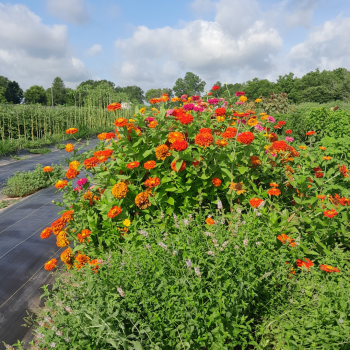
Zinnias are an easy flower to start with when adding cut flowers to a specialty-crop operation. Photo: Audrey Kolde
Growing and selling flowers is an easy shift for diversified farms. Summer annuals such as zinnias, sunflowers, cosmos, gomphrena, and celosia thrive in a wide range of climates and are easy to grow and sell. These “cut-and-come-again” flowers can be harvested multiple times throughout the season. For example, a single 100-foot row of zinnias or cosmos can yield 1,000 to 3,000 stems over a season, while gomphrena may produce 3,000–4,000 stems. With just a few rows, you can bring buckets of flowers to market each week. On ¼ to ½ acre, growers often supply local florists, farmers markets, or bouquet subscription services. Adding herbs like basil, mint, or rosemary offers both fragrance and foliage for arrangements.
Adding Value: Bouquets
As your skills grow, bouquet design becomes a natural next step—this is where creativity meets profitability. In busy markets, pre-made bouquets facilitate faster sales. Slower-paced markets allow for a more interactive experience, allowing customers to choose their own stems for a custom bouquet. Either way, refreshing your knowledge of basic bouquet-building techniques increases your product’s value. Learn which flowers function as focal, fillers, line flowers, and greenery, and plan your growing season with color palettes and design in mind. Kraft paper wrapping, flower food packets, and a polished table setup help elevate your market presentation. Flowers naturally lend themselves to visual marketing, so use your social media to showcase blooms in context—on a table, in a vase, or as a gift. Adding a social mission (like donating bouquets to hospital wings, elder homes, or community centers) creates emotional connection and buyer loyalty. You can also build scarcity-driven marketing strategies through limited CSA shares, preorder-only focal bouquets, or subscription deliveries to homes and offices.
Harvesting and Post-Harvest Handling
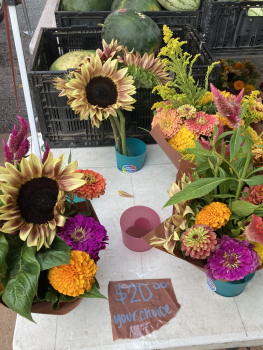
Bouquets for sale at a Farmers Market table. Photo: Nina Prater
To ensure top-quality blooms, proper harvesting and post-harvest care are crucial. Cut flowers early in the morning or late in the evening with sharp, sanitized floral snips to minimize stem damage and maximize water uptake. Immediately place stems in clean buckets filled with cool water and preservative (homemade or commercial). Strip leaves below the waterline to reduce bacteria, and move flowers to a cool, shaded area—or ideally a CoolBot-equipped cooler (34–38°F)—as soon as possible.
Leveling Up Quality
Using cucumber netting or flower support mesh helps produce straighter stems. Low tunnels and caterpillar tunnels protect crops from wind and rain, extending the growing season. Shade cloth can prevent petal burn and help grow longer stems, while row cover (like Reemay) provides light frost protection and speeds up early growth. Insect netting blocks common pests without the use of chemicals, and drip irrigation keeps foliage dry, preventing diseases such as botrytis and powdery mildew. These lightweight, movable tools are well-suited for use on plots ranging from ¼ to 1 acre and make it easy to adapt quickly to changing conditions.
Beautiful Profit
Flower farming isn’t just a source of income—it’s a fulfilling lifestyle that balances creativity and connection to your local community. Lynn Byczynski, author of The Flower Farmer, has inspired growers since 1997 with the message that well-managed flower farms can earn $25,000 to $30,000 per acre through direct sales. Income varies based on marketing, crop choice, and local demand: farmers’ markets may bring in $500–$2,000 per week, while CSA subscriptions often sell for $15–$25 per share per week.
Start Blooming
Engaging in flower farming can be a deeply rewarding endeavor, whether your motivations are a desire for profit, a passion for horticulture, or a combination of both. This vibrant industry offers an opportunity to cultivate stunning blooms while honing your skills in planting, nurturing, and harvesting flowers. As you immerse yourself in the art of flower farming, you’ll discover the intricacies of soil health, seasonal cycles, and sustainable practices that not only enhance your yields but also connect you to the beauty of nature. With each season, you’ll witness the fruits of your labor come to life, fostering a sense of accomplishment and satisfaction that grows alongside your expertise in this blossoming field.
References
Byczynski, Lynn. The Flower Farmer: An Organic Grower’s Guide to Raising and Selling Cut Flowers. 2nd ed., Chelsea Green Publishing, 2008.
Flower farming is making a comeback as gardeners grow a local niche. 2023. The Produce News. https://theproducenews.com
DTC flower sales have blossomed during the pandemic. 2021. Bloomberg Second Measure. https://secondmeasure.com
Related ATTRA Resources:
Specialty Cup Flower Production and Marketing Publication:
https://attra.ncat.org/publication/specialty-cut-flower-production-and-marketing/
Podcast: A Flower Farm Blossoms:
https://attra.ncat.org/a-flower-farm-blossoms/
Other Resources:
Association of Specialty Cut Flower Growers
Growing for Market Magazine: Getting started with Cut Flowers Part 1: The Why and How of it
Kentucky Center for Crop Diversification: Cut Flower Resources
North Carolina State Extension: Cut Flowers

House Farm Bill Proposal Omits Biochar Research Bill
The House Agriculture Committee has passed its version of the Farm Bill. It includes some positive biochar provisions but also has a critical omission.
The bill does not include the bipartisan Biochar Research Network Act, which authorizes the USDA Agricultural Research Service to establish a large multi-site research project to close critical knowledge gaps on agricultural use of biochar. Research results on biochar have been promising, demonstrating that biochar can improve soil health, increase soil water holding capacity, enhance fertility, reduce soil acidity and improve yields. But research results have been inconsistent because diverse types of biochar have been tested in varying soils and conditions.
The Act would establish a multi-site national research project to test a common set of biochar types with standardized characteristics across multiple locations with varying conditions. The research would help sort out which biochar types have promise for varying cropping systems, soil types and climates. The research would measure effects on soil health, fertility, biological activity, organic matter and water holding capacity, as well as plant growth and crop yields.
Findings of the research would be used to inform farmers on which biochar types can be helpful in their soils and cropping systems.
We are working to ensure the Act is included in the Senate version of the Farm Bill when that is taken up, and the final Farm Bill produced by a conference committee of House and Senate committee members.
The Forestry Title of the House Bill does have some positive provisions on biochar. It would support development and commercialization of biochar by establishing demonstration and research projects in each region of the US Forest Service and US Bureau of land Management. The projects would be targeted to forested areas with elevated risk of wildfire and get at least half of the biochar feedstock from forest thinning and management.
It is uncertain whether a Farm Bill will be completed in this Congress. Legislation often stalls in election years. If the Farm Bill stalls, the new Congress will need to start anew in 2027 after the election.
We’ll keep you informed.
Executive Director
The National Center for Appropriate Technology (NCAT) is seeking an energetic, passionate, experienced and collaborative Executive Director to provide visionary leadership to its dynamic staff, board and partners.
Founded in 1976, NCAT is a national, private non-profit organization providing trusted assistance and education nationally on acclaimed projects in sustainable agriculture, energy efficiency, and related topics that reduce poverty, increase healthy communities and protect natural resources. NCAT employs nearly 60 staff across 14 states. The organization has an annual budget exceeding $15 million.
This position will report to NCAT’s Board of Directors and be responsible for overall programmatic, administrative, and fiscal supervision of the organization while empowering and entrusting Executive Team members to provide day-to-day management and administration.
The Executive Director will maintain and grow successful local, regional, and national projects that advance NCAT’s mission, including increasing sustainable funding to ensure that NCAT continues to be a vibrant organization well into the future.
The experienced professional will, with the Board of Directors, assure that the organization has a long-term strategy to achieve its mission in alignment with its values. The Executive Director will lead the organization’s senior leadership to chart NCAT’s growth and strategic response to demands for the organization’s services.
QUALIFICATIONS:
The position requires either:
The position also requires a proven track record of delivering superior results and strategic plan implementation. Applicants must have experience in acquiring and managing large institutional donor-funded projects from the U.S. government and foundations. Preference will be given to applicants with background and experience in sustainable agriculture; sustainable energy; or rural development.
SKILLS AND ABILITIES REQUIRED:
SALARY AND BENEFITS:
$135,000 – $170,000 annually, depending on qualifications and experience. Excellent benefits include paid vacation and holidays, health, life and disability insurance, a cafeteria and 401(k) plan.
LOCATION:
NCAT is headquartered in Butte, Montana with staff in 14 states across the US. The position requires a major travel commitment of up to 40% time. In addition to expected monthly travel to the Butte office, the ED will travel to work with staff across the NCAT footprint, and represent NCAT at industry events.
APPLICATION PROCESS:
Applications will be accepted through March 31, 2026 or until a suitable candidate is identified. Early applications are encouraged. All persons interested in being considered for the position must submit a current resume and cover letter highlighting their experience and skills via NCAT’s recruitment webpage.
Questions about the application process can be directed to: Cassie Lindau, Human Resources Manager, e-mail: jobs@ncat.org.
NCAT’s mission is to advance practices in sustainable agriculture and clean energy, reducing poverty, so that both people and the environment can flourish. Our work brings together diverse partnerships and communities to help reduce poverty and protect our natural resources.
NCAT is an equal opportunity employer dedicated to cultivating a diverse, inclusive, and equitable workplace. We believe that a variety of perspectives strengthens our work and mission, and we welcome applicants from all backgrounds. All qualified applicants will receive consideration for employment without regard to race, color, religion, sex, sexual orientation, gender identity or expression, national origin, age, disability, veteran status, or any other characteristic protected by applicable law.
For additional information about NCAT, please visit our home page at www.ncat.org.
Small Steps, Big Vision: Oyster Farming on Long Island’s Great South Bay
By Lee Rinehart, NCAT Agriculture Specialist
Mike Miezianka and Ray Smith have found a way to beat the average Long Island commute time by almost seventy-five percent. They take a boat. After a fifteen-minute crossing of Great South Bay, their workplace materializes on the horizon: a series of floating cages in discrete rows covering an acre and a half of the estuary. We have arrived at Toasted Oysters Farm, one of twenty-three similar operations scattered across this shallow part of the bay that grows the region’s distinctively flavored Blue Point Oysters.
The morning commute. Photo: Lee Rinehart
The journey to Toasted Oysters Farm really began five years earlier, back in 2020. Mike was hanging with Ray in Ray’s backyard, sharing after-work drinks, and the conversation turned speculative, as often happens when long-time friends gather to let the day settle. “I’m going to own an oyster farm,” Ray said out of the blue. I can imagine Mike’s look of curiosity, and Ray’s grin as he sat across from him, sipping his drink. The idea of farming oysters was nothing new to either of them. Ray had been taking a class on oyster farming at the township, but something was different as they sat together that day. That day, there was intention. So, Mike signed up for the next oyster farming class and the die was cast. What would follow over the next five years was a journey that Mike, a Navy veteran and former New York City detective, and Ray, a paramedic, could never have anticipated before that fateful day in Ray’s backyard.
When Mike, Ray, Luke (their summer employee), and I reached the farm the morning they took me out, the sun was balanced on the horizon, bathing the sky salmon as Ray throttled the engine down. The cages, supported by black plastic floats and each holding six oyster bags, bobbled gently in the current, longlines holding them in place, anchors at the end of each row. A converted pontoon boat lay anchored alongside the last row of cages, tethered to a floating pier. Together, they served as boat dock, staging zone, oyster sorting area, and packing house. Ray brought the boat alongside the floating dock and our workday began.
The tumbler Mike and Ray use to sort oysters by size. Photo: Lee Rinehart
Oysters start from seed (yes, seed… small, shelled creatures ranging from one to ten millimeters in diameter) in semirigid mesh bags. In March, Mike and Ray place the bags into floating cages where the oysters will grow rapidly, with an average of eighteen months between planting and harvest. Growth peaks in the summer months when the water temperature is warm and nutrient flows are abundant. Each day during the summer Mike and Ray work the farm, pulling bags from the cages and sorting them in a homemade tumbler, an ingenious device that looks like an oversized potato washer with holes along its surface that allows the oysters to fall into buckets underneath based on their size. After they sort the oysters to size, those that need more growth go back into bags and into the floating cages, and they rinse, bag, and ice the marketable oysters. The process continues all summer. Maintenance tasks such as de-fouling gear, repairing cages, or adjusting longlines also keep them busy throughout the growing season. Then, finally, the fall brings a lull in activity. After their last time sorting, Mike and Ray bag the remaining oysters, lay them on the bay floor to overwinter, and then haul the floating racks back to land, protecting the gear from ice damage.
Once we were tied to the floating dock, Ray and Luke, a college biology student whose work pace never slowed all day, immediately got busy with the tumbler while Mike and I descended the boat’s stern ladder into the seventy-nine-degree water of Great South Bay. There are probably as many ways to access oyster cages as there are oyster farms, and on Mike and Ray’s farm all the oyster handling and maintenance is done by wading out into the bay’s waist-high water. A terrestrial farmer has an advantage in that they can walk easily between rows, drive tractors, or listen to a podcast while working. But an ocean farmer, well, try spending a seven-hour workday walking against an ever-increasing tidal current while manipulating oyster bags into and out of chest-high floating cages. Nothing is lashed down, and everything moves, all the time. And while land farmers may be on constant lookout for snakes and spiders, an attentive oysterman is on vigil against the painful defensive pinches of the blue crab, which finds the aquatic plants that colonize the floating cages to be ideal habitat.
Mike says the demand for seafood is forecasted to increase by 25% from 2024 to 2032, and to cater to consumers’ greater awareness of the benefits of eating locally produced food, Toasted Oysters has adopted a system of traceability through inventory tracking and harvesting software that accurately pinpoints the location of each harvest. They market their oysters to distributors in the Long Island region thanks to the strong relationships they’ve developed with buyers. This year they are expanding into New Jersey, Pennsylvania, and Massachusetts, with a goal to increase their inventory to three million oysters by the end of 2025 to keep up with demand. In addition to distributors, Mike and Ray supply four restaurants, diversifying their distribution channels and enhancing their brand presence among people seeking the briny, savory flavor that distinguishes Blue Point Oysters from other varieties.
Floating cages at Toasted Oysters Farm. Photo: Lee Rinehart
We’d been on the farm since five-thirty a.m., and as the clock approached noon the tide increased, and walking to and from the cages became a laborious push against an even deeper aqueous surge. As Mike and I handed the bulging bags of oysters up to Luke on the floating dock, we decided it was time to sort the marketable oysters, get them on ice, and call it a day. Mike and I had been talking all day as we worked, about the ecological benefits of filter-feeding shellfish, how heavy rainfall events can temporarily shut down an operation, what to look for in a marketable oyster, and the various practices and communal nature of the close-knit oyster farmer community in the bay. Then our conversation turned toward the pragmatic: I wanted to know his recommendations for beginners.
There are so many moving parts on a shellfish farm: site selection, leasing, regulations, choosing the right equipment, marketing, and acquiring production knowledge. When Mike started out, before he even had a lease, he volunteered on oyster farms to learn the craft. “Farmers are always looking for assistance,” Mike said. Getting out and working on farms acquaints you with the rigors of a normal workday. You get firsthand knowledge of systems and techniques – like which kind of cage system to use depending on water depth, how to install anchors and longlines, what to do about biofouling on cages and cormorants and gulls pooping on your gear.
If you catch the shellfish farming bug, then it’s time to research the available aquaculture lease sites and regulations in your area. “On Long Island,” Mike explained, “several entities manage different regions, each with its own specific rules and regulations, in addition to state regulations.” This is one of the benefits of volunteering on farms. You forge a relationship with an established farmer (who may end up being your neighbor) and you can get firsthand information on leasing and regulations.
Volunteering is essential for learning the trade. As Mike noted, “In oyster farming, the motto is: ‘More flow, more grow, more dough.’” Good water flow is essential for delivering nutrients to your oysters and is the principal consideration in site selection. And finally, Mike recommends you “consider how the farming technique aligns with your current physical abilities. Farming in deeper water requires a larger boat and additional equipment. Conversely, in shallow water, you may need to physically roll cages for anti-fouling measures and navigate walking in tidal currents.”
Mike steers the boat away from the oyster farm at the end of the day. Photo: Lee Rinehart
Mike and Ray are proving that small-scale oyster farming can be a viable business, as they are at a point now where they are scaling to a level that will provide a sustainable income. For those who would begin the journey to having their own oyster farm, or any kind of farm for that matter, Mike’s words are salient: “Begin with small steps and maintain a big vision.”
Related Resources
ATTRA Podcast: Farming Oysters with Mike Miezianka
Ocean Farming: a Conversation with Bren Smith
Further Resources
Toasted Oysters – Authentic Blue Point Oysters
Cultivating the Eastern Oyster, Crassostrea virginica
Report: State by State Summary of Shellfish Aquaculture Leasing/Permitting Requirements (2021)
Rhode Island Shellfish Marketing Guide
Wool Quality: Preparing for Shearing Time
By Danielle Duni, NCAT Agriculture Specialist
Whether you have ten sheep or one thousand, proper preparation, handling, and storage of wool can significantly improve the value of your wool clip. When you take steps to produce clean wool, you open the door to better pricing and more opportunities for processing into finished products.
One of the biggest factors affecting wool quality is contamination, which can come from livestock paint, feed, grass seed, baling twine, net wrap, and many other sources. The good news is that there are several steps you can take long before shearing day to reduce contamination and protect your wool quality. You should start making plans for your next clean wool clip shortly after your previous shearing is complete. Keep reading for ways to keep your wool clean from a range of contaminants.
Sheep Paint
Many operations shear their sheep before lambing to create a cleaner environment for the birth and to make it easier for lambs to latch onto the ewe. Larger operations often use paint brands to be able to identify ewe and lamb pairs once they’re in the pasture. When you apply paint, use a scourable sheep paint, which can be removed during the wool-cleaning process. Apply paint sparingly and place it consistently within the flock, high on the hind end where it can be easily removed on the shearing floor. Careful placement helps prevent unnecessary contamination of the fleece.
Synthetic net wrap can contaminate wool if not removed and disposed of. Photo: NCAT
Synthetic Fiber
Feeding practices can also play a major role in wool contamination, especially in confinement settings. Taking the time to remove all net wrap and poly twine from feed and properly disposing of it goes a long way. Additionally, refrain from using twine to hold up posts of gates; twine is made from poly fibers that break down into smaller strands and eventually find their way into the wool. Poly fibers cannot be combed out in processing, resulting in an unusable yarn.
Feed Particles
Using proper sheep bale feeders helps reduce the amount of time sheep spend climbing into feeders (though anyone with sheep knows they will always find a way). Feeding daily rations instead of allowing continuous access to feed can reduce contamination, although it does require more labor. If you are spreading feed or bales with a tractor or wagon, it is best to keep sheep penned away while spreading to prevent fine feed particles from settling into the wool.
It’s Shearing Day!
Speaking from experience, you can never be too prepared for shearing day. The number one priority is keeping sheep dry. A good rule of thumb is this: if you place your hand on top of the fleece and it feels even slightly damp, the sheep are too wet to shear. Moisture can clog shearing equipment, ruin the wool clip, and create unsafe or uncomfortable conditions for the shearing crew. Even a light rain or snow can delay shearing just as much as a major storm.
Shearing Set-Up
With larger flocks, shearing crews often bring wool help, i.e., an experienced crew to help with the wool handling and preparation aspect of the shearing process. If you only have a few sheep and no wool help, congratulations, you are the wool help!
Shearing crews also often bring equipment such as wool packs, wool sweeps, and skirting tables. At a minimum, have proper wool bags and a broom on hand. Wool packs are the industry standard for baling and storing wool and can be purchased online. If a wool sweep is not available, a clean shop broom works well for clearing debris from the shearing area.
Skirting involves removing undesirable wool such as wool that is contaminated with manure, paint, heavy vegetable matter, dirt, or short fibers. The key is to separate lower quality wool from the main fleece. A skirting table provides the best results when removing bellies, tags, and contaminated pieces from the fleece. Skirting involves removing undesirable contaminants from wool such as manure, paint, heavy vegetable matter, dirt, or short fibers. There are many effective DIY skirting table designs available online. If a table is not feasible, you can skirt directly on the shearing floor. The key is to separate lower quality wool from the main fleece. Additionally, laying down a canvas tarp in the shearing area helps keep wool clean and off the ground.
Sorting Wool
After skirting comes sorting. Best practice is to have separate bags ready for the main fleece line and off-sorts such as bellies, pieces, and tags (often grouped together). If the main fleece varies in quality, you can split it into an AA (highest quality) line and an A line. Even if you have limited experience with wool sorting or classing, the important take away is to sort “like wool with like wool.” Shorn belly wool goes into the belly bag. Areas of contamination, such as the crow’s nest/top knot or painted wool, go into the pieces bag. The main fleece goes into the mainline bag, taking care to remove short fibers or weak samples that break easily when pulled. (For more on fleece anatomy, check out this article from New Mexico State University). Compost or discard wool from the hind end with manure contamination, as it can add moisture to the bales. The main fleece goes into the mainline bag, taking care to remove short fibers or weak samples that break easily when pulled.
When sorting, it’s helpful to pull a sample from the fleece to evaluate quality. Measure length against your hand, with a general minimum of three inches. Test strength by gently pulling the staple apart to check for breaks. If your flock includes colored fiber sheep, shear them last to prevent contamination of white wool.
Danielle Duni sits atop bales of wool that are sorted and ready for market.
Baling Wool
Once sorted, it’s time for baling. Some shearing crews bring hydraulic wool balers that compress wool into 400-to-500-pound bales. The wool packs (bags) are then securely fastened to keep the wool clip protected.
Labeling and Storage
And don’t forget the final step: labeling! Industry standard labeling guidelines can be found through the American Sheep Industry Association. At a minimum, each bag should include the operation name, bag number, wool description (mainline or off-sorts), and year. Store wool in proper wool packs in a dry area. Storing bales on pallets helps prevent moisture absorption and allows for airflow. Ideally, wool should be stored indoors in an area with moderate temperature fluctuations.
Shearers Know Best
One of the best resources you have is your shearer. Ask what you can do to set up the area for success. A pen with an alley run is a great starting point. Keeping the shearing area clean is essential. Lightly watering the barn floor beforehand to prevent dust can help conditions be ideal. Shearers might have other tips like that to make sure the shearing goes smoothly and the wool clip is the best quality possible.
This blog is just an overview of preparing for sheep shearing. For more information, please reach out to our NCAT agriculture specialists at askanag@ncat.org. Additionally, the American Sheep Industry (ASI) provides great resources for how to prepare, sort, handle and store the wool clip. Find some of their resources below.
Resources:
Preparation Steps for Wool Quality Improvement
https://www.sheepusa.org/wp-content/uploads/2021/11/Prep-Steps-Brochure-Small-Size.pdf
Wool Contamination: American Sheep Industry Association, Inc.
https://www.sheepusa.org/wp-content/uploads/2022/06/Wool_contamination-1.pdf
Poly Contamination: American Sheep Industry Association, Inc.
https://www.sheepusa.org/wp-content/uploads/2022/06/Poly-1.pdf
Understanding Wool Grads: New Mexico State University
https://pubs.nmsu.edu/_b/B409/index.html
Code of Practice for Preparation of Wool Clips
https://www.sheepusa.org/wp-content/uploads/2021/11/code-of-practice-2021.pdf
Wool Handling Videos (for purchase): American Sheep Industry Association, Inc.
https://www.sheepusa.org/product/wool-handling-videos
This blog is produced by the National Center for Appropriate Technology through the ATTRA Sustainable Agriculture program, under a cooperative agreement with USDA Rural Development. ATTRA.NCAT.ORG.
Get Organized for a Smooth Lambing, Kidding, and Calving Season
By Danielle Duni, NCAT Agriculture Specialist
The birth of baby lambs, kids, and calves—what a special time of year! It’s what producers prepare for all year long. Beyond the fall paycheck, the real reward of ranching comes from watching a newborn lamb, goat, or calf stretch out for the first time and take those wobbly steps, then trail faithfully behind its mother.
Danielle Duni holds two young lambs.
Still, amid those heartwarming moments lies the reality of long days, sleepless nights, and tough decisions. Preparation can make all the difference, easing the pressure and setting the stage for a successful season. The best way to be ready is to ensure your facilities, nutrition program, and supplies are all in order. Facilities don’t have to be elaborate, just functional, with a space to hold expectant mothers that are about to lamb/kid/calve, a few jugs (i.e., mothering pens), and an area to sort animals when needed.
The main factor that will make or break the birthing season is the nutrition received by the mother during pregnancy and lactation. This subject is beyond the scope of this blog, however. Your local Cooperative Extension Service will have resources regarding nutrition that incorporate locally available feedstuffs. Check your flock or herd’s body condition and aim for moderate condition (not fat, not thin) during pregnancy. We can provide more information on nutrition upon request at askanag@ncat.org.
It’s amazing how even with all the planning in the world, each lambing, kidding, or calving season still manages to surprise you. Maybe it’s a ewe that decides to lamb at two a.m. during the coldest cold snap of the year, or a calf that needs a little extra encouragement to nurse. Those moments remind us why it’s so important to have everything ready and within reach. When things get busy (and they always do), being organized and prepared can make the difference between chaos and calm.
Here are some sample supply lists of materials and equipment that can help make lambing and calving go more smoothly. It is important to note that the sample list is an extensive list of supplies that could possibly come in handy. Most of these supplies can be gathered over time, and each operation will learn what works best for their situation.
*The asterisk denotes basic items that are nice to have when getting started.
Lambing, Kidding, and Calving Supplies
Pen Set-Up and Cleaning Supplies
Supplies for in the Pen
Supplies for Assisting the Birth
Fresh calf in a warm pen sporting a shiny new ear tag.
Supplies for Processing Lambs, Kids, and Calves
Supplies for Supplemental Feeding
Supplies for Veterinary Medicine
Ensure supplies are stored in an easy-to-access location. Pro tip: make sure milk replacers are stored in a cool, dry, mouse-proof location.
Not mentioned in this list are the necessary drugs and dosages for treatment, as that information requires veterinary oversight. Always make sure to have established care with a vet before lambing and calving season. This article from Texas Tech University provides guidance on when to call your vet during calving, lambing, and kidding season.
At the end of the day, no matter how many seasons you’ve been through, each year brings its own set of lessons and little victories. Being ready with the right nutrition, setup, and supplies helps take some of the stress off so you can focus on what really matters, caring for your animals and appreciating the new life on the ground. It’s hard work, but it’s the kind that fills your heart and reminds you why you do it year after year.
ATTRA Resources:
Masterful Management in Lambing Jugs – ATTRA – Sustainable Agriculture
Top 5 Lambing Hacks for a Panic-Free Season – ATTRA – Sustainable Agriculture
Lambing, Kidding, and Calving on Pasture – ATTRA – Sustainable Agriculture
For a Safe Lambing Season, Make a ‘Lambulance’ – ATTRA – Sustainable Agriculture
Healthy Animals, Happy Farm: Strategies for Sheep and Goat Care – ATTRA – Sustainable Agriculture
This blog is produced by the National Center for Appropriate Technology through the ATTRA Sustainable Agriculture program, under a cooperative agreement with USDA Rural Development. ATTRA.NCAT.ORG.
Technical Assistance Provider (4)
NCAT is a non-profit organization whose mission is to advance solutions in regenerative agriculture and clean energy so that both people and the land can flourish. NCAT operates locally, with deep ties to the communities and regions we serve. We share knowledge, build skills, craft practical solutions, and cultivate networks through workshops and convenings, an online resource hub, and multimedia communications. We are known for providing trusted, human-centered technical assistance in agriculture and energy.
NCAT is seeking four (4) full-time Technical Assistance Providers who will be on the implementation team of a multi-year project focused on wool producers in Colorado, Idaho, Montana, South Dakota, Utah, and Wyoming to strengthen their market access. Technical Assistance Providers work directly with targeted wool producers with resources for improving wool quality, soil health, drought resiliency, and market access improvement
This position is remote, and the employee must be based in one of the following states: Colorado, Idaho, Montana, South Dakota, Utah, and Wyoming. Relocation support is not provided.
This position is tied to a grant-funded project that is scheduled to conclude March 2028. Employment is contingent upon the continuation of project funding.
QUALIFICATIONS:
This position requires a BA/BS degree in agriculture, animal science, natural resource management, conservation, or related fields. Experience in building soil health through regenerative ranching and farming; and demonstrated competence/certification in whole farm planning, such as NRCS conservation planner certification.
DESIRED KNOWLEDGE, SKILLS, AND ABILITIES:
RESPONSIBILITIES:
SALARY AND BENEFITS:
This position offers a salary range of $63,000 to $67,000 based on experience and qualifications, along with a comprehensive benefits package.
APPLICATION PROCESS: Applications will be accepted until a suitable candidate can be identified. Early applications are encouraged. Applicants are encouraged to visit www.ncat.org to learn more about NCAT.
All interested applicants must apply by submitting a current resume and cover letter that highlights relevant skills and experience aligned with the listed qualifications.
To apply, please visit our workforce page and choose Technical Assistance Provider.
Questions about the application process can be directed to:
Cassie Lindau, Human Resources Manager
jobs@ncat.org
(406) 494-8644
NCAT is an equal opportunity employer. We are committed to building a diverse, inclusive, and equitable workplace. All qualified applicants will receive consideration for employment without regard to race, color, religion, gender, sexual orientation, gender identity or expression, national origin, age, disability, veteran status, or any other characteristic protected by law.
Working the Woods with Pigs — Practical Tips for Silvopasture Success
By Mike Lewis, NCAT Agriculture Specialist
The forest is not merely a backdrop for raising pigs in silvopasture. The forest is a living partner in the cycle of growth and renewal. When pigs are raised thoughtfully among the trees, they become agents of fertility and soil health, creating a balance that benefits the animals, the trees, and the land. This balance isn’t a given, though – it requires intention, observation, and a gentle hand to maintain.
Pigs should ideally be moved every three to seven days to prevent over-disturbance that can cause soil erosion, compaction, and overgrazing. Fencing is one of the most important tools required for this practice. Portable electric fencing—made of polywire or mesh netting, supported by step-in posts—allows farmers to move pigs quickly and safely. A well-maintained fence that delivers a reliable charge of 6 Joules or more encourages pigs to respect boundaries, keeping them within the paddock and protecting sensitive areas.
Moving pigs from one paddock to the next isn’t as hard as it might seem at first. Leaving paths or corridors between paddocks helps reduce stress and builds trust in animals during moves. A simple trick is to carry the feed bucket when moving pigs—this familiar sound will encourage them to follow calmly.
Forest where pigs have grazed that has been allowed to rest and recover. Photo: Nina Prater, NCAT
Rest periods for paddocks, typically between 30 and 90 days to allow forages to fully recover, allow the forest floor to regenerate. Wetter or more fragile soils may require longer rest periods. Walking the paddock before turning pigs in provides valuable insight into whether the ground is ready or needs more time.
Appropriate stocking rates will help maintain a balanced silvopasture system. A general guideline is to stock between 10 and 20 pigs per acre in a rotation system, but this varies based on tree density, soil type, and forage availability. Observing the ground after a rotation will allow you to assess if the stocking density is appropriate; if leaf litter remains intact and fungi are still visible, the pressure on the land is likely well-managed.
It is best to err on the side of understocking, as it is easier to build up a system than to repair overused ground. It is also important to avoid farrowing pigs in the rotation paddocks, as sows and piglets need stable, sheltered areas with minimal disturbance.
Protecting the trees themselves is vital. Young saplings are especially vulnerable and will benefit from wire mesh guards or rigid tree protectors to prevent pigs from chewing on bark or rubbing against the trunks. A single pig can uproot a small oak sapling in minutes, so take measures to protect your future forest. Also take care to avoid compaction around tree roots, especially after rain. Rotating pigs away from these sensitive areas during wet conditions preserves root health and prevents long-term damage.
Timing moves to suit soil conditions is a practice rooted in respect and care for the land. Wet or saturated soil is very soft, and grazing pigs on it can lead to soil compaction and erosion, damaging both pasture and the forest understory. When the soil dries and firms, pigs can safely root and disturb the leaf litter, helping to clear invasive plants and cycle nutrients back into the soil without causing lasting harm.
Feeding pigs in portable troughs helps reduce excessive soil disturbance. Photo: Nina Prater, NCAT
Feeding management supports both pig health and land stewardship. While pigs will forage widely on acorns, roots, and greens, supplemental feed is necessary to reach market weight efficiently. Feed balanced rations, including grains or fermented feeds, in a way that encourages natural behavior and spreads manure evenly. Using portable feeders will allow you to move feeding sites around the paddock, which help limit the creation of wallows or overly concentrated manure piles. Seasonal mast like acorns and hickories offer rich forage, but it is important to limit pig time in these areas after the pigs have feasted to allow trees to recover from trampling. Monitoring the pigs’ body condition throughout the rotation is key. Pasture-raised pigs may grow more slowly than confined animals, but their meat often develops a richer flavor and firmer texture.
Above all, raising pigs in silvopasture is a practice of attentive observation and adaptability. No single plan fits all seasons or sites. Successful farmers walk their land daily, watching rooting patterns, monitoring tree health, and noting soil recovery. Keeping a simple journal with observations and adjustments helps build a deeper understanding over time. Managing a regenerative pig enterprise in the forest is not about control, but cooperation. It’s a dialogue between steward and land, where both pig and tree flourish.
In the end, silvopasture invites the producer to foster an approach of patience and respect. When managed with care, pigs do more than grow; they become part of the story of soil and tree, of land renewed and bounty shared. Through this work, farmers honor not only the meat they harvest but the living, breathing landscape that sustains them.
ATTRA Resources:
Mastering Smoke and Serenity: Tips for Beginning Beekeepers
By Eric Fuchs-Stengel, NCAT Agriculture Specialist
Back in the olden times, hardscrabble beekeepers worked their hives in the hot sun with no suits or gloves. They would puff on cigars, blowing smoke up around their faces, filling the air underneath their wide-brimmed bee veils. This smoke would keep bees, either defensive or curious, away from their upturned mustaches, long beards, and sunbaked faces. Meanwhile, these old-timers would work methodically, gently squeezing the bellows of their copper smokers, floating a thick gray smoke, often a mix of burning pine needles and wood chips, into their Langstroth beehives.
Two beekeepers applying smoke to a Langstroth hive. Photo: Eric Fuchs-Stengel
The smoke served (and continues to serve) many functions: it distracts the bees, confuses their olfaction system (smell and pheromone communication), and signifies the potential of an incoming forest fire. The simple practice of using a smoker goes all the way back to ancient times and is still a cornerstone of modern-day beekeeping. Modern beekeepers may have lost the cigars and the outlandish facial hair, but the smoker remains in both copper, stainless steel, and aluminum forms and is a symbol of sustainable, productive, and successful beekeeping.
When I was a brand-new beekeeper, my local bee club partnered with a remarkable bee mentor who rarely used a bee smoker. She was extraordinarily successful with her hives, stewarding many through Varroa mite infestations and cold winters. She prioritized moving slowly and thoughtfully, with movements that were not jarring or alarming to bees. I have not seen this slow and steady “Tai Chi” style of beekeeping replicated anywhere else in the beekeeping world. She would on occasion use smoke, but it was rarely needed when she worked her mature, well-aged, well-mannered, and “spiritually connected,” hives in her home apiary. On a beautiful, sunny, summer day, I would watch my mentor slowly opening, inspecting, and working the hives with her bare hands—no smoker lit, no fear at all, and no defensive hives stinging and buzzing her in the face. Truly, a sight to behold.
As an inexperienced beekeeper, I thought this was the way I should begin raising my bees, which brings us to our story. For several years I kept my colonies on a horse farm. My mentor would visit me and wear a bee suit with no gloves so that she could feel what was happening in the hives and to what extent she was jostling the frames around. The bees were calm and peaceful around her. She was a master of this practice. I, on the other hand, was extremely nervous. I wore a full bee suit, thick leather gloves, and sweated profusely every time I worked my hives in the sun. The smell of my stress radiated outward, and my sweat soaked into the suit, which I did not really wash. In an attempt to imitate my mentor, I did not use a smoker. I would try to be gentle. Slow. Steady. But the fully aware, undistracted-by-smoke, energetic bees would BUZZ LOUDLY and swarm around my face covered by my bee veil. This would lead to me crushing bees under my fingers with the thick leather gloves, jarring and jolting frames as I removed them from the colony.
Basic anatomy of a Langstroth hive. Source: Jason Nelson, 2008.
In the heat of summer, I would struggle lifting off the heavy honey super, then the top deep, to do a full inspection on the bottom deep—as I had interpreted that to be standard practice—at least once a month. (In actuality, I was over-inspecting my colony due to my inexperience. A skilled beekeeper can read the comb in a hive to determine its health and would need to dive deep into the brood chamber much less frequently.) The bees would buzz, cluster on top of the deep frames, and bubble over the sides of the hive box like lava.
In short, my bees were angry. My leather gloves were covered in stingers. The edges of the hives were full of dead bees crushed between the deeps and supers. My suit was smelly with the stench of nervous sweat. Every time I went to the hives I was scared and worked faster to try to avoid the eruption of bees out of the colony, which only made things worse.
Toward the end of July, I found one of my hives densely packed and sealed tight with propolis, which made it difficult to open. Every time I freed the inner cover, prying it apart with my hive tool, a loud crack would sound, and the sweet smell of bananas would flow out into the air. That banana smell is the alarm pheromone released by the bees’ Koschevnikov gland, which contains isoamyl acetate (the same compound that naturally occurs in bananas). The bees would produce this pheromone upon my arrival and fan it throughout the hive. As I lifted the lid off the hive, the bees buzzed and flew into my veil aggressively, then shot out into the surrounding area, stinging farm visitors, and harassing workers.
For the seasoned beekeepers reading this, it already sounds like a nightmare scenario. But to top it all off, something else had also been occurring that I had not realized would be an issue. About fifteen feet in front of the hive was the farm’s horse-washing station. Every day, several horses would be brought out of the stalls and sprayed down, soaped up, and washed—in the flight path of the forager bees. The animal smell and dust would waft into the hive entrances, further agitating hives already on edge from my nervous management practices.
Honeybees are excellent at mapping and remembering where to find nectar. Photo: Lance Cheung, USDA
Honeybees have a great memory when it comes to smells. Their brain is tiny but contains up to one million neurons and is organized into clusters called “lobes.” Each lobe controls distinct functions or activities, and one particularly important lobe is called, the “mushroom body.” This lobe is enlarged in honeybees and takes up to 20% of their brain. Its purpose is to receive sensory information like smell and taste, learn about that information, and remember it for the future. This is what allows the bee’s brain to recall certain flowers that are good nectar sources. Likewise, they can also recall the smells of threats like horses, or a scared beekeeper like me.
As the season progressed, I started to receive calls about honeybees stinging visitors as they got out of their cars. Farm staff could be on the other side of the farm working when all a sudden a stray honeybee would fly in their face, get stuck in their hair, and sting them. My colony had become chronically on-edge, and something needed to be done. First, I tried to re-queen the colony. I bought a gentle, healthy, and highly regarded Carniolan queen from a local queen breeder and put it in the hive. This did change the hive temperament a little bit, but I still had stinging issues and excess defensiveness from the colony. When winter arrived, I decided to move the colony to a new location. It took me years to fully understand all the factors that led to turning this hive—which had initially been calm and peaceful—into the volcano of overflowing guard bees that it became. Here are some key lessons I learned:
One common model of smoker used in beekeeping to keep the hives calm. Photo: Eric Fuchs-Stengel
I hope you can benefit from the mistakes I made as a new beekeeper, so you’ll be able to start your beekeeping career off a little less painfully than I did. Please feel free to reach out to me with questions, or to let me know if there is other beekeeping information you need from us at ATTRA!
Sources:
Paoli, M. and Galizia, G. 2021. Olfactory coding in honeybees, Cell & Tissue Research 383, pp. 35–58.
Conrad, R. 2017. Natural Beekeeping, Revised and Expended ed. From Chapter 2, Working With The Hive / Attitude. Chelsea Green Publishing, White River Junction, VT. pp. 30–31.
ATTRA Resources:
Podcast episode: Beekeeping Basics with Eric Fuchs-Stengel
Sales Bloom for Local Cut Flowers
By Audrey Kolde, NCAT Agriculture Specialist
Growing up, the only cut flowers I ever saw were the ones handed out at dance recitals: a rose from a proud parent or a carnation from the teacher. These classic blossoms—roses, carnations, and chrysanthemums—make up the “big three” of the cut flower world. They’re reliable, hardy, and grown for scale. But over the past two decades, bouquets have evolved into something far more diverse, textural, and beautiful.
The switch to diversity can be traced back to a pivotal moment in U.S. trade policy. In 1991, the Andean Trade Preference Act began opening the door to duty-free flower imports from Colombia. By 2012, the U.S.-Colombia Trade Promotion Agreement made Colombia’s position as the dominant supplier of cut flowers to the American market untouchable. While this surge in low-cost imports made bouquets more affordable and abundant, it also hurt domestic wholesale flower farms, which couldn’t compete on price alone.
Finding a Niche and the Digital Floral Revolution
Sweet pea blossoms make a fragrant addition to bouquets.
Confronted with this challenge, U.S. flower farmers began to adapt. Instead of pursuing the wholesale giants with resilient, shippable blooms, they embraced their unique strength: growing delicate, fragrant, seasonal flowers that could not withstand long-distance transport. Local farms carved out a niche, offering sweet peas, dahlias, ranunculus, and garden roses—blooms that thrived in nearby soil but couldn’t be shipped in a box.
Social media accelerated this shift: Instagram and Pinterest introduced consumers to lush, wild, and seasonal bouquets. People’s preferences began to shift; they no longer just wanted a dozen roses. Instead, they sought flowers with unique textures, captivating fragrances, and compelling stories. Social media also gave local farmers a direct connection to consumers and florists, allowing them to bypass traditional wholesale channels. This increased visibility on digital platforms transformed previously overlooked flower varieties into sought-after blooms, sparking a grassroots revival of local flower farming.
The Rise of Direct Sales
The local food movement of the 2010s led to a shift in consumer values towards sustainably grown flowers. Many shoppers began seeking “American Grown” labels, desiring not only beauty but also environmental and ethical accountability. This demand gave rise to more direct marketing, including flower CSA subscriptions and an expanded presence of fresh flowers at farmers’ markets. The COVID-19 pandemic accelerated this trend, when weddings, festivals, and large gatherings were canceled and wholesale orders from florists, event planners, and retailers were scaled back dramatically. What began as a crisis response evolved into a lasting business model as farms transitioned to e-commerce and direct-to-consumer sales, with many farmers quickly adapting by launching online shops, subscription flower boxes, and local delivery services. Small and mid-size flower farms can bypass traditional wholesale channels, strengthening grower-consumer relationships and creating new revenue streams. Direct-to-consumer sales have become a cornerstone of the modern floral industry.
Easy Blooms to Start Growing
Zinnias are an easy flower to start with when adding cut flowers to a specialty-crop operation. Photo: Audrey Kolde
Growing and selling flowers is an easy shift for diversified farms. Summer annuals such as zinnias, sunflowers, cosmos, gomphrena, and celosia thrive in a wide range of climates and are easy to grow and sell. These “cut-and-come-again” flowers can be harvested multiple times throughout the season. For example, a single 100-foot row of zinnias or cosmos can yield 1,000 to 3,000 stems over a season, while gomphrena may produce 3,000–4,000 stems. With just a few rows, you can bring buckets of flowers to market each week. On ¼ to ½ acre, growers often supply local florists, farmers markets, or bouquet subscription services. Adding herbs like basil, mint, or rosemary offers both fragrance and foliage for arrangements.
Adding Value: Bouquets
As your skills grow, bouquet design becomes a natural next step—this is where creativity meets profitability. In busy markets, pre-made bouquets facilitate faster sales. Slower-paced markets allow for a more interactive experience, allowing customers to choose their own stems for a custom bouquet. Either way, refreshing your knowledge of basic bouquet-building techniques increases your product’s value. Learn which flowers function as focal, fillers, line flowers, and greenery, and plan your growing season with color palettes and design in mind. Kraft paper wrapping, flower food packets, and a polished table setup help elevate your market presentation. Flowers naturally lend themselves to visual marketing, so use your social media to showcase blooms in context—on a table, in a vase, or as a gift. Adding a social mission (like donating bouquets to hospital wings, elder homes, or community centers) creates emotional connection and buyer loyalty. You can also build scarcity-driven marketing strategies through limited CSA shares, preorder-only focal bouquets, or subscription deliveries to homes and offices.
Harvesting and Post-Harvest Handling
Bouquets for sale at a Farmers Market table. Photo: Nina Prater
To ensure top-quality blooms, proper harvesting and post-harvest care are crucial. Cut flowers early in the morning or late in the evening with sharp, sanitized floral snips to minimize stem damage and maximize water uptake. Immediately place stems in clean buckets filled with cool water and preservative (homemade or commercial). Strip leaves below the waterline to reduce bacteria, and move flowers to a cool, shaded area—or ideally a CoolBot-equipped cooler (34–38°F)—as soon as possible.
Leveling Up Quality
Using cucumber netting or flower support mesh helps produce straighter stems. Low tunnels and caterpillar tunnels protect crops from wind and rain, extending the growing season. Shade cloth can prevent petal burn and help grow longer stems, while row cover (like Reemay) provides light frost protection and speeds up early growth. Insect netting blocks common pests without the use of chemicals, and drip irrigation keeps foliage dry, preventing diseases such as botrytis and powdery mildew. These lightweight, movable tools are well-suited for use on plots ranging from ¼ to 1 acre and make it easy to adapt quickly to changing conditions.
Beautiful Profit
Flower farming isn’t just a source of income—it’s a fulfilling lifestyle that balances creativity and connection to your local community. Lynn Byczynski, author of The Flower Farmer, has inspired growers since 1997 with the message that well-managed flower farms can earn $25,000 to $30,000 per acre through direct sales. Income varies based on marketing, crop choice, and local demand: farmers’ markets may bring in $500–$2,000 per week, while CSA subscriptions often sell for $15–$25 per share per week.
Start Blooming
Engaging in flower farming can be a deeply rewarding endeavor, whether your motivations are a desire for profit, a passion for horticulture, or a combination of both. This vibrant industry offers an opportunity to cultivate stunning blooms while honing your skills in planting, nurturing, and harvesting flowers. As you immerse yourself in the art of flower farming, you’ll discover the intricacies of soil health, seasonal cycles, and sustainable practices that not only enhance your yields but also connect you to the beauty of nature. With each season, you’ll witness the fruits of your labor come to life, fostering a sense of accomplishment and satisfaction that grows alongside your expertise in this blossoming field.
References
Byczynski, Lynn. The Flower Farmer: An Organic Grower’s Guide to Raising and Selling Cut Flowers. 2nd ed., Chelsea Green Publishing, 2008.
Flower farming is making a comeback as gardeners grow a local niche. 2023. The Produce News. https://theproducenews.com
DTC flower sales have blossomed during the pandemic. 2021. Bloomberg Second Measure. https://secondmeasure.com
Related ATTRA Resources:
Specialty Cup Flower Production and Marketing Publication:
https://attra.ncat.org/publication/specialty-cut-flower-production-and-marketing/
Podcast: A Flower Farm Blossoms:
https://attra.ncat.org/a-flower-farm-blossoms/
Other Resources:
Association of Specialty Cut Flower Growers
Growing for Market Magazine: Getting started with Cut Flowers Part 1: The Why and How of it
Kentucky Center for Crop Diversification: Cut Flower Resources
North Carolina State Extension: Cut Flowers
Congress Members Reintroduce Biochar Research Network Act
The Biochar Research Network Act has been reintroduced in the US House as HR 4764 and in the US Senate as S2450. The legislation has a long list of bipartisan sponsors including Senators Chuck Grassley (IA-R) and Martin Heinrich (NM-D), as well as Representatives Mariannette Miller Meeks (IA-R), Chellie Pingree (ME-D), Dan Newhouse (WA-R), Kim Schrier (WA-D), Rodney Feenstra (IA-R), Zack Nunn (IA-R), Mike Lawler (NY-R), Sean Casten (IL-D) and Jimmy Panetta (CA-D).
Democrats and Republicans in Washington don’t often agree. But they do agree that the federal government should invest in research to close critical knowledge gaps on the agronomic and forestry benefits of biochar.
The Act calls for a national, multi-site, research project to test a common set of biochar types in varying soils and circumstances. The research will inform farmers and foresters on which biochar types will have positive effects in their conditions.
Biochar is produced by heating biomass in the absence of oxygen. Research has demonstrated that biochar can improve soil health, reduce soil emissions of methane and nitrous oxide, increase soil water holding capacity, improve the efficiency of plant nutrient use and raise crop yields. The improved soil water holding capacity can be particularly valuable in enhancing the resilience of crops to extreme weather by soaking up heavy downpours and storing the moisture for use by crops in subsequent dry periods.
Research results on biochar have been inconsistent, however, because diverse types of biochar are being tested in varying conditions. The research supported by the Act would help determine which types of biochar will achieve particular agronomic objectives in differing conditions.
NCAT’s Biochar Policy Project initiated introduction of the Act. If you would like us to keep you informed on developments on biochar related legislation, you can sign up here. We’ll let you know when your email to your representative in Congress can make a difference.