Tag Archive for: Vegetables

By Audrey Kolde, NCAT Agriculture Specialist 

For many vegetable growers in climate zones nine and warmer, like where I live in Louisiana, summer brings a familiar yet challenging routine. In May and June, those long sunny days and warm soils fuel vibrant growth. But July and August bring real heat, and suddenly it feels like we’re all moving in slow motion. Tomato pollen becomes infertile, peppers get sunscald, and beans struggle to breathe under high ozone levels.
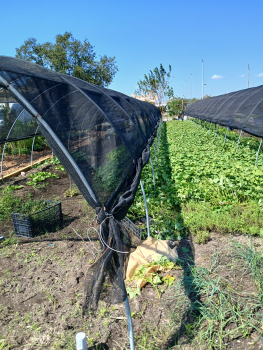
Two caterpillar tunnels at the VEGGI Farmers Cooperative, with sweet potatoes growing between them. Photo: Audrey Kolde

This seasonal slowdown is a natural part of the farm rhythm and even needed for certain farm goals like cover cropping, infrastructure projects, planning, or that vacation you need. But sometimes you may need to push a crop a bit longer, bridge a production gap, or protect sensitive varieties. That’s where shade becomes a useful tool. 

Though shade cloth has traditionally been used over greenhouses, this clever solution is making its way into open fields, offering an invaluable respite from the sun’s harsh rays. In the fields, the crops basking in too much sunlight can suffer from sunburn, absorbing more light than they can safely use, leading to heat exhaustion and even to their leaves “fainting” from the stress! 

Shade cloth can reduce solar radiation that causes these problems. The even light the net creates prevents overheating, flower drop, localized burn spots on peppers, and cracking on tomatoes when temperatures soar past 90°F.  

Making an Investment 

Now, before we get too excited, let’s talk about costs. Shade cloth can be an investment, with costs dependent on factors such as shading percentage, material, UV stabilization, and whether you opt for knitted or woven. For those covering large areas, costs can escalate quickly, especially when you factor in the necessary hardware, posts, and tensioning systems. But here’s the silver lining: the initial investment often pays off. When the scorching sun brings sunscald, blossom drop, bittering, and reduced fruit set, the economic losses can quickly outweigh the cost of shade structures. Even a minor reduction in plant stress can mean steadier yields, superior quality, and an extended harvest window, offering substantial returns during the most unpredictable parts of the growing season. 

When purchasing shade cloth, cut-to-length pieces work well for first-time users, small-scale growers, or trial runs, while bulk rolls are ideal for farms managing multiple blocks or constructing several shelters. Always seek suppliers who offer UV-stabilized materials, transparent warranty terms, and consistent mesh quality. A reputable supplier will also give you comprehensive specifications, including the actual shade percentage, expected lifespan, airflow properties, and whether the cloth is knitted (which tends to be more durable) or woven (stiffer but may fray). Because shade cloth is an investment, you’re better off using it for your highest-value crops that bring you the greatest return on investment.  

A Versatile Tool

When I first purchased shade cloth, my main goal was to cool down my greenhouse. However, it didn’t take long for me to recognize that my field needed it just as desperately. I explored which setups stood strong in the face of wind and were worth my efforts. What astonished me the most was the sheer versatility of shade cloth – it’s like a chameleon that adapts perfectly when paired with the right structure and crop. 
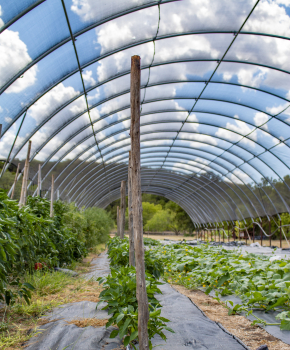
Shade cloth over a caterpillar tunnel frame protects vulnerable vegetables. Photo: NCAT

I began using shade cloth on low tunnels because I already had some hoops from my winter growing endeavors. This system revealed itself to be one of the simplest and most cost-effective options for shading crops in the field. With a little creativity, you can repurpose wire hoops, PVC pipe, or conduit bent into arches to create tunnels, draping the shade cloth directly over the top and securing it with sandbags, landscape staples, or snap-on clips. The beauty of this system lies in its accessibility; most growers already have the materials on hand, which helps keep costs low and waste to a minimum. However, it’s crucial to ensure proper anchoring and attachment, especially during high winds or sudden summer storms. A few sturdy clips and weighing down the edges can make all the difference in preventing the cloth from lifting or tearing.  

Low tunnels are particularly effective for crops like lettuce, brassicas, cucumbers, herbs, and young transplants. But they’re not without their challenges! One downside is that low tunnels can trap excessive heat when ventilation is restricted, which leads to stressed crops and increased humidity. The key is to use a lighter shade cloth, keep the sides open, and promote good airflow. In hotter climates, opting for lighter-colored or aluminized cloth can reflect heat, while darker cloth might trap it. And let’s not forget about tension! Loose cloth that flaps in the wind wears out quickly, so ensuring it’s snugly stretched over the hoops not only enhances durability but also stabilizes the structure.  

Suspension Systems 

Thinking bigger, I expanded to a suspension-style system that stretched shade cloth over multiple crop rows. This setup involved T-posts, bamboo, EMT conduit, and even 4” x 4” wooden posts along the bed edges. I strung paracord, wire, or greenhouse twine between the posts like clothesline. Achieving strong tension here is essential, and a ratchet strap proved invaluable for getting that perfect tautness. I found that upgrading to 10-foot T-posts provided the resistance I needed for this taller structure. Clipping and zip-tying the shade cloth to the frame resulted in a spacious, airy canopy that kept me cool while I worked beneath it.  

This design not only minimized costs by reusing existing materials but also excelled during afternoon showers, provided I anchored it properly! Deep-set posts, taut lines, and secure attachments are vital to withstand intense rainfall or sudden gusts. And trust me: hurricane winds and sail-like canopies are a recipe for disaster, so make sure to take it down when preparing for a big storm.  

This canopy-style shade works wonders for summer greens, peppers, tomatoes, ginger, and turmeric, due to its excellent ventilation. Inadequate airflow can raise humidity and increase disease risks. The main challenge revolves around maintaining tension. Sagging cloth can create pockets that trap water and wind, putting the structure at risk. Choosing the right shade percentage is crucial, too. If you overshade your crops, you risk hindering their photosynthesis when they need it the most. But with the right setup, this system stands out as one of the most efficient ways to shade multiple beds simultaneously.  

Another effective method is to stretch shade cloth directly over existing trellises. I found that laying shade cloth horizontally above trellis lines or cattle panels—angling it toward the west to buffer that harsh afternoon sun—works like a charm. Try this approach on tomato stakes, Florida-weave systems, and cucumber tunnels. For growers seeking a quick, budget-friendly way to protect sunscald-prone crops like tomatoes, peppers, and cucumbers, this is an excellent starting point.  

Nature’s Solution 
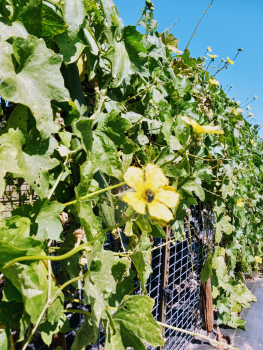
Luffa grows over trellises at Inglewood Farm, with lettuce (not visible) planted beneath. Photo: Audrey Kolde

Stratification, i.e., the natural layering of vegetation, creates cooler, buffered microclimates, which farms can utilize. This is why combining shade cloth with living plants has become one of my favorite agroecological strategies. I plant tall crops such as sunflowers, okra, sorghum-sudan grass, or trellised crops (my favorites are cucuzza, luffa, and cucumbers) to create a vertical, layered habitat that naturally cools the soil and protects sensitive crops. While these plants are growing to full size, I use shade cloth temporarily and then remove it once the living canopy takes over. Mimicking natural ecosystems on the farm can reduce your farm’s plastic use, but it requires close monitoring to avoid competition for water and nutrients. Living shade is particularly effective in mixed perennial-annual systems or on farms seeking long-term ecological resilience. Shade trees and agroforestry systems can provide a more permanent form of stratification, creating microclimate buffers while adding habitat and carbon storage.  

In addition to living shade, there are many other options for complementing or replacing traditional shade cloth. Greenhouses can achieve similar effects by painting the greenhouse with a limewash to diffuse sunlight, thereby reducing heat without adding physical structures. Some farmers experiment with natural-fiber materials like hemp cloth as biodegradable shading options. Drawing from all these tools, living systems, structural shade, and material alternatives, it is possible to design a shade strategy that supports both crop health and long-term farm sustainability. 

Related Resources

ATTRA Publication: Season Extension Techniques for Market Gardeners

ATTRA Blog: Agroforestry and Agrivoltaics: Two Appropriate Technologies for Smart Shade on Farms

This blog is produced by the National Center for Appropriate Technology through the ATTRA Sustainable Agriculture program, under a cooperative agreement with USDA Rural Development. ATTRA.NCAT.ORG.
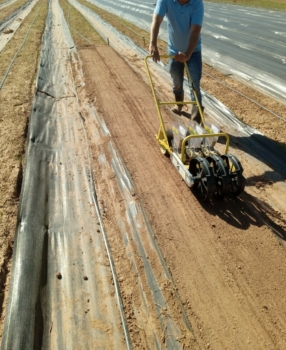
By Audrey Kolde, NCAT Sustainable Agriculture Specialist

My experience in farming started at the hand-tool scale. I enjoy the physical labor, that tangible connection to the land. But years of repetitive movement have started to catch up with me. My love of farming hasn’t changed as the aches and pains have increased—in fact, it has grown. I want to produce even more food to feed my community. I want to grow crops that are calorie- and nutrient-dense, and store well, like beans, winter squash, sweet potatoes, and dent corn—but these require a lot of land. They are cornerstones of the American diet that small-scale gardens often can’t keep up with.

With these crops in mind, my farming partner and I have started the journey to transition part of our land to tractor farming. It is a work in progress. As two women running a farm, we started to think more about why more women aren’t transitioning from small- to mid-scale operations. Women represent 9% of primary farmers in small-scale farms ($100,000-$350,000) and 5% of primary farmers in mid-scale operations ($350,000-$1,000,000). Women have continued farming in small-scale and traditional systems that involve a lot of manual labor and require physical strength. However, mechanization and technology like tractors offer women the chance to broaden their opportunities in agriculture.

Increase Productivity
One major reason to adopt tractor farming is that it makes it possible to cultivate larger areas in less time, with less hired help, and less backbreaking work. Mechanizing tasks like bed shaping, planting, and cultivation is game-changing. Using tractors increases productivity and efficiency, leading to bigger harvests, better quality produce, and access to lucrative markets that require a larger volume of products.

Improve Profitability
Tractors can make it easier for women to grow their businesses and achieve financial independence, helping to close the gender gap in agricultural productivity and land ownership. According to the 2012 Farm Census, female farmers in the United States earn about 40% less than male farmers. As women earn more, they can reinvest in their businesses by buying more equipment, diversifying their crops, or improving how they market their products. This economic freedom allows women to become successful agricultural entrepreneurs.

Improve Farmer Health
One of the biggest benefits of using a tractor for me is that it reduces the need for so much heavy (and expensive, if hired out) manual labor. I am all too aware of the back pain that planting, weeding, and harvesting crops can lead to. By using tractors, women can better manage their health while increasing their farm’s productivity. Tasks you wouldn’t immediately think of, like moving tarps and weights, are much easier with tractors. I once even moved a walk-behind tractor with a riding tractor.

Improve Conservation Practices
As an added bonus, tractors have so many attachments that can help with conservation practices. Proper tilling and cultivation help with pest management. No-till drills and roller crimpers make cover cropping easier. And the world of precision farming methods, like GPS and sensors, save water, use fewer chemicals, and enhance crop yields with less environmental harm.

Barriers
Unlike seed packets and wheel hoes, financing tractors costs more than a pretty penny. Tractors require capital to purchase, rent, or borrow. Women will likely need to find financial help through affordable loans from institutions such as the U.S. Department of Agriculture’s (USDA) Farm Service Agency, Women’s Business Center, or the Small Business Administration, or grants through organizations like USDA Rural Development, National Women’s Business Council, RAFI, and American Farmland Trust’s Brighter Future Fund.

Another barrier is knowledge. Tractor operation is a skill that can be intimidating to learn. Organizations like NCAT and Extension Services are trying to overcome this barrier by training new farmers on how to operate tractors, maintain equipment, and use sustainable practices. Experienced farmers are also an invaluable source of knowledge, and now is the time for those skilled in using tractors to pass their knowledge on to the next generation. The generational transition in farming is coming, and our ability to maintain a steady food supply will require a smooth transition, passing the torch to well-trained hands.

Conclusion
Tractors, used responsibly, can turn more acres into productive, sustainable land, reducing food insecurity and improving the local economy in communities. By overcoming a few barriers, women farmers can improve their profitability and increase their chances of long-term health and success.

ATTRA Resources

Maintaining Your Tractor – Building Your Toolbox

Scaling Up Your Vegetable Farm for Regional Markets

Equipment and Tools for Small-Scale Intensive Crop Production

NCAT Highlights Safety Resources During Farm Safety and Health Week

Other Resources

American Farmland Trust’s Research into Women in Agriculture

The State of Gender Equity in U.S. Agriculture (pdf)

Sources

Dentzman, K. and Lewin, P. (2024), A Fair Comparison: Women’s and Men’s Farms at Seven Scales in the United States. Rural Sociology, 89: 3-39. https://doi.org/10.1111/ruso.12512https://doi.org/10.1111/ruso.12512 

Schmidt, C., Goetz, S. J., & Tian, Z. (2021). Female farmers in the United States: Research needs and policy questions. Food Policy, 102039. https://doi.org/10.1016/j.foodpol.2021.102039  

By Audrey Kolde, NCAT Agriculture Specialist

As a nongenerational farmer, most of my agricultural experiences before entering the field of farming and food systems had huge impacts on my decision to farm, from childhood memories of wild blackberries to college-age harvesting of carrots.

I love direct seeding crops; it feels like an act of faith that the seeds won’t fail, or the weeds won’t choke them out. It never seems to lose its wonder, the careful bed preparation that ends in straight rows of seedlings. Or sometimes, the rushed bed flip is good enough. Please, Jesus, take the wheel. With either farming style, I want to make sure you have the 411 behind-the-scenes of some of my favorite roots.

Prepping my bed can be a quick flip for my later successions, but let’s pretend that I am coming out of the rest period of the garden (July and August for me), so I get to do some TLC ahead of planting. I use a silage tarp to break down plant matter from previous crops. Then, I decrease the seedbed. There are a number of ways to do this, including tilling, flaming, solarizing, and stirrup. Now it’s time to water and sprout, and then repeat the process to kill these sprouts.

As I switch seasons, I also like to keep tabs on my soil temperature with a thermometer or at the nearest extension research center to ensure that my roots will germinate. If I can help it, I don’t waste seeds on soil that is too hot or too cold. It is the best tool to know when to plant since every year brings an irregularity to the climate.

Next, I want the bed to have a near-perfect texture. I want to see no debris or chunks in the bed, a beautiful tilth to the soil, and a level bed top. I need this textural perfection for the seeding tools made for freshly tilled and shaped beds.

How do I make that happen? I remove debris with a rake, use a wheel hoe or a push tiller set at a shallow depth, or add an inch of compost. Then I add a broadfork to break up the tiller pan for deeper roots.

Ready to start planting? The following are some seeding options to consider.

  • Hand seeding with shallow trenches: Use the handle end of a rake to make the trenches and then use the back side of the rake to close them.
  • EarthWay Seeder: Easy to use and low cost but may result in inconsistent seed distribution due to its reliance on how fast you walk.
  • Four-Row Pinpoint Seeder: Easy to use with minimal setup, making it a good choice for quick planting. It’s robust, durable, and effective with various soil conditions and seed types.
  • Jang Seeder: Known for its precision and adaptability, it is suitable for professional growers and dedicated enthusiasts. However, it’s higher priced, and it may take some time to master its many options and settings.

And here are some tips for growing a few of my favorite root vegetables:

Beets

Germination soil temp: 40 to 90°F degrees
Soil PH: 6 to 7.5
Days to germination: 5 to 8
Days to harvest: ~40 to 55
Prefers soil 65 to 75°F
Thin to 3” to 4″ apart or 6″ for winter storage

I’ve found that beets bring some challenges to be aware of. The beets’ seeds are dried fruits that contain a cluster of two to six seeds. After planting, thinning them out is essential to ensure healthy growth. When seeding, it’s crucial to stay vigilant because the irregular shape of the seeds can potentially clog up a machine. To address this problem, some seed companies have begun producing pelleted seeds to prevent clogging and ensure smoother planting.

Jang seeder

Jang seeder. Photo: Audrey Kolde, NCAT

Carrots

Germination soil temp: 45 to 85°F
Soil pH: 5.5 to 7
Days to germination: 7 to 21
Days to harvest: ~35 (baby) to 75
Prefers soil 60 to 70°F
Thin to 2″ apart

Carrot seeds are tiny and difficult to sow evenly. Some farmers sow carrot seeds with sand or coffee grounds to achieve better spacing. You can use seed tape or pelleted seeds if that makes your life easier and helps reduce thinning and wasted seeds. Personally, this crop is what made me upgrade to a more precise seeder. The real trick to carrots is maintaining the moisture that they require. You can achieve this by watering two to three times per day or laying fabric like burlap sacks over the soil and watering them.

Turnips

Germination soil temp: 60 to105°F
Soil pH: 5.5 to 7
Days to germination: 2 to 5
Days to Harvest: ~38 to 50
Prefers soil 40 to 75°F
Trim to 2″ to 4″ apart

Turnips can germinate at 105°F! That is impressive! And also counterintuitive, since turnips like cooler soil temperatures during growth, but this can be achieved by mulching once they germinate. I like to use insect netting to keep those flea beetles at bay so I can sell the turnips with greens on.

Starting seeds in beautiful, meticulously prepared soil is always the dream. But the reality of farming often has other plans for us. Don’t worry. By better understanding your growing conditions and your tools, you can escape the worst of last-minute panic seeding, with fingers crossed that they germinate. Instead, you can make educated decisions on controlling the weather in your microbiome, like the mad scientist you are. I’m rooting for you!

Related ATTRA Resources:

Equipment and Tools for Small-Scale Intensive Crop Production

Sustainable Weed Management for Small and Medium-Scale Farms

Other Resources:

Vegetable Growing Guides, Cornell University

The Best Vegetable Seeders for Market Gardening — The Earthway Seeder

The Vegetable Gardener’s Bible

This blog is produced by the National Center for Appropriate Technology through the ATTRA Sustainable Agriculture program, under a cooperative agreement with USDA Rural Development. ATTRA.NCAT.ORG.