Tag Archive for: Sheep and Goats

By Danielle Duni, NCAT Agriculture Specialist 

Whether you have ten sheep or one thousand, proper preparation, handling, and storage of wool can significantly improve the value of your wool clip. When you take steps to produce clean wool, you open the door to better pricing and more opportunities for processing into finished products.

One of the biggest factors affecting wool quality is contamination, which can come from livestock paint, feed, grass seed, baling twine, net wrap, and many other sources. The good news is that there are several steps you can take long before shearing day to reduce contamination and protect your wool quality. You should start making plans for your next clean wool clip shortly after your previous shearing is complete. Keep reading for ways to keep your wool clean from a range of contaminants. 

Sheep Paint 

Many operations shear their sheep before lambing to create a cleaner environment for the birth and to make it easier for lambs to latch onto the ewe. Larger operations often use paint brands to be able to identify ewe and lamb pairs once they’re in the pasture. When you apply paint, use a scourable sheep paint, which can be removed during the wool-cleaning process. Apply paint sparingly and place it consistently within the flock, high on the hind end where it can be easily removed on the shearing floor. Careful placement helps prevent unnecessary contamination of the fleece. 
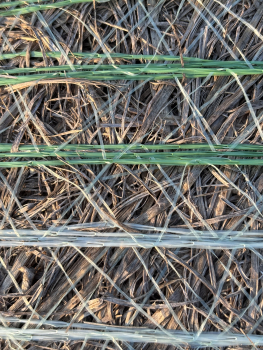
Synthetic net wrap can contaminate wool if not removed and disposed of. Photo: NCAT

Synthetic Fiber

Feeding practices can also play a major role in wool contamination, especially in confinement settings. Taking the time to remove all net wrap and poly twine from feed and properly disposing of it goes a long way. Additionally, refrain from using twine to hold up posts of gates; twine is made from poly fibers that break down into smaller strands and eventually find their way into the wool. Poly fibers cannot be combed out in processing, resulting in an unusable yarn.  

Feed Particles

Using proper sheep bale feeders helps reduce the amount of time sheep spend climbing into feeders (though anyone with sheep knows they will always find a way). Feeding daily rations instead of allowing continuous access to feed can reduce contamination, although it does require more labor. If you are spreading feed or bales with a tractor or wagon, it is best to keep sheep penned away while spreading to prevent fine feed particles from settling into the wool.  

It’s Shearing Day! 

Speaking from experience, you can never be too prepared for shearing day. The number one priority is keeping sheep dry. A good rule of thumb is this: if you place your hand on top of the fleece and it feels even slightly damp, the sheep are too wet to shear. Moisture can clog shearing equipment, ruin the wool clip, and create unsafe or uncomfortable conditions for the shearing crew. Even a light rain or snow can delay shearing just as much as a major storm. 

Shearing Set-Up 

With larger flocks, shearing crews often bring wool help, i.e., an experienced crew to help with the wool handling and preparation aspect of the shearing process. If you only have a few sheep and no wool help, congratulations, you are the wool help!  

Shearing crews also often bring equipment such as wool packs, wool sweeps, and skirting tables. At a minimum, have proper wool bags and a broom on hand. Wool packs are the industry standard for baling and storing wool and can be purchased online. If a wool sweep is not available, a clean shop broom works well for clearing debris from the shearing area.  

Skirting involves removing undesirable wool such as wool that is contaminated with manure, paint, heavy vegetable matter, dirt, or short fibers. The key is to separate lower quality wool from the main fleece. A skirting table provides the best results when removing bellies, tags, and contaminated pieces from the fleece. Skirting involves removing undesirable contaminants from wool such as manure, paint, heavy vegetable matter, dirt, or short fibers. There are many effective DIY skirting table designs available online. If a table is not feasible, you can skirt directly on the shearing floor. The key is to separate lower quality wool from the main fleece. Additionally, laying down a canvas tarp in the shearing area helps keep wool clean and off the ground. 

Sorting Wool 

After skirting comes sorting. Best practice is to have separate bags ready for the main fleece line and off-sorts such as bellies, pieces, and tags (often grouped together). If the main fleece varies in quality, you can split it into an AA (highest quality) line and an A line. Even if you have limited experience with wool sorting or classing, the important take away is to sort “like wool with like wool.” Shorn belly wool goes into the belly bag. Areas of contamination, such as the crow’s nest/top knot or painted wool, go into the pieces bag. The main fleece goes into the mainline bag, taking care to remove short fibers or weak samples that break easily when pulled. (For more on fleece anatomy, check out this article from New Mexico State University). Compost or discard wool from the hind end with manure contamination, as it can add moisture to the bales. The main fleece goes into the mainline bag, taking care to remove short fibers or weak samples that break easily when pulled.  

When sorting, it’s helpful to pull a sample from the fleece to evaluate quality. Measure length against your hand, with a general minimum of three inches. Test strength by gently pulling the staple apart to check for breaks. If your flock includes colored fiber sheep, shear them last to prevent contamination of white wool. 
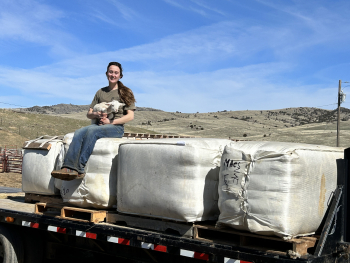
Danielle Duni sits atop bales of wool that are sorted and ready for market.

Baling Wool

Once sorted, it’s time for baling. Some shearing crews bring hydraulic wool balers that compress wool into 400-to-500-pound bales. The wool packs (bags) are then securely fastened to keep the wool clip protected.  

Labeling and Storage 

And don’t forget the final step: labeling! Industry standard labeling guidelines can be found through the American Sheep Industry Association. At a minimum, each bag should include the operation name, bag number, wool description (mainline or off-sorts), and year. Store wool in proper wool packs in a dry area. Storing bales on pallets helps prevent moisture absorption and allows for airflow. Ideally, wool should be stored indoors in an area with moderate temperature fluctuations. 

Shearers Know Best 

One of the best resources you have is your shearer. Ask what you can do to set up the area for success. A pen with an alley run is a great starting point. Keeping the shearing area clean is essential. Lightly watering the barn floor beforehand to prevent dust can help conditions be ideal. Shearers might have other tips like that to make sure the shearing goes smoothly and the wool clip is the best quality possible.  

This blog is just an overview of preparing for sheep shearing. For more information, please reach out to our NCAT agriculture specialists at askanag@ncat.org. Additionally, the American Sheep Industry (ASI) provides great resources for how to prepare, sort, handle and store the wool clip. Find some of their resources below.  

Resources:  

Preparation Steps for Wool Quality Improvement
https://www.sheepusa.org/wp-content/uploads/2021/11/Prep-Steps-Brochure-Small-Size.pdf  

Wool Contamination: American Sheep Industry Association, Inc. 
https://www.sheepusa.org/wp-content/uploads/2022/06/Wool_contamination-1.pdf  

Poly Contamination: American Sheep Industry Association, Inc.
https://www.sheepusa.org/wp-content/uploads/2022/06/Poly-1.pdf  

Understanding Wool Grads: New Mexico State University
https://pubs.nmsu.edu/_b/B409/index.html

Code of Practice for Preparation of Wool Clips 
https://www.sheepusa.org/wp-content/uploads/2021/11/code-of-practice-2021.pdf  

Wool Handling Videos (for purchase): American Sheep Industry Association, Inc.
https://www.sheepusa.org/product/wool-handling-videos  

This blog is produced by the National Center for Appropriate Technology through the ATTRA Sustainable Agriculture program, under a cooperative agreement with USDA Rural Development. ATTRA.NCAT.ORG.
By Danielle Duni, NCAT Agriculture Specialist

The birth of baby lambs, kids, and calves—what a special time of year! It’s what producers prepare for all year long. Beyond the fall paycheck, the real reward of ranching comes from watching a newborn lamb, goat, or calf stretch out for the first time and take those wobbly steps, then trail faithfully behind its mother.

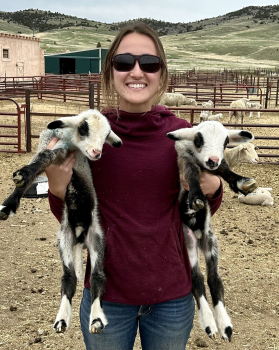
Danielle Duni holds two young lambs.

Still, amid those heartwarming moments lies the reality of long days, sleepless nights, and tough decisions. Preparation can make all the difference, easing the pressure and setting the stage for a successful season. The best way to be ready is to ensure your facilities, nutrition program, and supplies are all in order. Facilities don’t have to be elaborate, just functional, with a space to hold expectant mothers that are about to lamb/kid/calve, a few jugs (i.e., mothering pens), and an area to sort animals when needed.

The main factor that will make or break the birthing season is the nutrition received by the mother during pregnancy and lactation. This subject is beyond the scope of this blog, however. Your local Cooperative Extension Service will have resources regarding nutrition that incorporate locally available feedstuffs. Check your flock or herd’s body condition and aim for moderate condition (not fat, not thin) during pregnancy. We can provide more information on nutrition upon request at askanag@ncat.org.

It’s amazing how even with all the planning in the world, each lambing, kidding, or calving season still manages to surprise you. Maybe it’s a ewe that decides to lamb at two a.m. during the coldest cold snap of the year, or a calf that needs a little extra encouragement to nurse. Those moments remind us why it’s so important to have everything ready and within reach. When things get busy (and they always do), being organized and prepared can make the difference between chaos and calm.

Here are some sample supply lists of materials and equipment that can help make lambing and calving go more smoothly. It is important to note that the sample list is an extensive list of supplies that could possibly come in handy. Most of these supplies can be gathered over time, and each operation will learn what works best for their situation.

*The asterisk denotes basic items that are nice to have when getting started.

Lambing, Kidding, and Calving Supplies

Pen Set-Up and Cleaning Supplies

  • Straw or bedding material*
  • Water and feed buckets*
  • Extra panels for pens
  • Lime for pen sanitation
  • Bedding fork and shovel*
  • Broom
  • Wheelbarrow
  • Garbage cans and trash bags
  • Designated disposal area for afterbirth and dirty straw

Supplies for in the Pen

  • Alfalfa pellets or good-quality hay*
  • Head catch (to secure stubborn ewes and assist in lamb bonding and feeding)
  • Heat lamps* (babies may arrive during cold weather)
  • Replacement bulbs for heat lamps
  • Extension cords*
  • Wire or carabiner (to secure heat lamps and prevent heat lamps from starting straw fires)*

Supplies for Assisting the Birth

  • OB lubricant (or mild dishwashing soap)
  • Long OB sleeves (arm-length gloves) (important to protect from zoonotic diseases)
  • Calf/lamb puller
  • Clean towels or rags for drying lambs*
  • Prolapse harness or spoon
  • Prolapse needle (to sew prolapses)
  • Umbilical tape (to tie thick umbilical cords or sew prolapses)

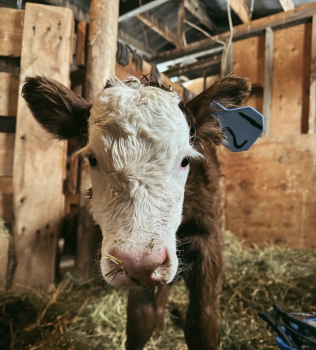
Fresh calf in a warm pen sporting a shiny new ear tag.

Supplies for Processing Lambs, Kids, and Calves

  • Elastrator bands and banding tool (for docking tails and castrating)
  • Paint marker for tags
  • Ear tags and tagger
  • Scissors (to trim umbilical cords)
  • Betadine or iodine (used to dip umbilical cord)
  • Umbilical dipping cup (filled with betadine—an empty pill bottle works well)
  • Scale for weighing lambs/kids
  • Record sheets or notebook along with pens/pencils*
  • Livestock paint – spray or paint bucket (to mark mothers and their babies)
  • Paint numbers (numbers can be stamped on livestock to identify pairs in the field)
  • Paint brand (necessary in larger operations to identify owner)

Supplies for Supplemental Feeding

  • Bottles with spare nipples*
  • Colostrum replacer (to use within first days of birth)*
  • Milk replacer*
  • Hot water supply (for mixing milk replacer)*
  • Stomach tube (for lambs, kids, or calves not taking a bottle)
  • Measuring cups and spoons

Supplies for Veterinary Medicine

  • Gloves
  • Needles and syringes
  • Sharps container
  • Drugs and dosage information
  • Thermometer
  • Solution
  • Antibiotic spray or powder
  • Electrolyte solution (for dehydrated lambs/kids/calves)
  • Energy drench (e.g., Nutri-Drench) (for lambs/kids/calves needing a boost)

Ensure supplies are stored in an easy-to-access location. Pro tip: make sure milk replacers are stored in a cool, dry, mouse-proof location.

Not mentioned in this list are the necessary drugs and dosages for treatment, as that information requires veterinary oversight. Always make sure to have established care with a vet before lambing and calving season. This article from Texas Tech University provides guidance on when to call your vet during calving, lambing, and kidding season.

At the end of the day, no matter how many seasons you’ve been through, each year brings its own set of lessons and little victories. Being ready with the right nutrition, setup, and supplies helps take some of the stress off so you can focus on what really matters, caring for your animals and appreciating the new life on the ground. It’s hard work, but it’s the kind that fills your heart and reminds you why you do it year after year.

ATTRA Resources:

Masterful Management in Lambing Jugs – ATTRA – Sustainable Agriculture

Top 5 Lambing Hacks for a Panic-Free Season  – ATTRA – Sustainable Agriculture

Lambing, Kidding, and Calving on Pasture – ATTRA – Sustainable Agriculture

For a Safe Lambing Season, Make a ‘Lambulance’ – ATTRA – Sustainable Agriculture

Healthy Animals, Happy Farm: Strategies for Sheep and Goat Care – ATTRA – Sustainable Agriculture

This blog is produced by the National Center for Appropriate Technology through the ATTRA Sustainable Agriculture program, under a cooperative agreement with USDA Rural Development. ATTRA.NCAT.ORG.
By NCAT Conservation Planner Cody Brown and NCAT Senior Conservation Planner Alisha Horak

If the word ‘wool’ conjures up memories of itchy socks and the scratchy blankets your grandparents would pull out when it got cold, it’s time to modernize your view on this warm, soft, functional fiber! Wool has come a long way in recent years. The wool industry has improved processing methods to increase wool’s versatility and comfort, and consumers are loving it, driving the demand for sustainable fibers. In response, the global woolen textiles market, which was valued at 190.4 billion dollars in 2023, is expected to grow almost eight percent every year between now and 2030.

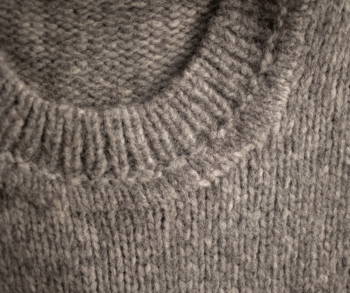
Close-up photo of medium-gray wool sweater.

Wool is a timeless, sustainable fiber that can be used to make comfortable, functional clothes.

The fibers that make up your wardrobe may all make comfortable, useful clothes, but there are growing concerns about a wide range of environmental impacts these different fibers can have. Synthetic fiber’s elasticity, comfort, and cheap cost of production have made it a fierce competitor with natural fibers since the invention of nylon in the 1930s. However, synthetic textiles can lead to microplastic pollution, among other environmental costs. These concerns are starting an industry-wide shift to seek natural fiber sources with verified benefits to land and climate.

The prevalence of synthetics has led to a decline in the American wool industry and the domestic wool processing infrastructure that supported American wool in the past. This caused wool growers to have an increased dependency on volatile international wool markets. To be more profitable, wool producers and domestic wool processors can work together to serve the market of sustainability-interested consumers.

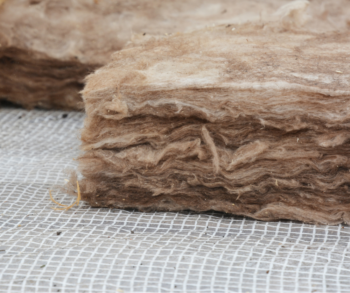
Close-up photo of a cross-section of wool insulation.

Wool insulation is a sustainable alternative to synthetic insulations and a potential market for coarse wool fibers.

Wool isn’t just for clothes, either. The fashion industry and the fine wool producers that support them are seeing an increase in demand for fine wool (i.e., the softest types of wool with the smallest fiber diameter), but medium and coarse wool producers also have opportunities to serve the sustainable fiber market. Medium and coarse wool can be turned into carpets and insulation, replacing synthetic fibers in our homes.

The best part is, when sheep producers use managed grazing techniques, they can actually build soil health and improve the health of the landscape. NCAT has a wide variety of resources available to help farmers and ranchers produce wool in sustainable, ethical ways, so together we can rebuild the American wool market from the soil up.

Producers and consumers both win with wool. It’s a sustainable material for clothing and other products. Wool’s durability, breathability, and insulative properties make it an easy choice when prioritizing the quality of materials. With a growing demand for sustainability across the nation, NCAT aims to empower wool producers through ATTRA’s sustainable agriculture information service, cost-share incentives, conservation plans, and access to new verified fiber markets that benefit the land, producers, and consumers. 

Additional Resources: 

Climate Beneficial Fiber Project

Tips for Marketing Sheep and Goat Products: Fiber

Building the Market for Climate-Beneficial Wool

Climate Beneficial Fiber Partnership: Introduction for Producers

Voices from the Field Podcast Episode 355. Soil-to-Skin: Rebecca Burgess of Fibershed on Building Community

January is Farmer Appreciation Month at NCAT, and some of the farmers and ranchers we especially value are those who make the effort to pass along their hard-won knowledge to beginners. NCAT Livestock Specialist Linda Coffey recently lost one of her farming mentors and took the opportunity to document how significantly this friend influenced her life.

By Linda Coffey

On December 21, 2024, family and friends gathered in Fayetteville, Arkansas, to celebrate the extraordinary life of Mrs. Janice Neighbor. Many people shared stories, and I loved hearing them all, but I couldn’t share mine then. I knew I would cry and stumble over words and not be able to adequately say what she has meant to me and my family for the past 25 years. But I would like to share here what Janice meant to me, in hopes that readers will be reminded of mentors in their own lives, and of people they could mentor, too, to help make the world a better place, as she did.

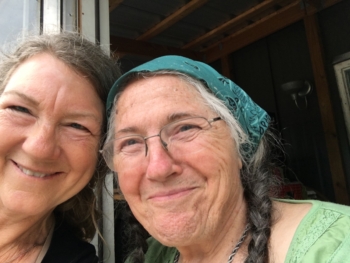
Two women taking a selfie, looking at the camera smiling.

NCAT specialist Linda Coffey (left) and her friend and farming mentor Janice Neighbor (right). Photo: Linda Coffey, NCAT

My path crossed with Janice because of dairy goats. I had the idea that if we had a couple of dairy goats to milk, we would save money on our grocery bill. Our family of six drank a lot of milk. I mentioned this to a friend who replied that I ought to talk to Janice Neighbor, because her son was in his last year of 4-H and the family would be selling a lot of goats.

I found Janice at the kitchen cabin at Prairie Grove Battlefield State Park, where she was engaged in a reenactment. I was fascinated with the living history she was enacting, cooking with cast iron in the fireplace of the cabin, wearing period clothing, teaching people who came in about the Civil War era, and sharing delicious rolls that she had baked in a Dutch oven. We arranged to meet, and she began mentoring me about goats right from the start.

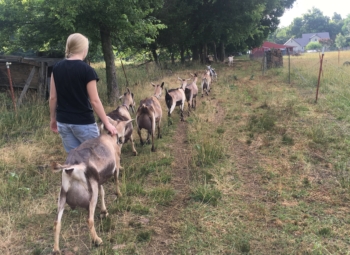
Hannah Coffey on left leading a string of milk goats down a grassy path to the barn for milking time.

Hannah Coffey leads the family’s herd of milk goats to the barn for milking time. Photo: Linda Coffey, NCAT

She and her son had spent years breeding high-quality goats. She gave some to us with the stipulation that we must join 4-H and show the goats at the county fair. She promised to help with that by forming a dairy goat club for others who wanted to show, so we could learn together. That is how we met others who had similar interests. Janice was THE person responsible for connecting the Coffey family to the fair community. The last 25 years would have been so different if she hadn’t cared for and worked with us. I am so grateful!

Janice showed so much patience. We had so much to learn, and she guided us through joining the American Dairy Goat Association, getting papers transferred, applying for our farm name, applying for our herd tattoo, filling out registration papers, filling out fair entry forms, learning to fit and show and properly care for these beautiful, useful animals. She taught us what we needed to know, and we entered our first fair.

It is so much more fulfilling to be a participant than to be a spectator! And it was amazingly helpful having the pro introduce us to other experienced people in the dairy goat barn, having her encourage us each step of the way and cheer us on as the goats that originally were her son’s won more ribbons for our children and our farm. The fair that year, and every year that we participated, was my favorite week of the year, and Janice gave that to us. She helped us learn all about the Dairy Goat Barn customs, the premium sale, and the fun event where the goats and children dressed up and competed.  And she was there, cheering us on and celebrating with us.

The joy of being part of this! It was great for me and for our kids, and we always did well, having started with really nice goats and taken Janice’s recommendations about where to acquire more breeding stock. It was satisfying and fun, and we would never have done it if she hadn’t put that requirement on us and then taught us how.

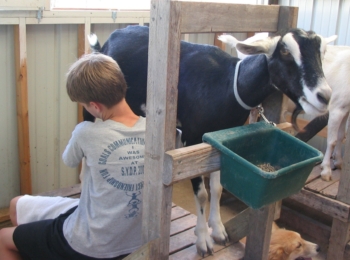
John Coffey with his back to the camera hand-milking a black goat, who is standing on a wooden milk stand facing the camera.

John Coffey takes a turn at milking one of the family’s milk goats. Photo: Linda Coffey, NCAT

The dairy goats brought other benefits to our family, beyond the fair. Our kids developed a solid work ethic with twice-a-day milking, and the milk itself fed our family, local customers, and the pigs, calves, and lambs we also raised. We learned to make cheese – she guided us there, too.

We took goats to Farm Friends, a fun event where over 1,000 school children attend, and there’s a free bean supper that evening for the community. Janice was always there, too, spinning all day with her guild and providing cornbread for the evening meal.

Janice also helped us with our sheep and got us involved in Sheep to Shawl. She got her entire spinners’ guild to spin our Gulf Coast wool for Sheep to Shawl, and I loved seeing what they created.

She was also such a good cook and gardener. She knew so much about culinary and medicinal herbs. She knew and grew at least ten basil varieties, for example, and the seed collection she and her husband developed is so impressive. She was a Master Naturalist as well as a Master Gardener, Master Canner, and knowledgeable in all the homesteading arts. I can’t capture everything that was special about her. I haven’t mentioned her humor, her colorful expressions, her vast knowledge of history, medicine, livestock, fiber arts, food preservation, indigenous knowledge, and more. I haven’t helped you picture her beautiful, kind smile, her enthusiasm for life and for people and for nature. You can’t see how she enjoyed all the good things, how she encouraged so many people every day, how she could be very blunt and straight-forward when the situation called for it, or how she’d lived so MUCH in her lifetime.

But her kindness and love for our family are what I will miss most. She got to know each of our children, celebrated our successes, and shared her teaching experience. She gave me great support and advice, even to the last time I saw her, literally on her deathbed, when she still cared and gave me words of wisdom.

I thought I had more time. I regret that I never took the time to just go hang out all day and learn. I would have had to go every day for a long time to just get the tip of the iceberg! I always thought I would do that “later.”  My advice for you is this: if you know someone you admire and love, prioritize spending time with them, no matter how busy you are. If you have the chance to be a participant instead of a spectator, do it! It’s much more fun. If you have a mentor, thank them. If you are a mentor, I thank YOU: you are changing lives and making the world a better place, as my precious friend Janice did.

Beginning farmers often connect with mentors through formal mentorship programs like Marbleseed’s Farmer-to-Farmer Mentorship Program, Quivira Coalition’s New Agrarian Program, and Practical Farmers of Iowa’s Labor4Learning. Similarly, structured learning opportunities like the ones listed in ATTRA’s Internship Hub can help beginners connect with experienced agricultural practitioners.

This blog is produced by the National Center for Appropriate Technology through the ATTRA Sustainable Agriculture program, under a cooperative agreement with USDA Rural Development. ATTRA.NCAT.ORG.