
By Audrey Kolde, NCAT Agriculture Specialist
Growing up, the only cut flowers I ever saw were the ones handed out at dance recitals: a rose from a proud parent or a carnation from the teacher. These classic blossoms—roses, carnations, and chrysanthemums—make up the “big three” of the cut flower world. They’re reliable, hardy, and grown for scale. But over the past two decades, bouquets have evolved into something far more diverse, textural, and beautiful.
The switch to diversity can be traced back to a pivotal moment in U.S. trade policy. In 1991, the Andean Trade Preference Act began opening the door to duty-free flower imports from Colombia. By 2012, the U.S.-Colombia Trade Promotion Agreement made Colombia’s position as the dominant supplier of cut flowers to the American market untouchable. While this surge in low-cost imports made bouquets more affordable and abundant, it also hurt domestic wholesale flower farms, which couldn’t compete on price alone.
Finding a Niche and the Digital Floral Revolution
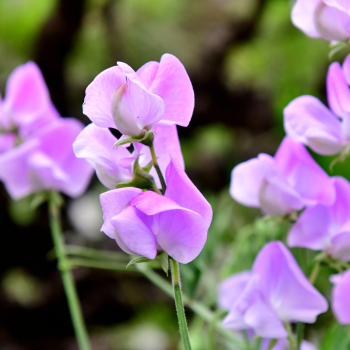
Sweet pea blossoms make a fragrant addition to bouquets.
Confronted with this challenge, U.S. flower farmers began to adapt. Instead of pursuing the wholesale giants with resilient, shippable blooms, they embraced their unique strength: growing delicate, fragrant, seasonal flowers that could not withstand long-distance transport. Local farms carved out a niche, offering sweet peas, dahlias, ranunculus, and garden roses—blooms that thrived in nearby soil but couldn’t be shipped in a box.
Social media accelerated this shift: Instagram and Pinterest introduced consumers to lush, wild, and seasonal bouquets. People’s preferences began to shift; they no longer just wanted a dozen roses. Instead, they sought flowers with unique textures, captivating fragrances, and compelling stories. Social media also gave local farmers a direct connection to consumers and florists, allowing them to bypass traditional wholesale channels. This increased visibility on digital platforms transformed previously overlooked flower varieties into sought-after blooms, sparking a grassroots revival of local flower farming.
The Rise of Direct Sales
The local food movement of the 2010s led to a shift in consumer values towards sustainably grown flowers. Many shoppers began seeking “American Grown” labels, desiring not only beauty but also environmental and ethical accountability. This demand gave rise to more direct marketing, including flower CSA subscriptions and an expanded presence of fresh flowers at farmers’ markets. The COVID-19 pandemic accelerated this trend, when weddings, festivals, and large gatherings were canceled and wholesale orders from florists, event planners, and retailers were scaled back dramatically. What began as a crisis response evolved into a lasting business model as farms transitioned to e-commerce and direct-to-consumer sales, with many farmers quickly adapting by launching online shops, subscription flower boxes, and local delivery services. Small and mid-size flower farms can bypass traditional wholesale channels, strengthening grower-consumer relationships and creating new revenue streams. Direct-to-consumer sales have become a cornerstone of the modern floral industry.
Easy Blooms to Start Growing
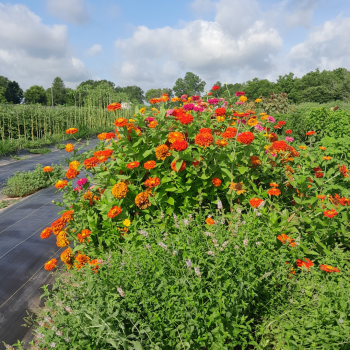
Zinnias are an easy flower to start with when adding cut flowers to a specialty-crop operation. Photo: Audrey Kolde
Growing and selling flowers is an easy shift for diversified farms. Summer annuals such as zinnias, sunflowers, cosmos, gomphrena, and celosia thrive in a wide range of climates and are easy to grow and sell. These “cut-and-come-again” flowers can be harvested multiple times throughout the season. For example, a single 100-foot row of zinnias or cosmos can yield 1,000 to 3,000 stems over a season, while gomphrena may produce 3,000–4,000 stems. With just a few rows, you can bring buckets of flowers to market each week. On ¼ to ½ acre, growers often supply local florists, farmers markets, or bouquet subscription services. Adding herbs like basil, mint, or rosemary offers both fragrance and foliage for arrangements.
Adding Value: Bouquets
As your skills grow, bouquet design becomes a natural next step—this is where creativity meets profitability. In busy markets, pre-made bouquets facilitate faster sales. Slower-paced markets allow for a more interactive experience, allowing customers to choose their own stems for a custom bouquet. Either way, refreshing your knowledge of basic bouquet-building techniques increases your product’s value. Learn which flowers function as focal, fillers, line flowers, and greenery, and plan your growing season with color palettes and design in mind. Kraft paper wrapping, flower food packets, and a polished table setup help elevate your market presentation. Flowers naturally lend themselves to visual marketing, so use your social media to showcase blooms in context—on a table, in a vase, or as a gift. Adding a social mission (like donating bouquets to hospital wings, elder homes, or community centers) creates emotional connection and buyer loyalty. You can also build scarcity-driven marketing strategies through limited CSA shares, preorder-only focal bouquets, or subscription deliveries to homes and offices.
Harvesting and Post-Harvest Handling
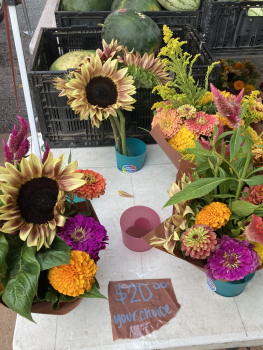
Bouquets for sale at a Farmers Market table. Photo: Nina Prater
To ensure top-quality blooms, proper harvesting and post-harvest care are crucial. Cut flowers early in the morning or late in the evening with sharp, sanitized floral snips to minimize stem damage and maximize water uptake. Immediately place stems in clean buckets filled with cool water and preservative (homemade or commercial). Strip leaves below the waterline to reduce bacteria, and move flowers to a cool, shaded area—or ideally a CoolBot-equipped cooler (34–38°F)—as soon as possible.
Leveling Up Quality
Using cucumber netting or flower support mesh helps produce straighter stems. Low tunnels and caterpillar tunnels protect crops from wind and rain, extending the growing season. Shade cloth can prevent petal burn and help grow longer stems, while row cover (like Reemay) provides light frost protection and speeds up early growth. Insect netting blocks common pests without the use of chemicals, and drip irrigation keeps foliage dry, preventing diseases such as botrytis and powdery mildew. These lightweight, movable tools are well-suited for use on plots ranging from ¼ to 1 acre and make it easy to adapt quickly to changing conditions.
Beautiful Profit
Flower farming isn’t just a source of income—it’s a fulfilling lifestyle that balances creativity and connection to your local community. Lynn Byczynski, author of The Flower Farmer, has inspired growers since 1997 with the message that well-managed flower farms can earn $25,000 to $30,000 per acre through direct sales. Income varies based on marketing, crop choice, and local demand: farmers’ markets may bring in $500–$2,000 per week, while CSA subscriptions often sell for $15–$25 per share per week.
Start Blooming
Engaging in flower farming can be a deeply rewarding endeavor, whether your motivations are a desire for profit, a passion for horticulture, or a combination of both. This vibrant industry offers an opportunity to cultivate stunning blooms while honing your skills in planting, nurturing, and harvesting flowers. As you immerse yourself in the art of flower farming, you’ll discover the intricacies of soil health, seasonal cycles, and sustainable practices that not only enhance your yields but also connect you to the beauty of nature. With each season, you’ll witness the fruits of your labor come to life, fostering a sense of accomplishment and satisfaction that grows alongside your expertise in this blossoming field.
References
Byczynski, Lynn. The Flower Farmer: An Organic Grower’s Guide to Raising and Selling Cut Flowers. 2nd ed., Chelsea Green Publishing, 2008.
Flower farming is making a comeback as gardeners grow a local niche. 2023. The Produce News. https://theproducenews.com
DTC flower sales have blossomed during the pandemic. 2021. Bloomberg Second Measure. https://secondmeasure.com
Related ATTRA Resources:
Specialty Cup Flower Production and Marketing Publication:
https://attra.ncat.org/publication/specialty-cut-flower-production-and-marketing/
Podcast: A Flower Farm Blossoms:
https://attra.ncat.org/a-flower-farm-blossoms/
Other Resources:
Association of Specialty Cut Flower Growers
Growing for Market Magazine: Getting started with Cut Flowers Part 1: The Why and How of it
Kentucky Center for Crop Diversification: Cut Flower Resources
North Carolina State Extension: Cut Flowers