
Biochar Policy Project
 The National Center for Appropriate Technology’s Biochar Policy Project was created in 2019 to support development of a carbon-negative biochar and biofuel industry that creates good jobs and opportunity in rural America, while sequestering carbon and building soil health and productivity.
The project works with farm groups, conservation organizations, soil scientists, farmers, ranchers and foresters that think an important solution can be found in a porous black shred of carbon called biochar.
The project is addressing three critical barriers:
- Critical knowledge gaps on biochar must be filled.
- Barriers to private investment in launching the industry must be lowered.
- A reliable supply chain of sustainable biomass feedstock must be developed.
The project is led by Chuck Hassebrook, who previously served 36 years with the Center for Rural Affairs, including 17 years as its executive director. It is represented in Washington by Bev Paul of Davenport Policy and Ferd Hoefner of Farm, Food, Environment Policy Consulting. Each brings decades of experience, Bev with Gordley Associates and Ferd as policy director and lead Washington representative of the National Sustainable Agriculture Coalition.
Biochar in Action
 https://www.ncat.org/wp-content/uploads/2026/03/Biochar-pile-being-sprayed-with-water.jpg
438
625
Robyn Metzger
/wp-content/uploads/2021/10/NCATlogo-RGB2-350x105.png
Robyn Metzger2026-03-06 15:46:122026-03-09 13:46:45House Farm Bill Proposal Omits Biochar Research Bill
https://www.ncat.org/wp-content/uploads/2026/03/Biochar-pile-being-sprayed-with-water.jpg
438
625
Robyn Metzger
/wp-content/uploads/2021/10/NCATlogo-RGB2-350x105.png
Robyn Metzger2026-03-06 15:46:122026-03-09 13:46:45House Farm Bill Proposal Omits Biochar Research Bill https://www.ncat.org/wp-content/uploads/2025/08/Biochar-Pile-by-U.S.-Department-of-Agriculture-Public-Domain-Mark.png
1080
1080
Robyn Metzger
/wp-content/uploads/2021/10/NCATlogo-RGB2-350x105.png
Robyn Metzger2025-08-08 12:36:062025-08-08 12:36:06Congress Members Reintroduce Biochar Research Network Act
https://www.ncat.org/wp-content/uploads/2025/08/Biochar-Pile-by-U.S.-Department-of-Agriculture-Public-Domain-Mark.png
1080
1080
Robyn Metzger
/wp-content/uploads/2021/10/NCATlogo-RGB2-350x105.png
Robyn Metzger2025-08-08 12:36:062025-08-08 12:36:06Congress Members Reintroduce Biochar Research Network Act https://www.ncat.org/wp-content/uploads/2024/11/Qualterra-Cheney-Site-Biochar_edited.jpg
837
1255
Robyn Metzger
/wp-content/uploads/2021/10/NCATlogo-RGB2-350x105.png
Robyn Metzger2024-11-19 16:22:552024-11-19 16:23:15Ag solutions company sparks biomass innovation and remarkable success
https://www.ncat.org/wp-content/uploads/2024/11/Qualterra-Cheney-Site-Biochar_edited.jpg
837
1255
Robyn Metzger
/wp-content/uploads/2021/10/NCATlogo-RGB2-350x105.png
Robyn Metzger2024-11-19 16:22:552024-11-19 16:23:15Ag solutions company sparks biomass innovation and remarkable success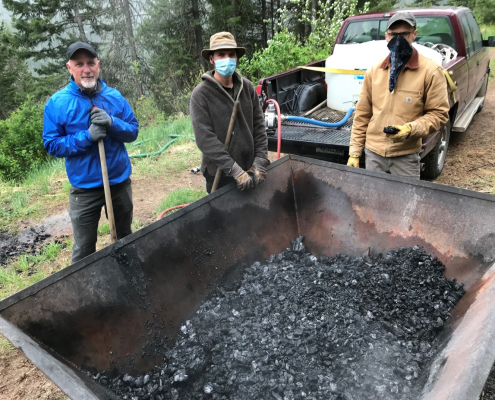 Biochar offers more lasting carbon sequestration. It is a form of charcoal produced for use in soil by heating biomass in the absence of oxygen. It is not new. Biochar from prairie and forest fires is a significant portion of the organic matter in most U.S. agricultural soils.